
Here's the number that matters most, before any of the history around it. Sixty. That's roughly the horsepower the old Go-Devil four cylinder made after a decade of service. Then Willys built the Hurricane, and the number jumped to somewhere around 72 hp. Twelve horsepower doesn't sound like much today. In 1953, on a truck that weighed about a ton and towed farm implements for a living, it was the difference between struggling up a grade and climbing it without downshifting. That's the jeep cj willys hurricane engine story in one sentence: more power, same basic engine family, and a body that had to change shape to make room for it.
Car Features
6 min read
The Hurricane F-Head: The Engine That Reshaped the Jeep
Twelve extra horsepower doesn't sound like much until you're towing a load up a grade. The Hurricane F-head engine delivered it, and forced the CJ-3B's hood to grow taller in the process.
What F-head actually means, and why it mattered
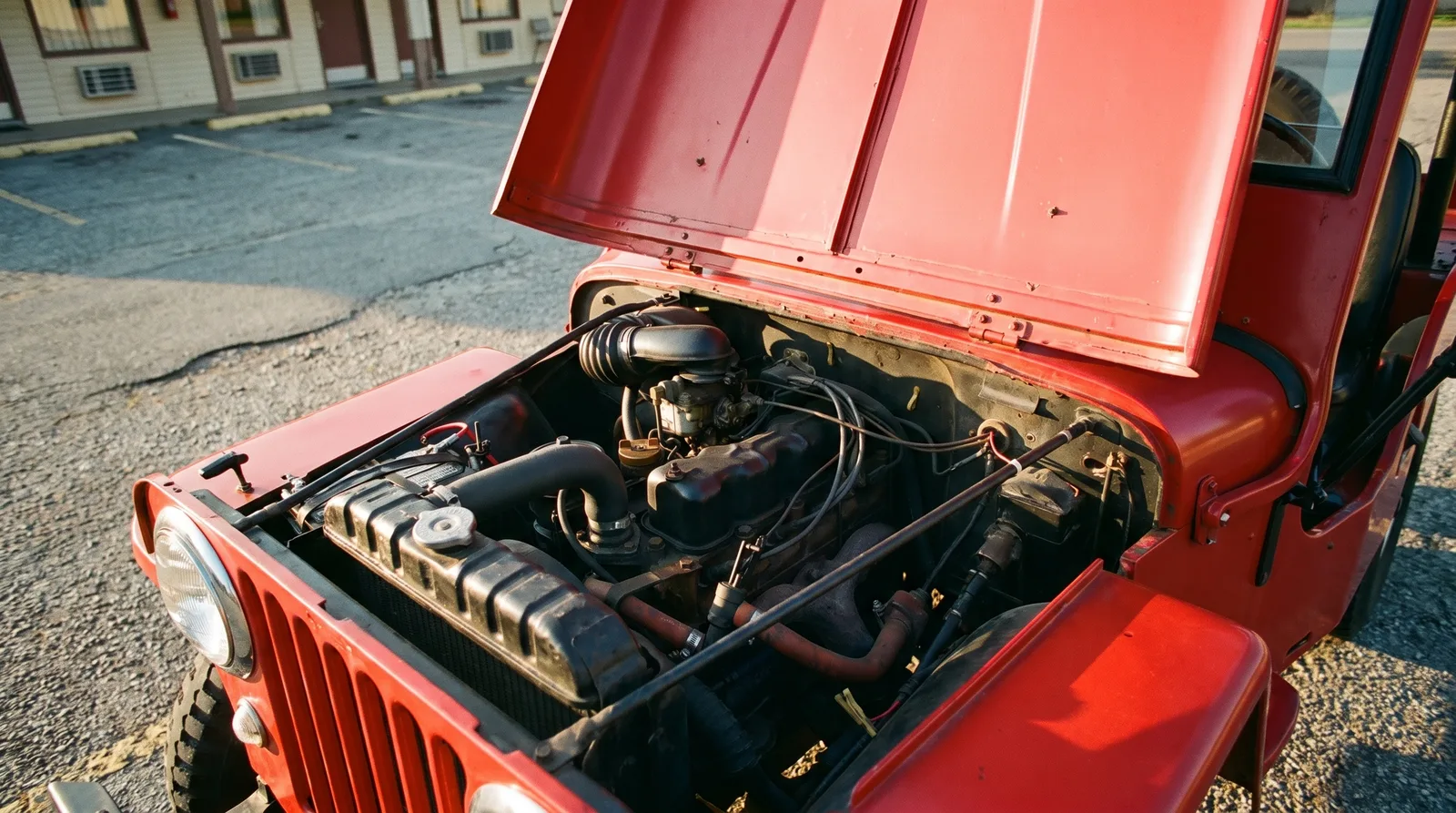
The Hurricane wasn't a clean-sheet engine built from nothing. Willys built it off the same basic 134.2 cubic inch displacement as the Go-Devil that came before it, but changed the valve arrangement from a flathead L-head layout to an F-head design. That means intake valves moved up into the cylinder head while exhaust valves stayed down in the block. Fewer restrictions on the intake side meant better breathing, and better breathing meant more power out of the same displacement without resorting to a bigger, heavier, thirstier engine sitting under the hood.
That's the whole trick, once you strip away the marketing language. Same cubic inches, smarter airflow, more usable output. It's a straightforward engineering move, not a revolutionary one, but it worked, and it worked reliably enough that the Hurricane stayed in Jeep service for years after its 1953 introduction.
What Willys had to give up to get there
Reworking an existing block for a new valve arrangement is not free. Willys had to retool cylinder head production, source new rocker arm assemblies, and requalify the whole engine through durability testing before it could go into a production Jeep. That's real time and real money spent on an engine that, on paper, kept the same displacement as the one it replaced. The company made that investment anyway because the Go-Devil's flathead ceiling had become a genuine limit on what the Jeep could tow, climb, and carry, and a modest displacement bump alone would not have solved the underlying breathing problem.
The number nobody talks about: the hood
The F-head valve train needed more vertical room than the old flathead ever did. Willys couldn't fit the Hurricane under the existing low hood, so the hood got taller. That's the direct link between this engine and the CJ-3B's distinctive raised nose. Engineers didn't redesign the body because they wanted a new look for 1953. They redesigned it because basic physics demanded a few extra inches of vertical clearance, and there was no way around that, full stop.
| Spec | Go-Devil (outgoing) | Hurricane F-head (new) |
|---|---|---|
| Displacement | 134.2 cubic inches | 134.2 cubic inches |
| Valve layout | L-head (flathead) | F-head |
| Horsepower | 60 hp | 72 hp (75 hp higher-compression version) |
| Introduced | 1941, wartime MB | 1953, CJ-3B |
It's worth being blunt about how small an inch and a half actually sounds and how large it actually was to solve. Every accessory bracket, hood hinge, grille mount, and headlight bezel that had been engineered around the old low hood needed rework to match the new height. This wasn't a bolt-on fix. Willys effectively redesigned the entire front clip of the vehicle around a valve train's clearance needs, a scale of change that most casual observers, looking only at the finished truck, never fully appreciate.
Why the extra power mattered more than it sounds
Twelve extra horsepower on a spec sheet undersells the real change felt from behind the wheel. Torque and driveability improved along with peak output, and for a work truck that spent most of its life at low speed under heavy load, that curve mattered more than the top number. A power takeoff running a saw or a pump doesn't care about a truck's top speed on an open highway. It cares about how much usable grunt the engine can deliver at low RPM without straining or bogging down under sustained load, and the Hurricane delivered noticeably more of it than the Go-Devil ever managed.
Fuel economy took a modest hit compared to the older flathead, a tradeoff period road tests noted without much fuss, since the buyers this engine targeted cared far more about pulling a loaded trailer up a grade than squeezing out an extra mile or two per gallon. Reliability held steady too. The Hurricane kept the same basic bottom end architecture as the Go-Devil, which meant it inherited a well proven bottom end even as the top end got a genuine redesign, a low-risk way to add power without introducing a whole new set of failure points.
The bottom line for buyers today
Servicing a Hurricane also demanded a small mental shift from mechanics who had spent years with the flathead Go-Devil. Valve adjustment on an F-head engine requires attention to both the intake valves up in the head and the exhaust valves still down in the block, effectively two separate procedures instead of one. Shops that skipped that step and treated the Hurricane like a familiar flathead sometimes ran into rough idle complaints that had nothing to do with a bad part and everything to do with a skipped adjustment. That learning curve faded within a few years as the engine became common enough that most rural mechanics simply learned the new routine.
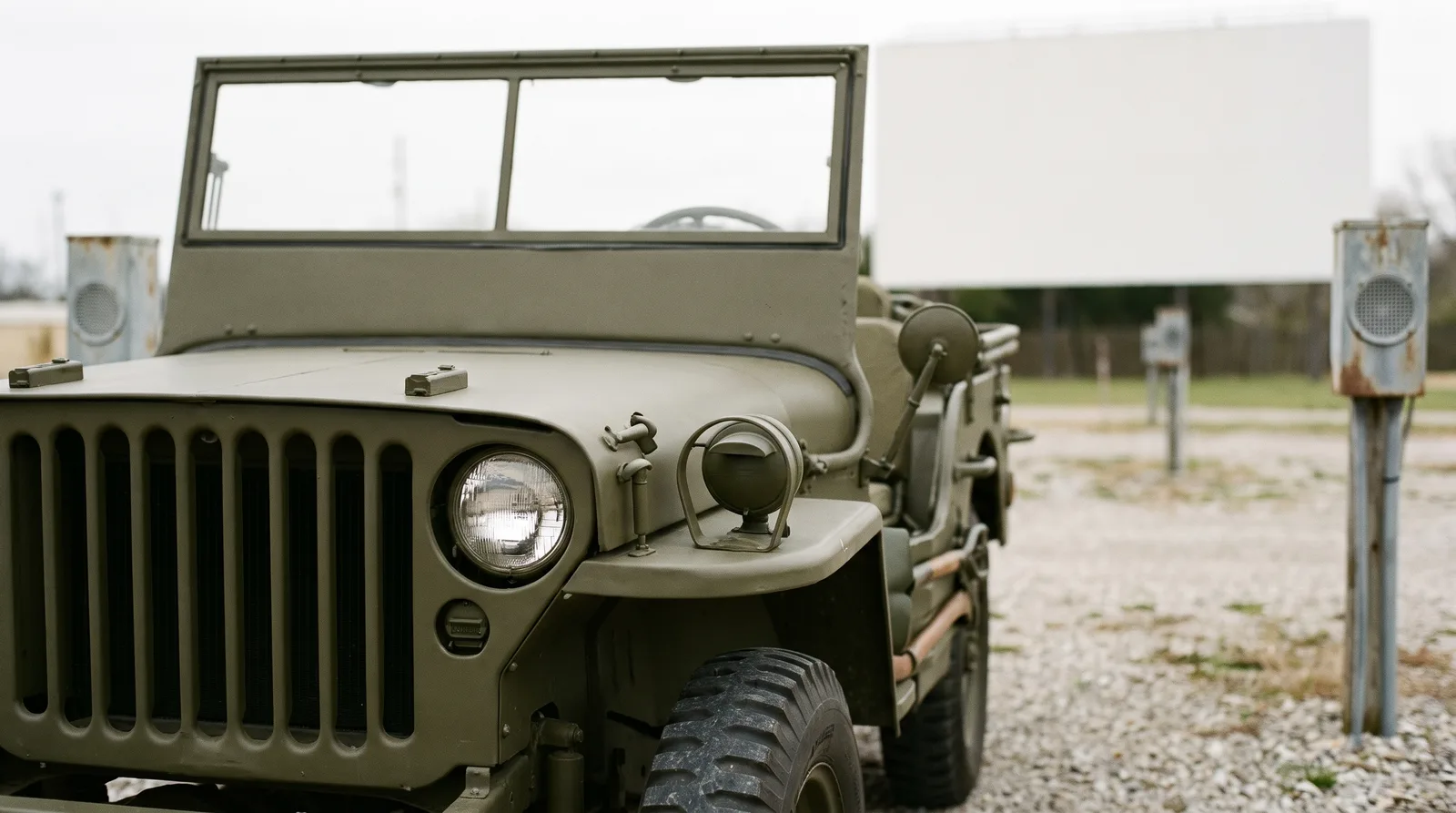
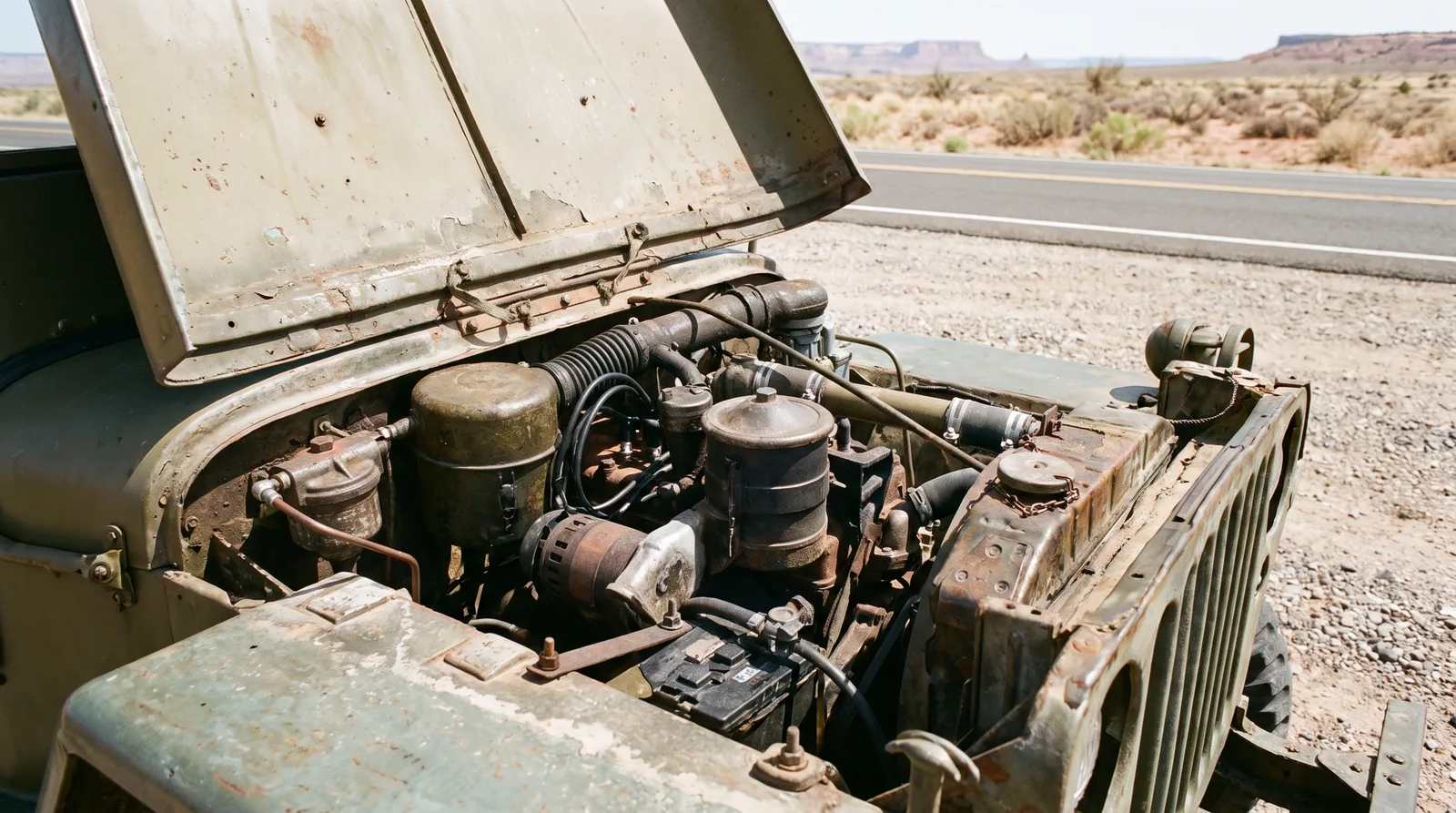
If you're shopping a 1950s CJ, the engine under the hood tells you the story before you even check a build sheet. Flathead Go-Devil under the hood generally means an earlier truck, pre-1953. Hurricane F-head means the taller-hooded CJ-3B or a later CJ-5, and it means more usable power in daily driving, whether that's climbing a trail grade or just merging onto a modern highway without falling behind traffic. Parts availability leans in the Hurricane's favor too, since the design stuck around in Jeep service for years and left a bigger aftermarket footprint than the older flathead ever built up, and specialty suppliers still stock rebuild kits for it decades later.
"Don't overthink it. More valve clearance, better breathing, more power. That's the whole Hurricane story, and it's why the hood got taller."
- Dan Reeves
None of this happens without the engine that came before it, and the full arc of how Willys got from a wartime necessity to a postwar refinement worth building an entire redesigned hood around is covered if you go back to where this started. If a Hurricane-powered CJ has your attention now, there's a classic CJ for sale waiting with exactly the engine this story is about, still doing the job it was built for seventy years later.
Sources and notes
Related Reading
Have a
Jeep CJ
for Sale?
Reach thousands of serious classic car collectors across the US.
Sell It Here →
Selling a classic? Here's how: compare the places to sell classic cars
Are You a Classic Car Dealer?
List your full inventory and connect with targeted classic car buyers.
Join as a Dealer →

About the author
Dan Reeves
Performance engine builder from North Carolina's motorsports corridor, focused on swaps, forced induction and making real, repeatable power.
Related Listings - Jeep CJ

Comments
Be the first to comment on this article.