
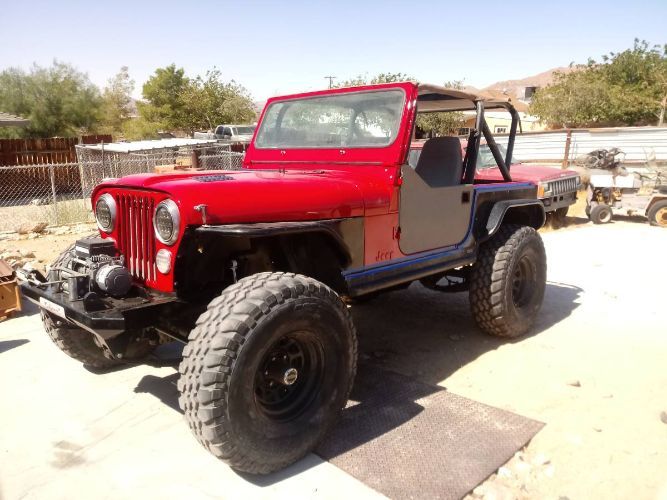
Stand a CJ-3B next to a CJ-3A on the same show field and the first thing you notice isn't a fender flare or a badge. It's the hood. The 3B sits taller through the nose, a full couple of inches higher than every civilian Jeep before it, and that awkward, ungainly bump exists for one reason: an engine that simply would not fit under the low flat hood Willys had used since the war. The jeep cj willys cj3b story is really a story about a company choosing horsepower over good looks, and getting a stranger, more distinctive truck as a result.
Car Features
7 min read
The High-Hood CJ-3B: A Taller Nose for a Bigger Engine
The CJ-3B's oddly tall hood exists for one reason: the Hurricane F-head engine simply would not fit under the old body, and Willys chose horsepower over good looks.
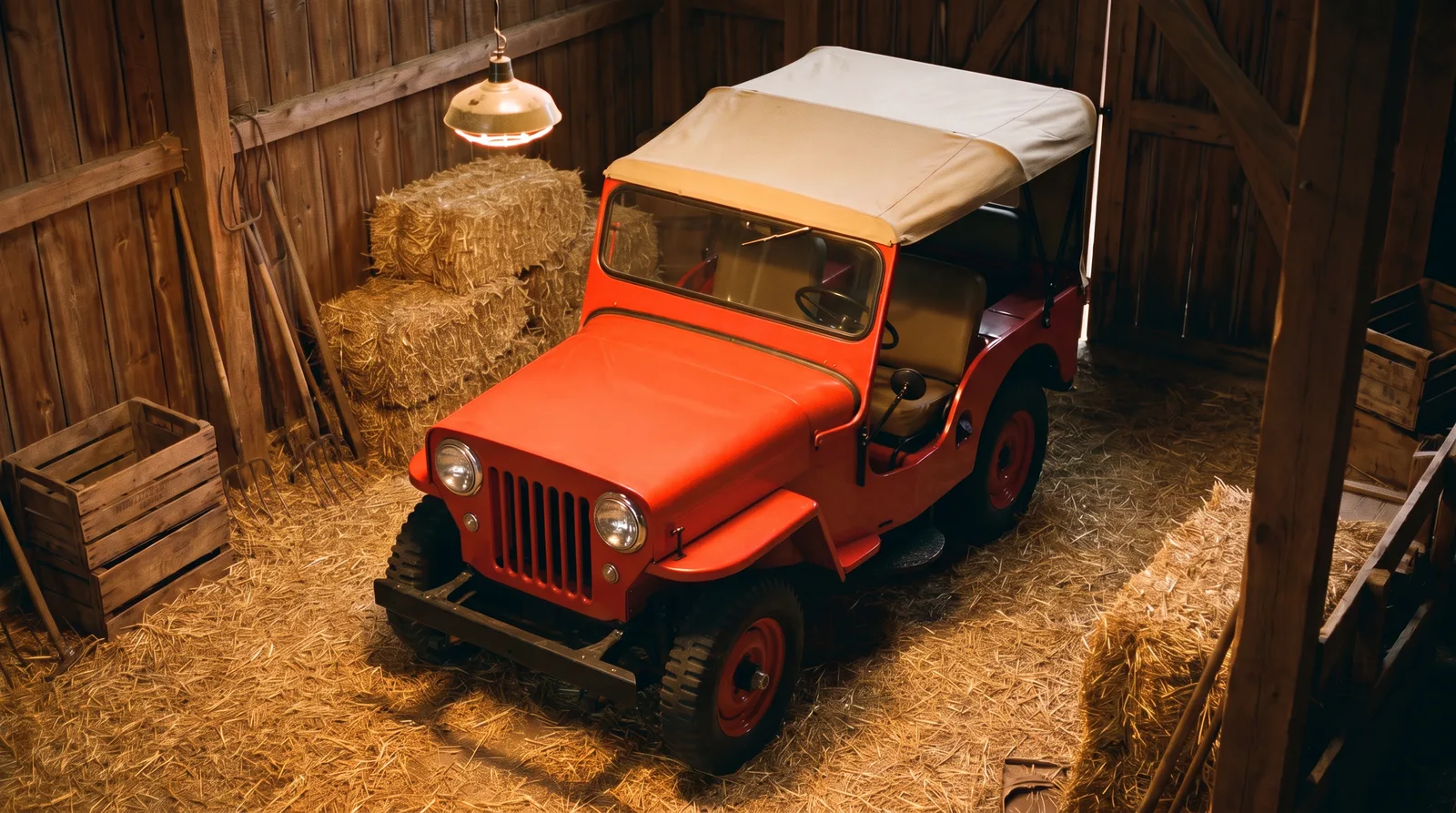
An engine too tall for its own body
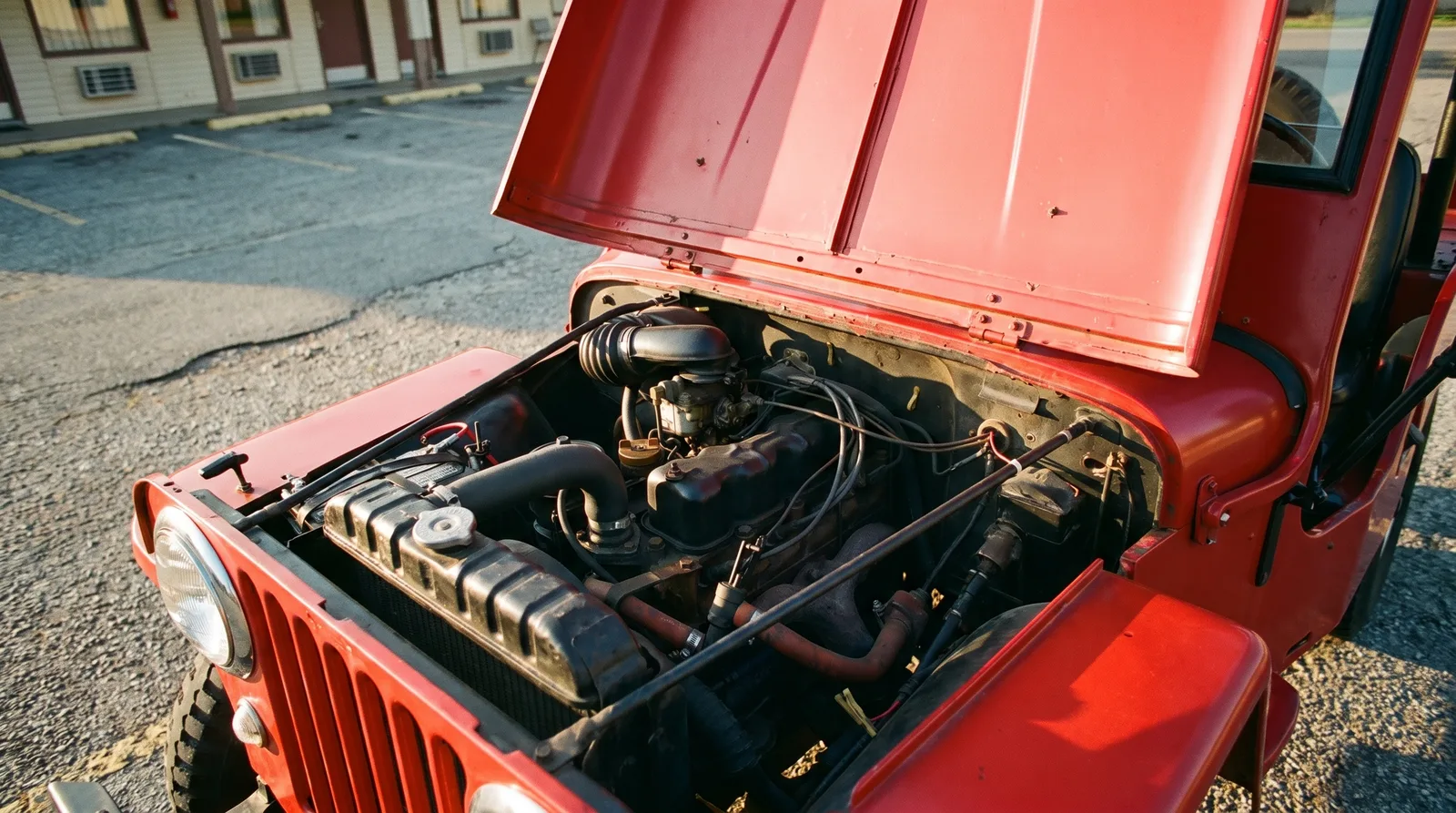
By the early 1950s, Willys engineers had developed the Hurricane F-head four cylinder engine, a more powerful update to the long serving Go-Devil unit that had powered every Jeep since the wartime MB rolled off the line in 1941. The Hurricane used an F-head valve arrangement, intake valves in the cylinder head and exhaust valves down in the block, a layout that let it breathe better and produce noticeably more power than the flathead Go-Devil it replaced. The catch was simple geometry. The taller valve arrangement needed more clearance than the existing low hood could provide.
Rather than redesign the whole engine block to fit the old body, Willys redesigned the body to fit the new engine. The result, introduced for 1953, was the CJ-3B, instantly recognizable by its raised hood line and higher grille. It looked less graceful than the 3A it replaced, and Willys knew it well before the first unit reached a dealer lot, but the tradeoff bought real performance gains that mattered more to working owners than styling ever would.
Willys stylists reportedly explored a handful of alternative solutions before settling on the raised hood, including reworking the engine's valve cover to sit lower and shifting the mounting angle slightly to steal a fraction of an inch of clearance. None of the workarounds solved the problem cleanly enough to satisfy engineering, and each one added cost or complexity that a raised hood simply avoided. In the end, the straightforward answer, just make the hood taller, won out over more elegant but more expensive alternatives, a decision that says something about how practical Willys stayed even as it modernized its engine lineup.
What the taller nose actually bought
The Hurricane engine pushed output up to around 72 hp (75 hp on the higher compression version), a meaningful jump over the Go-Devil's roughly 60. For a truck that spent its life towing implements, climbing grades, and running power takeoff equipment, that extra muscle showed up immediately in everyday use. Owners who'd spent years wringing every bit of power out of the older flathead engine noticed the difference the first time they pulled a loaded trailer up a hill.
| Spec | CJ-3B detail |
|---|---|
| Production start | 1953 |
| Engine | Hurricane F-head four cylinder |
| Horsepower | 72 hp (75 hp higher-compression version) |
| Hood height | Raised versus CJ-3A |
| Notable trait | Licensed for extensive overseas production |
The CJ-3B also picked up incremental frame and suspension revisions alongside the engine swap, changes aimed at handling the added weight and torque of the Hurricane without straining components sized for the lighter Go-Devil. Front axle components in particular saw quiet reinforcement, a detail rarely mentioned in period advertising but well documented in Willys parts bulletins from the era. Owners running these trucks hard, plowing snow, hauling firewood, working construction sites, benefited from a chassis that had been toughened to match the new engine's added output rather than simply bolted onto an unchanged frame.
A design that outlived its own American production run
Domestic CJ-3B public sales ended in 1964, though the model stayed available for commercial and military buyers until 1968, but the design's real longevity happened overseas. Willys licensed the CJ-3B design to manufacturers around the world, most famously Mahindra in India, which kept building versions of the tall hooded Jeep for decades after American factories had moved on to newer models, refining the powertrain along the way while keeping that same recognizable hood line largely intact. That licensing arrangement meant the awkward, purely functional shape born out of an engine clearance problem in 1953 was still rolling off assembly lines on another continent well into the twenty first century, a production lifespan longer than almost any other Jeep body style ever achieved.
India was not the only overseas market to keep the design alive. Various licensed and semi-licensed variants of the CJ-3B's basic architecture appeared across several other countries during the postwar decades, each adapted slightly for local manufacturing capabilities and regulations, but almost all recognizable at a glance by that same raised hood line. Few American light vehicle designs from the early 1950s can claim a production footprint that stretched so far past their domestic market, on nearly every continent, decades after Detroit and Toledo had both moved on to newer shapes entirely.
Why the awkward hood became a badge of honor
Among collectors today, judging entirely on the strength of what the truck actually accomplishes rather than how it photographs, that raised hood line has flipped from an aesthetic compromise into a defining feature. A CJ-3B is instantly identifiable at any distance, and the story behind the shape, a company choosing power over polish, appeals to people who value function over form in old machinery. It is not the prettiest CJ Willys ever built. It might be the most honest one, a truck whose entire shape can be explained by a single engineering constraint rather than a stylist's sketchbook.
"The tall hood tells you everything about how Willys made decisions in 1953. They didn't ask what looked right. They asked what fit the engine, and built around the answer."
- Sarah Whitfield
Domestic collectors sometimes overlook just how long the CJ-3B silhouette stayed relevant somewhere in the world. A shape born strictly out of engine clearance math in 1953 was, decades later, still a common working vehicle on roads in South Asia, long after the last American-built CJ of any generation had rolled off a domestic line. That kind of quiet global persistence rarely gets mentioned in stateside show judging, where originality and factory correctness dominate the conversation, but it says something meaningful about how sound the basic engineering really was.
The engine that forced this whole redesign only makes sense in the context of everything that came before it, which is why more on the willys jeep fills in the earlier chapters worth knowing. And if you want to trace the lineage all the way back to where this started, that origin story explains why Willys kept iterating on the same basic formula for decades instead of starting over. For those ready to own a piece of that tall hooded oddity, there are classic CJs on the market worth a look right now.
Sources and notes
Related Reading
Have a
Jeep CJ
for Sale?
Reach thousands of serious classic car collectors across the US.
Sell It Here →
Selling a classic? Here's how: compare the places to sell classic cars
Are You a Classic Car Dealer?
List your full inventory and connect with targeted classic car buyers.
Join as a Dealer →

About the author
Sarah Whitfield
Third-generation classic car collector specializing in pre-war American and European coachbuilt automobiles. Researcher and concours enthusiast.
Related Listings - Jeep CJ

Comments
Be the first to comment on this article.