
Park a 1972 GMC Jimmy next to its Chevrolet counterpart and the differences take a genuinely trained eye to spot. Grille, badging, a handful of trim details, and otherwise the two trucks share a body, a frame, and nearly every mechanical component underneath. That closeness is not an accident or an oversight. It reflects how General Motors organized its truck divisions in the early 1970s, and understanding the 1972 K5 Blazer Jimmy twin relationship tells you as much about corporate structure as it does about either individual truck.
Car Features
6 min read
The 1972 GMC Jimmy: The K5 Twin That Year
Why GMC's 1972 Jimmy shared nearly everything with the K5 Blazer, and why its lower production numbers make it a scarcer variant today.
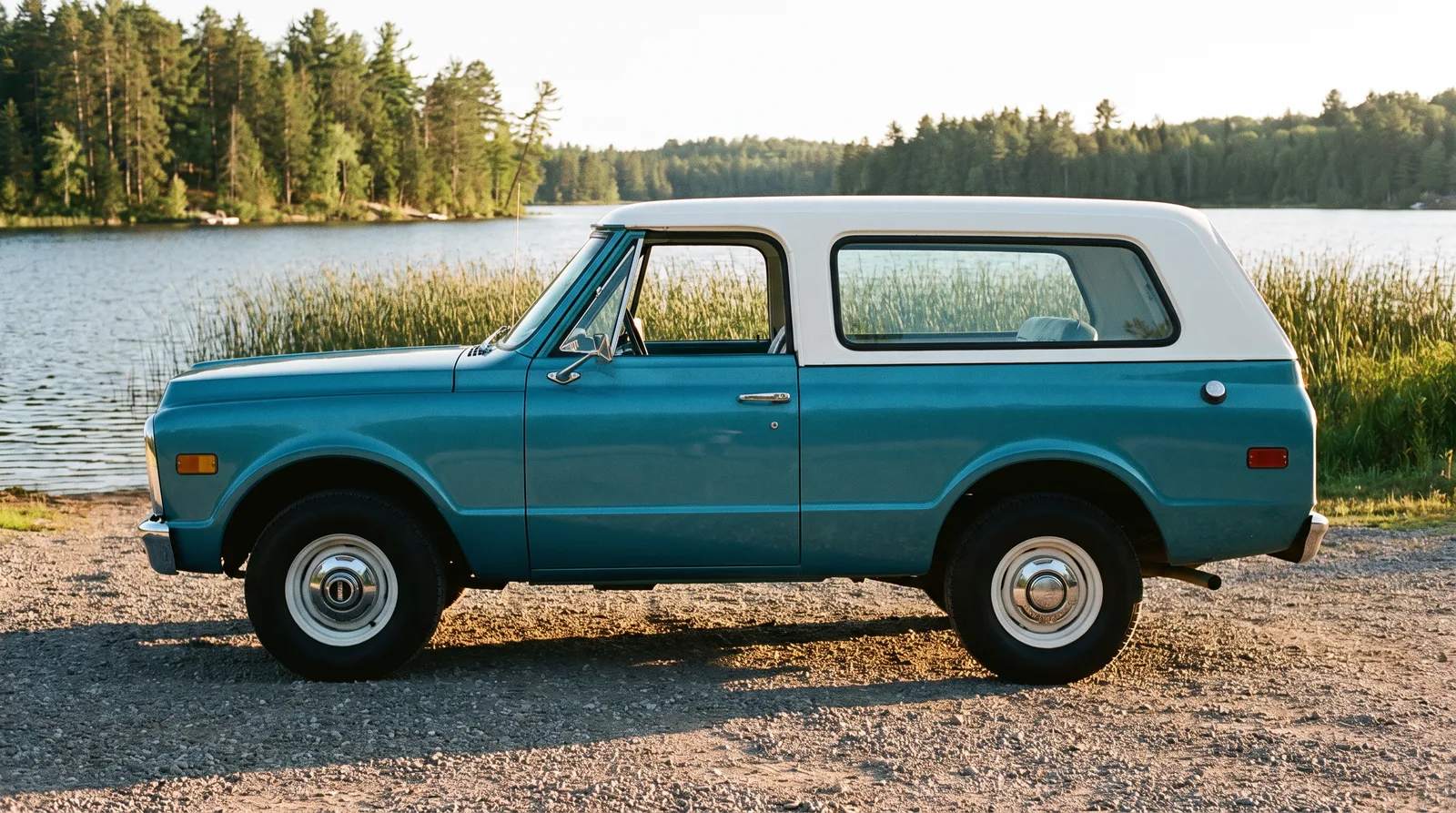
Why GMC built a badge-engineered twin at all
GMC in this era existed primarily as a commercial and fleet-facing brand within General Motors, selling trucks through a separate dealer network that often overlapped geographically with Chevrolet dealers but served a customer base that, for various institutional and regional reasons, preferred buying from GMC specifically. Rather than engineer a genuinely distinct full-size utility vehicle for that dealer network, GM took the sensible economic route: build the Jimmy on the same body and chassis as the K5 Blazer, badge it differently, and let two dealer networks sell essentially the same truck to two overlapping but not identical customer bases.
This was not unique to the Blazer and Jimmy. GM ran the same playbook across its pickup lineup for decades, and the practice reduced engineering and tooling costs significantly while still letting both dealer networks offer a complete truck lineup.
What actually differs between the two
The most visible differences sit at the front of the truck: grille design, hood ornamentation, and badging carry each brand's identity, while the sheet metal underneath, the doors, the removable top, the bed structure where applicable, remained shared. Engine and drivetrain options mirrored each other closely as well, since both trucks drew from the same parts bins for six-cylinder and V8 powerplants, transfer cases, and axles.
Trim level naming diverged slightly, with GMC using its own designations rather than Chevrolet's Custom and Cheyenne branding, though the actual equipment and comfort tiers those names represented lined up closely between the two trucks. A buyer cross-shopping both in 1972 was, in practical terms, choosing a dealership and a badge more than choosing a meaningfully different vehicle.
Interior appointments followed a similarly close pattern between the two trucks, with seat fabrics, dash layouts, and gauge clusters sharing the same underlying hardware even as GMC applied its own naming and occasionally its own color options to differentiate the cabin experience on paper. A buyer sitting in a 1972 Jimmy and a comparable Blazer side by side would notice badge differences on the glovebox and steering wheel center before noticing anything about how the truck actually felt to operate, since the ergonomics and switchgear were, in practice, identical.
Production numbers and why they matter to collectors
Jimmy production volumes in this era generally ran lower than Chevrolet Blazer numbers, a reflection of GMC's smaller dealer network and more commercially focused customer base rather than any difference in the truck's actual quality or capability. That lower production volume has, over five decades, made surviving 1972 Jimmys somewhat scarcer than comparable K5 Blazers, a fact that collectors focused specifically on GMC's truck history have started to notice and act on.
For a collector prioritizing rarity within an otherwise familiar and well-supported platform, a documented 1972 Jimmy can represent a genuinely interesting position: nearly all the mechanical familiarity and parts support of the K5 Blazer, combined with meaningfully fewer surviving examples wearing the GMC badge.
| Feature | 1972 K5 Blazer | 1972 GMC Jimmy |
|---|---|---|
| Body and chassis | Shared platform | Shared platform |
| Grille and badging | Chevrolet identity | GMC identity |
| Trim naming | Custom, Cheyenne | GMC-specific naming |
| Dealer network | Chevrolet dealers | GMC dealers |
| Relative survivorship | More common | Scarcer |
"Treating the Jimmy as a footnote to the Blazer misses the point. It is the same truck wearing a different corporate hat, and that hat is exactly why fewer of them survived."
- Sarah Whitfield
How the badge-engineering approach held up over time
Looking back from five decades later, the badge-engineering decision that produced the Jimmy alongside the K5 Blazer has aged well from a practical ownership standpoint, whatever it meant for GMC's brand identity at the time. Parts interchange between the two trucks remains close enough that a Jimmy owner today benefits from the much larger K5 Blazer parts and knowledge base, rather than being stranded with a smaller, isolated support network the way owners of some genuinely unique GMC models have been.
That practical advantage does not erase the collector-world tendency to treat the Jimmy as a secondary consideration, a truck people default to researching only after they have already exhausted Blazer-specific material. But for buyers willing to do that extra cross-referencing work, the Jimmy offers a real opportunity: comparable capability and comparable parts support, wrapped around meaningfully better rarity numbers than the more commonly discussed Chevrolet badge.
Researching a Jimmy the same way you would a Blazer
Because documentation and parts literature so often treated the two trucks as a single subject, researching a 1972 Jimmy's originality means drawing on the same body of knowledge that supports K5 Blazer research, cross-referencing VIN patterns, factory build codes, and period photographs across both nameplates rather than treating them as separate research problems. For a collector or restorer, that shared knowledge base is genuinely useful. It means the Jimmy is not an obscure orphan vehicle with no support network, just a scarcer variant of a well-documented platform.
Anyone specifically hunting for a 1972 Jimmy rather than settling for whichever badge happens to turn up should expect a longer, more patient search, since fewer examples means fewer listings at any given moment. That patience tends to pay off for buyers who value rarity within a familiar, well-supported platform over the convenience of a faster purchase from a larger available pool of Blazers.
Advertising for the Jimmy, when it existed at all in period, leaned even harder into commercial and fleet messaging than the Blazer's split campaign did, since GMC's dealer network skewed further toward commercial and municipal customers to begin with. That marketing emphasis reinforced the truck's working-vehicle identity in a way that the more recreation-focused Blazer campaigns did not, and it is part of why surviving Jimmys today are disproportionately found in fleet and utility configurations rather than the recreation-trim examples that dominate Blazer collector circles.
For the fuller account of the 1972 model year that the Jimmy shares its underpinnings with, our complete history covers the trim levels, engines, and configuration choices common to both trucks. And whether you are chasing a Blazer or its GMC twin, you can browse classic K5 Blazer listings to see what has survived from that shared 1972 production year.
Sources and notes
Related Reading
Have a
Chevrolet Blazer
for Sale?
Reach thousands of serious classic car collectors across the US.
Sell It Here →
Selling a classic? Here's how: the best sites to sell a classic car
Are You a Classic Car Dealer?
List your full inventory and connect with targeted classic car buyers.
Join as a Dealer →

About the author
Sarah Whitfield
Third-generation classic car collector specializing in pre-war American and European coachbuilt automobiles. Researcher and concours enthusiast.
Related Listings - Chevrolet Blazer




Comments (1)
D
Dale Pruitt
1 week ago
Sarah, a question for you, and some groundwork for anybody else shopping a Jimmy. Since the badges and grille are about all that separate the two, here is how I would go about checking one: 1) look at the VIN and the data plate before anything else, since a grille swap takes an afternoon; 2) check the glovebox door and the horn button for GMC lettering, because folks rarely bother changing those; 3) compare the trim name on any paperwork against what is actually on the truck. What I have never pinned down is whether GMC used its own codes on the trim tag or simply shared Chevrolet's. I would welcome a correction.
Your sequence is sound. The VIN and data plate are the anchor, because they travel with the body and cannot be swapped in an afternoon. On the trim tag, I have seen GMC trucks carry their own trim designations on paperwork, but I would not rely on the tag alone without a dealer invoice or build sheet to confirm it. The interior is the weakest evidence of all, since a glovebox badge is easy to swap.