
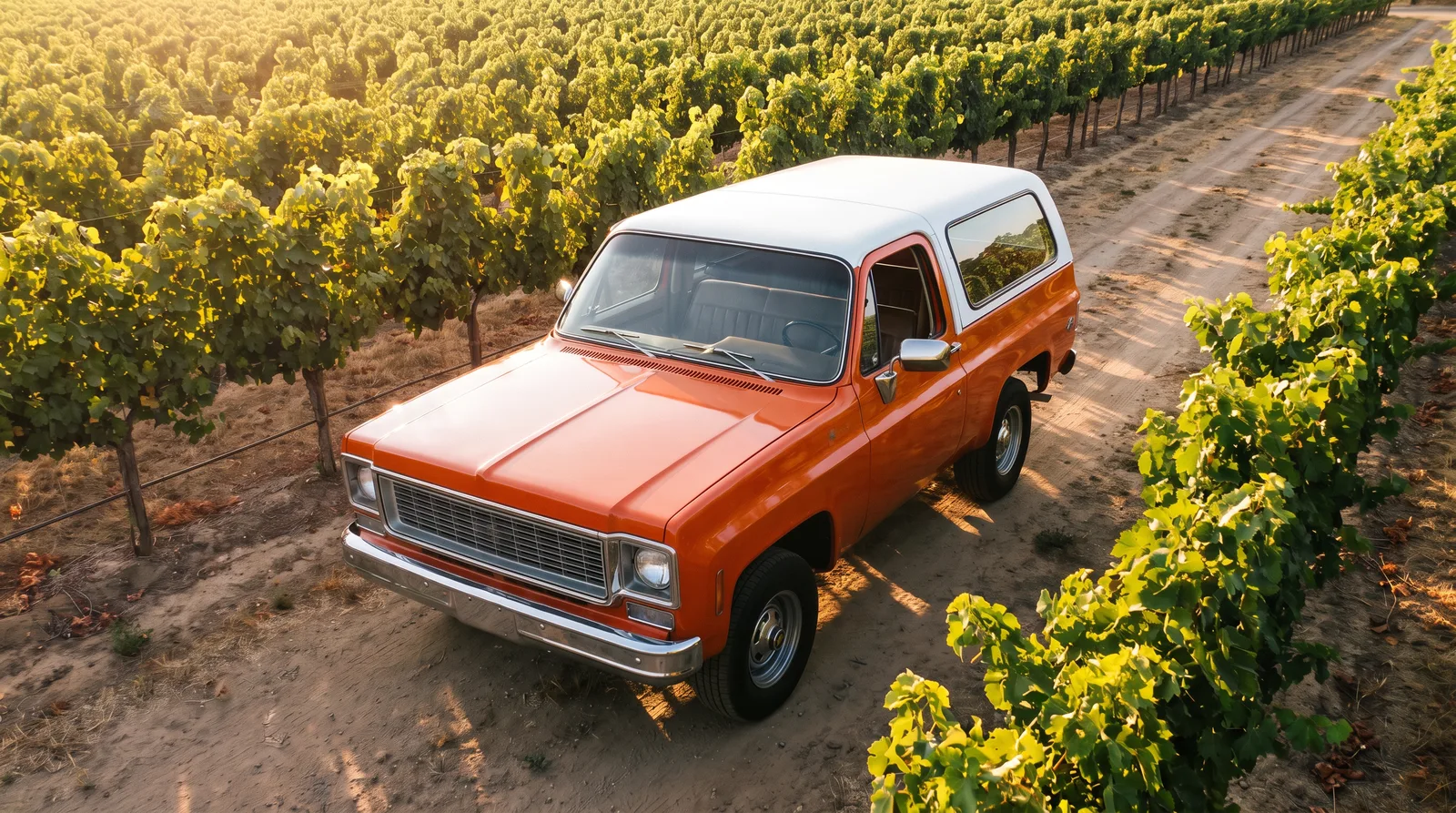
A man in Montana once told me his father ordered a 1973 K5 Blazer in a shade of orange so loud the dealer joked they should mount a flag on it for hunting season safety. He kept that truck thirty years, repainted it twice, and both times chose the same color, because to him the Blazer was never really the truck underneath. It was that orange. The K5 Blazer 1973 color palette carried that kind of weight for a lot of owners, and it is worth remembering that a paint chip on an order sheet was, for plenty of people, the whole personality of the vehicle they were about to live with for decades.
Car Features
6 min read
The Colors of the 1973 Squarebody K5 Blazer
The K5 Blazer 1973 color palette gave owners bold, saturated choices that outlasted the truck's spec sheet in family memory, one paint chip at a time.
A palette built for a new decade
1973 arrived with Chevrolet's truck lineup embracing the earthier, bolder colors that defined the era, and the redesigned K5 Blazer wore that palette well. Where the earlier first-generation trucks had leaned on a more restrained set of options, the squarebody Blazer's color sheet for 1973 expanded into oranges, golds, greens, and browns that read unmistakably as a product of their decade. Anyone who has spent time around period photographs knows the feeling of looking at a 1973 Blazer in one of these colors and immediately knowing, without checking a single spec sheet, exactly what year it rolled off the line.
Exact official paint code numbers from 1973 are hard to pin down consistently across surviving literature, so this account sticks to what is well documented rather than guessing at codes. What survives clearly in dealer literature and surviving trucks is the general character of that palette, warm, saturated, unapologetic, a far cry from the more conservative colors that would eventually creep back into truck lineups over the following decades.
Two-tone paint and what it said about the buyer
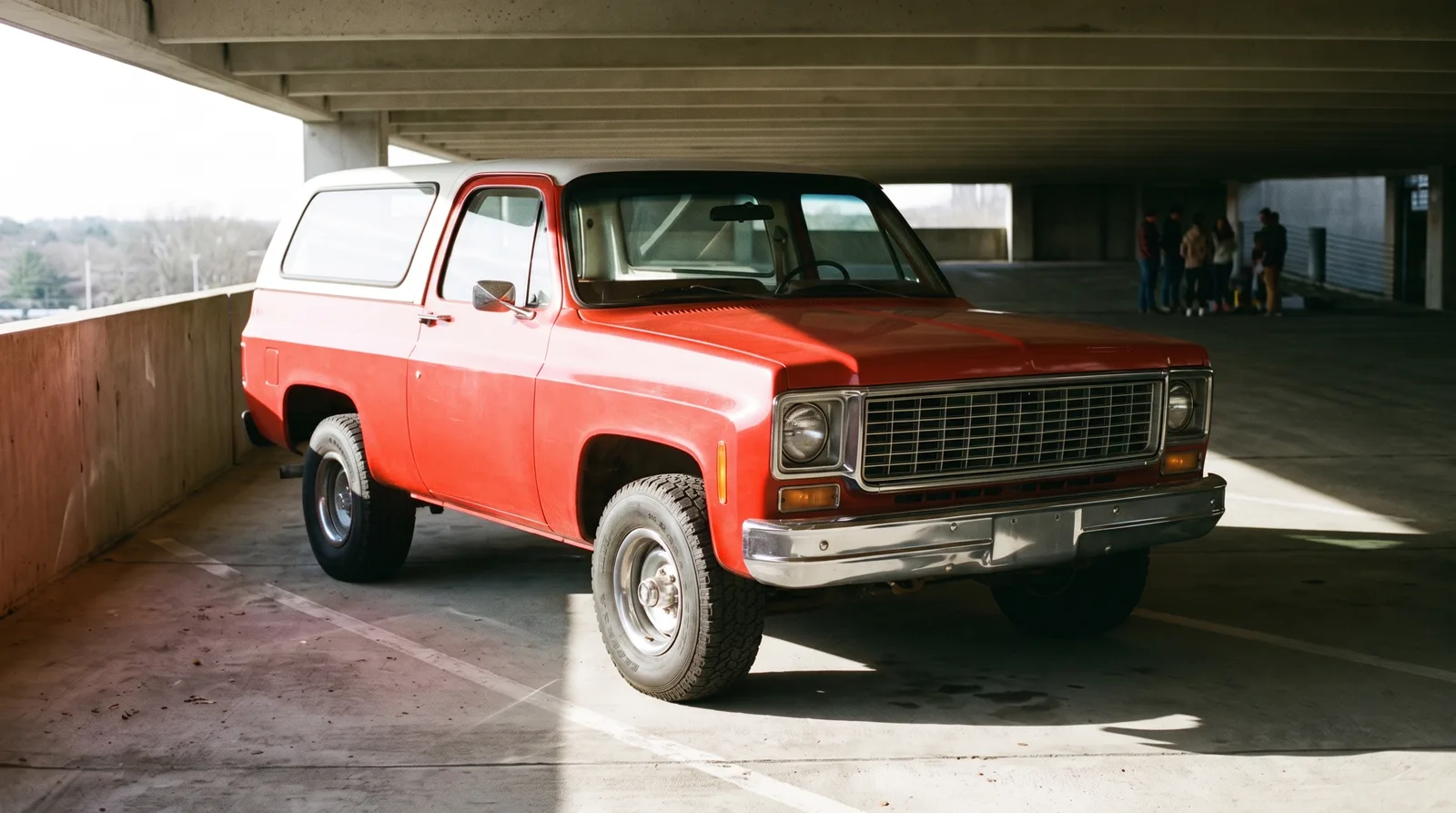
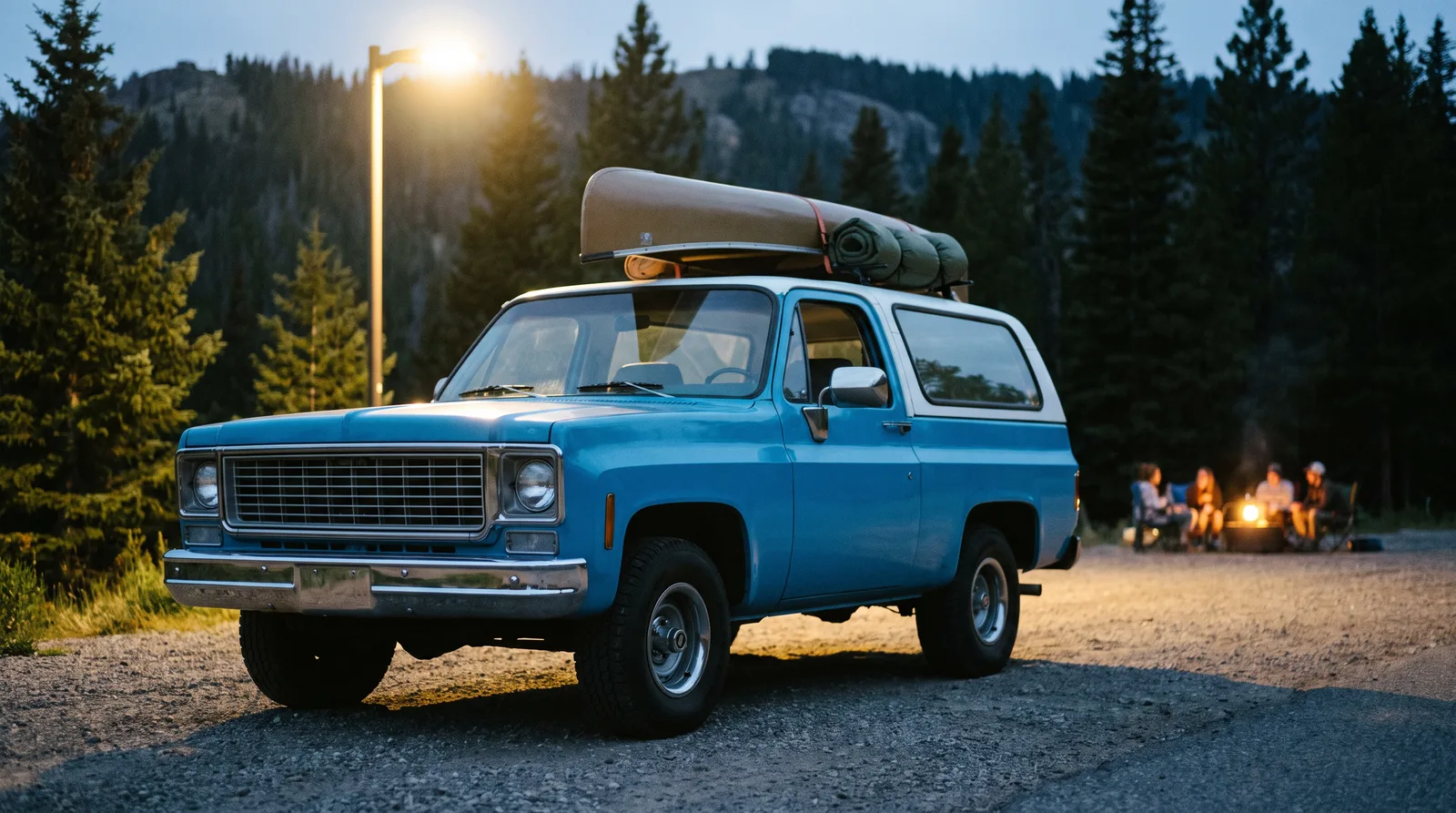
Two-tone paint schemes were widely available on the 1973 Blazer, and the choice to order one said something about the kind of owner behind the wheel. A single solid color read as practical, a truck bought to work. A two-tone scheme, often a body color paired with a contrasting roof or lower panel accent, read as a truck bought at least partly for how it looked in the driveway. Dealers of the period reported two-tone orders skewing toward buyers cross-shopping the Blazer against wagons and other family vehicles, the same buyers drawn in by the larger body and roomier cabin, further evidence of how closely the 1973 redesign's various pieces, size, comfort, color options, worked together to reach a broader customer.
What color choice tells us about ownership
I have talked with enough owners over the years to notice a pattern. People rarely describe their K5 Blazer by trim level or engine size when they first start telling you about it. They describe the color. The green one their grandfather drove to the lake every summer. The gold one that sat in a barn for a decade before somebody's daughter decided to bring it back. Color becomes the shorthand for the whole relationship between a person and a truck, long after the specific mechanical details have blurred in memory. That is not unique to the Blazer, but the boldness of the 1973 palette seems to have made the effect stronger than it might be on a car finished in a quieter, more forgettable shade.
"Ask someone about their old Blazer and they will tell you the color before they tell you the engine. That is not an accident. Chevrolet gave them colors worth remembering."
- Nora Beckett
Finding original color today
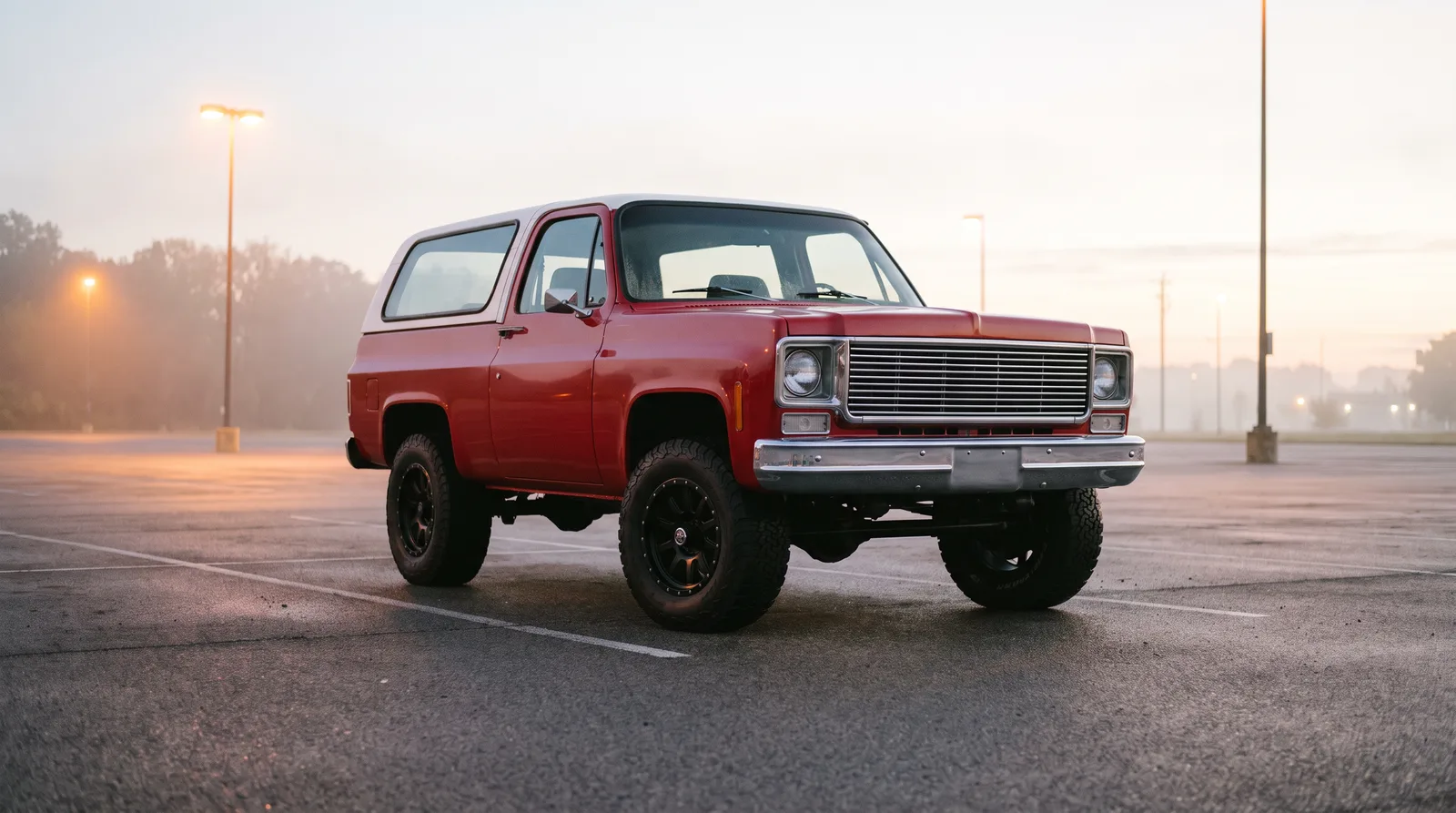
For anyone chasing a truck in its factory-original color, patience matters more than almost anything else in the search. Decades of repaints, often in whatever shade a previous owner preferred or whatever was available cheaply at the time, have erased original color from a significant share of surviving 1973 Blazers. A truck that still wears its factory paint, or has been carefully restored back to a documented original color, carries a kind of honesty that a repainted truck, however nicely finished, simply cannot claim. That honesty is part of what draws serious collectors to prioritize original color matching even when a different shade might be objectively more popular on today's market.
For the full account of everything else that changed on the 1973 truck beyond its color sheet, the whole picture covers the complete redesign. And if a particular shade from 1973 has stuck with you the way that Montana orange stuck with its owner, find a classic K5 Blazer and see what is out there waiting.
A small detail that carries a lot of memory
Paint fades. Panels get replaced. Engines get rebuilt or swapped entirely over fifty years of ownership. But color, more than almost any other detail on these trucks, seems to be what people hold onto when they talk about what a K5 Blazer meant to their family. The 1973 palette gave them plenty worth holding onto, and that is a small, human thing worth remembering next to all the engineering history this truck usually gets credit for.
Interior color and the choices buyers made together
Exterior paint rarely stood alone on a 1973 order sheet. Chevrolet paired its bold body colors with interior vinyl and cloth options that either matched or deliberately contrasted, and the combination a buyer chose says almost as much about them as the exterior color alone. Some owners went bold throughout, a saturated body color matched to an equally confident interior. Others preferred a loud exterior balanced by a plainer, more practical cabin, the kind of compromise a parent makes when the truck also needs to survive years of kids and gravel roads. Neither choice was wrong. They were simply different answers to the same question Chevrolet's expanded color sheet was asking every buyer that year: how much of yourself did you want this truck to show.
Talking to owners now, decades later, the ones who chose boldly throughout tend to tell the most vivid stories about their trucks. Whether that is cause or coincidence, I could not say for certain. But it tracks with something I have noticed across a lot of these interviews. People do not remember restraint. They remember the truck that looked like nothing else in the parking lot, and for a lot of 1973 K5 Blazer owners, that memory started with a paint chip they picked out on a Saturday afternoon at the dealership, with no idea it would still matter to them fifty years later.
That is the quiet power of a good color palette. It outlasts the specification sheet. It outlasts the original owner, most of the time. What it leaves behind is a truck that still gets recognized from across a parking lot, decades on, by people who never read a single word about torque figures or axle ratios, and never needed to.
Sources and notes
Related Reading
Have a
Chevrolet Blazer
for Sale?
Reach thousands of serious classic car collectors across the US.
Sell It Here →
Selling a classic? Here's how: where to sell your classic car online
Are You a Classic Car Dealer?
List your full inventory and connect with targeted classic car buyers.
Join as a Dealer →

About the author
Nora Beckett
Automotive features writer and photographer who tells the human stories behind the cars, from show fields to cross-country road trips.
Related Listings - Chevrolet Blazer

Comments
Be the first to comment on this article.