
Factory order documentation from the early 1970s rarely survives in complete form, which makes any question about a specific option package on the k5 blazer 1973 cst worth approaching carefully rather than repeating whatever the last forum thread claimed. CST, short for Custom Sport Truck, was a Chevrolet option package that predates the redesigned K5 Blazer's arrival that year, and its extension to the newly reworked truck is a smaller, quieter story than the Cheyenne trim question that gets more attention, but it deserves its own accurate accounting.
Car Features
7 min read
The CST Package on the New 1973 K5 Blazer
The Custom Sport Truck package predated the 1973 K5 Blazer redesign, and understanding how it differed from Cheyenne trim matters for anyone documenting original specification.
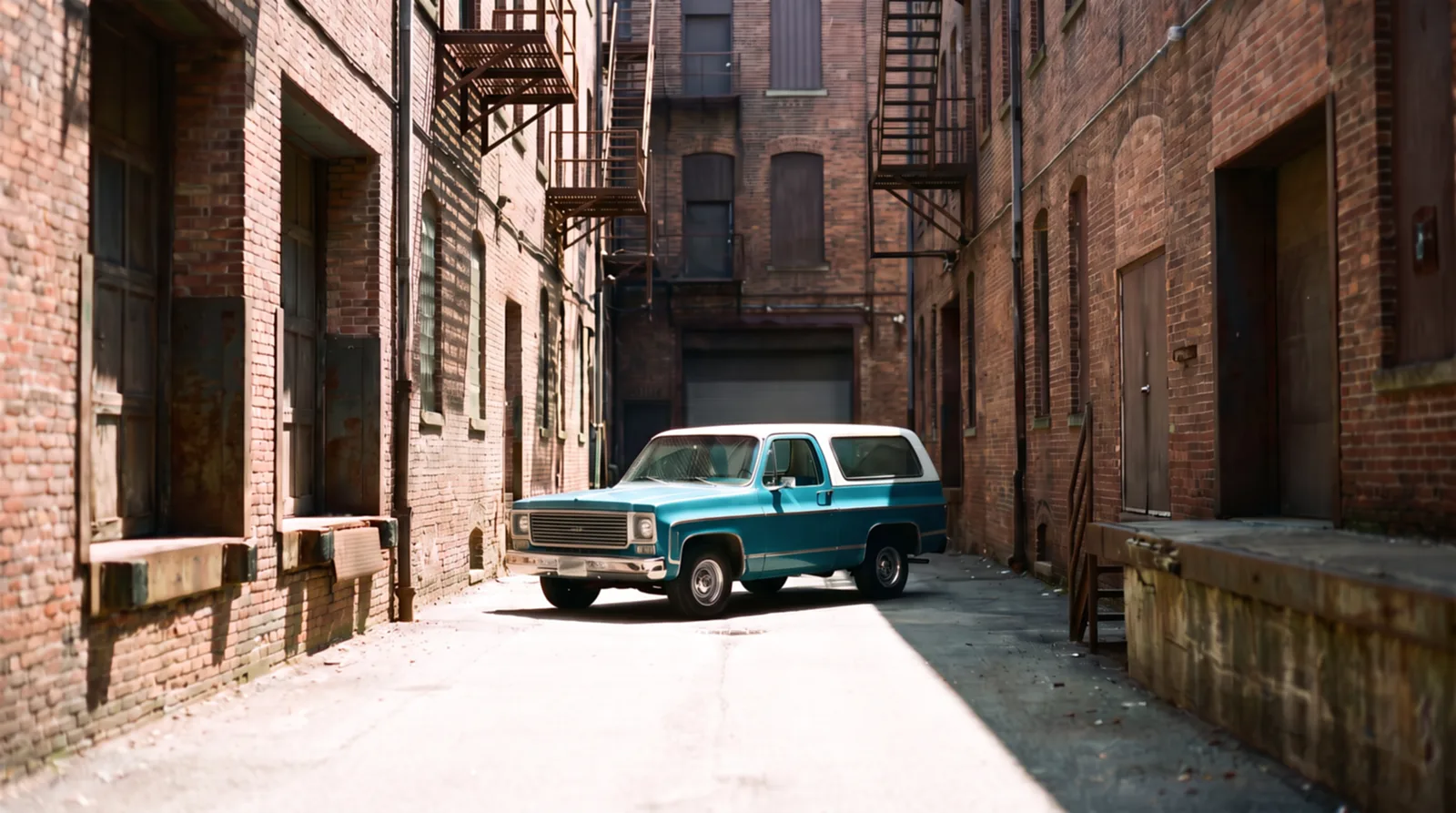
Where the CST designation actually came from
Chevrolet had already established the Custom Sport Truck package on its pickup line before the 1973 redesign brought the K5 Blazer onto the same full-size platform. CST packages across GM's truck division generally focused on upgraded interior trim, additional brightwork, and a general step up in presentation over a base work truck, without necessarily reaching the fuller upscale positioning that a package like Cheyenne represented. When the redesigned K5 Blazer arrived for 1973 sharing its chassis and much of its cab structure with the pickup line, it makes sense that Chevrolet would extend an existing trim strategy to the new platform rather than invent something separate. The precise option list and availability of CST specific to the 1973 K5 Blazer model year is not something that shows up reliably in general reference sources, and confirming it for a particular truck means going back to factory build documentation rather than relying on secondhand summaries.
A common misconception worth addressing directly: CST and Cheyenne were not simply two names for the same package. They occupied different positions in Chevrolet's trim hierarchy across the pickup and Blazer lines during this period, and treating them as interchangeable in casual conversation, which happens often enough in enthusiast circles, misrepresents how the factory actually structured its option sheets. Getting that distinction right matters for anyone trying to document a specific truck's original specification.
"Trim package names get flattened into casual shorthand over decades of retelling. Going back to what the factory actually documented is the only way to keep that history accurate."
- Tom Ramirez
Why precision on this point matters to buyers and researchers
The used market for classic trucks has grown considerably more sophisticated about documentation over the last two decades, and buyers researching a 1973 K5 Blazer increasingly want to know not just what trim level a truck carries today but what it left the factory with. Confusing CST and Cheyenne, or assuming either package included features it did not, leads to inaccurate listings and, more importantly, to owners making restoration decisions based on faulty assumptions about what their truck originally had.
This is a gentle but persistent correction worth making whenever the subject comes up: a K5 Blazer's original trim designation should be confirmed against factory build documentation or a verified cowl tag and option code reading wherever possible, rather than assumed from memory, a previous owner's account, or a general sense of what "sounds right" for the era. That kind of verification is unglamorous work, but it is the difference between an accurate restoration and an educated guess dressed up as one.
Where CST sat in the 1973 Blazer trim hierarchy
Understanding CST properly means placing it in context alongside the other trim choices a buyer could order on a 1973 K5 Blazer. At the entry point sat the base truck, a straightforward work-oriented specification with rubber flooring, minimal brightwork, and a bench seat trimmed in vinyl built for durability rather than comfort. CST occupied a step above that baseline, adding upgraded upholstery patterns, additional interior brightwork, and door panel treatments that moved the cabin closer to passenger-car presentation without pushing all the way into the fuller trim territory that Cheyenne represented. Cheyenne, and later Cheyenne Super as the decade progressed, layered in additional exterior brightwork, upgraded carpeting, and sound insulation packages that CST buyers typically did not receive. Dealers ordering trucks for their lots, and private buyers working directly from an order form, picked among these tiers based on how much of the truck's daily use would be work versus how much would be family transportation or weekend driving, since CST split the difference reasonably well for buyers who wanted a nicer cabin without paying for every available comfort option.
This layered structure is common across GM's truck lines in this era, and it is worth remembering that dealers had real latitude in how aggressively they stocked upper trim packages versus base and mid-level trucks. A dealership in a rural area with heavy fleet and ranch business might order mostly base and CST-level trucks, while a suburban dealership competing for family buyers might stock more Cheyenne Super units. That regional variation is part of why CST-equipped 1973 K5 Blazers turn up with real frequency today relative to how often the package gets discussed, and it is a useful reminder that production volume by trim level was never evenly distributed across the country.
Confirming CST through cowl tags and option codes
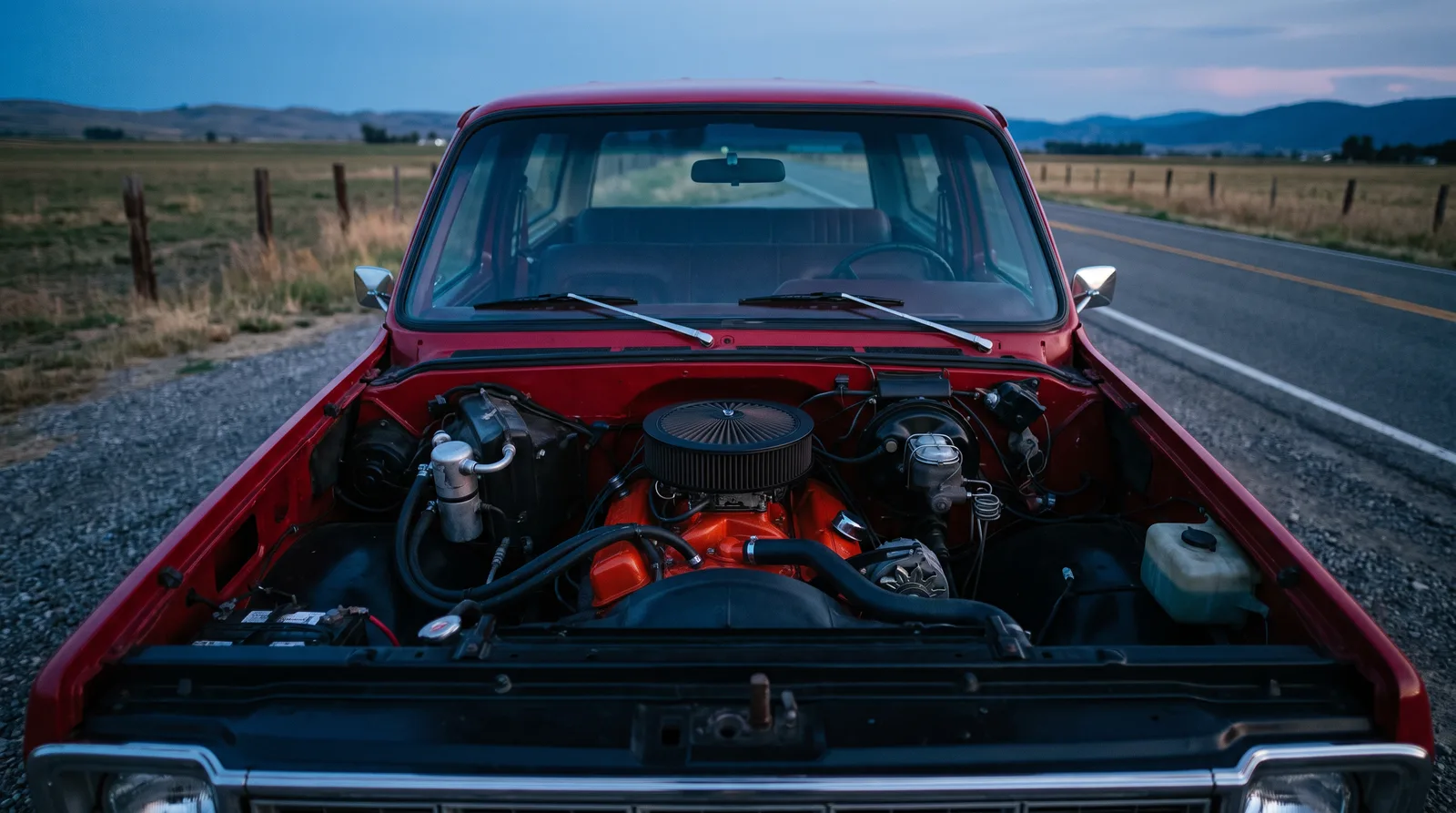
For anyone trying to verify whether a specific 1973 K5 Blazer left the factory with CST, the starting point is the cowl tag, a small stamped plate typically mounted near the base of the windshield on the firewall side of the engine bay. That tag carries a build sequence and a set of coded information tied to the truck's original order, though reading it correctly takes some familiarity with how GM structured its codes for that model year, since the format is not self-explanatory to someone encountering it for the first time. Alongside the cowl tag, a factory build sheet, when one has survived inside the truck's body cavities or seat springs, offers a more direct listing of installed options using RPO, or Regular Production Option, codes that map to specific packages including CST.
Neither source is universally reliable on its own. Cowl tags can be replaced, damaged, or repainted over during a poorly documented restoration, and build sheets are frequently lost entirely during a truck's working life, particularly on Blazers that spent decades as ranch or utility vehicles before entering the collector market. The most credible verification, when it is available, combines a legible cowl tag reading with a period dealer invoice, a window sticker, or corroborating parts manual references that describe what CST included for the 1973 model year specifically. Absent any of that documentation, a knowledgeable appraiser can sometimes infer CST from surviving original interior trim and hardware, though that approach carries more uncertainty and should be presented to a buyer as an informed opinion rather than a confirmed fact.
What this means for the record going forward
Getting small factual details like this right matters more the further a truck's history sits from living memory. Every year, fewer people who bought these trucks new are around to correct a mistaken claim, and inaccuracies that go unchallenged in enthusiast writing have a way of hardening into accepted fact simply through repetition. A careful accounting of exactly what CST meant on the redesigned 1973 K5 Blazer, and how it differed from other trim options offered that same year, is a small contribution toward keeping that record straight for researchers who come to this subject later.
Readers who want the broader context of the model year this package belongs to can find it in the fuller account of where this started, which covers the 1973 redesign in more depth. For anyone whose research has turned into active shopping, there is real value in comparing documented trim history across a few examples of classic K5 Blazer for sale before settling on one, since original specification is exactly the kind of detail that separates a well-documented truck from a guess.
None of this diminishes how appealing these trucks are to own or drive. It simply means the record deserves the same care that any other piece of automotive history gets, built on documentation rather than repetition, and corrected patiently whenever the two start to drift apart.
Sources and notes
Related Reading
Have a
Chevrolet Blazer
for Sale?
Reach thousands of serious classic car collectors across the US.
Sell It Here →
Selling a classic? Here's how: the best sites to sell a classic car
Are You a Classic Car Dealer?
List your full inventory and connect with targeted classic car buyers.
Join as a Dealer →

About the author
Tom Ramirez
Corvette researcher and historian based in Bowling Green, Kentucky. Two decades documenting Corvette production history from original factory records.
Related Listings - Chevrolet Blazer
Comments
Be the first to comment on this article.