
There is a particular kind of year in automotive history when everything about a vehicle seems to shift at once, not just the sheet metal but the whole idea of who the truck is for. The k5 blazer 1973 redesign was one of those years. Chevrolet did not simply refresh the K5 Blazer for its fifth model year. It rebuilt the truck from the frame up, and in doing so it changed the story the Blazer had been telling since 1969.
Car Features
7 min read
The Big 1973 Redesign of the K5 Blazer
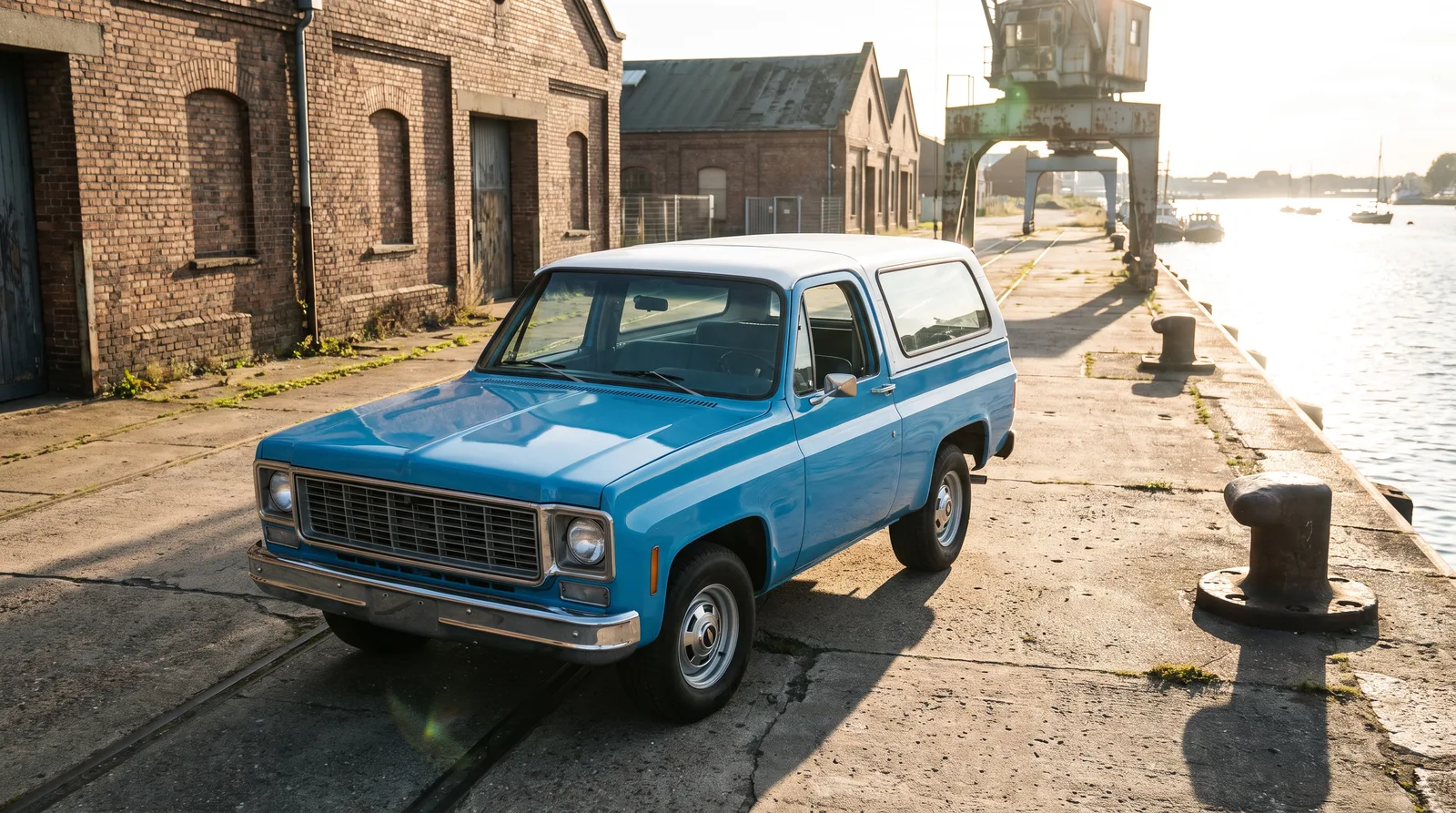
The 1973 K5 Blazer redesign replaced the original's rounded fenders and removable top with a squared, roomier truck built for daily driving as much as trail use.
Leaving the first generation behind
The original K5 Blazer, born in 1969 to answer the Ford Bronco and International Harvester Scout, had rounded fenders, a shorter wheelbase, and a full-length removable top that let owners strip the whole roof away for open-air driving. It was charming and a little rough around the edges, closer in spirit to the compact off-roaders it was competing against than to Chevrolet's own full-size pickup line. For 1973, that changed completely. The K5 Blazer moved onto the new full-size GM truck platform shared with the redesigned C/K pickups, and with that move came a body that looked nothing like its predecessor.
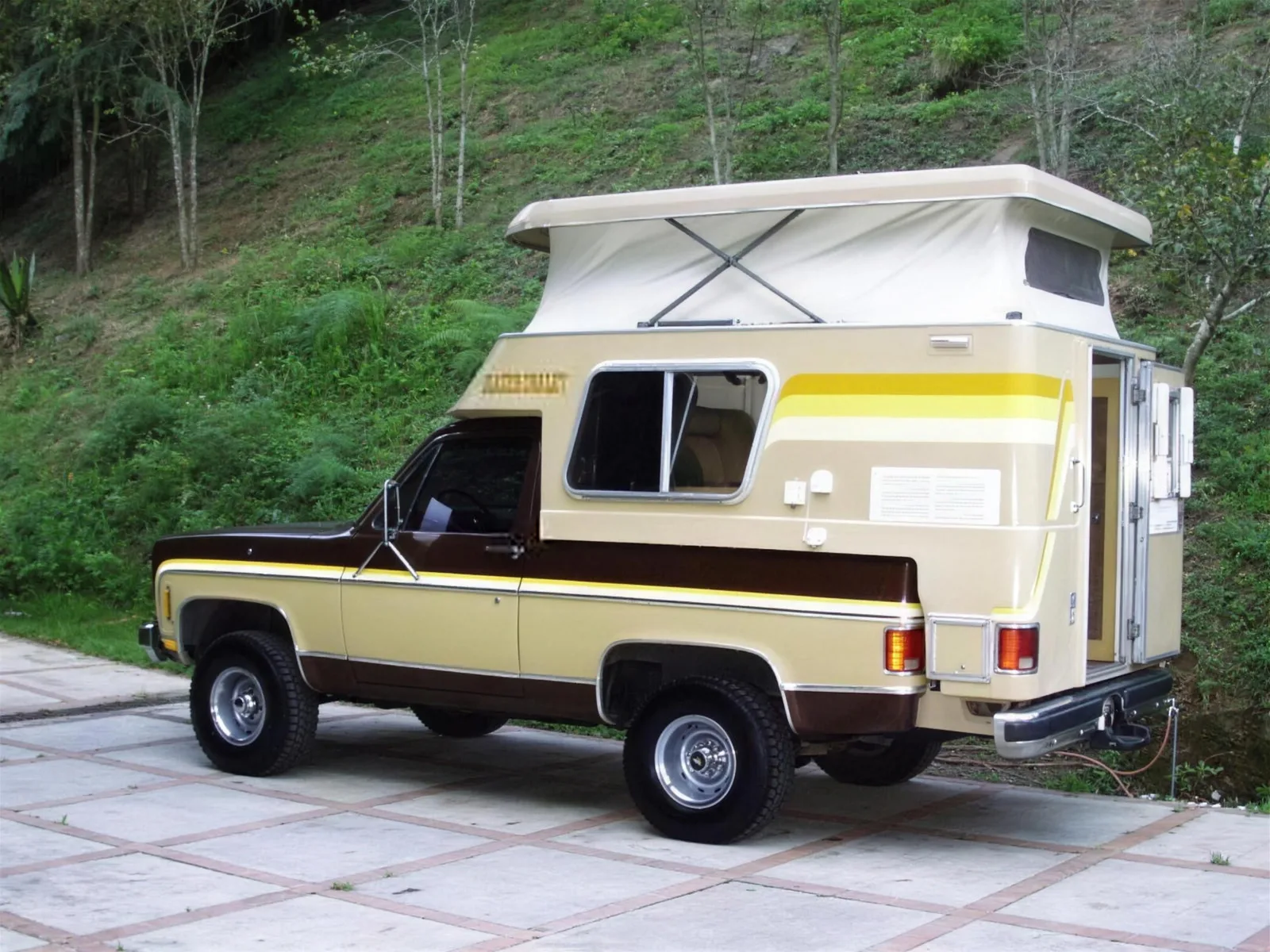
Flat, squared panels replaced the earlier rounded ones. The cab grew roomier and the whole truck sat with a wider, more substantial stance. Owners and enthusiasts who lived through the change often describe it less as an update and more as watching one truck retire and a new one take its place, even though the badge on the tailgate never changed.
A cab built for people who actually lived in the truck
Comfort mattered in a way it had not for the first generation. The redesigned cab offered more interior room, better visibility, and a driving position that felt closer to a passenger vehicle than the earlier trucks had managed. This was not an accident. By the early 1970s, buyers cross-shopping four-wheel-drive trucks were increasingly using them as everyday transportation rather than purely as work or recreation vehicles, and Chevrolet built the redesigned K5 Blazer to fit that shift. The truck still had serious off-road capability, but it no longer asked owners to sacrifice daily comfort to get it.
| Element | Pre-1973 (first generation) | 1973 redesign (squarebody) |
|---|---|---|
| Body style | Rounded fenders, shorter wheelbase | Flat, squared panels, wider stance |
| Roof | Full-length removable top | Full-length removable top carried over, until the fixed half-cab arrived for 1976 |
| Platform | Original K-series short chassis | Shared with redesigned full-size C/K pickup line |
| Cab feel | Compact, closer to competitors like the Bronco | Roomier, built for daily comfort |
"The 1973 truck was not trying to be a bigger version of the old one. It was answering a different question about who was going to drive it every day."
- Nora Beckett
The half-cab roof and what it said about buyer habits
The 1973 redesign kept the full-length removable top that had defined the K5 Blazer since 1969, now wrapped around the new squarebody sheet metal. It was not until 1976 that Chevrolet dropped the full removable roof in favor of a half-cab configuration, a fixed steel roof over the front seats paired with a removable section over the rear cargo area, a change driven largely by rollover-safety concerns rather than daily-use comfort alone. The original full-length removable top had real charm, but it also meant real commitment every time weather turned. The half-cab arrangement that followed a few years later let owners keep the open-air option for the cargo area while giving the front seats permanent weather protection, a design choice that reflected a bigger truth about how people were actually using these trucks through the 1970s. Fewer owners wanted to manage a full open-air roof on a truck they drove to work five days a week.
Trim badges that told a quieter story
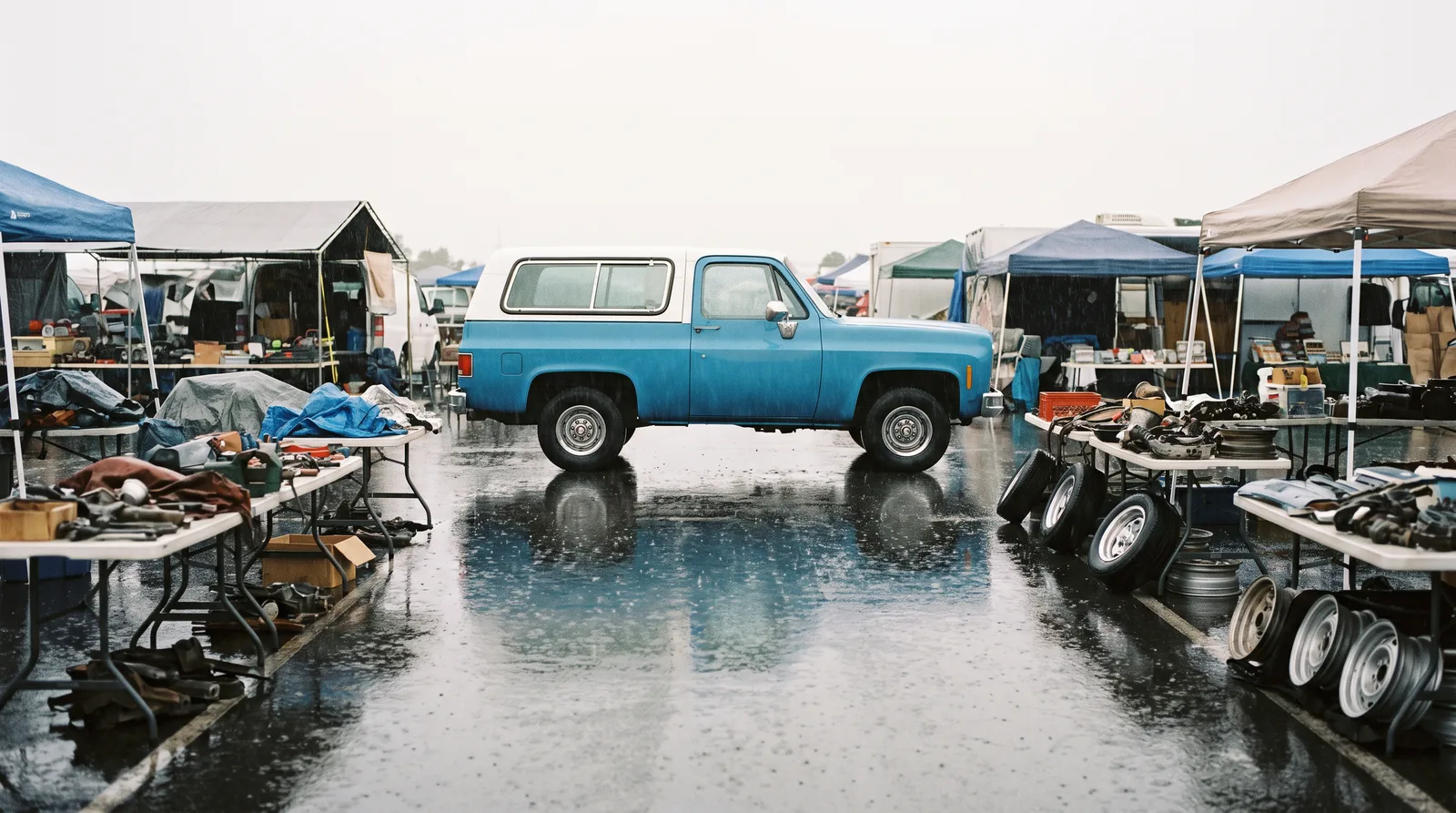
Walk a swap meet today and you can still find the small chrome trim badges that came off these redesigned trucks, tucked into shoeboxes next to hood ornaments and dealer keychains. They look like afterthoughts. They were not. When the K5 Blazer moved onto the new full-size platform in 1973, it inherited the same trim ladder Chevrolet was running across its whole C/K pickup line, and that decision mattered more than the badges themselves suggest. A buyer could walk into a dealership and order a Blazer in a base configuration built for ranch work, or step up through Custom and into the Cheyenne trim that brought woodgrain-look dash inserts, upgraded cloth or vinyl seating, and brightwork around the windows and grille that made the truck look considerably more expensive than its window sticker admitted. That range mattered because it let one body style serve two very different buyers without either one feeling like they had settled for the wrong truck.
A rancher ordering the plain-cloth base interior and a suburban buyer ordering the Cheyenne package with its extra brightwork were sitting in trucks that shared every structural bone, right down to the doors and the windshield frame. What separated them was upholstery, trim, and the small comforts that told a driver whether Chevrolet expected this particular truck to spend its life hauling feed or dropping kids at school. That flexibility, baked into the platform from the 1973 redesign forward, is part of why so many of these trucks survive today in such different states, some stripped to bare function, others still wearing the woodgrain and chrome their first owner paid extra for.
What sat under the hood and why it mattered to buyers
The redesigned Blazer also carried its engine lineup over from the new-generation C/K pickups, which meant buyers were choosing from the same family of six-cylinder and V8 options offered across the full-size truck range rather than a scaled-down or compromised setup unique to the smaller Blazer body. For a buyer cross-shopping a Bronco or a Scout, that shared powertrain lineup was a quiet selling point. It meant parts, service knowledge, and mechanical familiarity extended across an entire dealer network rather than being confined to a low-volume specialty vehicle. Mechanics who already knew how to service a C10 pickup could open the hood of a 1973 Blazer and recognize almost everything in front of them.
That shared mechanical DNA is also why so many of these trucks are still running decades later. Owners were never stuck hunting for Blazer-specific parts that some tiny specialty shop discontinued years ago. They could walk into almost any parts counter that stocked components for the full-size Chevrolet and GMC truck line and walk out with what they needed, a practical benefit of the 1973 redesign that outlasted the styling trends of any single decade.
Why this redesign still defines the truck's reputation
Decades later, when people picture a classic K5 Blazer, more often than not they are picturing the squarebody shape that arrived in 1973, not the rounder first-generation truck that came before it. That is a direct result of how thorough the redesign was and how long GM kept building on that same basic architecture afterward. The 1973 truck set the visual template that carried the K5 Blazer through the rest of its production run, which means a single model year decision ended up shaping how an entire truck line was remembered.
For readers who want the fuller picture of what happened that year, our complete history covers the full model year in more depth, from trim levels to the market Chevrolet was chasing. And for anyone whose interest in this story has turned into wanting one in the driveway, it is worth taking the time to find a classic K5 Blazer and see how well these redesigned trucks have held up against decades of daily use and weather.
A redesign this complete does not happen often in truck history, and it rarely lands as cleanly as this one did. The 1973 K5 Blazer is proof that sometimes the boldest move a manufacturer can make is starting over completely rather than tweaking what already worked.
Sources and notes
Related Reading
Have a
Chevrolet Blazer
for Sale?
Reach thousands of serious classic car collectors across the US.
Sell It Here →
Selling a classic? Here's how: sell my classic car
Are You a Classic Car Dealer?
List your full inventory and connect with targeted classic car buyers.
Join as a Dealer →

About the author
Nora Beckett
Automotive features writer and photographer who tells the human stories behind the cars, from show fields to cross-country road trips.
Related Listings - Chevrolet Blazer
Comments (1)
F
first_classic_noah
5 days ago
Is it crazy to want a '73 purely for the Cheyenne woodgrain dash?