
I have taken a full removable top off a first-generation Blazer and I have lived with a squarebody half-cab, and I will tell you straight, the shift to the half-cab top was a bigger deal to real owners than most people give it credit for. It looks like a minor engineering footnote next to the flashier squarebody redesign that arrived in 1973. It was not minor. It changed how these trucks actually got used, day in and day out, and that matters more than most styling stories ever do.
Car Features
8 min read
1973 and the Shift Toward the Half-Cab Top
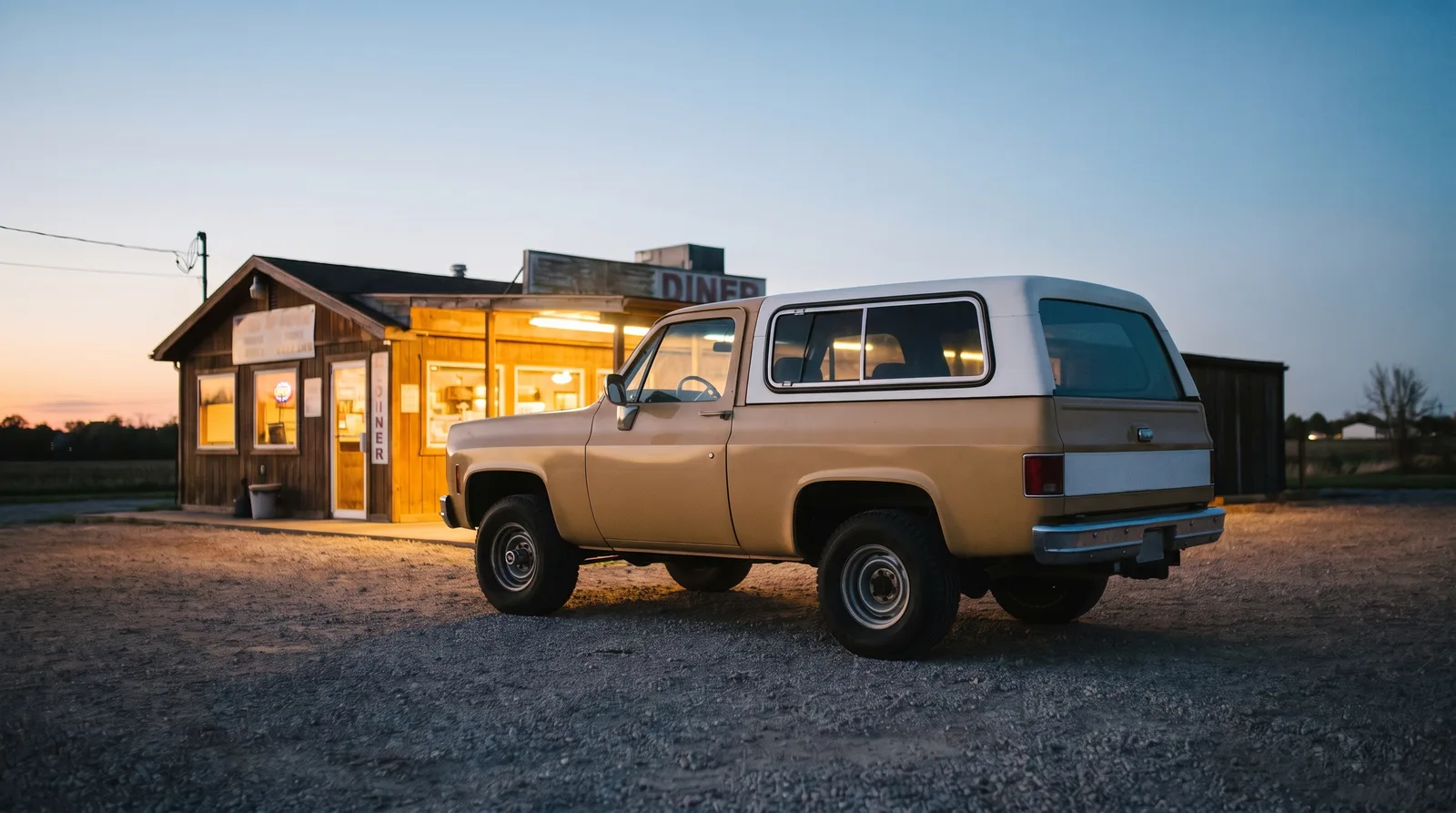
The 1973 redesign replaced the K5 Blazer's full-length removable top with a fixed front roof and removable rear section, trading full open-air capability for daily livability.
What the half-cab actually was, and when it really arrived
The original K5 Blazer, built from 1969 through 1972, had a full-length removable fiberglass top that covered the entire passenger area, front seats and cargo bed alike, and could be lifted off completely to turn the whole truck into an open-air rig. It was a genuinely appealing feature for a certain kind of buyer, but it came with a real cost. A full-length top is heavy, awkward to remove without a second set of hands, and once it was off there was no weather protection anywhere in the truck. For 1973, when Chevrolet redesigned the K5 Blazer around the new full-size squarebody platform, that full-length removable top actually carried over onto the new body, now wrapped around flatter, squarer sheet metal. It was not until 1976, three model years later, that Chevrolet made the bigger change: the front of the cab got a fixed steel roof, permanently welded in as part of the body structure, while the section over the rear cargo area remained removable. Rollover safety concerns, more than daily-use comfort alone, were a major reason for the switch.
That is the half-cab, or half-top, configuration, and it is the layout most people picture today when they think of a classic K5 Blazer with an open rear section. It is not the same truck as the original full-length open-top design, even though casual conversation sometimes blurs the two together, and it is worth remembering that the squarebody redesign and the half-cab roof were two separate changes three years apart rather than one single 1973 event.
The same story played out at GMC, because the K5 Blazer never lived alone. Its badge-engineered twin, the GMC Jimmy, followed the identical roof timeline, sharing sheet metal, glass, and top hardware with the Chevrolet down to the latch positions. If you are cross-shopping today and a seller tells you a Jimmy top will not interchange with a Blazer of the same year, walk away from whatever else that person is telling you. The two trucks came off the same line with the same roof engineering, and the only meaningful differences are badging and the way each division dressed up its trim packages.
"The half-cab was not a downgrade. It was Chevrolet admitting most owners wanted weather protection over their heads more than they wanted a truck they could fully strip down on a whim."
- Jim Vasquez
Why the change made sense from a builder's chair
A full removable top sounds great in theory. In practice, it is a two-person job to take off and put back on, it needs somewhere dry to store when it is not on the truck, and it leaves the entire cabin exposed to weather the moment it comes off. For an owner using the Blazer as a daily driver, that tradeoff got old fast. The fixed front roof solved the biggest complaint immediately: a driver could leave for work in the rain without thinking twice, while still having the option to remove the rear section for hauling gear or driving open-air on a good day.
From a builder's perspective, the fixed front section also gave the cab real structural rigidity that the earlier full-open design never had. A welded steel roof over the front seats stiffens the whole cabin in a way a fully removable top simply cannot match, which matters for ride quality, noise, and how tightly the doors and windows seal over years of use. Chevrolet was not just chasing comfort with this change. It was building a more solid truck.
Not every owner was happy about it
Plenty of first-generation loyalists were not thrilled when the half-cab arrived in 1976. Losing the ability to strip the entire roof away felt, to some longtime Blazer fans, like losing part of what made the truck distinctive in the first place. That argument has never fully gone away in enthusiast circles, and you will still hear it at shows from people who grew up around the earlier trucks. My own view, for what it is worth after years of working on both, is that the half-cab was the right call for the truck's second act. It kept the open-air option alive over the cargo area while fixing the daily-use problems that made the first design a tough sell for anyone using the truck as real transportation.
Living with the rear section, from someone who has done it
Here is the part nobody tells you at the show field. The removable rear section on a half-cab is still a real piece of fiberglass, and it still needs two people and a clear plan before you start unbolting anything. Take it off in the spring and you have got a truck that feels like a convertible pickup for six months. Put it back on in October and you find out how well the previous owner treated the seals. The weatherstripping that runs along the top of the cab and down the rear body seam is the single most abused part on these trucks, because every owner who ever wrestled that top back into place pinched it, tore it, or squashed it flat and then wondered why the carpet smelled like a pond by December.
Storage is the other honest complaint. A rear top section takes up a serious chunk of a one-car garage, and leaning it against a wall on its edge will warp it over a couple of seasons. The owners who kept theirs straight built a rack, hung it flat, and kept it out of direct sun so the gelcoat did not chalk. When I inspect a half-cab today, the condition of that removable section tells me more about the previous owner than the paint on the body does. A straight, unfaded, uncracked rear top with intact hardware usually means the rest of the truck was cared for by somebody who understood what they had.
How the roof change fits the rest of the squarebody run
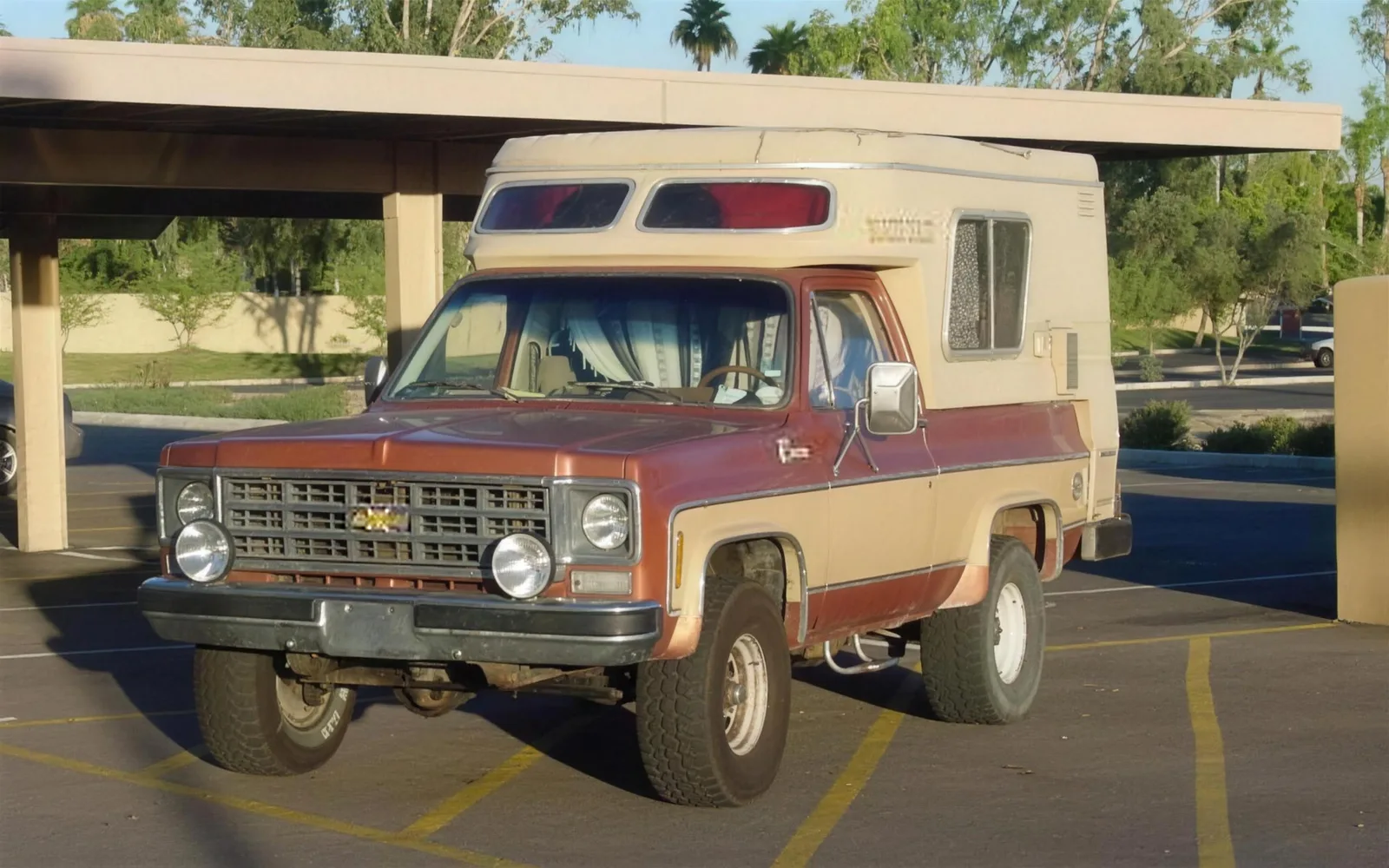
Step back and the roof story is really the story of the whole generation. The squarebody K5 Blazer ran an unusually long production life, from the 1973 redesign all the way through 1991, which by any measure is a remarkable stretch for one basic body. Over those years Chevrolet kept adjusting the recipe around that roof. The Blazer Chalet, a factory-blessed camper conversion built with Chinook for the 1976 and 1977 model years, leaned directly on the newly fixed front cab as an anchor point for its camper structure. Later in the run the truck picked up a lighter, cleaner front-end facelift for 1981, and a diesel option arrived in the early 1980s for buyers who cared more about torque and fuel economy than about how fast the thing got to sixty.
Through all of it, the half-cab layout stayed. Chevrolet never went back to a full-length removable top on the K5, and when the full-size Blazer finally gave way to its successors in the early 1990s, the removable rear section went with it. That is worth sitting with for a moment. What arrived in 1976 as a compromise ended up defining the look of the most-loved full-size Blazer of them all, the one that fills show fields and auction listings today. Compromises rarely age that well.
What it means for a buyer today
If you are shopping the used market, knowing which roof configuration you are looking at matters more than it might seem. Half-cab trucks and full-length removable-top trucks are mechanically related but they feel different to own and they attract different kinds of collectors. Anyone wanting more context on the squarebody redesign that set the stage for this change can read the background on the full 1973 redesign, and the trim-level story on the Cheyenne package from that same year is worth a look too for anyone comparing options from that generation.
Whichever roof style speaks to you, the market for these trucks rewards patience and a good eye for structural condition, especially around where that fixed front roof meets the rest of the cab. It is worth taking the time to shop classic K5 Blazer listings and compare a few examples in person before deciding. A photo cannot tell you how tight a half-cab roof still fits after fifty years, and that fit is exactly what separates a good truck from a rough one.
Sources and notes
Related Reading
Have a
Chevrolet Blazer
for Sale?
Reach thousands of serious classic car collectors across the US.
Sell It Here →
Selling a classic? Here's how: the best sites to sell a classic car
Are You a Classic Car Dealer?
List your full inventory and connect with targeted classic car buyers.
Join as a Dealer →

About the author
Jim Vasquez
Southern California hot rod and custom car builder with roots in the traditional kustom kulture scene.
Related Listings - Chevrolet Blazer
Comments (1)
C
Chuck Perkins
1 hour ago
What do you seal the rear top with? Factory-style strip or foam tape?