
Look at a brochure photo of a Blazer Chalet from the mid-1970s and you can tell exactly who Chevrolet was selling to. A family standing next to it in a national forest campsite, a cooler open, a dog sniffing around the tailgate, mountains in the background. That image was not an accident. It was a direct pitch to a specific kind of American family that had just discovered they could afford to disappear into the woods for a weekend without sacrificing comfort, and the Chalet was built to be their vehicle for doing it.
Car Features
7 min read
The Blazer Chalet and 1970s Adventure Culture
How the Blazer Chalet fit into the 1970s camping boom, who Chevrolet marketed it to, and why that adventure-seeking lifestyle still resonates with collectors today.
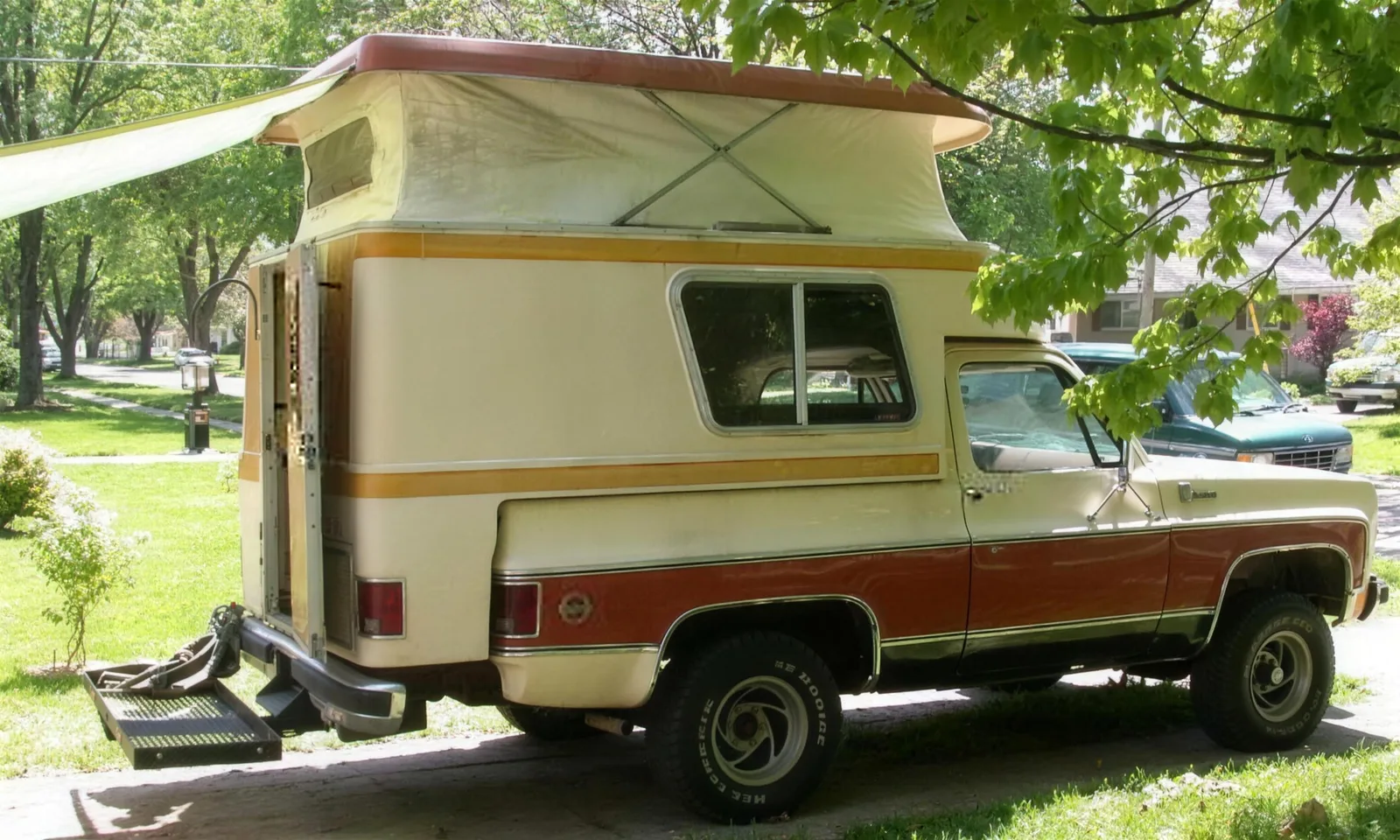
Photo courtesy of blazerchalet.com
What "adventure" meant in the 1970s
The recreational camping boom of the 1970s did not look like the overlanding scene you see on social media today. Families were not chasing remote trailheads in built-up rigs with rooftop tents and solar panels. They were loading up a truck or a trailer and heading to national forests, state parks, and lakeside campgrounds that were, for the first time, genuinely accessible to a middle-class family with a few weeks of vacation time and a truck capable of towing or hauling their gear.
The K5 Blazer already fit that world before the Chalet ever existed. It had four-wheel drive, real ground clearance, and enough interior space to haul a family and their gear to a trailhead most sedans could never reach. The Chalet took that foundation and removed the last obstacle standing between a K5 owner and a genuinely comfortable camping trip: the need to sleep in a tent or tow a separate trailer behind the truck they were already driving.
Selling comfort to people who already loved the outdoors
Chevrolet's marketing for the Chalet leaned hard into that comfort angle. This was not a truck pitched at hardcore off-roaders looking to push limits. It was pitched at families who wanted a weekend away that did not require roughing it in the traditional sense, people who liked the idea of camping but wanted a real bed, a working stove, and shelter from the rain that a tent could never fully provide. That target buyer overlaps with the standard K5 Blazer's customer base, but it is a distinct slice of it, aimed squarely at people planning their next trip rather than people using the truck for daily hauling.
That distinction matters because it explains why the Chalet never needed huge sales numbers to be considered a success in its own narrow lane. It was not competing against every K5 sold. It was competing against dedicated pop-up campers and small trailers, offering buyers a single vehicle that handled the driving and the camping without towing anything behind it. For families who valued that simplicity, especially ones already sold on the K5 platform, the Chalet solved a real problem.
The gear culture that grew up around it
Owning a Chalet in period meant buying into a broader ecosystem of camping gear that had exploded alongside the trucks themselves. Coolers, portable stoves, sleeping bags rated for real weather instead of just backyard sleepovers, folding camp furniture, all of it sold in growing volume through the same sporting goods stores and mail-order catalogs that were expanding fast to serve this new wave of weekend adventurers. A Chalet owner was not just buying a truck. They were buying into a lifestyle that had its own products, its own magazines, and its own growing subculture of families who defined a good year partly by how many weekends they spent away from the driveway.
That cultural context is easy to lose when you look at a surviving Chalet parked at a modern car show, cleaned up and treated as a static collectible. In period, these trucks were working vehicles in the truest sense, hauling families to real destinations, absorbing real wear, and getting used exactly the way Chevrolet's marketing department pictured. Understanding that lifestyle context is part of what makes the surviving trucks worth more than just a curiosity. They are physical evidence of how an entire generation chose to spend its free time. For the full mechanical and historical picture behind the truck itself, the full story covers what the Chalet actually was and how it came together.
"You ask an old Chalet owner about the truck and they don't start with the specs. They start with a lake, or a trail, or a kid who's grown now. That's the whole point of the thing. It was never really about the camper. It was about where it took people."
- Mike Sullivan
Why that lifestyle still resonates with buyers today
The appeal of a self-contained truck camper has not disappeared, it has just evolved into a bigger, more visible movement, chasing the same basic promise the Chalet made fifty years ago: get outside without giving up comfort. Modern overlanding culture, with its rooftop tents and expedition-ready rigs, traces a straight line back to what the Chalet and its contemporaries were trying to do, even if the gear and the terrain ambitions have both gotten more extreme along the way.
For a buyer today, owning a Chalet is as much about buying into that history as it is about owning a rare truck. It is a way of connecting to a specific era of American outdoor culture, one where a family truck with a camper on the back represented genuine freedom and a real vacation, not a compromise. If that history appeals to you and you are starting your search with a standard K5 while you consider the full Chalet route, there are usually a few browse classic K5 Blazer listings worth checking before you commit to the harder hunt for a Chalet specifically.
The road trip stories that outlive the trucks
Talk to enough original owners or their children and a pattern shows up fast. Nobody remembers the exact horsepower rating or the specific dinette hardware. They remember a specific lake, a flat tire fixed on a gravel road at dusk, a storm that rattled the fiberglass roof all night while the family stayed dry inside. Those stories are the actual product the Chalet was selling, even though the brochure copy talked about floor plans and standing headroom. Chevrolet's marketing team understood, whether they said it outright or not, that they were selling memories a family could point back to for decades.
That is part of why so many surviving Chalets come with a thick folder of family history attached, photographs, old campground receipts, handwritten trip logs kept by a parent who wanted to remember where the truck had been. Buying one of these trucks today often means inheriting that history along with the hardware, and plenty of new owners treat that paper trail as seriously as they treat the mechanical documentation, because it tells the story of exactly what the truck was built to do.
A truck that sold a feeling, not just a floor plan
Strip away the fiberglass roof and the dinette hardware, and what the Blazer Chalet really sold was a feeling, the promise that a family could load up on a Friday and wake up somewhere beautiful on a Saturday without spending the whole trip uncomfortable. That promise has not lost its appeal in fifty years. It has just found new trucks to ride in.
Sources and notes
Related Reading
Have a
Chevrolet Blazer
for Sale?
Reach thousands of serious classic car collectors across the US.
Sell It Here →
Selling a classic? Here's how: the best sites to sell a classic car
Are You a Classic Car Dealer?
List your full inventory and connect with targeted classic car buyers.
Join as a Dealer →

About the author
Mike Sullivan
Detroit-area muscle car enthusiast and restoration specialist with three decades of hands-on experience working on American iron.
Related Listings - Chevrolet Blazer




Comments
Be the first to comment on this article.