
I mark my calendar of great American trucks the way some guys mark ball games, by the years that mattered. For the K5 Blazer, the run from 1969 to 1975 is the one I keep coming back to on the shop floor. The k5 blazer convertible top 1969 75 stretch covers the true full removable roof and the first years after Chevrolet changed course, and putting them side by side tells you everything about how a great idea gets built, then gets compromised, then still manages to leave a mark.
Car Features
7 min read
The Golden Years of the Open-Air K5 1969 to 1975
From the true full-convertible launch in 1969 to the half-cab redesign of 1973 and beyond, a builder walks through the seven years that defined the K5 Blazer's open-air identity.
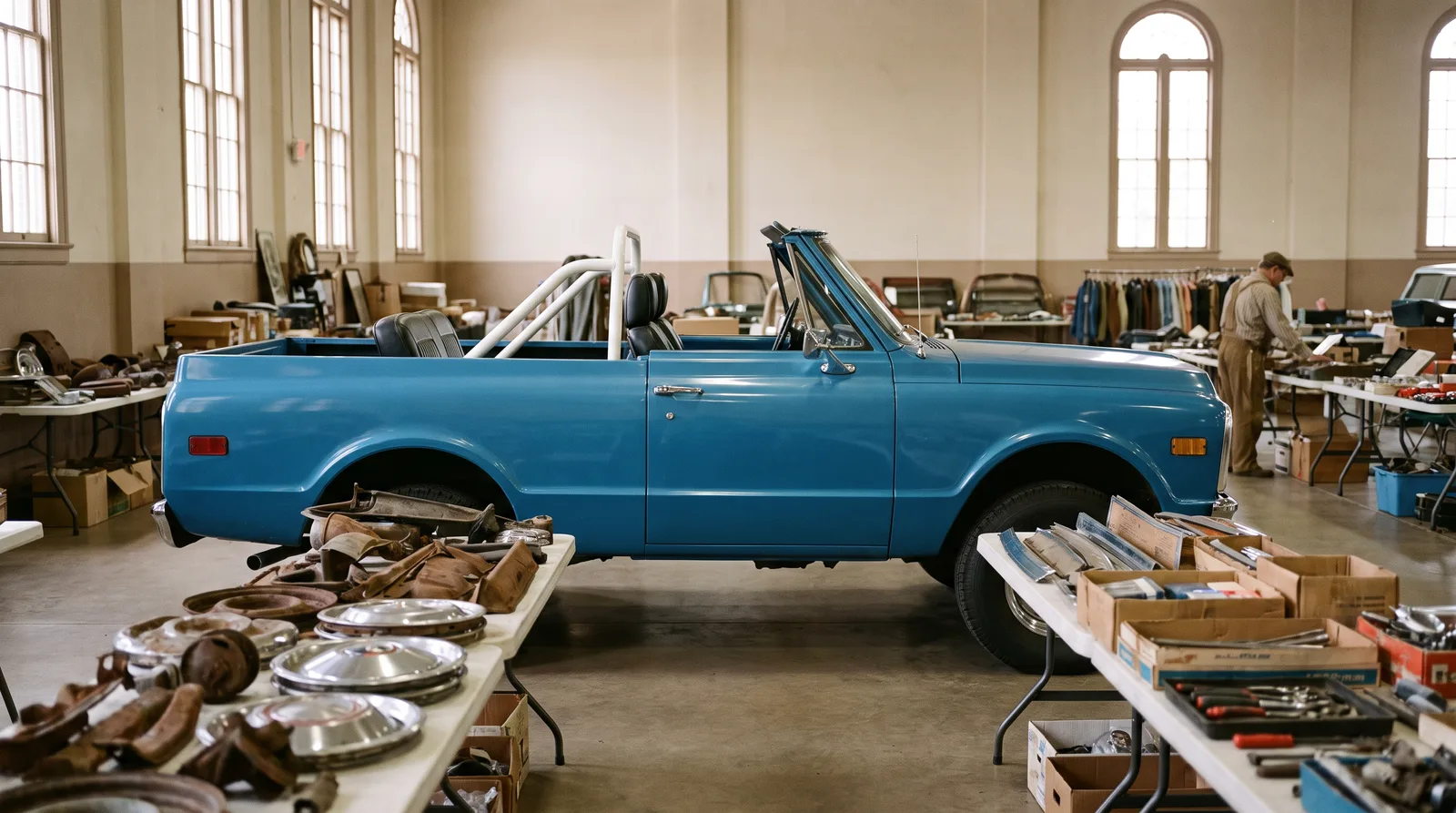
1969 to 1972: the truck that started it all
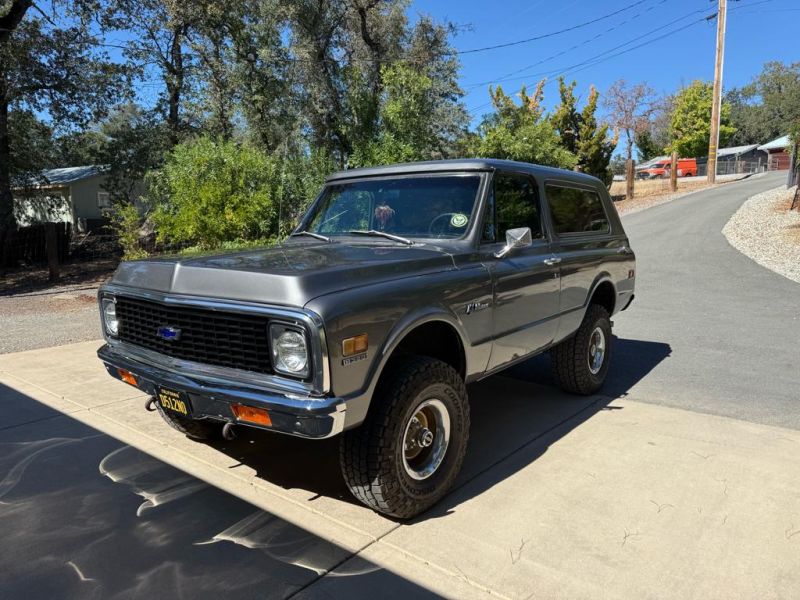
Chevrolet launched the K5 Blazer for the 1969 model year with a full-size frame borrowed from the C/K pickup line and a body nobody else in the segment had the nerve to build. The entire top, cab and cargo section together, lifted off as one shell. GMC followed a year later with its badge-engineered twin, the Jimmy, giving the same idea a second sales channel. These first-generation model years, 1969 through 1972, are the ones purists usually picture first when they talk about the convertible Blazer, but the truck was not done being a convertible when this generation ended.
Production during this window was modest by pickup truck standards. Buyers cross-shopping a Ford Bronco or an International Scout found a truck with more room, a stronger drivetrain lineup, and a top that came off with less fuss than either competitor offered. That combination is part of why surviving examples from this era carry strong collector premiums in the whole Blazer lineup, and you can read the background on how that history is documented in full.
1973: a new chassis, the same removable top
The 1973 model year brought the squarebody redesign across GM's whole truck line, and the Blazer changed with it, riding on a new frame and sheet metal. What did not change right away was the top. Chevrolet carried the full one-piece removable shell over onto the redesigned truck, so a 1973, 1974, or 1975 Blazer could still be stripped down to an open cockpit exactly like the first-generation trucks before it. The squarebody chassis was heavier and stiffer by design, but the party trick that defined the nameplate was still standard equipment.
I have rebuilt trucks from both sides of the 1973 changeover, and structurally the newer chassis is the better platform to work from even with the full top still fitted. The frame flexes less and the doors seal tighter than the first-generation trucks did. What changed the character of the truck was not the 1973 redesign at all. It was what happened three years later.
1976: the year the full top actually disappeared
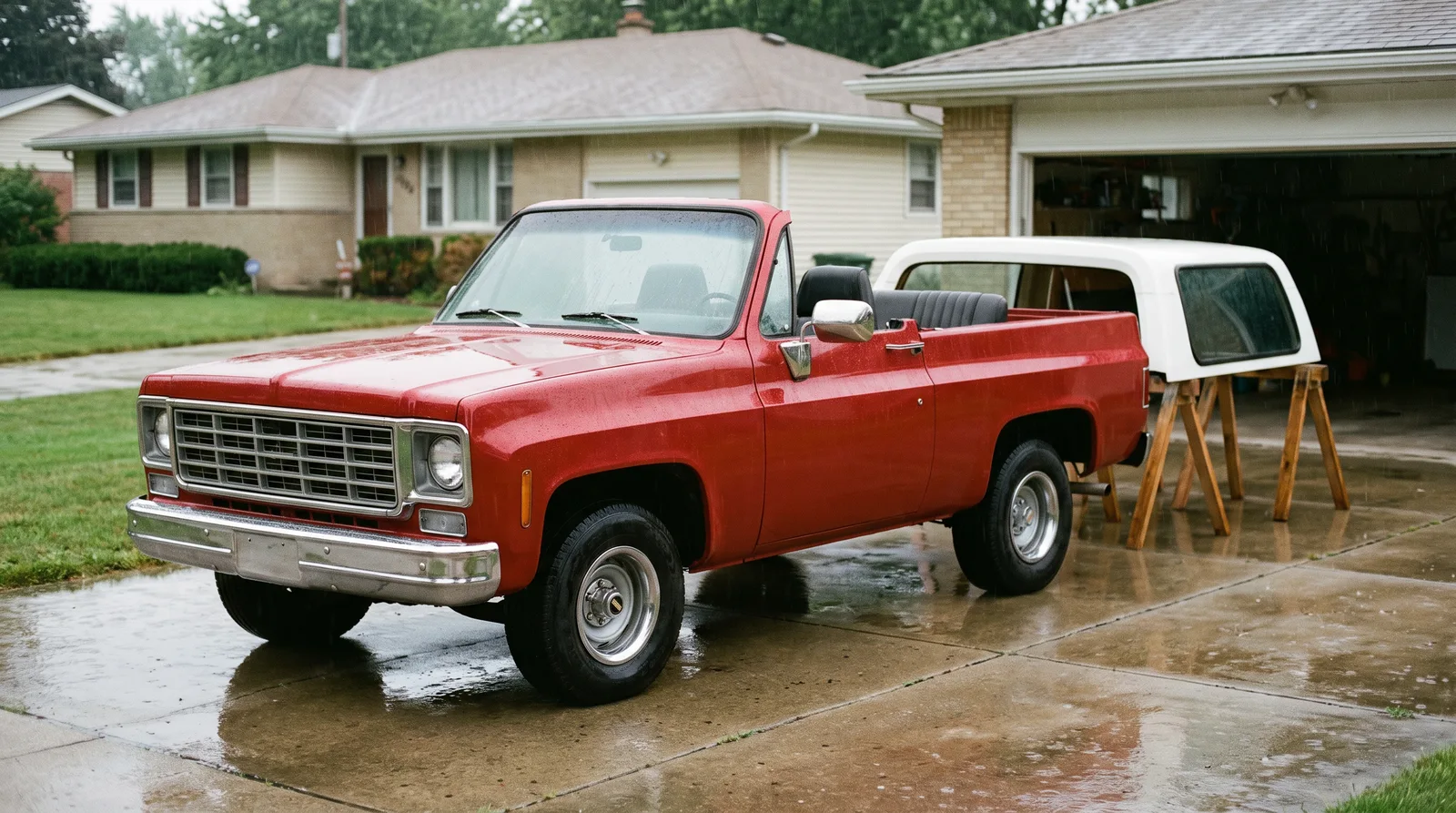
The full removable top ran out for the 1976 model year, when Chevrolet replaced it with a fixed steel cab, doors, and windshield frame welded permanently in place, leaving only the rear cargo section removable. Rollover safety was a real factor behind that change, alongside the cost and complexity of building a separate top shell. For buyers who wanted some of the original open-air experience without hunting for an increasingly scarce full-top truck, the half-cab that followed still offered a genuine removable rear section, just without the ability to open the whole cab.
By the time 1976 arrived, small-block V8 options had matured and emissions equipment had started creeping into the drivetrain, so the truck had already begun settling into the identity it would carry for most of the rest of its production run even before the top changed. The wildest years were the full seven, 1969 through 1975, and that is the window worth keeping straight if you want to talk about this truck accurately.
The drivetrain story running underneath the top story
The top gets the attention, but the years between 1969 and 1975 also cover a real shift in what powered these trucks. Early K5 Blazers offered inline-six and small-block V8 choices that felt appropriate for a truck still finding its identity. By the middle of this window, buyers were leaning harder toward V8 power, and Chevrolet responded with a broader spread of displacement options through the mid-1970s. A truck bought new in 1969 and one bought new in 1975 could feel like distant cousins under the hood even before you account for what happened to the roof.
Emissions regulation started tightening during these same years, and horsepower ratings across the industry began drifting downward as a result, not because engines got worse but because they got measured differently and choked down to meet new standards. The industry-wide switch from gross to net SAE horsepower ratings between 1971 and 1972 alone makes a lot of period brochure numbers look like a bigger drop in power than actually happened under the hood, so any figure you see quoted for output in this era deserves a second look against the specific model year, engine, and which rating standard was used.
Why this stretch of years still defines the truck's reputation
Ask a longtime Blazer owner which years matter and most will point straight at this window. It is where the concept was purest, where the compromise arrived, and where the truck proved it could survive that compromise without losing its identity entirely. Later squarebody Blazers, right through 1991, sold in far greater numbers and are excellent trucks in their own right, but they are building on a foundation that these first seven years poured.
The half-top design that emerged from the 1976 redesign has its own committed following today, distinct enough from the earlier full-convertible trucks that it is worth a look too if you want to understand how the two camps of Blazer owners see their trucks differently.
"You can tell a lot about a truck by what the factory was willing to give up to keep building it. The Blazer gave up the whole top and kept the spirit anyway."
- Jim Vasquez
What to look for if you want a truck from this era
A genuine 1969 to 1972 truck is the harder find and the pricier one, and originality of the top hardware matters more than almost anything else in that search. A 1973 to 1975 full-top truck on the newer squarebody chassis is often a more attainable entry point into the same open-air experience, still a true full-convertible but riding on a stiffer, more modern frame. Either way, check for consistent VIN tags between the body and frame, evidence of the correct top hardware for the model year, and honest rust history before anything about trim level or engine choice.
If this seven-year stretch has you shopping seriously, shop classic K5 Blazer listings and compare what is actually available against the years described here. The gap that actually matters is between a 1975 and a 1976 truck, not between a 1972 and a 1973, and knowing that going in will save you from paying full-convertible money for a half-cab truck, or the reverse.
Seven years, two very different trucks under one name, and one design idea stubborn enough to survive the transition between them. That is the golden stretch, and it is why I still point new collectors here first.
Sources and notes
Related Reading
Have a
Chevrolet Blazer
for Sale?
Reach thousands of serious classic car collectors across the US.
Sell It Here →
Selling a classic? Here's how: where to sell your classic car online
Are You a Classic Car Dealer?
List your full inventory and connect with targeted classic car buyers.
Join as a Dealer →

About the author
Jim Vasquez
Southern California hot rod and custom car builder with roots in the traditional kustom kulture scene.
Related Listings - Chevrolet Blazer




Comments
Be the first to comment on this article.