
At a truck show outside Tucson last spring, two Blazers sat nose to nose under the same tent, close enough in color and trim that a passerby might have called them twins. They were not. One was a 1971 with a top that lifted off in a single piece. The other, a 1976, kept its cab fixed and offered only a removable section over the cargo bed. The owners, both proud, both certain their truck represented the real spirit of the Blazer, spent an hour arguing amicably about it while I listened. The k5 blazer convertible top vs half top question turns out to be less about specifications and more about what people believe a truck is supposed to promise.
Car Features
7 min read
Full Top Versus Half Top: The Great K5 Divide
Two Blazer owners, one full-convertible and one squarebody half-top, make their case for which design better represents the truck's open-air spirit.
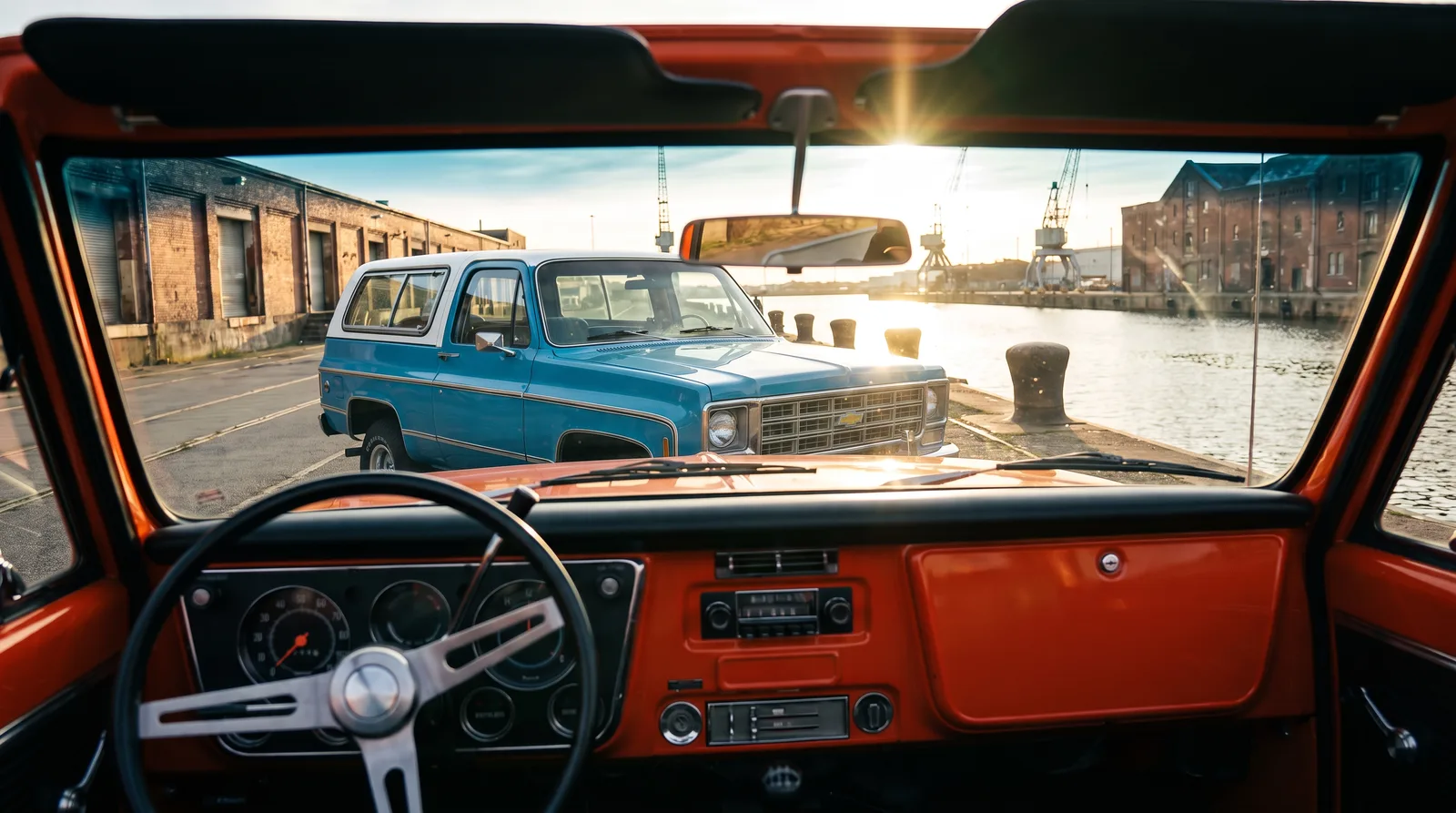
What actually separates the two designs
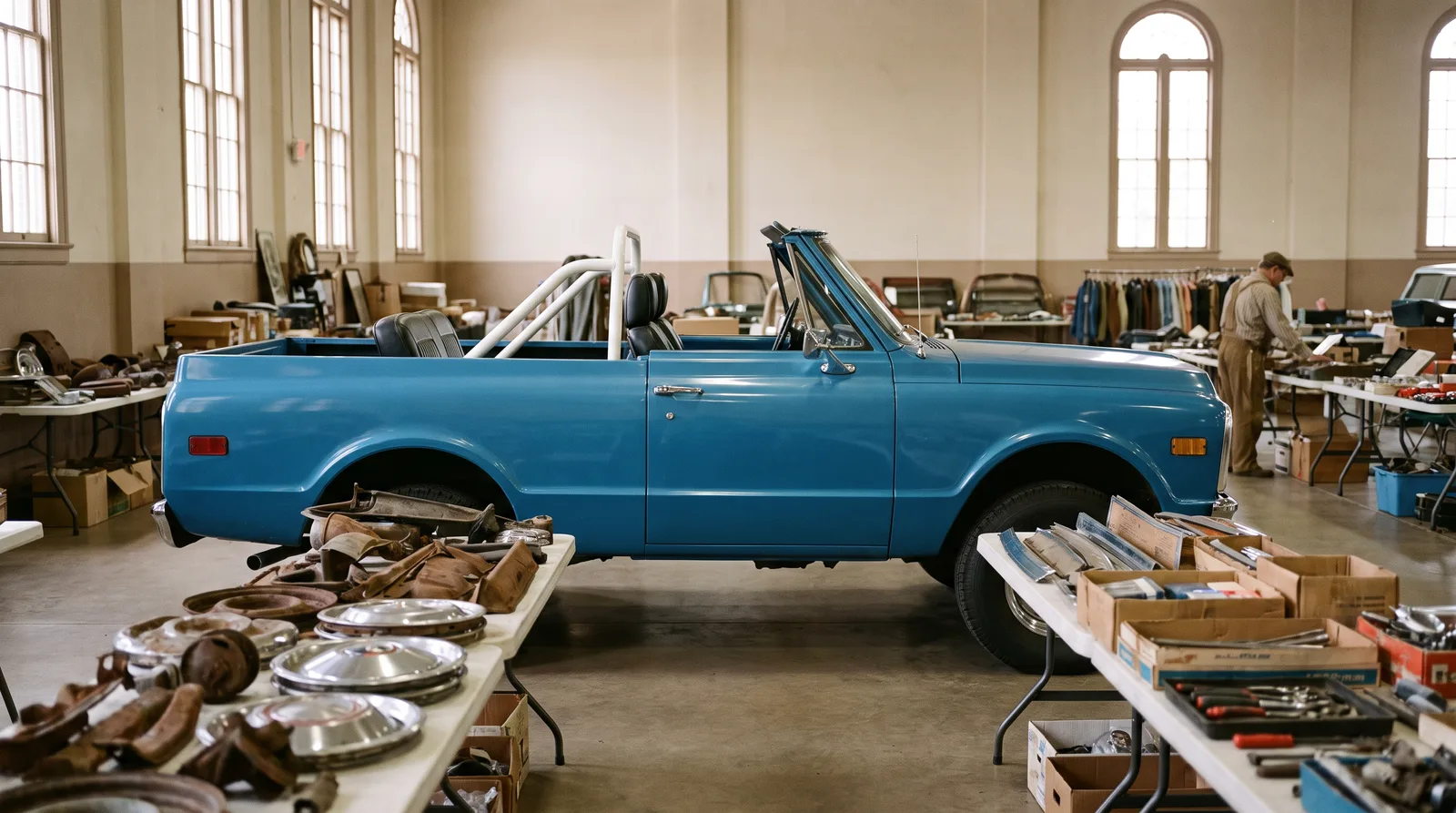
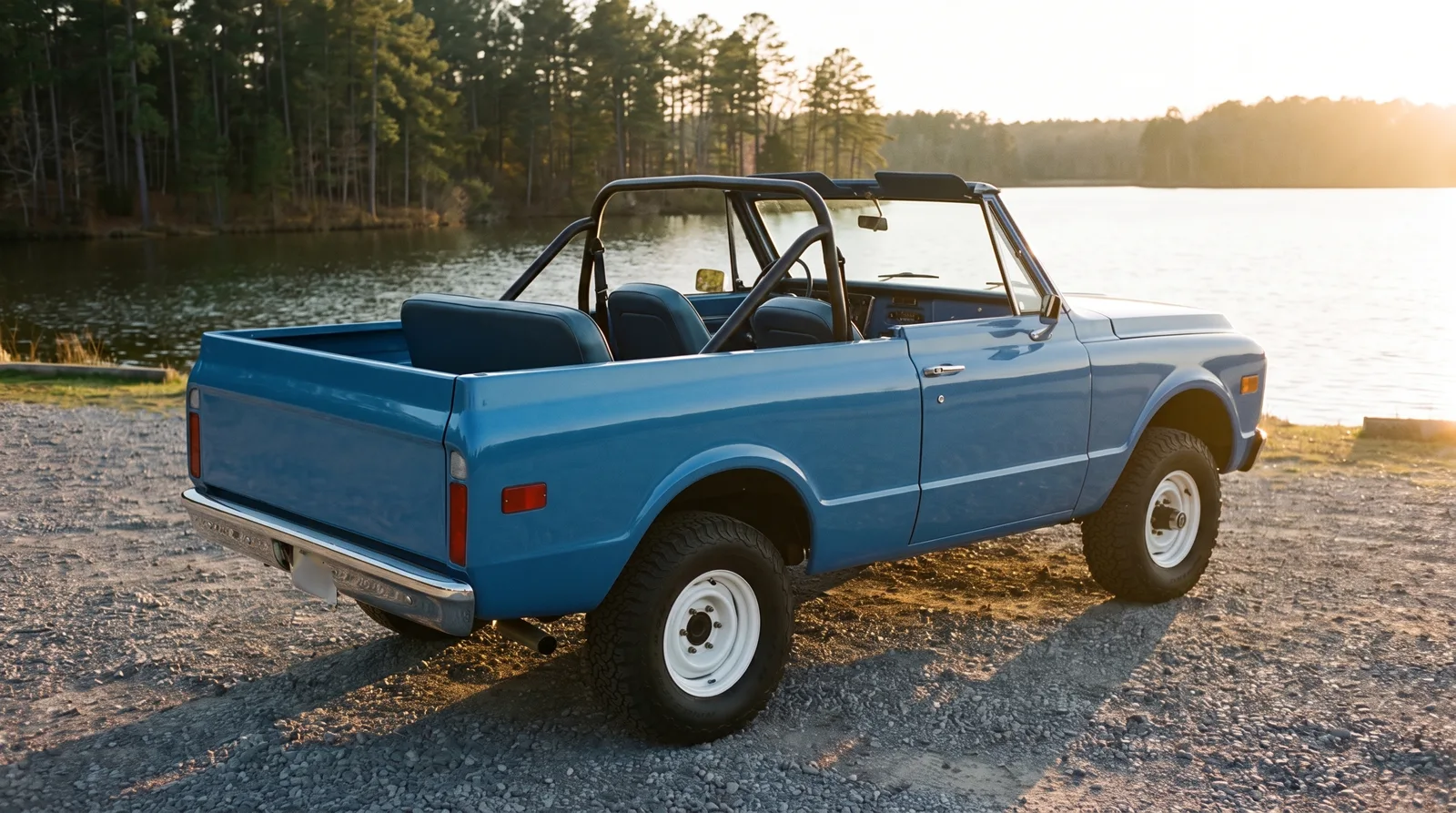
The distinction is structural, not stylistic. On the 1969 through 1975 K5 Blazer, the entire top, cab and rear cargo area together, comes off as one continuous shell, leaving the truck completely open from the windshield frame back, a design that survived the 1973 squarebody chassis change and lasted three more years on it. On the 1976-and-later squarebody Blazer, GM welded the cab, doors, and windshield frame permanently to the body, and only the section over the rear seats and cargo bed remains removable. One truck can be stripped down to an open cockpit. The other keeps its front half enclosed no matter what you do to the back.
Neither approach is wrong, exactly. They answer different questions. The first generation asked how open a truck could be. The second asked how a truck could keep some of that openness while gaining the rigidity and quiet that a fixed cab provides.
The case the full-top owners make
Owners of the early trucks talk about the top the way people talk about a feature that changes how a vehicle feels to be inside, not just how it looks. With the shell off, there is no roofline at all, no header bar over the windshield breaking the view upward. The truck stops feeling like a truck with the roof missing and starts feeling like its own category of vehicle. That difference is why full-top examples, even rougher ones, tend to draw a crowd first at any show where both generations are present.
There is also a scarcity argument underneath the sentimental one. Chevrolet built the full-convertible design for seven model years, 1969 through 1975, before moving to the fixed cab for 1976, so fewer of them exist today, and fewer still have survived with original, uncracked top hardware. You can find more of that history, told in full, in more on the k5 blazer convertible, which traces exactly how and why the design came and went.
The case the half-top owners make
The squarebody owners are not arguing that their trucks are rarer. They are arguing that their trucks are better built. A welded cab does not develop the same rattles and leaks that a removable one accumulates over fifty years of on-and-off use. Doors seal tighter. Structural rigidity is higher, which matters on rough terrain where a Blazer is actually meant to be driven, not just displayed. And the removable rear section still delivers real open-air utility for hauling gear or riding with the wind at your back, just without sacrificing the whole front cab to get it.
Half-top owners also point out, fairly, that their trucks represent the design GM committed to for the long haul, sixteen model years of production from 1976 through 1991 compared to the seven-year run of the true convertible. Popularity is its own kind of argument.
How the two camps show up differently at shows
Judging categories at truck shows have quietly adapted to this split over the years. Some events now separate full-convertible entries from squarebody half-top entries entirely, recognizing that comparing them head to head rewards neither fairly. A full-top truck judged against half-top competition wins almost automatically on novelty. A half-top truck judged against full-top competition loses points for a decision GM made in a design studio, not one the owner made in a garage. Separating the categories lets both kinds of dedication get evaluated on their own terms, which most longtime owners consider the fairer approach.
Parts availability tells a similar story. Reproduction weatherstrip, latch hardware, and top panels for the full-convertible trucks, 1969 through 1975, are a smaller, pricier market simply because demand is smaller, while half-top rear sections and their seals benefit from the far larger production run of squarebody trucks built between 1976 and 1991. An owner chasing originality on a full-top truck should budget accordingly, since sourcing correct parts takes longer and costs more than the equivalent search for a half-top owner.
Why the argument never really gets settled
Talk to enough owners and you notice the disagreement is not really about engineering at all. It is about which promise a truck should keep. A full-top owner wants the truck to disappear entirely when the moment calls for it. A half-top owner wants a truck that is honest about being a truck, with open air as a bonus rather than its whole identity. Both are reasonable positions, and both are represented by trucks that people spend real money and real years restoring with equal devotion.
"Neither owner is wrong about their truck. They are just describing two different love letters to the same idea, written a few years apart."
- Nora Beckett
The debate goes back to how the Blazer nameplate began in the first place, and understanding where this started helps explain why both camps feel so strongly about their version of the truck. Chevrolet never intended for owners to be picking sides. It intended to sell trucks, and it kept selling them for over two decades by letting the design evolve rather than freezing it in 1972.
If you find yourself drawn to one side of this argument, the only real way to settle it for yourself is to sit in both. Browse classic K5 Blazers on the market and see which one answers the question the way you would answer it. The Tucson owners never did agree that afternoon. They just shook hands, admired each other's trucks a while longer, and drove home in the vehicles they already knew they loved.
That, more than any spec sheet, is probably the truest answer the debate has ever produced.
Ask either owner what they would buy if money were no object and the honest answer usually surprises you. Plenty of full-top purists admit a clean half-top would make a fine second truck, and more than a few half-top loyalists confess they would not turn down the right full-convertible if one crossed their path at the right price. The rivalry is real, but it is a friendly one, built on shared respect for a nameplate that managed to mean two slightly different things and still satisfy both crowds.
Sources and notes
Related Reading
Have a
Chevrolet Blazer
for Sale?
Reach thousands of serious classic car collectors across the US.
Sell It Here →
Selling a classic? Here's how: where to sell your classic car online
Are You a Classic Car Dealer?
List your full inventory and connect with targeted classic car buyers.
Join as a Dealer →

About the author
Nora Beckett
Automotive features writer and photographer who tells the human stories behind the cars, from show fields to cross-country road trips.
Related Listings - Chevrolet Blazer




Comments
Be the first to comment on this article.