
I get asked at least once a month whether a Jimmy is just a Blazer with different badges, and the answer is close enough to yes that most people stop listening before I get to the interesting part. The k5 blazer convertible top jimmy question is really a question about GMC's decision to join a party Chevrolet had already started, and the details of how that decision played out matter more than the badges suggest.
Car Features
7 min read
The Convertible Top on the Early GMC Jimmy
GMC's Jimmy carried the exact same removable top as the K5 Blazer, one year later. A builder explains what actually differed between the two badges and what did not.
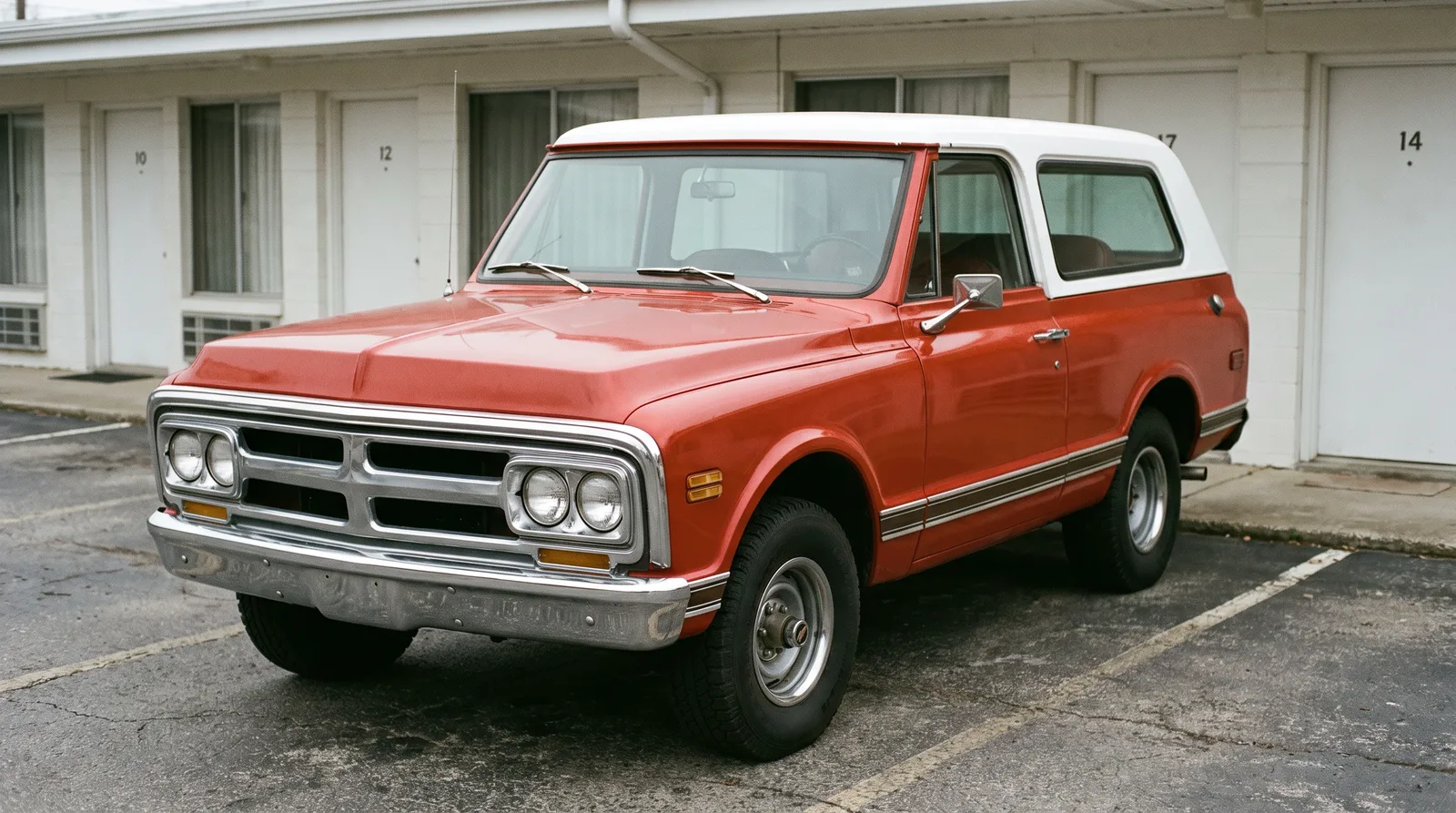
Why the Jimmy showed up a year late
Chevrolet launched the K5 Blazer for the 1969 model year, and GMC did not follow with its own version, the Jimmy, until 1970. That single-year gap tells you something about how GM structured its truck lineup at the time. Chevrolet and GMC shared platforms and engineering constantly, but rollout timing between the two brands did not always move in lockstep, and the Blazer got first crack at a market Chevrolet's engineers had clearly identified before their counterparts at GMC finished their own version of the pitch.
Once it arrived, though, the Jimmy carried the exact same removable top design as its Chevrolet sibling. Same latch points, same mounting rail, same two-person lift-off procedure. GMC was not interested in reinventing what already worked. It wanted access to the same buyers Chevrolet was already winning, sold through GMC's own dealer network to customers who, for whatever reason, preferred that badge on their hood.
What actually differed between the two trucks
Mechanically and structurally, next to nothing separated a K5 Blazer from a Jimmy of the same model year. Trim details, badging, some grille and interior appointments varied, the usual differences GM applied across its badge-engineered pairs throughout this era. The top itself, the entire reason either truck earns the word convertible in casual conversation, was identical hardware between the two.
That shared engineering is exactly why I treat inspection the same way regardless of which badge is on the truck in front of me. A Jimmy with a cracked latch mount has the same problem a Blazer with a cracked latch mount has. The fix does not care what the grille says.
Why collectors treat the two trucks differently anyway
Despite the shared engineering, the market does not always price a Jimmy and a Blazer identically. Chevrolet's dealer network was larger, its production numbers for this generation were higher, and simple brand recognition tends to favor the Blazer name among casual buyers who are not deep into GM truck history. That gap has been narrowing for years as more serious collectors realize the Jimmy is mechanically the same truck, sometimes available for a meaningfully lower price precisely because it carries less brand recognition.
I have steered more than one budget-conscious buyer toward a well-kept Jimmy specifically because the truck underneath the badge was every bit as good as the Blazer they were originally shopping, and the savings let them put more money into the restoration itself rather than the badge on the hood.
"Underneath the paint, a Jimmy and a Blazer from the same year are the same truck wearing different jewelry. Anyone telling you otherwise is selling something."
- Jim Vasquez
How dealership positioning shaped each truck's reputation
GMC's dealer network historically leaned more toward commercial and fleet customers than Chevrolet's did, and that positioning shaped how the Jimmy got marketed even after it launched with the identical convertible top. Some regional GMC dealers pushed the truck harder toward buyers who wanted a rugged work vehicle first and treated the removable top as a secondary bonus, while Chevrolet leaned into the recreational, beach-and-trail image a bit more aggressively in its own advertising. Neither approach changed a single bolt on either truck, but it shaped which buyers gravitated toward which badge, and that early perception has had a long tail on how each nameplate gets remembered decades later.
That difference in marketing emphasis is part of why some regions of the country have noticeably more surviving Jimmys than others. Areas with a strong GMC commercial dealer presence in the early 1970s tended to sell more Jimmys generally, convertible-top examples included, even though the two trucks were fighting for exactly the same buyer on paper.
What to check if you are considering a Jimmy specifically
Because the Jimmy sold in smaller numbers than the Blazer throughout this generation, parts sourcing can occasionally take longer for trim-specific items, badges, certain interior pieces, even though the structural and top hardware interchanges freely between the two trucks. Confirm the model year carefully, since a genuine full-convertible Jimmy only exists from 1970 forward, one year later than the earliest Blazer window. You can read the deeper background on how this whole design came about in our k5 blazer convertible retrospective, which covers both badges under the shared history they actually share.
Collector premiums on the earliest, rarest examples of either badge are climbing, and understanding what actually drives that premium is worth a separate look, covered in a related story if you want the full breakdown of what makes an original full-convertible truck worth real money today.
If a Jimmy or a Blazer from this era is on your list, K5 Blazers for sale now is a good place to compare what is actually available, badge aside, and decide for yourself whether the name on the grille is worth paying extra for. In my shop, it rarely is. The truck underneath is what matters, and on this specific point, the truck underneath is identical either way.
The badge debate makes for good conversation at a show, but it rarely changes what actually needs attention on the lift. A tired latch mount is a tired latch mount, and it does not care whether the hood ornament says Chevrolet or GMC.
What I do notice, looking back over every Jimmy and every Blazer that has come through my shop, is that Jimmy owners tend to be a little more insistent about proving their truck belongs in the same conversation as its Chevrolet twin. That insistence is not misplaced. If anything, it is the correct instinct. The engineering earns the truck a seat at the table regardless of which division sold it, and any serious appraisal of these convertible-top trucks has to treat both badges as equals from the frame rails up.
Sources and notes
Related Reading
Have a
Chevrolet Blazer
for Sale?
Reach thousands of serious classic car collectors across the US.
Sell It Here →
Selling a classic? Here's how: where to sell your classic car online
Are You a Classic Car Dealer?
List your full inventory and connect with targeted classic car buyers.
Join as a Dealer →

About the author
Jim Vasquez
Southern California hot rod and custom car builder with roots in the traditional kustom kulture scene.
Related Listings - Chevrolet Blazer




Comments (1)
R
Ramon Ibarra
2 days ago
One point on how these trucks get described, for anyone shopping one. The 1970 Jimmy top that lifts off was a fiberglass shell, not a folding convertible top, although a canvas top was offered and few were sold. The Jimmy my neighbor brought home to Tucson in 1971 still wore its hardtop, a swing-out spare carrier, and a pair of chrome West Coast mirrors.