
There is a photograph that turns up on every squarebody forum eventually. A ski-area parking lot somewhere in Colorado, mid seventies, snow banked up past the door handles, and a two-tone K5 Blazer sitting nose-out with the rear top panel off and a pair of skis poking up over the tailgate. Nobody knows who took it. Nobody knows whose truck it was. It gets posted anyway, every winter, because it explains the whole vehicle faster than any brochure Chevrolet ever printed.
Car Features
17 min read
The Chevrolet K5 Blazer Story: The Full-Size 4x4 That Defined an Era
Chevrolet built the K5 Blazer out of the pickup parts bin and accidentally created the only full-size convertible 4x4 America ever had. Here is how it happened, and why the shape still moves people.
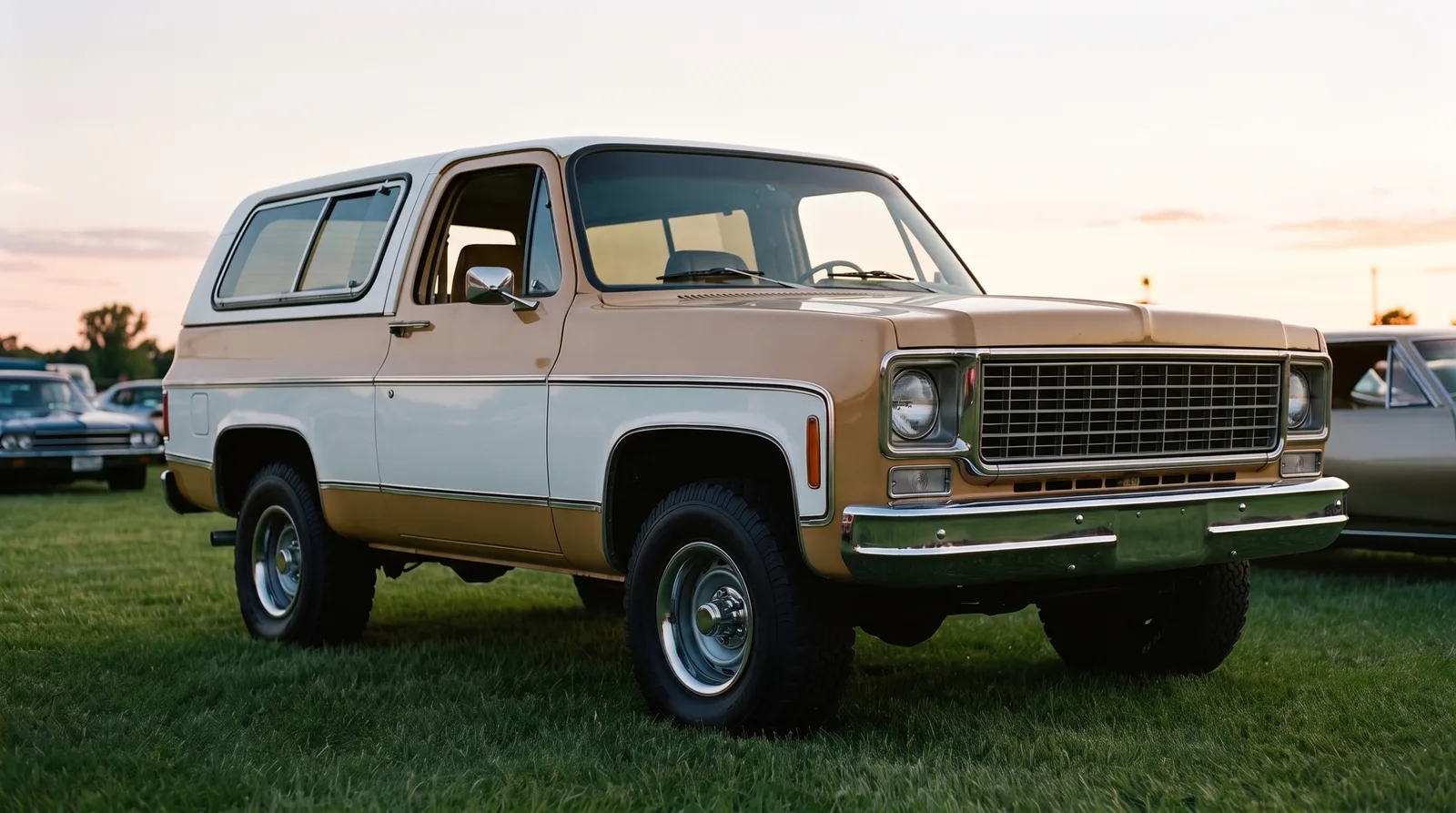
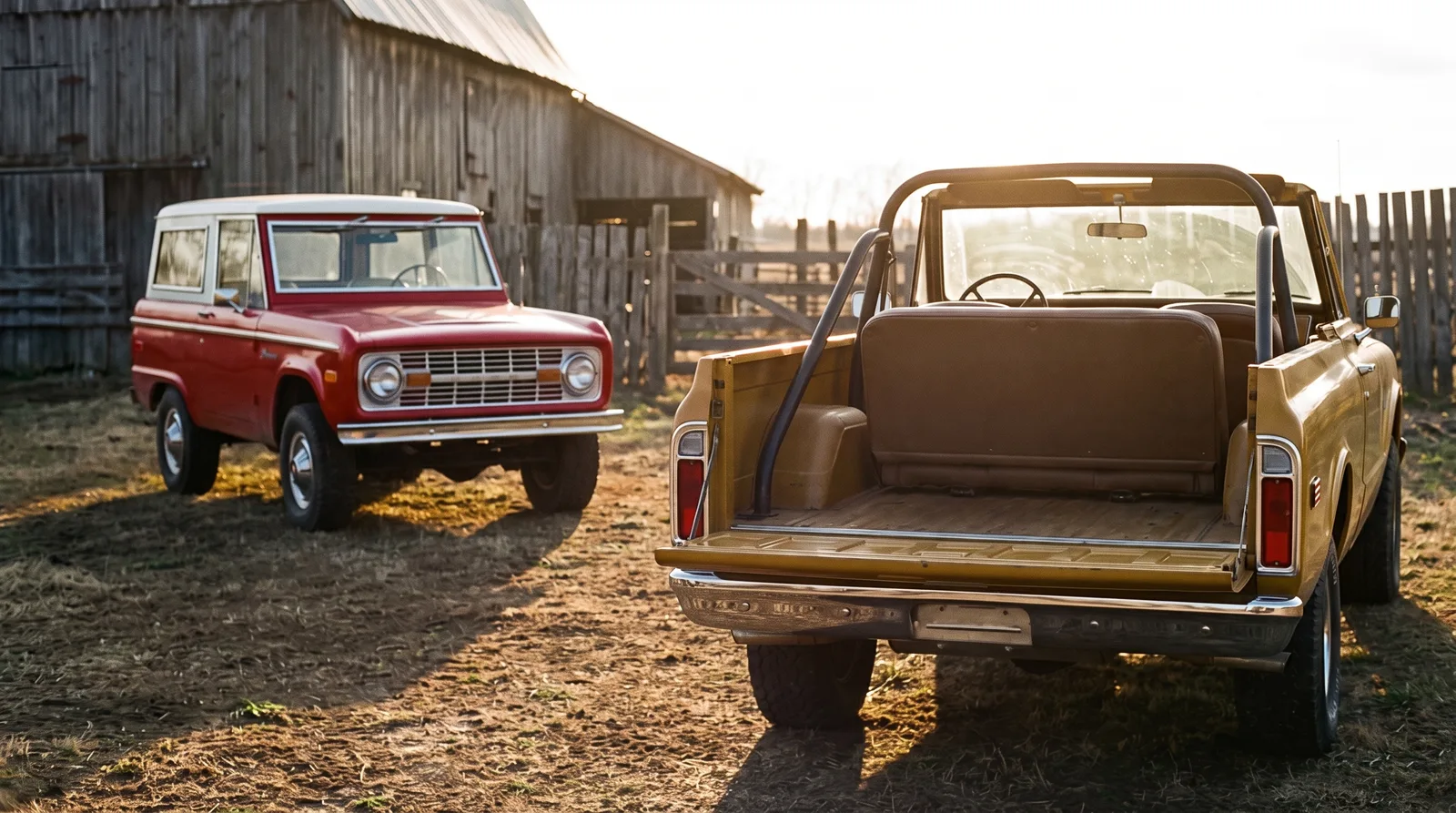
The K5 Blazer was Chevrolet's answer to a question the company had been slow to ask. Ford had the Bronco in 1966. International had the Scout since 1961. Jeep had been selling the idea of a civilian four-wheel-drive wagon since the Willys station wagon rolled out after the war. Chevrolet, sitting on the largest truck operation in the country, had nothing. When the answer finally arrived in 1969, it did not look like the competition at all. It was bigger, plusher, cheaper to build, and it came apart at the roof.
That combination turned out to be the right one for about twenty-two years, across two very different generations, and it left behind a silhouette that people who have never driven one can still draw from memory.
The idea Chevrolet almost talked itself out of
The engineering shortcut is the interesting part. Ford designed the Bronco from scratch on its own short wheelbase platform, which meant tooling, unique parts, and a body that shared very little with anything else in the showroom. Chevrolet went the other direction entirely. It took the existing C/K pickup chassis, cut the wheelbase down to 104 inches, dropped on a body that reused the pickup's cowl, doors, hood, fenders, and windshield frame, and called it done.
The result was a vehicle that cost Chevrolet almost nothing to develop and gave buyers something no rival could match. Because it started as a full-size truck, the Blazer was wide inside. Because it kept the pickup's front sheet metal, it looked like a Chevrolet truck rather than a special-purpose machine. And because the entire roof and rear body structure aft of the windshield was a removable fiberglass unit, it did something the Bronco and the Scout only approximated. You could take the whole top off and drive what amounted to a full-size four-wheel-drive convertible.
Internally the logic was straightforward. The recreational truck market was growing, dealers wanted a product to sell against the Bronco, and the parts bin already contained ninety percent of what was needed. What nobody at Chevrolet seems to have predicted is how much the removable top would come to define the thing. The K5 Blazer was sold as a work-capable utility vehicle. It was bought, in enormous numbers, by people who wanted the roof off.
1969 to 1972: the convertible years
The first generation ran only four model years, and it is the one collectors chase hardest today. The original 1969 cars were four-wheel drive only, badged K5, on the 104-inch wheelbase. Chevrolet added a two-wheel-drive version for 1970 badged C5, which sounds like a footnote until you realize that a rear-drive full-size Blazer is now one of the odder things you can bring to a show field.
First-year volume was modest. Chevrolet built roughly 4,935 units for 1969, a figure quoted constantly in the hobby and worth treating carefully, because dealer-order trucks of this era have messy records. What is not in doubt is the direction of travel. Production climbed steeply through 1970, 1971, and 1972 as the recreational vehicle boom took hold and Chevrolet's dealer network figured out how to sell the thing.
Trim was simple. Base trucks were spartan in a way that modern buyers find charming and period buyers found normal, with a rubber floor, a bench, and painted metal where later trucks would have carpet. The CST package, short for Custom Sport Truck, added the interior brightwork, better seats, sound insulation, and the chrome that photographs well. A CST-optioned first-generation K5 Blazer with the original top and factory air is close to the top of the desirability list for this platform.
The top itself is the reason survivors are rare in good condition. That full fiberglass unit weighed enough that removing it was a two-person job at minimum, and a great many owners took it off in June, leaned it against the garage wall, and forgot about it. Tops got cracked, stolen, sold separately, and thrown away. A first-generation truck with its correct original top intact is worth meaningfully more than the same truck without one, and the gap has widened every year since about 2015.
| Generation | Model years | Wheelbase | Roof | Defining trait |
|---|---|---|---|---|
| First generation | 1969-1972 | 104 in | Full removable fiberglass top | True full-size convertible 4x4 |
| Second generation (early) | 1973-1975 | 106.5 in | Full removable top retained | Rounded Line body, barn-door tailgate options |
| Second generation (late) | 1976-1991 | 106.5 in | Half top over rear only | Fixed windshield header, rollover-era safety change |
1973 and the squarebody rewrite
The 1973 redesign is the one that mattered most, because it produced the shape that the phrase "squarebody" now refers to. Chevrolet called the new truck line Rounded Line internally, which is a nice piece of corporate irony given that the world settled on the opposite nickname. The wheelbase grew to 106.5 inches. The body got wider, the glass got bigger, the doors got the curved side glass that made the cabin feel like a car, and the whole thing gained the flat-sided proportions that hold up under a two-tone paint scheme better than almost any other American vehicle of the period.
For 1973 through 1975, Chevrolet kept the full removable top. Then came the change that splits the fanbase. From 1976, the roof structure ahead of the B-pillar became fixed, and only the section over the rear seat and cargo area came off. The stated reasoning was rollover protection and structural rigidity in an era when federal attention to vehicle safety was sharpening. Purists have grumbled about it ever since. The practical effect is that pre-1976 trucks carry a premium, and half-cab trucks from 1976 onward are the ones most people picture when they hear the name.
Trim climbed steadily upward through the second generation, which is a story about American trucks generally rather than the Blazer specifically. Custom Deluxe at the bottom, then Scottsdale, then Cheyenne, with Silverado arriving as the range topper for 1975. By the mid eighties a loaded Silverado K5 Blazer had power windows, air conditioning, cruise control, a tilt column, cloth buckets, and a stereo with a cassette deck. This was no longer a farm implement with a roof you could remove. It was a family vehicle that happened to have a transfer case.
"Every generation of enthusiast finds its own entry point into this hobby, and for a lot of people under forty the K5 Blazer is it. They did not grow up with tri-fives. They grew up with the square truck their uncle drove, and that memory turns out to be just as durable."
- Patrick Walsh
The Jimmy, the Chalet, and the rest of the family
GMC got its version for 1970, badged Jimmy, and the badge engineering was about as light as it gets. Grille, tailgate lettering, trim names, and dealer network. Under the skin it is the same truck, and today it is the same truck in the market's eyes too, with a small discount that has been shrinking as buyers realize a Jimmy is simply a rarer way to own the same thing. GMC trim ran Sierra, then High Sierra and Sierra Classic further up.
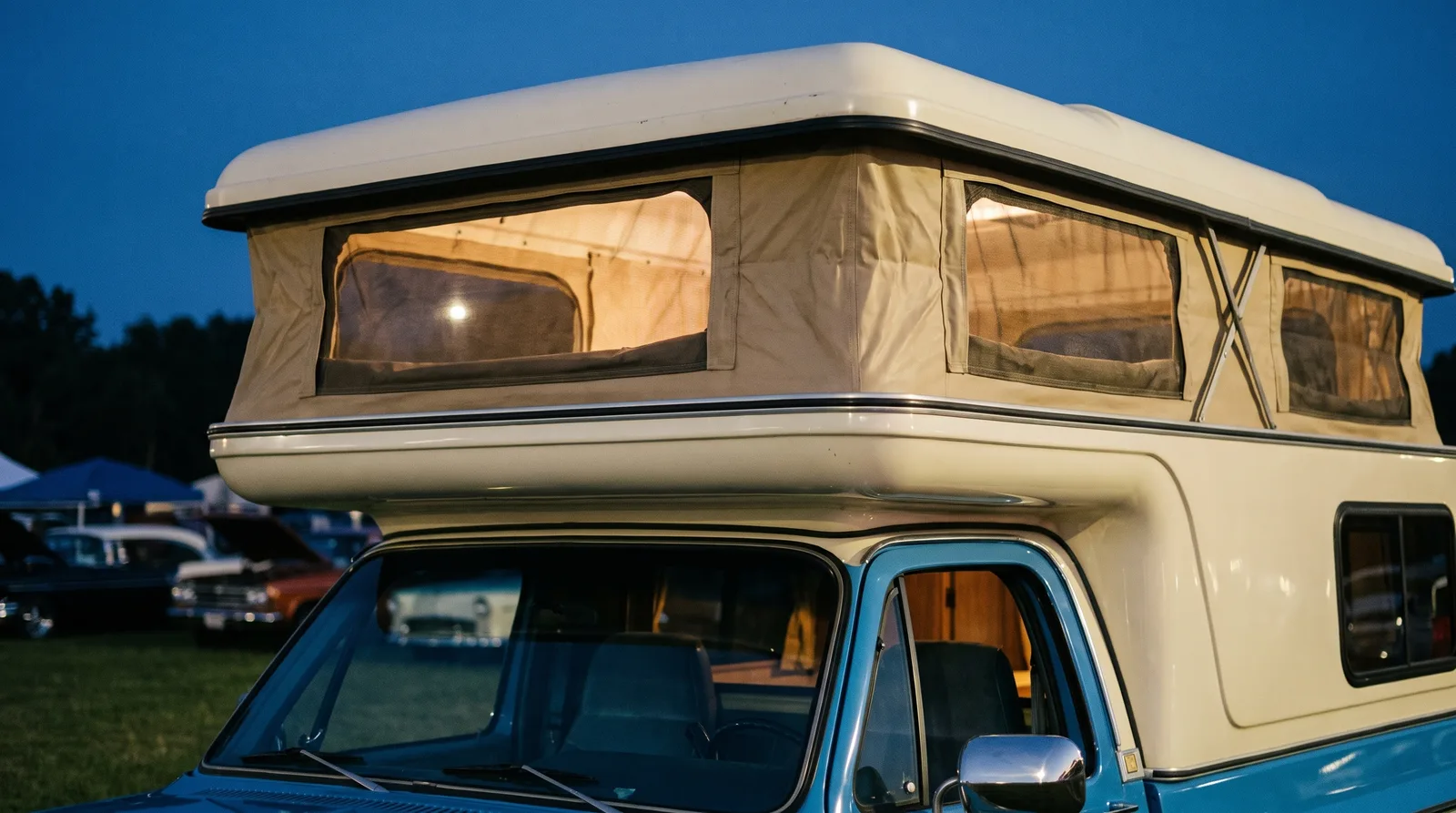
The oddities are where this platform gets genuinely interesting. The Blazer Chalet, offered for 1976 and 1977, was a factory-authorized camper conversion built with Chinook that turned the rear of the truck into a pop-top sleeper. Production was small, with roughly 1,800 Blazer Chalet and Casa Grande units built between the two brands over the two model years, and surviving examples turn up rarely enough that one showing up at auction generates its own news cycle within the community. The Jimmy equivalent was called Casa Grande.
There were also the trailer-oriented packages, the Feathers striping options, the police and municipal fleet orders, and a long tail of government contract trucks. The military CUCV program of the mid eighties produced a Blazer-based M1009 for the US armed forces, built on the same body with the 6.2 liter diesel, 24-volt electrics, and a paint scheme that has become its own collecting sub-hobby. Those trucks entered civilian hands through surplus auctions in large numbers and are often the cheapest route into full-size Blazer ownership, with the obvious caveat that they lived hard lives.
Export markets produced their own variations worth knowing about. GM built full-size Blazers and Jimmys in Brazil and in Canada under different arrangements, and the trucks that came out of those plants sometimes carried engines and trim that were never offered in the United States. Those are curiosities rather than serious market forces in North America, but they occasionally explain a truck that looks wrong to an American eye and turns out to be entirely correct for where it was built. Naming is its own hazard here. Chevrolet reused the Blazer badge twice after the K5 left the catalog, first on the compact S-10 based truck that ran alongside it from 1983, and later on a mid-size crossover that shares nothing with either. Anyone researching a squarebody by name alone will spend the first hour of every search filtering out vehicles that have no connection to it. The K5 designation is the useful search term, and the hobby uses it precisely because the plain word Blazer stopped meaning anything specific decades ago.
Engines as legend
No single engine defines the K5 Blazer the way the 289 defines the early Mustang, and that is part of the appeal. Chevrolet sold this truck across the horsepower peak of the late sixties, the emissions trough of the seventies, and the fuel-injected recovery of the late eighties, and the engine bay tells you exactly which era you are standing in.
The early trucks offered the 250 cubic inch inline six as a base engine, with the 307 and then the 350 small block as the volume choices. Big-block availability came through the 402 cubic inch engine that Chevrolet insisted on calling a 400 in truck applications, and a genuine big-block first-generation Blazer is a legitimately uncommon find. Through the mid seventies the 400 small block joined the list, a torquey and slightly fragile thing beloved by people who tow and mistrusted by people who have overheated one.
The 350 is the constant. It carried the truck through the entire second generation in one state of tune or another, dropping to genuinely modest output figures in the smog-choked late seventies, then climbing back once throttle-body fuel injection arrived for 1987. That injection change is the single biggest drivability upgrade in the truck's history and it matters to buyers. A 1987 to 1991 K5 Blazer starts on the first turn of the key on a cold morning without any of the choke rituals its predecessors demanded.
The 6.2 liter diesel V8 arrived for 1982 and occupies its own corner of the story. It was never fast. It was never meant to be. What it was, in a period when gasoline anxiety was still fresh, was frugal in a way that no other full-size four-wheel drive of the era could match. Diesel K5 Blazers were a small slice of production, and the ones that survive are usually owned by people with strong opinions about them.
Transmissions tell a parallel story. The early trucks leaned on three-speed and four-speed manuals with the granny-low first gear that made a truck feel like a truck, alongside the Turbo Hydra-Matic automatics that most buyers actually chose. By the eighties the automatic had become the default and the manual the enthusiast's request. Transfer cases moved from the cast-iron Dana units of the first generation to the lighter New Process cases of the second, and the shift-on-the-fly convenience that arrived later in the run changed how owners used the vehicle more than any horsepower figure did. A truck you can put into four-wheel drive without stopping is a truck you put into four-wheel drive more often.
None of this adds up to a performance story, and that is the point. The K5 Blazer never had a halo engine, never had a factory hot rod version, and never appeared on a magazine cover for its acceleration. Its legend is built on the low-end torque of a small block that anyone could work on, mated to a driveline that would still be turning after two hundred thousand miles of neglect. In a hobby that usually rewards rarity and output, this one rewards durability and the memory attached to it.
Two-tone paint and the culture that grew around it
Color does more work on this vehicle than on almost anything else Chevrolet built. The flat body sides and the horizontal beltline give a two-tone scheme somewhere to live, and Chevrolet exploited that relentlessly through the seventies and eighties. Certain combinations have become shorthand for entire years. The dark blue over white. The brown over tan that looks unforgivable in a paint chip book and completely correct on the truck. The seventies orange that reads as a period statement rather than a color choice.
What people did with them matters as much as how they were painted. The K5 Blazer ended up as the default vehicle for a specific kind of American life: the ski town, the ranch, the county sheriff's department, the beach town where a fixed roof would have been a waste of good weather. It was the truck that went to the lake with a boat behind it. It hauled hay in the week and kids on the weekend. Fire departments and park services bought them by the fleet. That everyday ubiquity is exactly why so few clean survivors exist, and also why the shape triggers such specific recognition in people who never owned one.
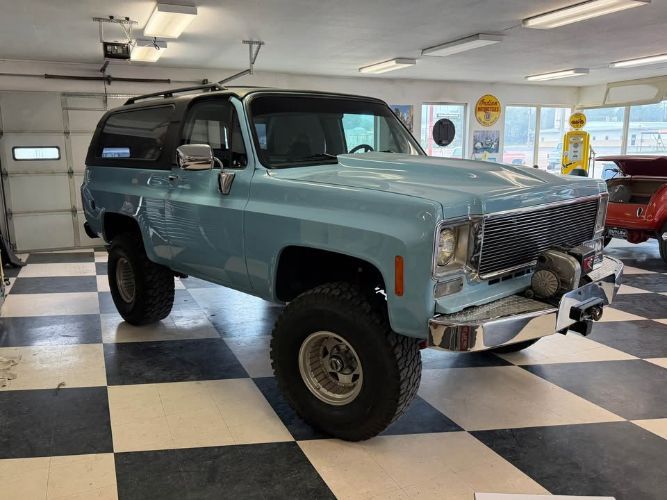
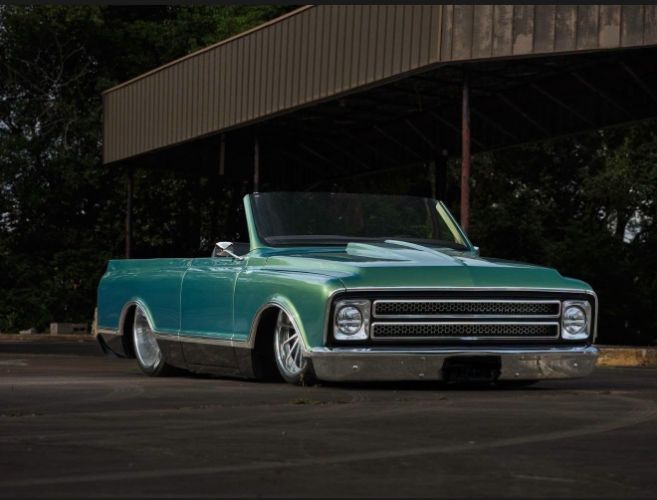
The modern chapter is the restomod scene, which discovered the platform in earnest around the mid 2010s and has not let go since. Lifted trucks on 35s with LS swaps and modern interiors now sit alongside stock restorations at the same shows, and the two camps have reached a truce that other hobbies have not managed. Part of that is supply. There are enough of these trucks left that nobody has to argue about whether a driver-quality 1978 deserves to stay original.
What the K5 Blazer is worth now
Values on this platform have moved a long way in a short time, and the movement has not been uniform. The clearest split is generational. A first-generation 1969 to 1972 truck with its original full top, honest sheet metal, and correct drivetrain sits in a different market from a 1985 half-cab, and the spread between them has widened rather than compressed. Concours-level early cars now regularly bring prices that would have seemed absurd in 2010, with top examples at major auction houses pushing toward the upper five figures and occasionally beyond.
Second-generation trucks are where most transactions happen. A rough but running project truck remains genuinely affordable. A solid driver in decent paint with a working four-wheel-drive system occupies the broad middle. Clean, rust-free, documented trucks from the desert southwest command real money and sell quickly, because rust is the variable that determines everything here. Rear wheel arches, rocker panels, cab corners, the floors under the rear seat, and the tailgate are the areas that separate a fifteen-thousand-dollar truck from a fifty-thousand-dollar one, and paint hides all of them.
The half-cab versus full-convertible question is worth understanding before you shop, because it is the single largest value lever within the second generation. So is the top itself. A truck missing its removable top panel is missing a component that is expensive and awkward to replace, and the shortage is structural rather than temporary. When you start looking at a classic Chevrolet K5 Blazer for sale, the presence and condition of that top should be one of the first three things you check, right after the frame and the floors.
"The people paying serious money for these trucks are not speculators. They are buying back a specific Saturday morning from 1981, and there is no substitute product for that. It is the most reliable demand signal in the collector market."
- Patrick Walsh
Why the shape refuses to go away
Production of the full-size Blazer on the squarebody platform ran to 1991, well past the point where the pickups it shared parts with had been replaced. The 1992 model year brought the new GMT400 based full-size two-door, which was renamed Tahoe for 1995 and grew into the four-door family vehicle that dominated the following two decades. The line continued. The idea did not. Nothing GM has built since has offered a full-size four-wheel drive with a roof you can take off in the driveway.
That is the reason the K5 Blazer occupies the position it does. It was never the most capable four-wheel drive of its era. The Bronco was more purpose-built, the Scout was tougher in some respects, the Land Cruiser outlasted everything. What the Blazer had was the combination: full-size comfort, truck parts availability, small block simplicity, and an open roof. That mix has never been reassembled, by Chevrolet or anyone else, and the market has quietly priced that fact in.
Walk any show field with a squarebody section and watch which vehicles people photograph. It is rarely the highest-dollar restoration. It is usually the honest driver with sun-faded paint and the top panel already sitting in the bed, because that is the K5 Blazer doing what it was built to do. The ski-lot photograph is still circulating for the same reason. Some vehicles are remembered for what they achieved. This one is remembered for what it made possible on a Saturday.
Sources and notes
Related Reading
Article
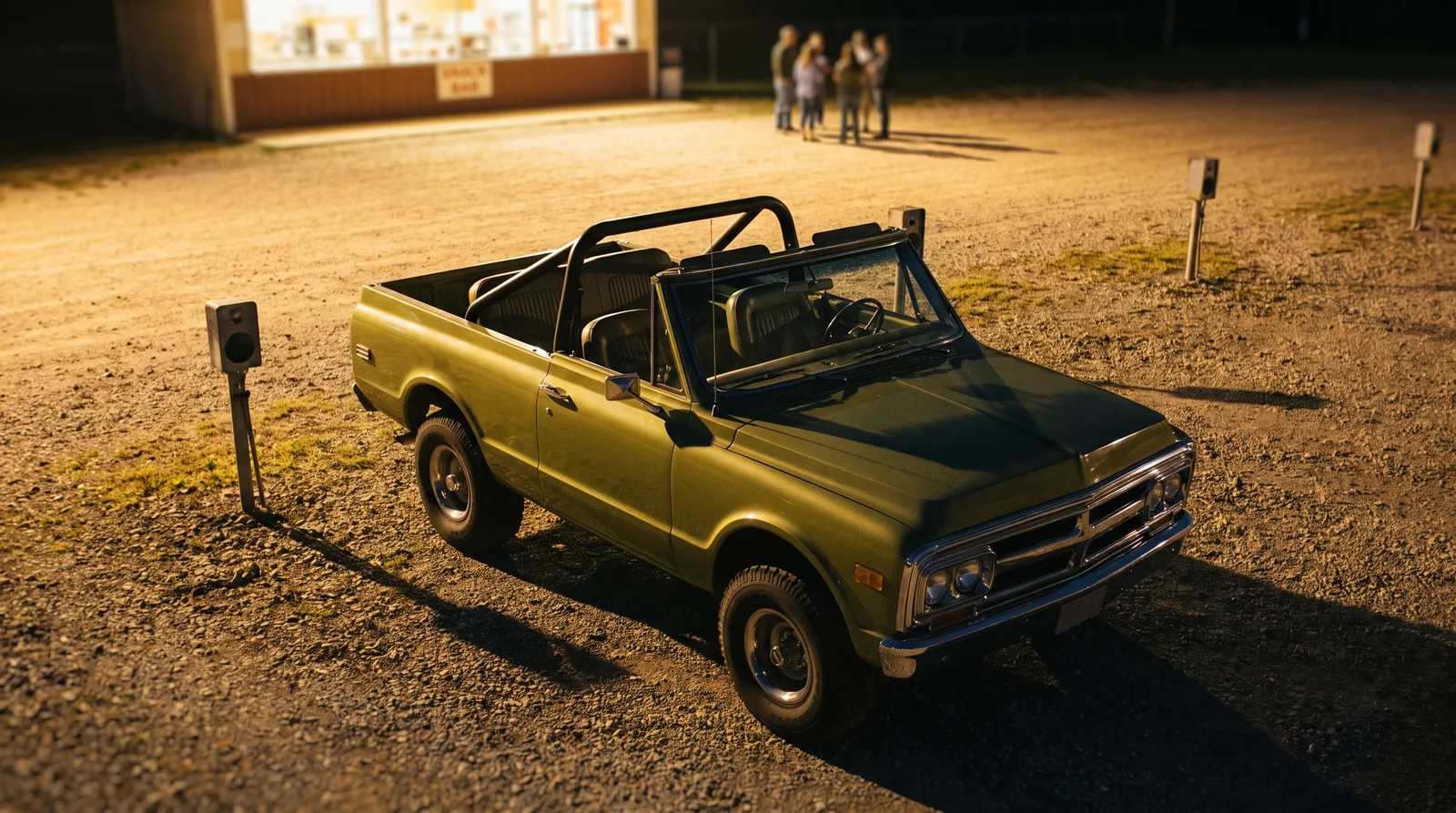
The GMC Jimmy: The Full-Size K5 Blazer Twin
Article
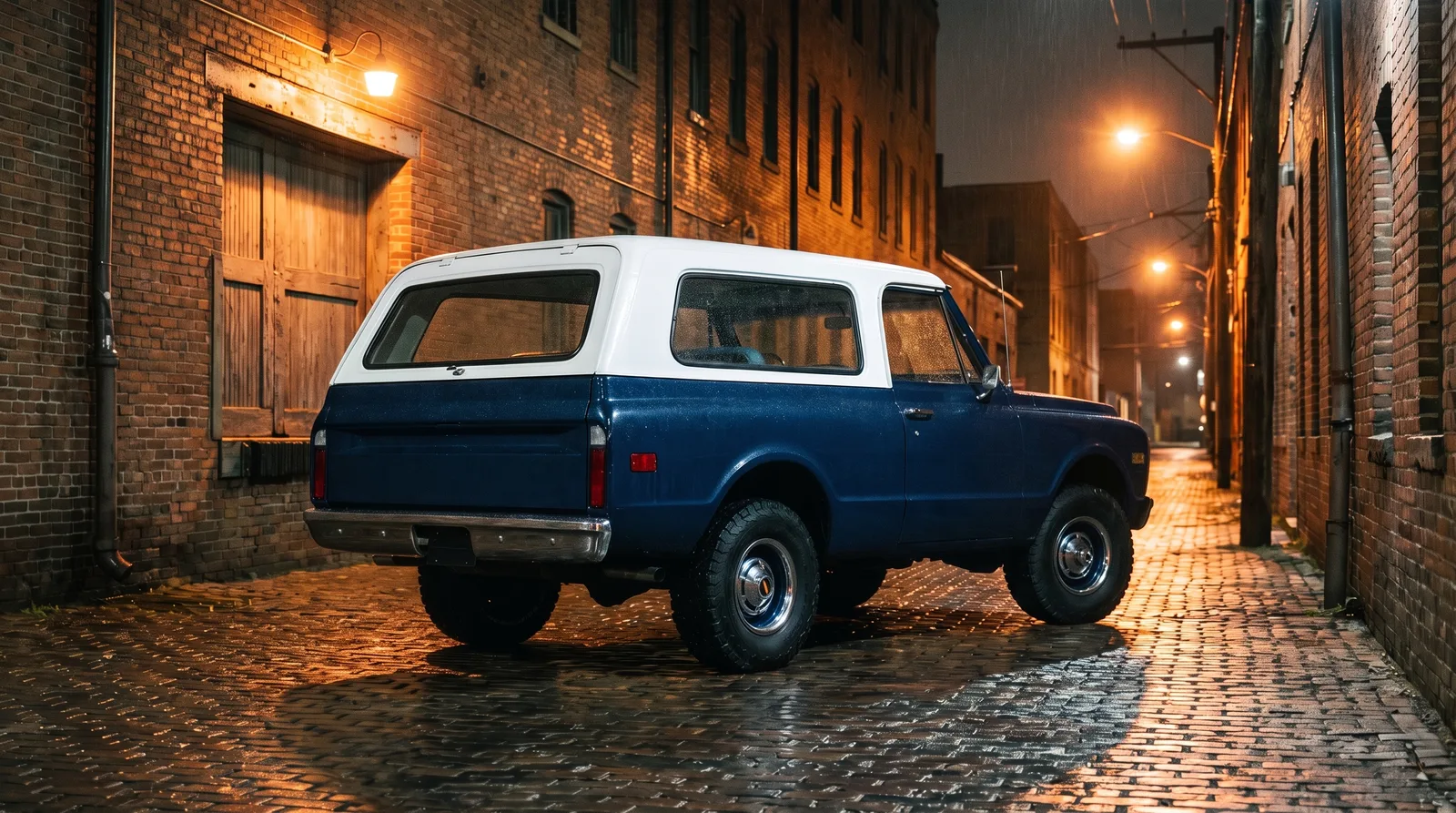
The 1972 K5 Blazer: The Most Wanted First-Generation Blazer
Article
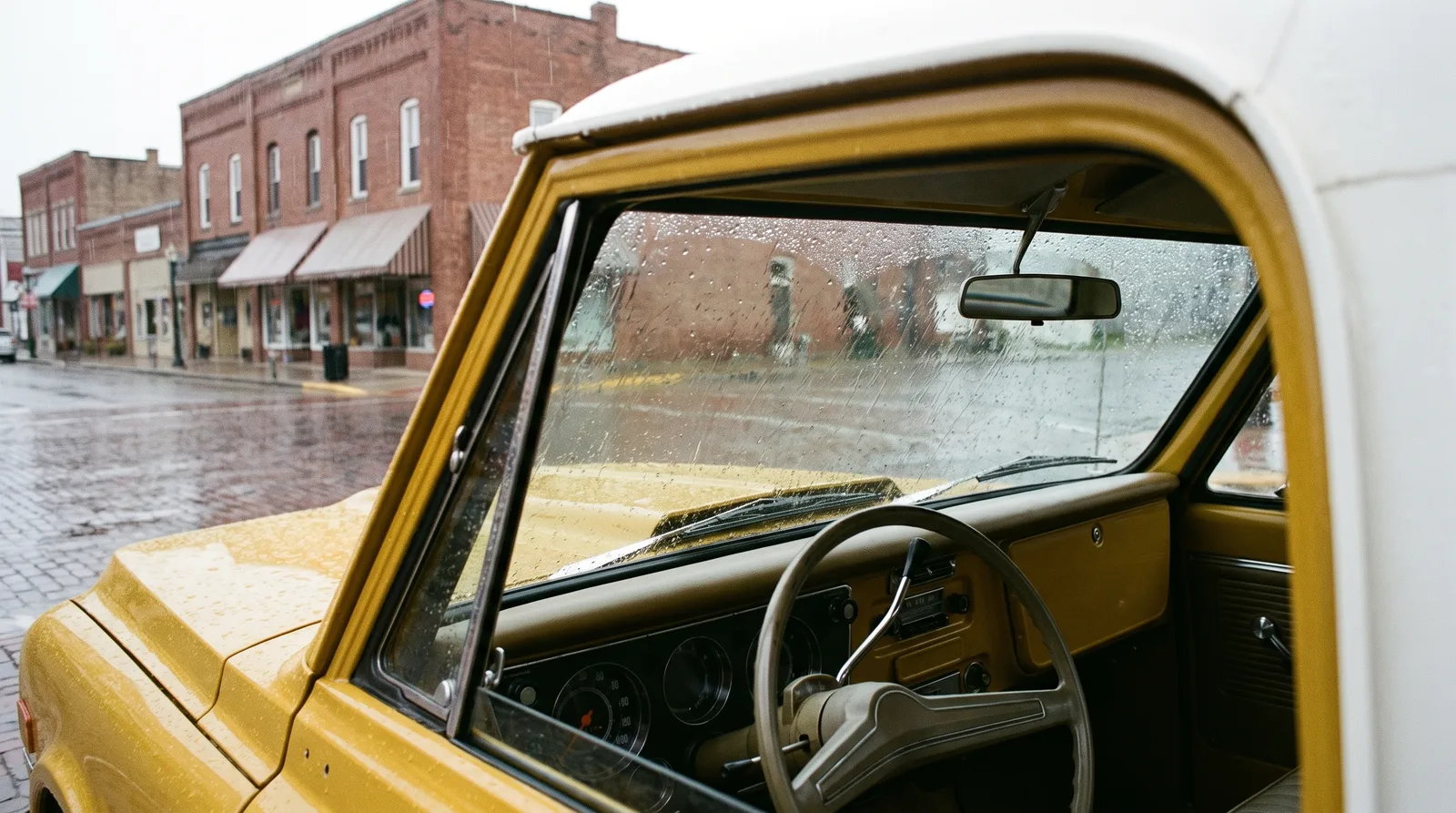
The 1969 K5 Blazer: The First Year
Article
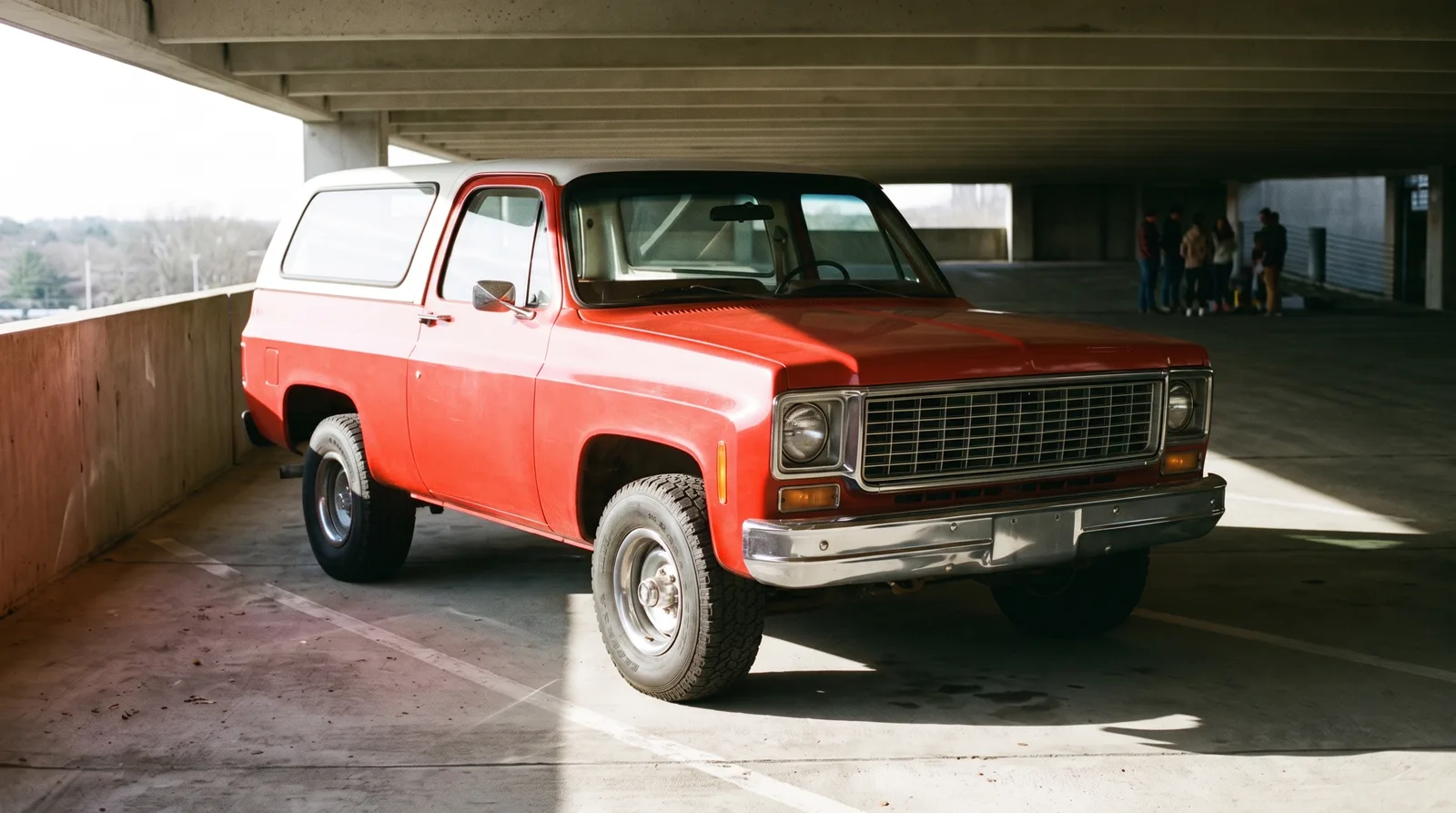
The 1973 K5 Blazer: The Squarebody Arrives
Article
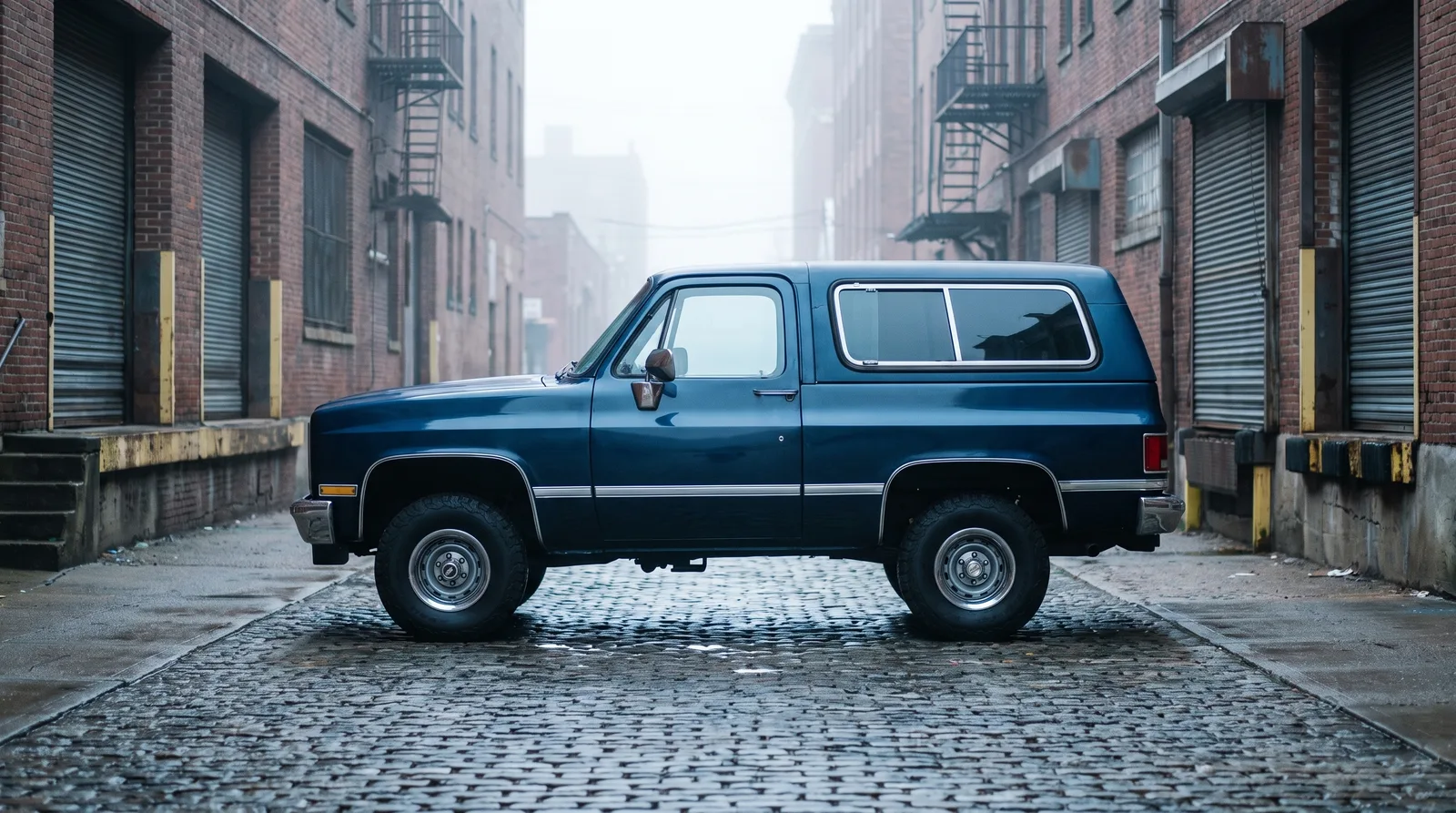
The Squarebody K5 Blazer 1973-1991
Article
The Blazer Chalet: The K5 Camper
Article
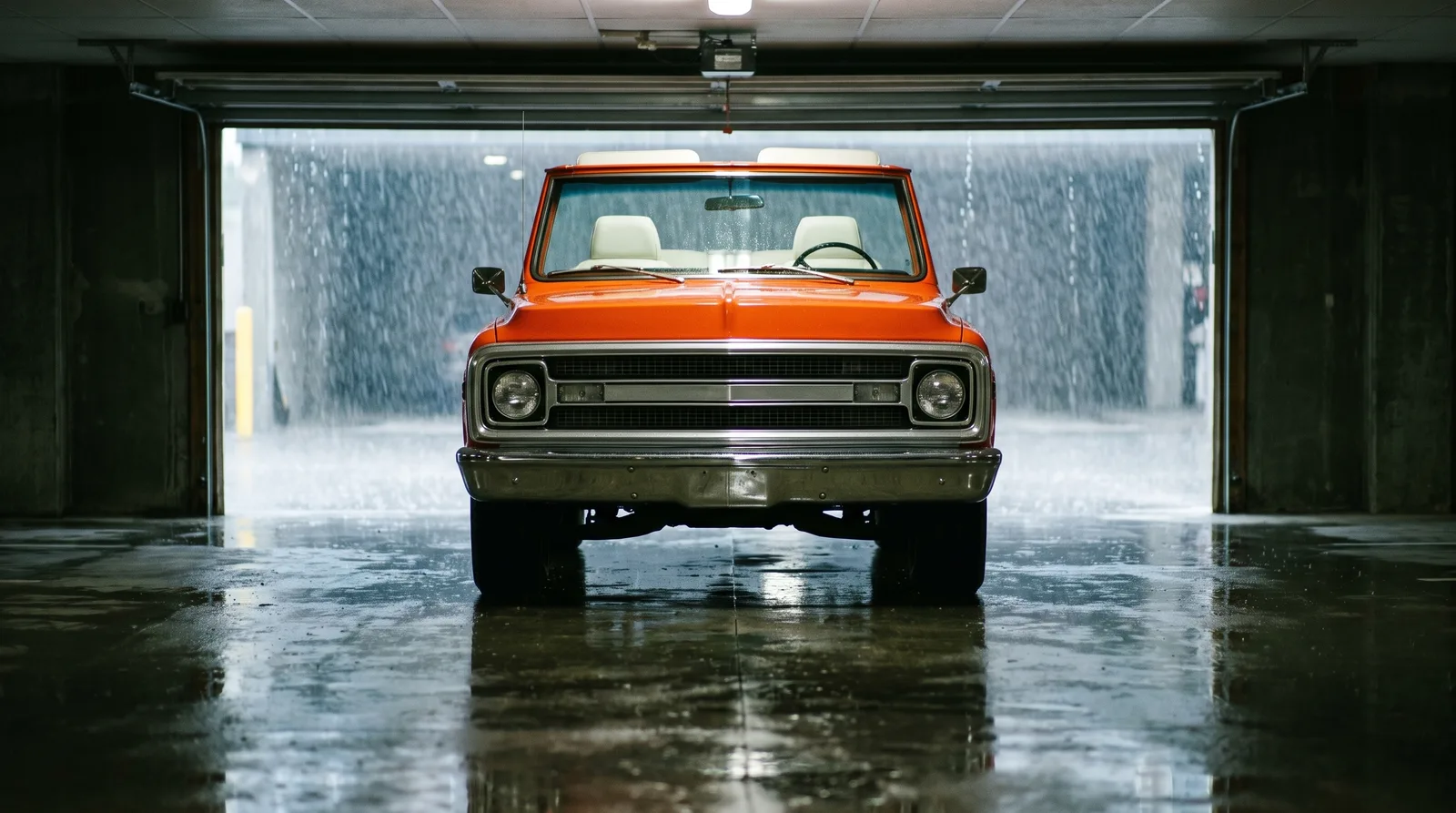
The K5 Blazer Convertible Top: The Full-Size Ragtop 4x4
Article
K5 Blazer vs Ford Bronco: The Full-Size 4x4 Rivalry
#1970s trucks
#Chevrolet trucks
#classic 4x4
#chevrolet k5 blazer
#squarebody
#gmc jimmy
#collector suvs

About the author
Patrick Walsh
Automotive journalist covering classic car shows, events, and the enthusiast community across North America.
Related Listings - Chevrolet Blazer





Comments
Be the first to comment on this article.