
Park a 1970 K5 Blazer next to an early Ford Bronco and the first thing you notice is not the grille or the wheelbase. It is the roof, or rather the lack of one. The k5 blazer convertible top vs bronco top argument has been running in truck stop parking lots and swap meet aisles for fifty years, and it usually comes down to a builder's opinion about what a full-size open top should feel like versus a compact one. I have wrenched on both, and they solve the same problem in two very different ways.
Car Features
7 min read
The K5 Top Against the Early Bronco Roof
A builder's honest comparison of the K5 Blazer's removable steel top and the early Ford Bronco's lighter hardtop, and what each one means for owning and restoring the truck.
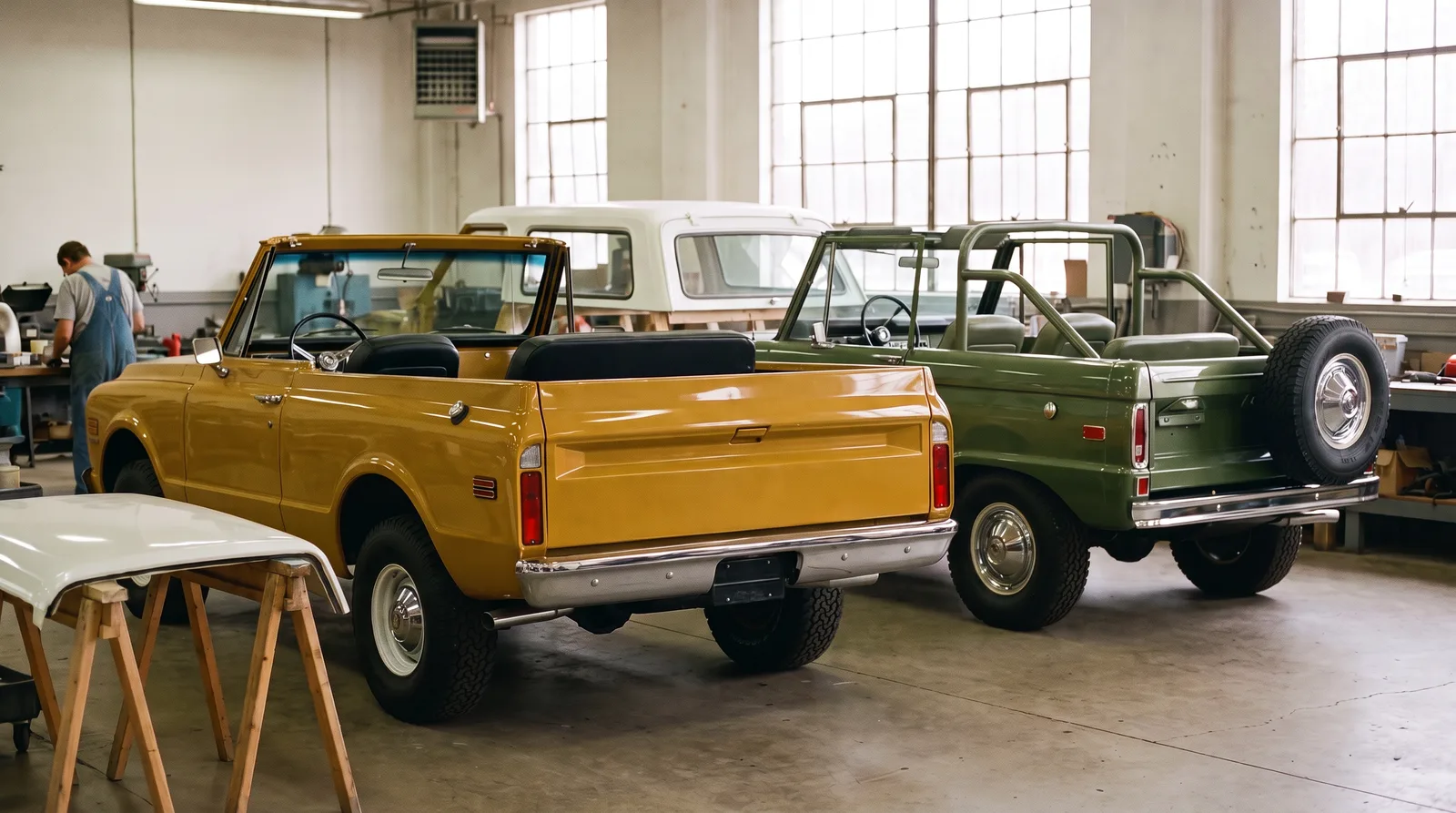
Two trucks, two philosophies
Ford got there first with the Bronco in 1966, a shorter, tighter package built around a removable fiberglass hardtop and a folding windshield on early units. Chevrolet answered in 1969 with the K5 Blazer, and instead of shrinking the idea down, they scaled it up. The K5 shares its front sheet metal, chassis, and running gear with the full-size C/K pickup line. That single decision shapes everything about how the top behaves. A Bronco top is a smaller, lighter shell over a smaller cab. A K5 top is a much bigger structure trying to seal a much bigger opening, and that difference shows up the moment you start comparing fit and function instead of just looking at brochure photos.
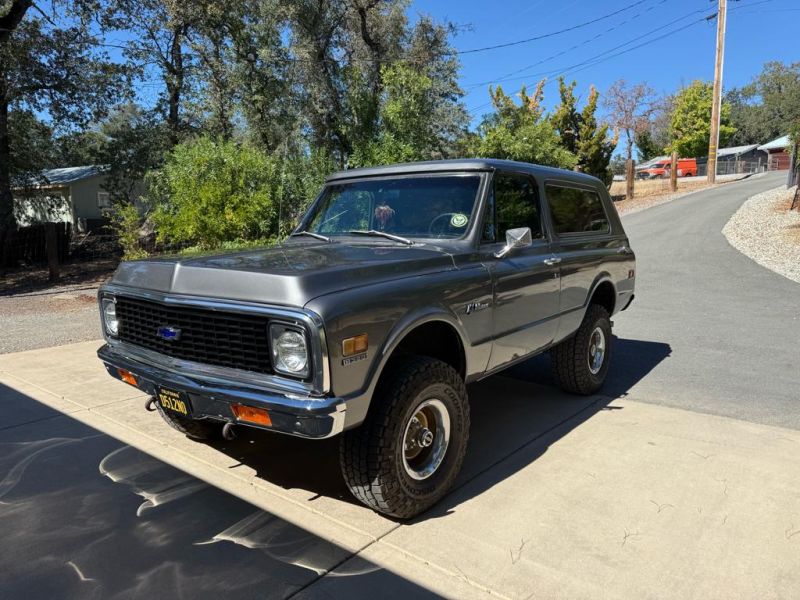
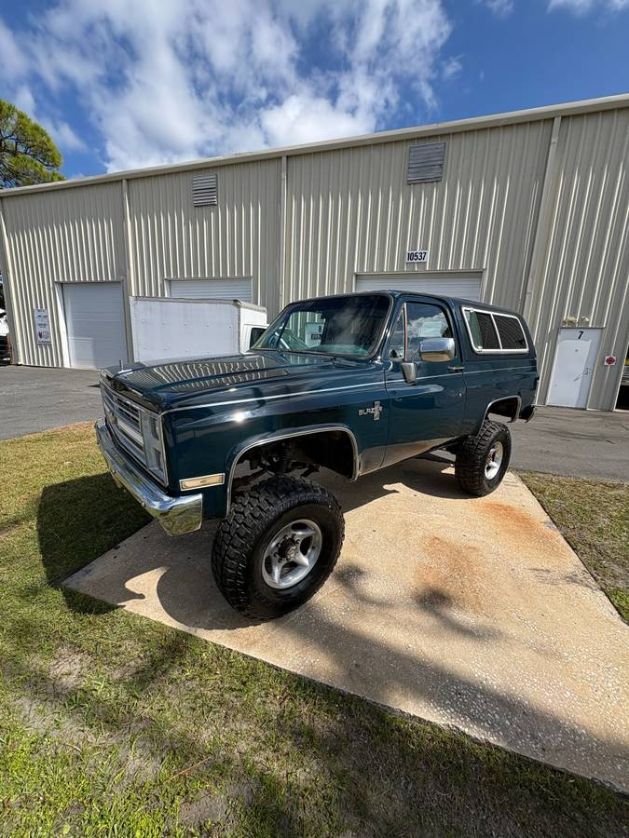
The removable steel top on the 1969 to 1972 K5 bolts down over the rear cargo area and cab, using a soft rubber gasket system and a set of bolts along the beltline. Pull those bolts, and with a shop crane or a few extra hands, the whole roof comes off in one piece, leaving the rollbar structure and a bare truck bed feel from the windshield back. The Bronco's early hardtop is a similar concept executed at a smaller scale, and it is genuinely lighter and easier for two people to lift off without equipment, which matters if you actually plan to remove it more than once a season.
Sealing, rattles, and living with it
Ask anyone who has daily driven either truck through a wet spring and you will hear the same complaint from both camps: leaks. The K5's larger perimeter means more gasket length to fail, more places for a seal to compress unevenly, and a heavier structure that can shift the sheet metal slightly out of true after a decade of being bolted and unbolted. Builders who chase a tight, quiet cab on a squarebody K5 spend real time shimming the top mounts and replacing weatherstripping, because the factory tolerance was never going to be perfect on a panel that large. The Bronco's smaller hardtop has less real estate to seal, and its simpler shape tends to hold its fit better over time, though it has its own rust and rot issues around the tailgate and rear corners that owners know well.
What the K5 gives up in sealing complexity, it gains back in interior room and highway manners. The wider track and longer wheelbase make the Chevrolet feel planted at speed in a way the shorter Bronco simply cannot match, top on or off. That tradeoff, room and stability against simplicity and ease of removal, is the real story behind the rivalry, more than any single spec sheet number.
What each truck feels like with the top off
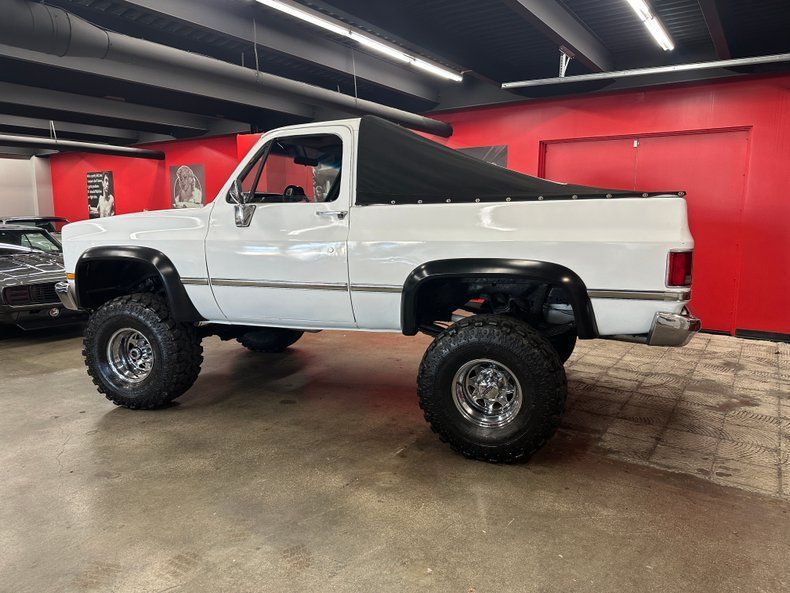
Drive a topless K5 and the sensation is closer to piloting a small pickup than a jeep. The cab sits high, the hood stretches out in front of you, and with the top gone the whole rear half of the truck opens up like a short bed with a rollbar. It is a different kind of open air experience than the Bronco, which feels tighter and more nimble with its top removed, closer in spirit to the original World War II jeep concept that inspired the whole category. Neither is wrong. They were built for different buyers from the start, with the Blazer aimed at someone who wanted truck capability first and open air second, and the Bronco aimed more squarely at the recreational off-road crowd.
For a builder deciding which platform to take on, the choice usually comes down to what you want the finished truck to do. If the plan is long highway hauls with occasional top-off weekends, the K5's size and stability win out. If the goal is a nimble trail rig that spends most of its life open, the Bronco's smaller footprint has real advantages. Neither answer makes the other truck wrong, and that is exactly why this comparison never really gets settled at a show or a cruise night. If you want the whole picture on how Chevrolet's convertible top actually worked, from bolt pattern to why it disappeared after 1975, that history is worth reading start to finish.
Weight, hardware, and the honest maintenance picture
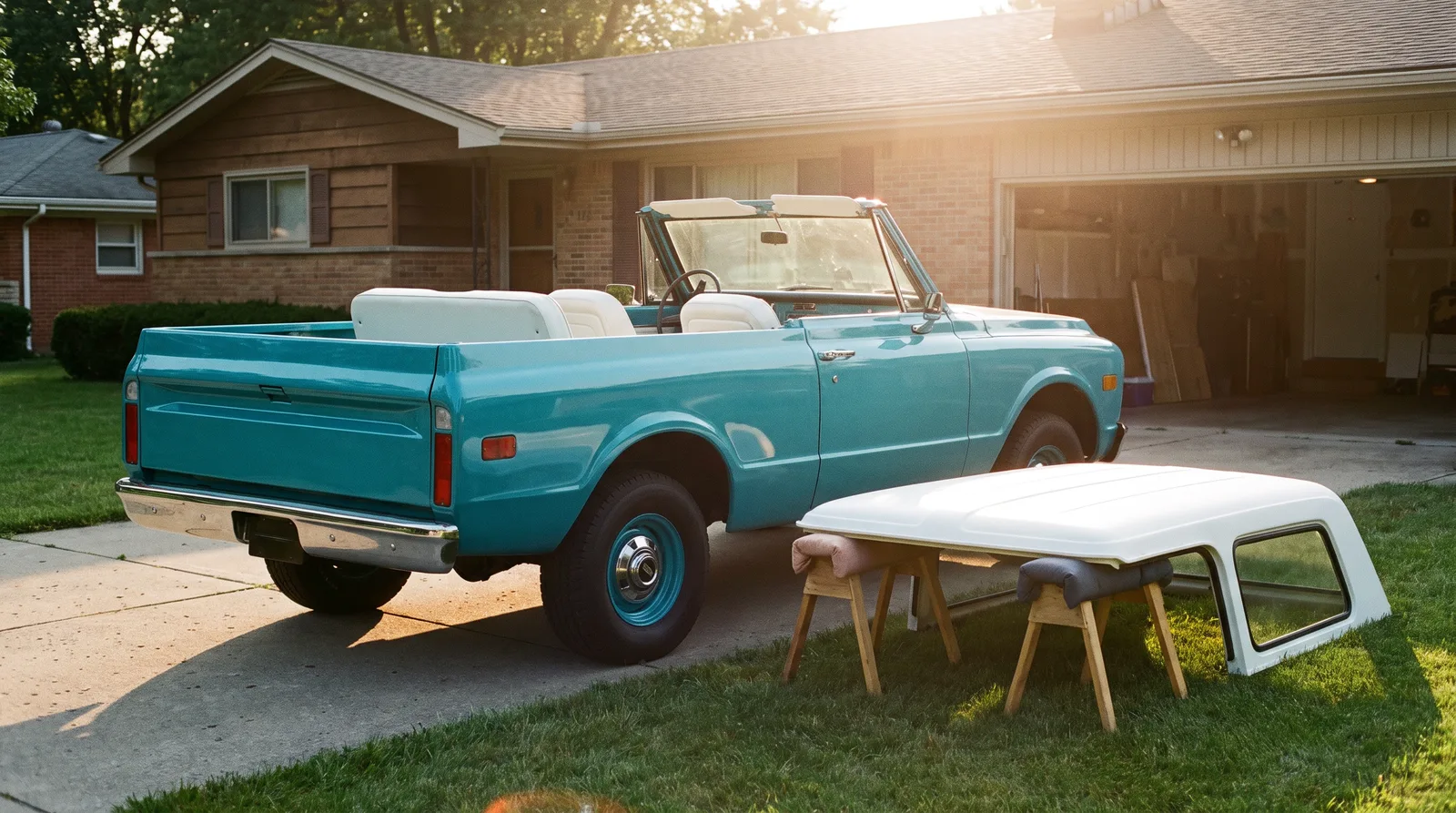
The K5's steel top is heavier than most people expect until they try to lift a corner of it alone. That weight is a big reason most owners treat removal as a seasonal job rather than a weekend habit, usually done with an engine hoist or a couple of strong friends and a padded set of stands to rest the roof on. The bolt hardware itself is simple, mostly a ring of fasteners along the top edge of the cab and bed rail, but rust and decades of over-tightening mean a lot of original bolts get replaced with fresh stainless before a top ever comes off cleanly again. Compare that to the Bronco's lighter shell, which two people can genuinely manage without machinery, and you start to understand why Bronco owners talk about topless summers more casually than K5 owners do.
None of this means the K5 loses the argument. A tight, well sealed removable top on a squarebody Blazer is one of the more satisfying restoration outcomes in the whole truck hobby precisely because it is hard to get right. The difficulty is part of the appeal for a certain kind of builder, the same way a manual transmission swap appeals to someone who wants to earn the driving experience rather than have it handed to them.
"People ask me which top is better and I tell them they're not really competing for the same job. The Bronco top comes off for an afternoon. The K5 top comes off for a season, and you plan around that."
- Jim Vasquez
Which one is right for your build
If you are shopping for a project truck, the top style should factor into your decision as much as the drivetrain does. A K5 with a rusted or missing top is a bigger, more expensive fix than most buyers expect, since good factory tops are getting harder to source and reproduction panels do not always fit as cleanly as an original. A Bronco missing its hardtop is a smaller problem in dollar terms but still not a trivial one. Either way, inspect the mounting points, the gasket channels, and the rear corners closely before you commit, because top condition tells you more about a truck's history than the paint ever will.
Whichever side of this debate you land on, both trucks earned their reputations honestly, built by two companies chasing the same open air idea from opposite directions. If you are ready to look at real trucks instead of just arguing about them, you can shop classic K5 Blazer listings and see how many surviving examples still wear their original removable tops.
Sources and notes
Related Reading
Have a
Chevrolet Blazer
for Sale?
Reach thousands of serious classic car collectors across the US.
Sell It Here →
Selling a classic? Here's how: sell my classic car
Are You a Classic Car Dealer?
List your full inventory and connect with targeted classic car buyers.
Join as a Dealer →

About the author
Jim Vasquez
Southern California hot rod and custom car builder with roots in the traditional kustom kulture scene.
Related Listings - Chevrolet Blazer




Comments
Be the first to comment on this article.