
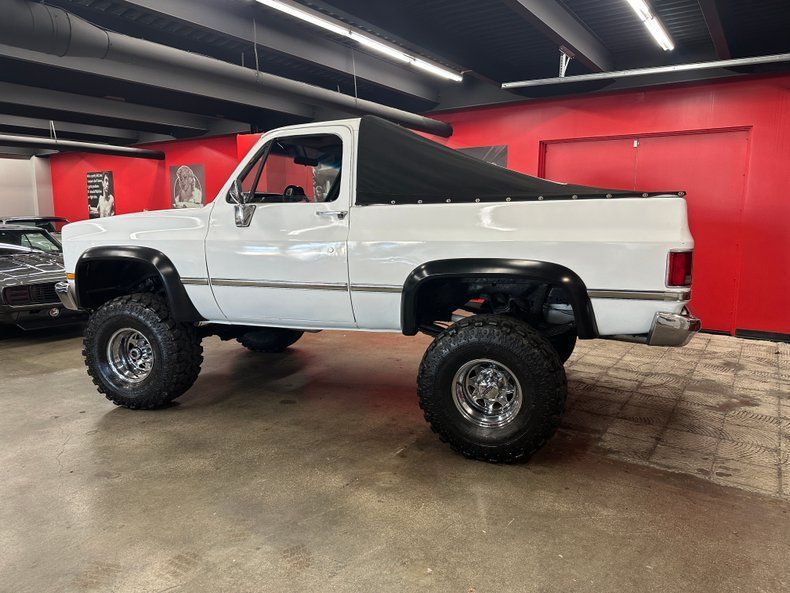
Every builder eventually has to explain why a manufacturer walked away from a good idea, and I get this question more than almost any other on the K5 Blazer. K5 blazer convertible top why dropped comes up at every show where an early truck sits next to a later one, and the honest answer has nothing to do with the design failing and everything to do with what it cost to keep building it.
Car Features
7 min read
Why Chevrolet Dropped the Full Convertible Top
A builder explains the engineering and business reasoning behind Chevrolet's 1973 decision to trade the K5 Blazer's full removable top for a fixed cab and a removable rear section.
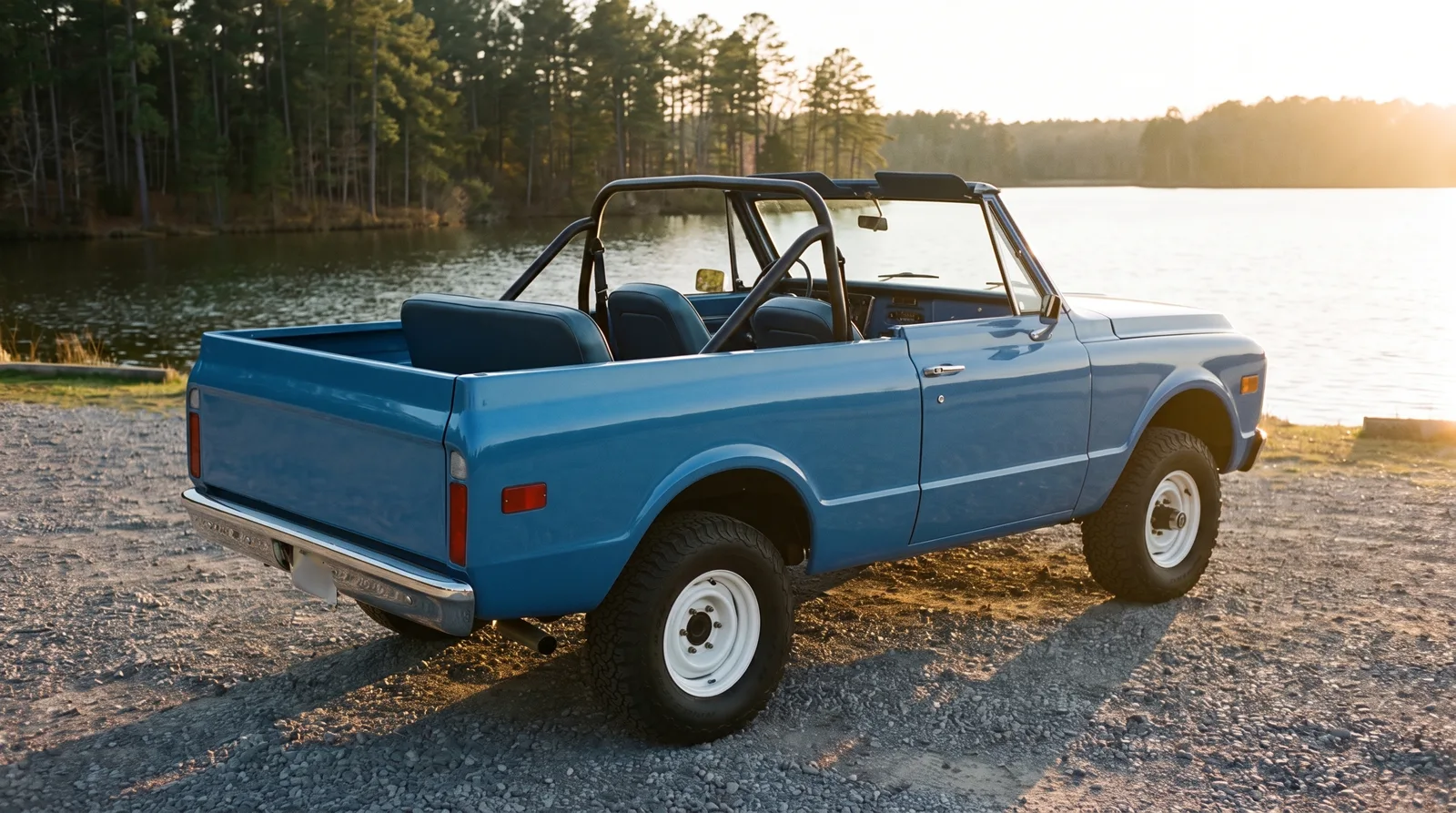
The truck GM actually wanted to sell
The full removable top on the 1969 through 1975 K5 Blazer was never really the point of the truck from Chevrolet's perspective. It was a feature that helped move units against the Ford Bronco and International Scout in a segment still finding its identity. GM's bigger ambition for the Blazer was as a genuine full-size truck platform, one that could compete on payload, towing, and drivetrain choice, not just on novelty. A removable top was a clever way to win early buyers. It was never going to be the foundation the whole product line got built on long term.
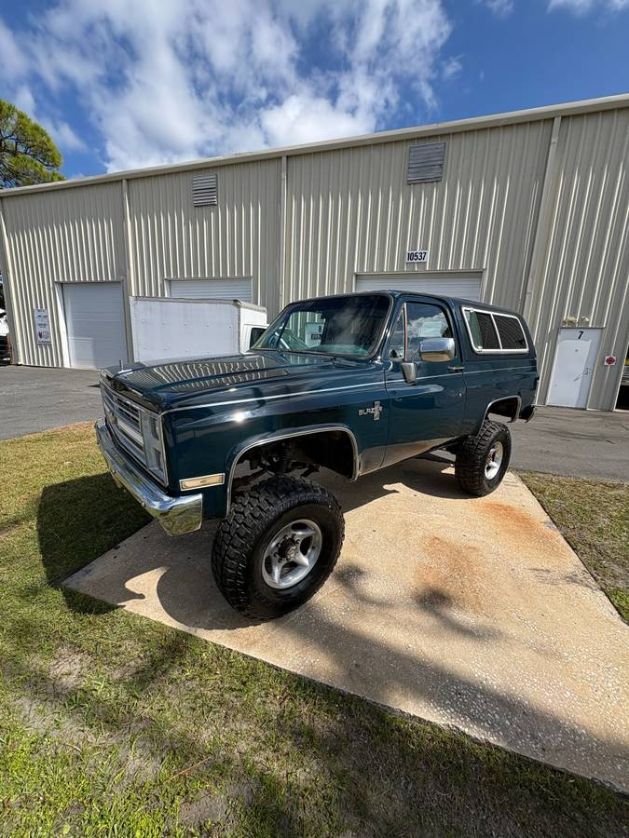
The full top actually outlived the first-generation truck itself. When the new squarebody C/K platform launched for 1973, Chevrolet carried the one-piece removable shell over onto the redesigned Blazer largely unchanged, and it stayed in production through 1975. The decision to finally drop it came three years after the chassis redesign, not alongside it, and safety was as much a driver as cost.
The engineering and safety case against the full top
A truck with no permanently fixed cab structure is inherently less rigid than one with a welded roof, doors, and windshield frame tying the body together. That flex matters for handling, for long-term durability, and for how well the body resists the twisting forces of real off-road use, and it matters most of all in a rollover, where a welded roof structure gives occupants meaningfully more protection than a shell held on by latches. Rising attention to rollover safety through the mid-1970s is widely cited as a major reason Chevrolet finally moved to a fixed cab with only a removable rear section for the 1976 model year, trading some of the open-air appeal for a stronger, quieter, more modern truck.
There was a manufacturing angle too. Building and shipping a separate top shell as a completely removable unit added cost and complexity to the assembly line that a welded cab did not require. Exact internal figures on warranty claims tied to weatherstripping, leaks, or misaligned reinstallation were never published for public reference, so that part of the decision is best described as a plausible contributing factor rather than a documented one.
What buyers actually wanted by the early 1970s
Consumer tastes were shifting too. The truck market was maturing past its Jeep-adjacent novelty phase and toward buyers who wanted a full-size vehicle that could serve as genuine daily transportation, not just a weekend toy. A fixed cab meant a quieter highway ride, better heating and cooling performance, and less owner maintenance overall, all things that mattered more to a broader buying public than the ability to remove the entire roof.
The removable rear section that arrived with the 1976 half-cab kept enough of the original appeal to satisfy plenty of buyers who wanted some open-air capability without the tradeoffs of the fully removable design. Chevrolet essentially split the difference, and the sales numbers over the following two decades suggest that compromise worked. Read where this started for the fuller account of how the original design came to exist in the first place.
"Manufacturers do not drop a good feature because it stopped working. They drop it because something else started making more sense on a balance sheet. That is exactly what happened here."
- Jim Vasquez
How the competition handled the same question
The Blazer was not alone in facing this tradeoff. Ford's Bronco kept a removable hardtop through much of its own production run without fully abandoning the concept, though its execution and market positioning differed enough that the two trucks are not a clean apples-to-apples comparison. International's Scout took yet another approach with its own convertible-adjacent body options. Chevrolet's choice to move decisively away from the full removable design, rather than keep iterating on it, set the Blazer apart from both rivals and pointed it toward a different kind of customer, one who wanted the truck to be excellent at being a truck first and an open-air novelty second.
Looking back, that decision probably helped the Blazer's longevity as a nameplate more than it hurt it. Nearly two decades of squarebody production followed the redesign, built on a platform that could handle real work, real mileage, and real weather without the compromises a fully removable cab structure demands over time. The trucks that people daily drove through the 1970s and 1980s were, in a very real sense, made possible by the decision to give up the feature that made the nameplate famous in the first place.
What the decision means for collectors today
The short production window for the full-convertible design is exactly why those early trucks command the attention and the money they do now. Chevrolet unintentionally created scarcity by moving on so quickly, and scarcity is one of the most reliable drivers of collector value in this hobby. A truck that only existed for seven model years, 1969 through 1975, built in numbers dwarfed by the sixteen years of half-cab squarebody production that followed, was always going to end up rare.
I tell people shopping in this space to stop thinking about the decision as a mistake GM made. It was a business decision that happened to leave behind a genuinely special truck for anyone patient enough to find one in good original condition. If you are hunting for a piece of that short window, classic K5 Blazer for sale listings are worth watching closely, since the earliest, most original examples do not sit on the market long once they surface.
Every good idea in the truck business eventually meets a spreadsheet. The full removable top just happened to meet its spreadsheet a little sooner than the people who loved it would have preferred, and that is the whole story of why it disappeared.
I have had customers ask if there was some dramatic failure behind the change, a lawsuit, a recall, a structural problem that forced Chevrolet's hand. There was not, at least not one documented publicly in any source I trust enough to repeat here. It was simply a company building a next-generation truck and choosing rigidity, cost control, and broader market appeal over a feature that, however beloved, only ever served a narrower slice of the buying public. That is a less dramatic story than some owners want, but it is the honest one, and it is the version I stick to when someone asks me across the hood of a truck on my lift.
Sources and notes
Related Reading

Have a
Chevrolet Blazer
for Sale?
Reach thousands of serious classic car collectors across the US.
Sell It Here →
Selling a classic? Here's how: where to sell your classic car online
Are You a Classic Car Dealer?
List your full inventory and connect with targeted classic car buyers.
Join as a Dealer →

About the author
Jim Vasquez
Southern California hot rod and custom car builder with roots in the traditional kustom kulture scene.
Related Listings - Chevrolet Blazer




Comments
Be the first to comment on this article.