
The GMC Jimmy did not appear out of nowhere in 1970. It arrived a full model year after the Chevrolet K5 Blazer, built on the same 1967-72 C/K truck platform, wearing the same removable top and the same open cargo bed, but carrying a GMC grille and a different story about why it existed at all. For a company that had spent a decade selling trucks as Chevrolet's slightly dressier sibling, the Jimmy was GMC's first real shot at the compact sport utility market that Ford and International Harvester had already staked out with the Bronco and the Scout.
Car Features
8 min read
How the 1970 GMC Jimmy Arrived as the K5 Blazer Twin
A year after the Chevrolet K5 Blazer launched, GMC finally got its own version. Here is why the Jimmy waited, and what its 1970 debut actually changed.
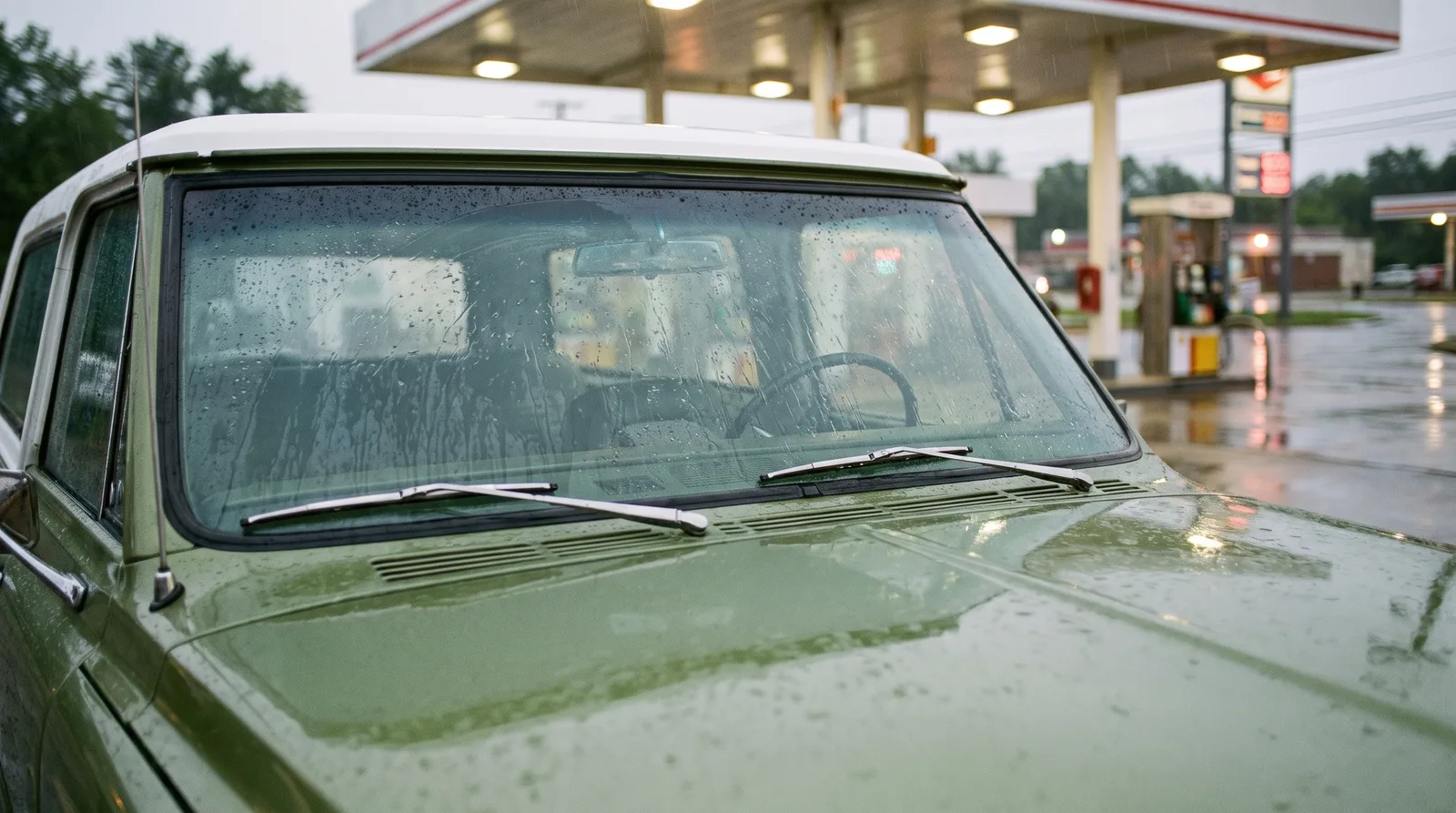
The lag matters more than it looks. Chevrolet launched the K5 Blazer for the 1969 model year, and GMC dealers spent that entire year watching Bronco and Scout buyers cross-shop a truck they could not sell. GMC's engineering and product teams did not need to invent anything new mechanically. They needed sign-off, tooling time, and a badge package, and none of that happens on a compressed timeline inside General Motors. So the Jimmy waited.
A truck GMC had wanted since 1967
GMC's parent company had already proven the formula worked. The K5 Blazer sold well enough in its first year that extending the platform to GMC was less a gamble than a formality. Internally, GM treated the Jimmy the way it treated most GMC light trucks of the era: a rebadge with distinct trim, a different grille, and separate marketing, built on the same frame, floorpan, and drivetrain as its Chevrolet counterpart. The 1970 Jimmy used the same 104-inch wheelbase, the same removable fiberglass hardtop or full canvas soft top, and the same choice of two-wheel or four-wheel drive that defined the first-generation K5.
What GMC brought to the table was less about hardware and more about positioning. GMC trucks in this era were sold as the working man's premium option, priced slightly above equivalent Chevrolet models and marketed through a smaller, often more rural dealer network. The Jimmy inherited that positioning from day one. It was never going to outsell the Blazer, and GMC's own sales figures never suggested anyone expected it to. It existed to close a gap, not to compete for volume.
The paperwork behind the badge
Anyone who has spent time cross-referencing GM production records for this era knows the documentation is thinner than collectors would like. GMC did not track the Jimmy as a standalone model with the same granularity Chevrolet applied to the Blazer, and early GMC truck literature treated the Jimmy almost as a footnote to the C/K pickup line rather than a flagship. That has real consequences for anyone researching a specific 1970 Jimmy today. VIN decoding works the same way it does for the Blazer, since both trucks share GM's K-series coding structure, but GMC-specific build sheets and dealer invoices from 1970 are considerably rarer to find intact than Chevrolet paperwork from the same year.
This is worth saying plainly because a lot of casual histories treat the Jimmy and the Blazer as interchangeable trucks with different logos, and mechanically that is close to true. But the recordkeeping gap is real, and it shapes how confidently anyone can talk about exact 1970 Jimmy production numbers today. Figures that circulate in enthusiast forums for first-year Jimmy output should be treated with caution, since GM production records and reference sources like Wikipedia break out totals for the Chevrolet K5 Blazer but do not separately publish a first-year GMC Jimmy production total, until a specific number can be traced back to a GM archival source rather than a repeated internet claim.
What changed and what did not
Mechanically, the 1970 Jimmy is a 1969 Blazer with a different face. Both trucks used GM's small block V8 options alongside the standard six-cylinder, both offered the same three-speed manual as the base transmission with automatic and heavier-duty options further up the list, and both retained the removable top that made the Blazer and Jimmy genuinely unusual among American trucks of the period. Ford's Bronco also had a removable top, but on a much smaller compact truck, and the Scout had its own separate approach entirely. GM's decision to make the whole top structure liftable, on both the Chevrolet and GMC versions, was the platform's real differentiator, and GMC did not touch it.
Where GMC did differentiate was trim and badging, which mattered more to period buyers than it might seem now. GMC's grille treatment, hood emblem, and interior badging separated the Jimmy visually from the Blazer even at a glance across a dealer lot, and GMC's own trim naming conventions, which would later produce names like Sierra and High Sierra, started taking shape almost immediately. The 1970 model year is really the baseline the rest of the Jimmy's badge history builds from. For anyone tracing how those later trim names developed, our gmc jimmy history covers the full arc from this 1970 debut through the end of the squarebody era in 1991.
Dealers, buyers, and the first year in the field
GMC's dealer network in 1970 skewed toward commercial and rural accounts more heavily than Chevrolet's, and that shaped who actually bought a first-year Jimmy. A meaningful share went to buyers who already owned GMC pickups for farm or work use and wanted a second vehicle that could tow, haul, and still serve as a family truck on weekends. That is a slightly different buyer profile than the one Chevrolet was chasing with the Blazer, which leaned harder into the recreational and outdoor-lifestyle marketing that defined so much of the Blazer's early advertising.
The practical result is that surviving 1970 Jimmys today tend to show up with more work history and more four-wheel-drive equipment than their Blazer counterparts from the same year, though that is an observation from the surviving population rather than a documented sales statistic. Collectors chasing an original, unmolested first-year Jimmy are working with a smaller pool than Blazer collectors face, both because total production was lower and because more of them were used hard.
"People assume the Jimmy was just a Blazer with a different hood ornament, and mechanically that is basically correct. But GMC's dealer network sold it to a different customer, and that difference shows up in which trucks survived. The ones that lived on farms got used up. The ones that sat in a garage in town are the ones we find in good shape forty years later."
- Tom Ramirez
How the debut compared to the competition
Context matters here. When the 1970 Jimmy reached dealers, it was not entering an empty market. Ford's Bronco had been on sale since 1966, and International Harvester's Scout had been available even longer, so GMC was arriving late to a segment two competitors had already spent years defining. That lateness is not a footnote. It shaped how GMC's own sales staff pitched the truck, since they could point to a proven market rather than having to convince a buyer that a small four-wheel-drive sport utility was worth owning at all.
What GMC had that neither Ford nor International offered was a fully removable hardtop on a full-size truck, shared with the Chevrolet Blazer, which let a buyer turn a roomy hauler into something close to an open-air vehicle. That single feature became the Jimmy's clearest point of difference against the Bronco and the Scout, and GMC's early advertising leaned on it heavily even while the rest of the truck's story, badge and dealer network aside, was inherited wholesale from Chevrolet's engineering work.
Pricing followed GMC's usual pattern relative to Chevrolet as well. A 1970 Jimmy typically carried a modest premium over an equivalent Blazer, consistent with how GMC positioned its trucks generally in this period, and that pricing gap is one more reason the Jimmy's first year sales lagged the Blazer's by a wide margin. Buyers paid more for the same truck under a different badge, and the market responded accordingly, favoring the lower-priced Chevrolet version even where the two trucks were, mechanically, indistinguishable.
Why the 1970 Jimmy still matters
Every GMC Jimmy variant that followed, from the Sierra and High Sierra trim packages to the later Casa Grande special edition, traces back to this first model year. Understanding the 1970 debut is understanding the baseline against which every later change gets measured, whether that is a badge update, a trim package, or the shift to the squarebody body style in 1973. It is also a useful corrective to the assumption that GMC trucks of this era were pure afterthoughts. The Jimmy was a deliberate, if delayed, decision to compete in a market segment GM had already proven out with the Blazer, and GMC's execution of it, badge differences aside, was faithful to the original in every mechanical respect that mattered.
For readers weighing how the Jimmy's identity evolved once GMC started leaning harder into badge differentiation, a related story looks at exactly how much daylight actually existed between a Jimmy and a Blazer once both trucks were established in the market. And for anyone whose interest in the 1970 debut year has turned into wanting one, K5 Blazers for sale now is the place to see what has actually survived from this generation.
Sources and notes
Related Reading

About the author
Tom Ramirez
Corvette researcher and historian based in Bowling Green, Kentucky. Two decades documenting Corvette production history from original factory records.
Related Listings - Chevrolet Blazer




Comments (1)
F
fordgirl_kate
1 day ago
Counterpoint from a test engineer: the town trucks ate road salt every winter. Plenty of dry Western farm Jimmys outlived them. Corrosion beats mileage.
Kate, climate may sort the survivors more than town or farm does. A Jimmy that worked a dry ranch in Nevada and one that sat in a heated garage in Ohio can both come out well; one that commuted through a Michigan winter usually did not. The surviving population I have seen paperwork for leans toward garage-kept trucks, and that is an observation, not a statistic. Nobody has published a survival study by region that I would trust.