
I have lost count of how many times I have stood at a truck show next to a GMC Jimmy while somebody's kid asks their dad why "that Blazer says Jimmy on it." The honest answer takes longer than a parking lot conversation usually allows, because the relationship between the K5 Blazer and the Jimmy is one of those things that sounds simple until you actually try to explain it. Same truck, different name, and yet owners of each will argue for hours about which one is the "real" thing.
Car Features
7 min read
Jimmy or Blazer: The Same Truck Under Two Badges
The GMC Jimmy and the Chevrolet K5 Blazer share a frame, a drivetrain, and a removable top. What actually separates them comes down to badges, trim names, and who GMC was selling to.
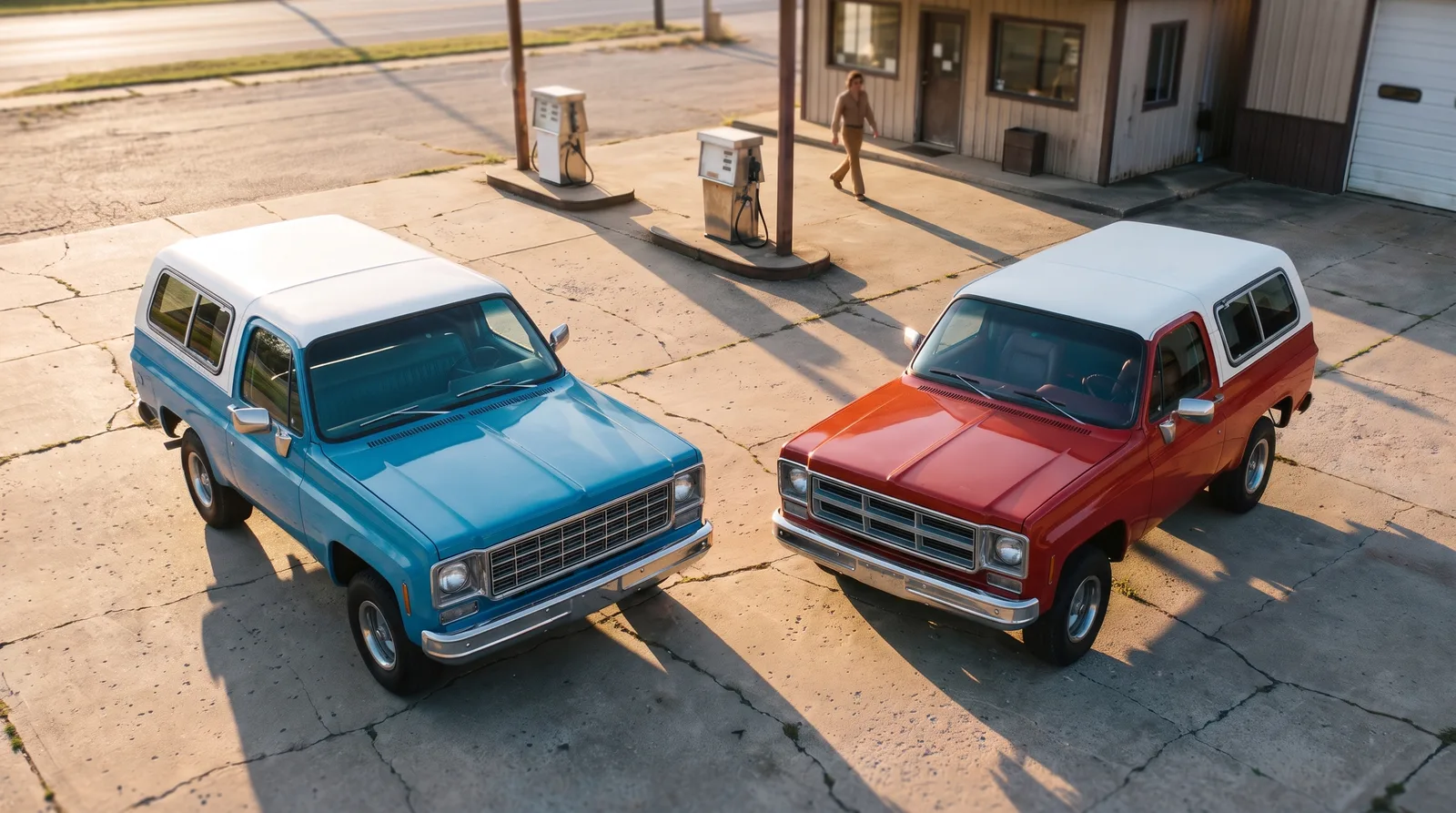
Our club has always had a mix of both badges parked in the same field at events, and over the years I have heard every theory about what actually separates a Jimmy from a Blazer. Most of it is folklore. Some of it is true. The truck itself, underneath the badge, does not care much either way.
What is actually different
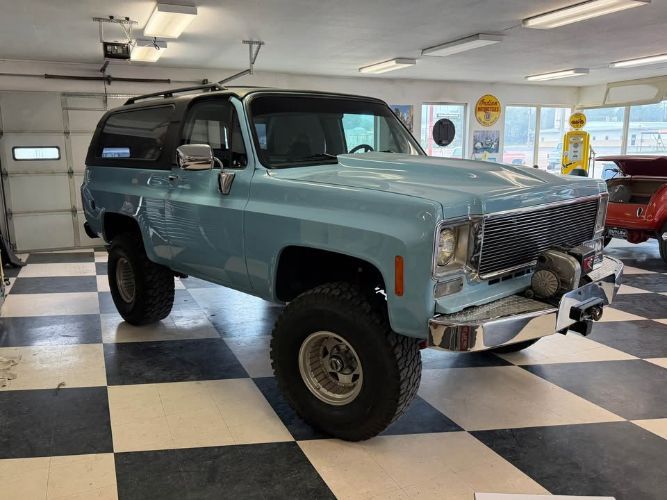
Strip away the emblems and you are looking at the same frame, the same K-series four-wheel-drive running gear, the same removable top, and largely the same engine choices across both trucks in any given year. GM built the Blazer and the Jimmy on shared tooling from the start, and that never changed across either generation, from the round-body trucks of 1969 through 1972 to the squarebody trucks that ran from 1973 to 1991. If you pulled the badges off a Blazer and a Jimmy from the same model year and parked them side by side, most people could not reliably tell them apart from ten feet away.
What actually differs is trim level naming, grille design, and some interior details GMC used to justify its slightly higher price point. GMC ran its own trim ladder, with names like Sierra, High Sierra, and later the Casa Grande special edition, that never appeared on a Chevrolet Blazer window sticker. Chevrolet had its own equivalent naming for the Blazer's upper trims. Neither company borrowed the other's trim names, which is part of why longtime owners can usually place a truck's badge just from hearing someone describe the interior package, even without seeing the grille.
Why GMC bothered at all
The short version is that GMC dealers wanted something to sell against the Blazer, and General Motors had already built the tooling to make a second badge version relatively cheap. GMC's dealer network in this era skewed rural and commercial, selling to farmers, contractors, and small fleet buyers who already trusted the GMC name on their pickups. Giving that same customer base a sport utility option, rather than sending them across town to a Chevrolet dealer, made business sense even if the Jimmy never came close to matching Blazer sales volume.
There is a persistent myth in some corners of the hobby that the Jimmy was somehow a "cheaper" or "lesser" version of the Blazer, built to a lower spec. That is backwards. GMC generally positioned its trucks a notch above the equivalent Chevrolet in price and trim content, not below. A well-optioned Jimmy in period would typically have cost more than a comparably equipped Blazer, not less, and GMC's higher trim packages often included features that took longer to reach the Blazer lineup.
How this plays out at a show or a swap meet
At club events, the badge debate almost always comes down to rarity rather than capability. Jimmy production numbers ran meaningfully lower than Blazer numbers across most model years, a gap the hobby generally accepts even though GM and reference sources do not publish an exact year-by-year Jimmy-to-Blazer production ratio, which means fewer Jimmys survive today in any given condition tier. That scarcity has started to matter more to buyers over the last decade, and I have watched clean Jimmys sell for prices that would have surprised owners a generation ago, sometimes matching or exceeding a comparable Blazer simply because there are fewer of them left to choose from.
None of that changes what the truck actually is mechanically. A four-wheel-drive Jimmy with a small block V8 drives exactly like a Blazer with the same drivetrain, because it is, functionally, the same truck. Parts interchangeability between the two is close to total for anything mechanical, which is a genuine advantage for Jimmy owners since it means the much larger Blazer parts market effectively serves both trucks.
"Somebody at every show tries to tell me the Jimmy is the underdog version of the Blazer, and I always ask them to check a period GMC price sheet before they say that again. GMC never sold this truck as the cheap option. They sold it as the truck for people who already trusted the GMC name."
- Wayne Coburn
What our club has actually seen change over time
I have been going to the same handful of shows for close to twenty years now, and the badge conversation has genuinely shifted in that time. A decade or two ago, a Jimmy at a show was treated almost as a curiosity, something people looked at and then walked back over to admire a Blazer instead, simply because the Blazer was the name everyone already knew. That has changed. Younger collectors coming into the hobby now, in my experience, are often actively looking for the Jimmy specifically, precisely because it is less common and less expected.
Part of that shift is generational curiosity, and part of it is straightforward economics. As Blazer prices climbed across the broader classic truck market over the last several years, buyers priced out of a nice Blazer started looking sideways at the Jimmy as a way to get the same platform, the same removable top, the same driving experience, sometimes for less money simply because fewer buyers were competing for the smaller pool of Jimmys on the market. That gap has narrowed as more people caught on, but it has not closed entirely, and I still hear from members who found their Jimmy specifically because it was the more affordable route into this platform.
None of this changes the underlying mechanical reality that started this whole conversation. The two trucks share a frame, a drivetrain, and a body structure, and any argument about which one is "better" eventually has to reckon with the fact that, apart from badges and trim naming, you are arguing about which logo you would rather look at every time you walk up to your own truck.
Which one should you actually want
I do not think there is a correct answer here, and I would be lying if I pretended the club did not split roughly down the middle on this question every year. If parts availability, resale liquidity, and a bigger pool of trucks to choose from matter most to you, the Blazer's larger production numbers make the search easier. If you like the idea of owning something less common at truck shows, with trim names most people outside the hobby have never heard of, the Jimmy scratches that itch in a way the Blazer cannot.
Either way, you are buying into the same platform, the same removable-top format that made this truck genuinely different from a Bronco or a Scout, and the same running gear. For readers who want the full arc of how GMC's version of this truck developed from its 1970 debut through the end of production, our complete history lays it out year by year. And if this back and forth has you leaning toward actually owning one, find a classic K5 Blazer is worth a look regardless of which badge you end up choosing.
Sources and notes
Related Reading

About the author
Wayne Coburn
Longtime Corvette owner, judge and club figure who knows the cars, the records and the people behind them.
Related Listings - Chevrolet Blazer





Comments
Be the first to comment on this article.