
There is a photograph that circulates in GMC forums every few years, grainy and often mislabeled, showing a mud-caked full-size Jimmy parked outside a feed store somewhere in the Ozarks, tow chain looped over the front bumper like a scarf. Nobody remembers who took it. Everybody claims to recognize the truck. That is the GMC Jimmy in four wheel drive culture in miniature: a machine that became folklore before it became a collectible, remembered less for what it was on a spec sheet and more for what it did on a Sunday afternoon when a creek crossing looked passable and a friend needed proving wrong.
Car Features
7 min read
The GMC Jimmy in Four Wheel Drive Culture
The full-size GMC Jimmy never marketed itself as a trail truck, but ranchers, line crews, and off-road clubs turned it into a fixture of four wheel drive culture anyway.
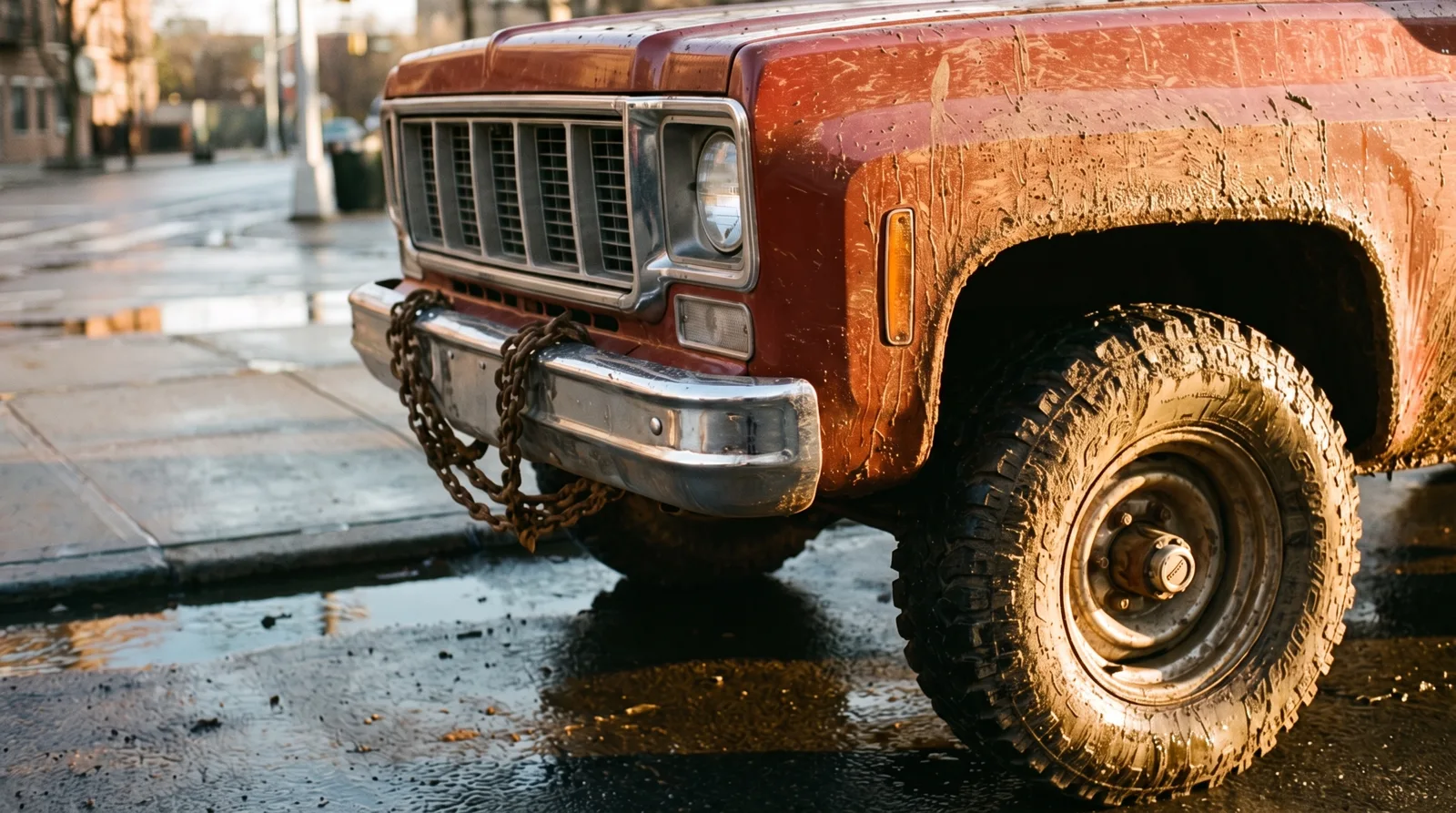
The Jimmy was never marketed as an off-road purist's tool the way some contemporaries were. GMC built it as a do-everything wagon, a Suburban's shorter, boxier cousin that happened to come with real transfer cases and real axles. But that practicality is exactly why it ended up so deep in 4x4 culture. It was the truck a rancher already owned, the truck a hunting camp already had a key to, the truck that ended up towing a boat on Saturday and hauling hay on Monday. Off-roading was not a hobby bolted onto the Jimmy after the fact. It was baked into a full-time transfer case and a frame that could take a beating without complaint.
A truck built for people who did not call it recreation
Through the 1970s and into the 1980s, the GMC Jimmy found its way into the kind of communities where four wheel drive was not a weekend identity but a Tuesday necessity. Forest Service contractors used them. Line crews used them. Small-town sheriff's departments in snow country put them into rotation because a K5 with chains could reach places a sedan patrol car simply could not. None of this made headlines. It made the Jimmy a fixture, the sort of vehicle that shows up in the background of decades of local news footage without anyone thinking to mention its name.
That utilitarian reputation is also what built the enthusiast base that exists today. People who grew up riding in the back of a Jimmy on a logging road, or who watched a father winch one out of a ditch at midnight, do not think of it as an appliance. They think of it as the vehicle that never quit, and decades later that memory is exactly what pulls a fifty-year-old back into a Jimmy's driver seat at a swap meet. For the whole picture of how the Jimmy and its Chevrolet twin came to be, the story runs back through GM's decision to give both divisions a genuine competitor to the Ford Bronco and the International Scout, but the culture side of that story is really about who kept the trucks running long after the factory stopped caring.
The removable top generation and open-air trail culture
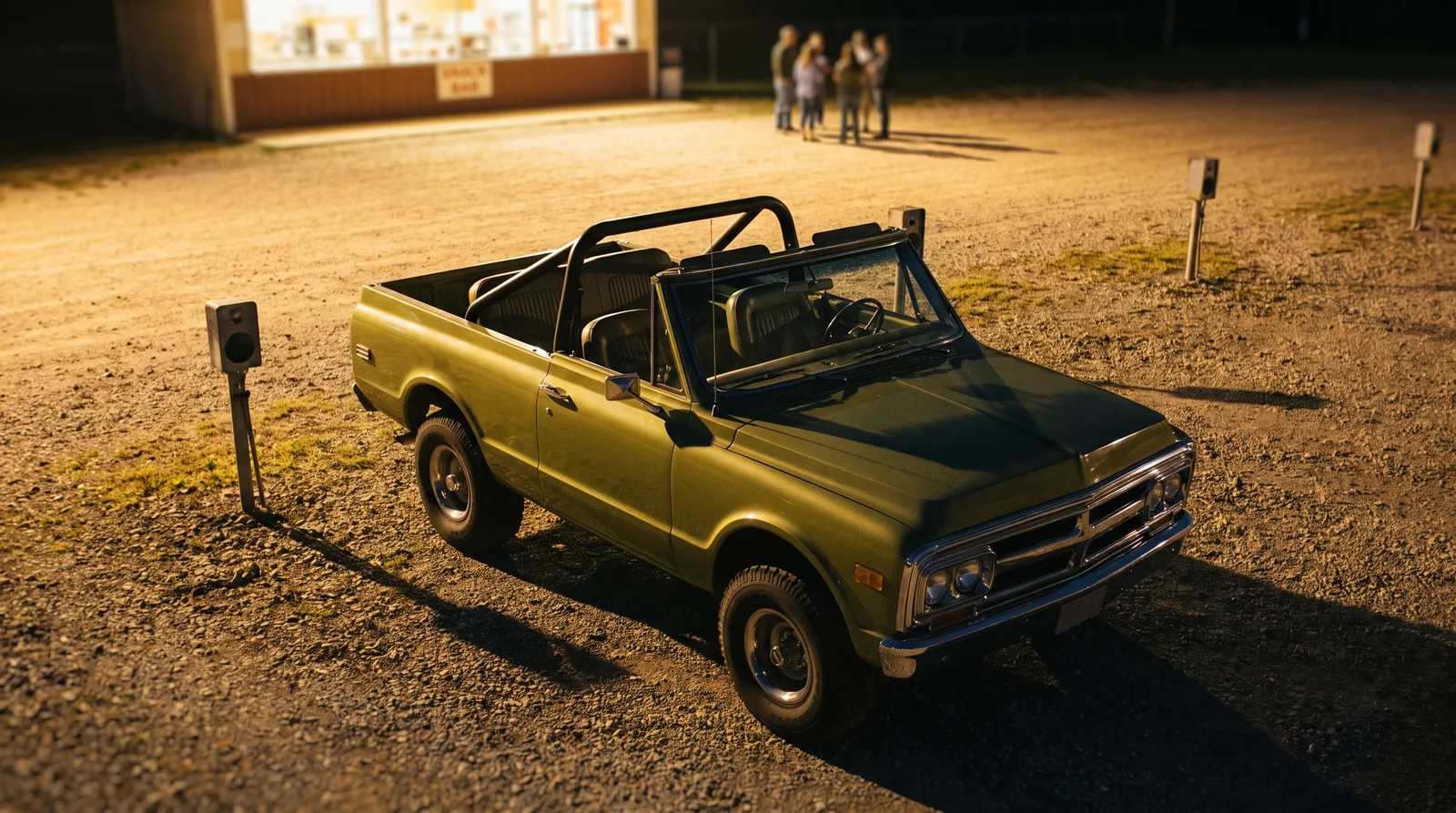
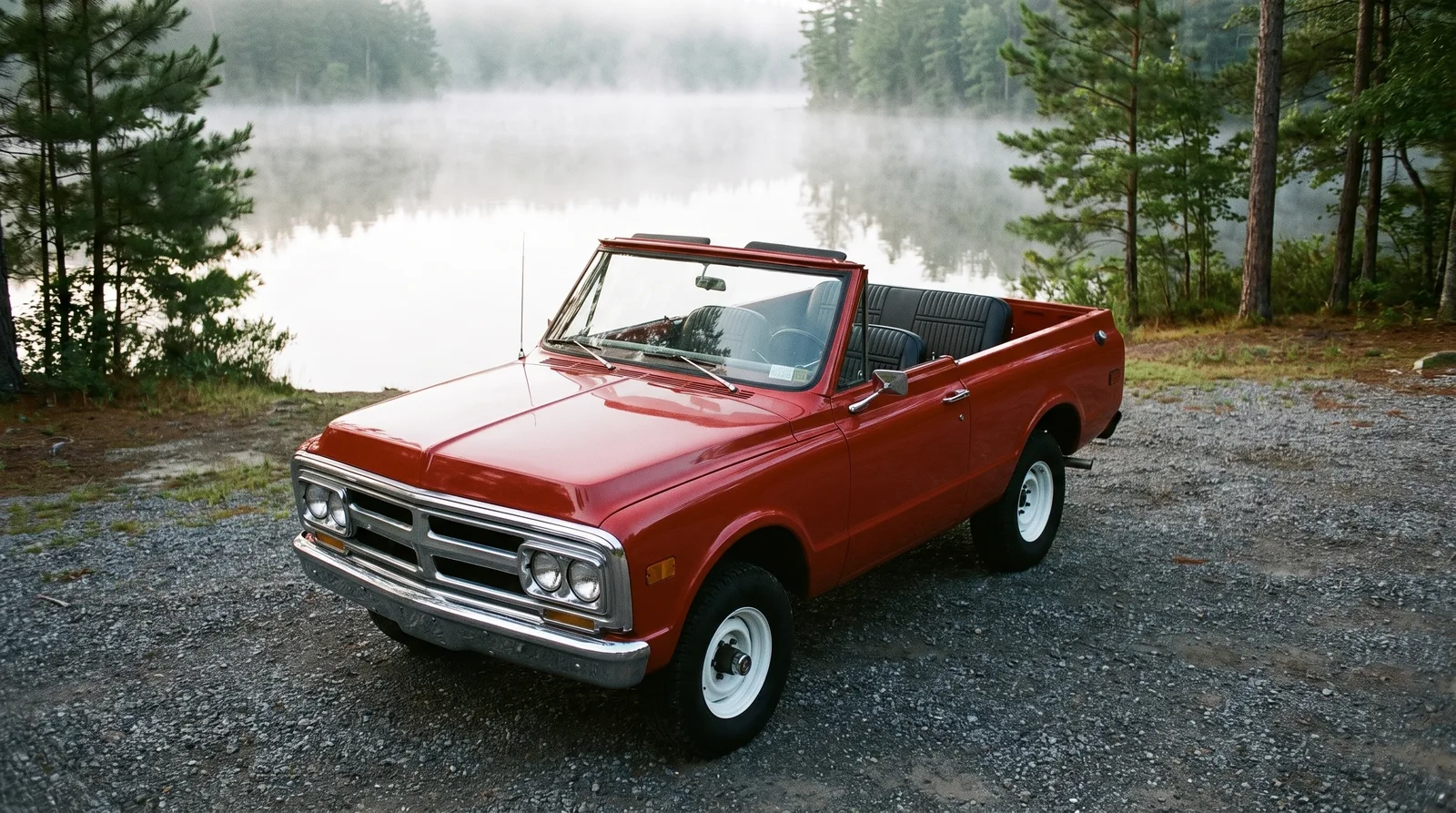
The earliest Jimmys, built from 1970 through 1972, carried a removable steel roof and a swing-away tailgate that turned the truck into something closer to an oversized Jeep than a wagon. That configuration mattered more than it looks like it should have. Pulling the top off before a trail run was a ritual, not a chore, and it gave the early Jimmy a specific identity among off-road clubs: half utility truck, half open-air toy. Owners who still run those early trucks today talk about the top removal the way sailboat owners talk about raising a sail, as a small ceremony that changes the character of the whole outing.
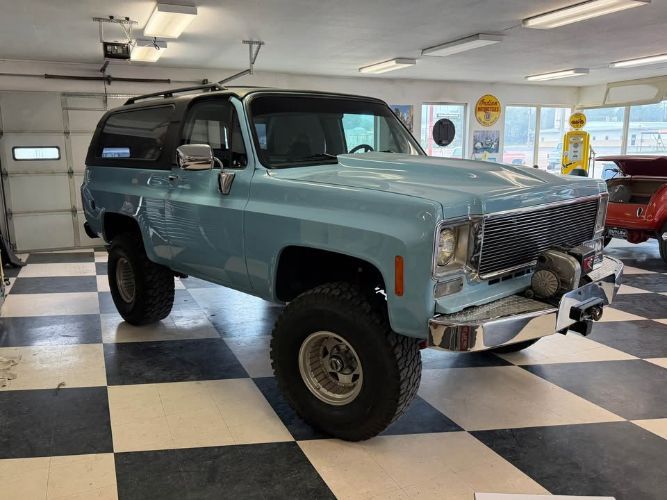
The squarebody generation arrived in 1973, but the removable top itself did not disappear right away. Convertible-style tops carried over into the new body through 1975 before GMC switched to a fixed half-cab roof for 1976, a change driven largely by rollover-safety concerns rather than comfort. Once that fixed roof arrived, the Jimmy gained the quietness and weather sealing to survive a Montana winter without a heater running flat out, and off-road clubs adapted. The later squarebody Jimmy became the truck people trusted for longer, colder, more remote trips, the kind where a removable top would have been a liability rather than a feature.
Clubs, caravans, and the informal network that kept Jimmys running
Long before online forums existed, Jimmy and Blazer owners found each other through four wheel drive clubs, county fairground meetups, and word of mouth at parts stores. These groups were not glamorous. They traded advice on axle gearing, argued about tire sizes, and organized caravan trips into national forest land that a solo driver would have been foolish to attempt alone. That informal network did more to keep full-size Jimmys alive through the lean years of the 1990s and 2000s, when the trucks were simply used vehicles and nobody thought of them as collectible, than any factory support program ever did.
"Every Jimmy I have owned came with somebody else's fingerprints on it, a bent tow hook here, a hand-painted club sticker there. You are not just buying a truck. You are buying into forty years of people who refused to let it die."
- Nora Beckett
That inherited character is part of why the Jimmy resonates so strongly with a certain kind of buyer today. It is not a truck that was preserved in a climate-controlled garage and rolled out for car shows. It is a truck that was used, abused, fixed, and used again, and the ones that survive carry that history somewhere in the metal.
Where the culture stands now
Modern off-road culture has circled back to appreciate exactly what made the Jimmy useful in the first place. Solid axles, simple electronics, and a frame that welders can actually work with have made the full-size Jimmy attractive again, this time to a generation that grew up on Jeeps and is discovering that GM's answer to the same problem was every bit as capable. Trail groups that once ignored GMC trucks in favor of Broncos and Scouts now welcome Jimmys as regulars, and event organizers report growing numbers of full-size GM trucks at overland meetups that would have been unimaginable a decade ago.
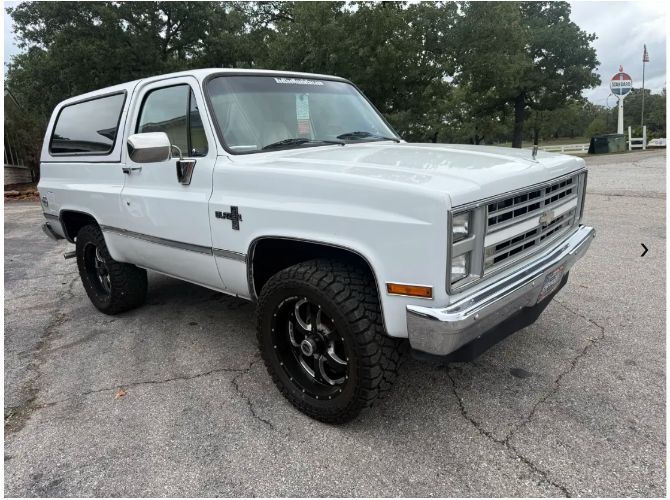
For anyone drawn into that history and looking to actually own a piece of it, it is worth taking the time to shop classic K5 Blazer listings rather than chasing the first truck that pops up in a local search. Condition and drivetrain history vary enormously between examples, and the trucks that best represent this culture tend to be the ones with a documented working past rather than a cosmetic restoration with no story behind it.
The Jimmy's place in four wheel drive culture was never built by marketing. It was built one muddy trail, one winter delivery, one loaned-out farm truck at a time, and that is precisely why the culture around it still feels earned rather than manufactured, decades after the last one rolled off a GMC assembly line.
Ask a longtime Jimmy owner what the truck means to them and the answer rarely starts with horsepower or trim codes. It starts with a place, a season, a person who is no longer around to ask about it. That is a harder thing to manufacture than any marketing campaign, and it is exactly why the trucks keep finding new owners instead of quietly disappearing into scrapyards the way so many of their contemporaries already have.
Sources and notes
Related Reading

About the author
Nora Beckett
Automotive features writer and photographer who tells the human stories behind the cars, from show fields to cross-country road trips.
Related Listings - Chevrolet Blazer




Comments
Be the first to comment on this article.