
Ask ten Jimmy owners about the Casa Grande and you will get maybe three who actually know what it was without looking it up. That is not a knock on the hobby, it is just how obscure this particular special edition has become. I only learned the full story myself after a club member showed up to a meet with a Jimmy I did not recognize at all, badged in a way I had never seen on this platform before, and spent the better part of an hour explaining what he had.
Car Features
7 min read
Casa Grande: The Forgotten Luxury GMC Jimmy
Most Jimmy owners have never heard of the Casa Grande. A club member on GMC's forgotten limited-run luxury package and why it is so rare to find today.
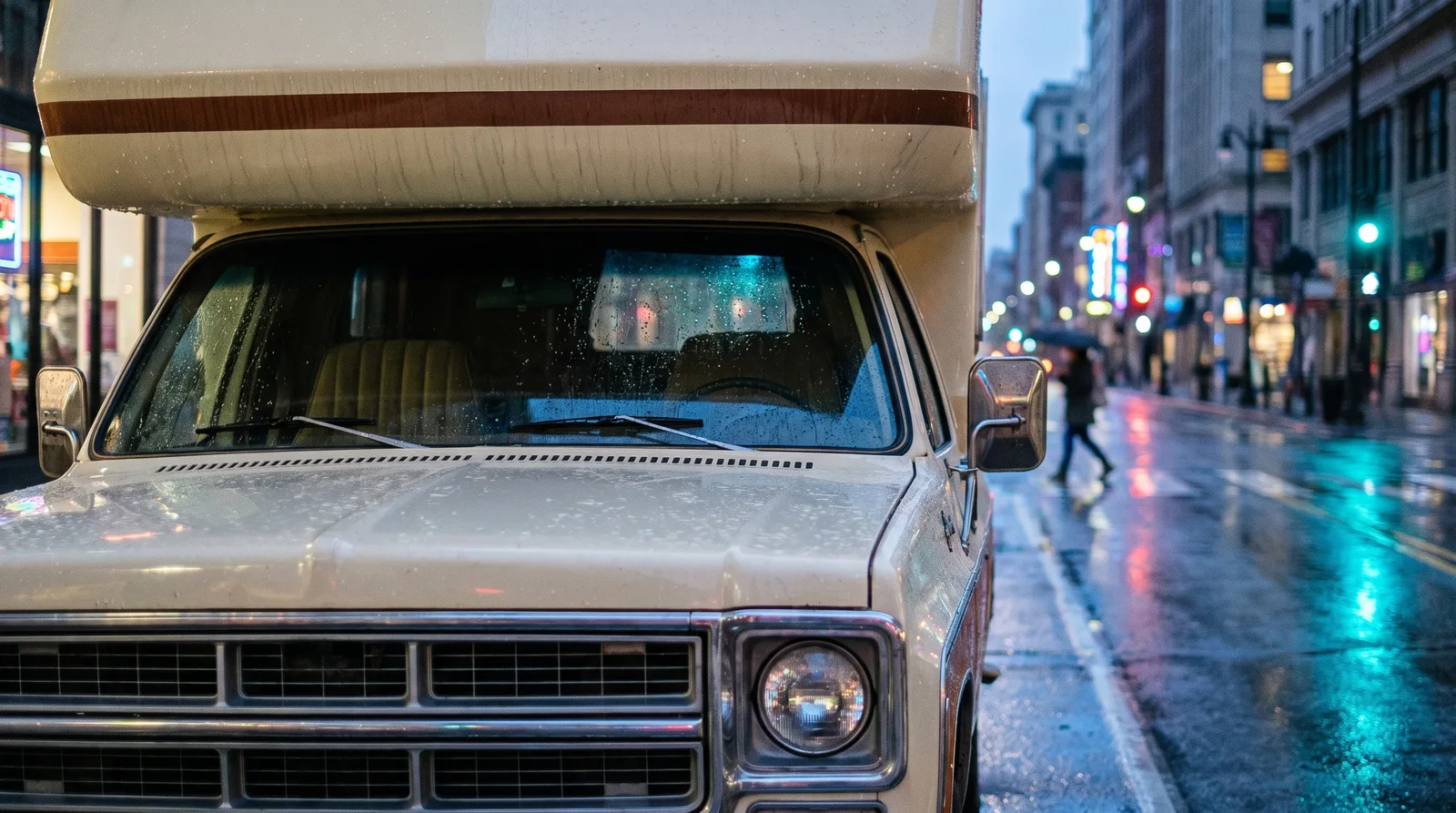
The Casa Grande was not a trim level at all. It was GMC's version of a factory pop-up camper conversion, built in partnership with the recreational vehicle maker Chinook, and it sits in an odd spot in the truck's history. It was not a mainstream trim like the Sierra or High Sierra that most buyers could walk into a dealer and order off a regular window sticker. It was a specialized, limited-run conversion produced for two model years, aimed at a buyer GMC did not usually get to sell to.
What GMC was actually going for
By the mid 1970s, GMC and Chevrolet were both watching the broader truck market shift toward buyers who wanted their four-wheel-drive vehicles to double as recreational rigs, not just work trucks. The Casa Grande was GMC's answer on the Jimmy platform, built through a factory partnership with Chinook: a permanently integrated pop-up camper unit grafted onto the Jimmy's body, with a top that raised to open up real standing headroom in back and a walk-through from the cab into the camper section. This was not a truck aimed at a work fleet buyer. It was aimed at someone who wanted their Jimmy to double as a camper without towing a separate trailer, closer to a recreational vehicle than a farm truck.
What separated the Casa Grande from the High Sierra above which the Jimmy's regular trim ladder sat was not presentation, it was function. The raised camper top, the added living space, and the through-cab access set these trucks apart in a way no badge or striping package elsewhere in the Jimmy catalog could match, because nothing else in the lineup physically changed shape when parked. Chevrolet sold the same idea on the Blazer as the Blazer Chalet, and the two shared the same Chinook-built camper conversion under different badges.
Why it is so hard to find one today
Limited production runs from the 1970s do not age well as a category, and the Casa Grande is no exception. Between low original numbers, the general attrition every truck from this era has suffered, and the fact that a lot of these trucks simply were not recognized as anything special by later owners who might otherwise have preserved them more carefully, surviving Casa Grande Jimmys are genuinely uncommon at shows and swap meets. Club members who have one tend to know exactly what they have and treat it accordingly, which is a big shift from decades ago when a badge like this could get repainted over or swapped out without anyone thinking twice.
The figure that traces back to documented sources is combined, not Casa Grande-specific: approximately 1,800 Blazer Chalet and Jimmy Casa Grande units were built total across the 1976 and 1977 model years. GM and later reference sources do not appear to break that number down by badge, so I would treat any claim of an exact standalone Casa Grande count with caution unless it traces back to GM's own records, because this is exactly the kind of limited-run conversion where forum folklore tends to run ahead of documented fact. What is not in dispute is that it is rarer at club events than any of GMC's standard trim levels, by a wide margin.
"Half our club had never heard the name Casa Grande until one showed up at a meet. That tells you everything about how forgotten this trim has become, and honestly it is part of why the guy who owns it will not sell it to anybody."
- Wayne Coburn
The club member who actually owns one
The Casa Grande that showed up at our meet belonged to a member who had inherited it from an uncle without initially understanding what he had. He told the story of digging through old paperwork after the truck came into his hands, finding a dealer invoice that referenced the Casa Grande package by name, and only then realizing the truck he had been driving around casually for a year was something the rest of the club had never seen before. That kind of discovery story is common with obscure special editions generally, but it lands differently with a truck this rare, since there was no established reference point in our local club for him to compare notes against.
What struck me most, watching him talk about it, was how little he had changed about the truck once he understood what it was. No repaint, no attempt to make it flashier or more show-ready than it already was. He treated the discovery as a reason to preserve what was already there rather than an invitation to improve on it, which is exactly the right instinct with something this uncommon. Once a special edition like this gets modified away from its original specification, there is often no reliable way to put it back, since the reference material to restore it correctly barely exists in the first place.
What it means for the truck's identity
The Casa Grande is a useful reminder that the Jimmy's story is not just a straight line from base work truck up through Sierra and High Sierra. GMC experimented with this platform in ways that did not always turn into lasting, well-documented trim levels, and some of those experiments have essentially fallen out of the hobby's collective memory. Finding a Casa Grande today feels less like finding a rare trim level and more like finding a piece of GMC's marketing history that most of the truck world forgot happened.
That obscurity is part of the appeal for the right kind of owner, the same way an unusual dealer-installed option or a one-year-only color draws a certain type of collector toward other classic trucks. It is not for everyone. But if you like owning something that starts a genuine conversation at every show rather than a nod of recognition, the Casa Grande is about as good as this platform gets.
It also raises a question our club has never fully settled. If a truck this obscure surfaces without any of its special badging intact, having been stripped or repainted at some point over the decades, how would anyone actually confirm what it originally was. The honest answer is that it often comes down to whatever paperwork survived, a dealer invoice, a build sheet, or, occasionally, a family member's memory of what a relative once owned. Trucks without that kind of documentation risk losing their identity entirely, quietly becoming just another Jimmy in someone's eyes when they were once something considerably rarer. That is part of why members who do have a documented Casa Grande tend to hold onto the paperwork as carefully as they hold onto the truck itself.
For the broader context on how GMC built out the Jimmy across its whole production run, from the ordinary trims to oddities like this one, where this started is the place to get the full picture. And if reading about a truck this rare has you wondering what is actually out there to buy today, even in the more common trims, classic K5 Blazer for sale listings are worth checking regularly, since trucks like this do not announce themselves ahead of time.
Sources and notes
Related Reading

About the author
Wayne Coburn
Longtime Corvette owner, judge and club figure who knows the cars, the records and the people behind them.
Related Listings - Chevrolet Blazer





Comments
Be the first to comment on this article.