
Provenance research on early GMC Jimmys almost always runs into the same wall: 1970 gets treated as the interesting year because it is the debut, and 1971 gets waved through as an afterthought, a placeholder between the launch and whatever came after it. That is a mistake, and it is one worth correcting, because the 1971 GMC Jimmy is arguably the more useful truck to understand if you actually want to know what GMC had settled on once the newness of the debut year had worn off.
Car Features
7 min read
1971 GMC Jimmy: The Rare First Full Year
The 1970 GMC Jimmy gets the attention as the debut year, but 1971 was its first full year in the lineup, and it is just as important for anyone authenticating an early truck.
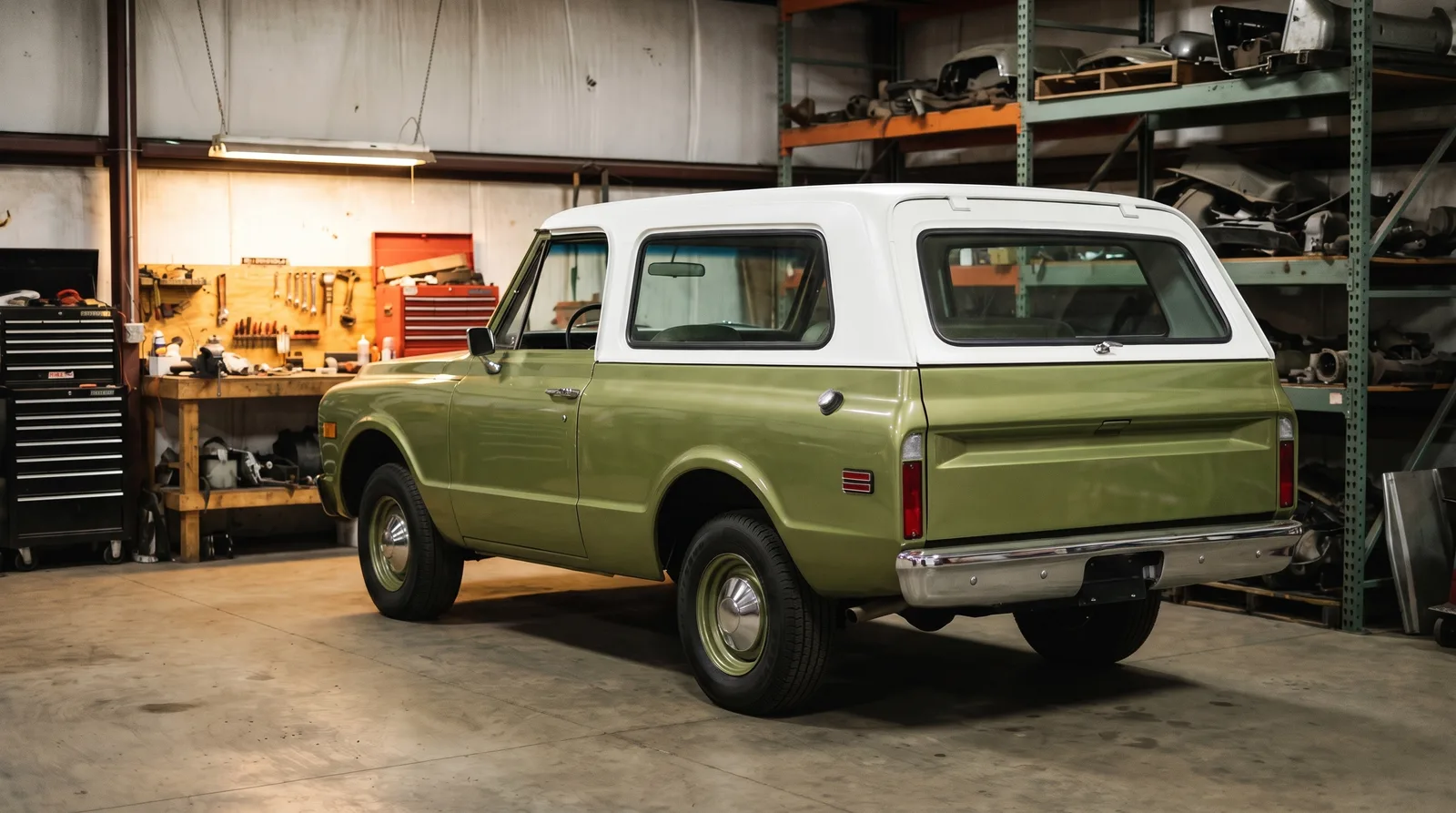
A debut year is, by definition, a truck built under compressed timelines, with a manufacturer still working out exactly how a new model will be received. The 1971 model year is the first year where GMC was building the Jimmy with a full sales cycle of feedback already behind it. That distinction matters for anyone trying to date, verify, or evaluate a truck from this specific period.
The first full year, not the first year
It is worth being precise about the distinction between 1970 and 1971 here. The 1970 Jimmy was GMC's launch year, arriving roughly a year behind Chevrolet's K5 Blazer on the same platform. By 1971, the truck had been in production long enough that GMC's dealer network and marketing had a full calendar year of experience selling it, rather than introducing it. Production planning, ordering patterns, and dealer stock levels for 1971 reflect a truck GMC understood as an established part of its lineup rather than a new experiment.
This is a meaningful distinction for documentation purposes. Researching a specific 1971 truck means working from a slightly more mature body of GMC dealer and factory paperwork than a 1970 example would offer, though the overall thinness of GMC-specific Jimmy documentation from this early period, relative to Chevrolet's Blazer records, remains a real limitation regardless of which of these two years a given truck was built in.
What changed between 1970 and 1971
Model year changes on the early Jimmy were incremental rather than dramatic, consistent with GM's broader approach to this platform in its first several years of production. Buyers shopping a 1971 Jimmy against a 1970 example are largely looking at the same fundamental truck: the same removable top format, the same K-series four-wheel-drive architecture, and a similar range of engine choices. Where changes did occur, they tended to be modest running changes rather than headline features, the kind of detail differences that matter enormously to a concours-level restoration and barely register to a casual buyer.
For anyone doing serious authentication work on a truck from this window, the distinction between 1970 and 1971 production details is exactly the sort of thing that separates a documented, correctly dated restoration from a truck that gets the model year approximately right and calls it close enough. Small trim and hardware differences that shifted between these two years can matter a great deal when a truck is being evaluated for judging or serious collector purchase.
Why rarity from this specific year matters
Total Jimmy production in the early 1970s ran well below Blazer numbers across the board, and a specific model year like 1971 narrows that already small population further. For collectors and researchers, this creates a genuine scarcity problem when trying to establish baseline facts. Even basic questions, like how many 1971 Jimmys were built with four-wheel drive versus two-wheel drive, or what proportion carried the V8 rather than the six-cylinder, are harder to answer with confidence for this truck than for its Chevrolet counterpart, since neither GM's surviving records nor the standard reference sources break the Jimmy's early-1970s production out by drivetrain or engine choice the way they do for the Blazer.
That scarcity is not just an academic concern. It shapes how confidently anyone can authenticate a specific truck's originality, since there is a smaller comparison set of surviving 1971 examples to check details against than a researcher would have for a more common model year or a higher-volume competitor.
This is where cross-referencing against Chevrolet's parallel 1971 Blazer records becomes genuinely useful, even though the two trucks carry different badges. Because the underlying platform, running changes, and general production timeline moved in parallel across both brands, a well-documented 1971 Blazer detail can sometimes point a researcher toward what a same-year Jimmy should also show, even where GMC's own records fall short. It is not a perfect substitute for GMC-specific documentation, and it should never be treated as proof on its own, but it is a legitimate research tool when the GMC paper trail runs thin, which for this specific model year, it often does.
"People treat 1970 as the only interesting year because it is the debut, but 1971 is where you actually see what GMC settled on once the new-model excitement wore off. If you are trying to authenticate a truck properly, that first full year matters just as much as the launch."
- Sarah Whitfield
What proper authentication actually requires
Working with early Jimmys long enough teaches you to be skeptical of any claim that is not backed by primary documentation. A door tag, a build sheet, or a dealer invoice tells you far more about a specific 1971 truck than a general knowledge of what the model year is supposed to look like, because running changes within a single model year were not unheard of on this platform, and generalized descriptions of "what a 1971 should have" can miss those details entirely.
For a truck presented for judging or for a serious collector sale, I want to see the paper trail before I trust the truck's appearance to tell the story on its own. Repainted trucks can look correct to a casual eye while carrying hardware from a different model year entirely, whether through an honest parts-bin repair decades ago or a more deliberate attempt to dress up a lesser example. The scarcity of surviving 1971 Jimmys makes this kind of careful verification more important, not less, since there are fewer confirmed originals available to cross-reference a questionable truck against.
None of this is meant to discourage anyone from pursuing a 1971 example. It is meant to set expectations correctly. A properly documented, correctly authenticated 1971 Jimmy is a genuinely rewarding find, precisely because getting there requires more diligence than shopping for a more common model year would.
Placing 1971 in the larger story
Understanding a 1971 Jimmy in isolation only gets you so far. It makes the most sense in the context of the Jimmy's full production run, from the 1970 debut through the shift to the squarebody body style in 1973 and onward to the end of production in 1991. For readers who want that complete arc, our team has put together the full story covering how the Jimmy developed across its entire run, which is the right starting point before narrowing in on any single model year.
For anyone whose interest in this early, low-volume window has turned into an actual search, current browse classic K5 Blazer listings is worth checking regularly, since a genuine early-production Jimmy from this period does not come up for sale often, and rarely stays listed long when it does.
Sources and notes
Related Reading

#K5 Blazer
#chevrolet k5 blazer
#gmc jimmy
#1971 GMC Jimmy
#early GMC trucks
#classic truck authentication

About the author
Sarah Whitfield
Third-generation classic car collector specializing in pre-war American and European coachbuilt automobiles. Researcher and concours enthusiast.
Related Listings - Chevrolet Blazer




Comments
Be the first to comment on this article.