
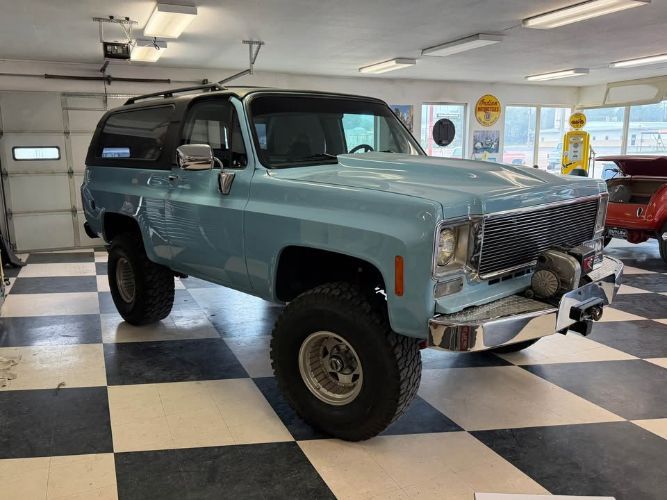
The 1991 GMC Jimmy is the quiet bookend to a twenty-two-year run. Buyers who ordered a full-size Jimmy that year had no way of knowing they were signing the last chapter, but GMC's own product planners did. Somewhere in a Pontiac, Michigan office, a program clock was already counting down to the badge-engineered Suburban derivative that would carry the Jimmy name into the 1990s under a new shape entirely. The k5 blazer jimmy final year 1991 story is really two stories at once: the last gasp of a body style everyone in the truck world had learned to trust, and the first quiet signal that GMC's SUV lineup was about to be reorganized around the Suburban platform.
Car Features
6 min read
1991: The Last Full-Size GMC Jimmy
The 1991 GMC Jimmy closed out twenty-two years of full-size production with no fanfare, making it one of the quietest and most overlooked final model years in the truck world.
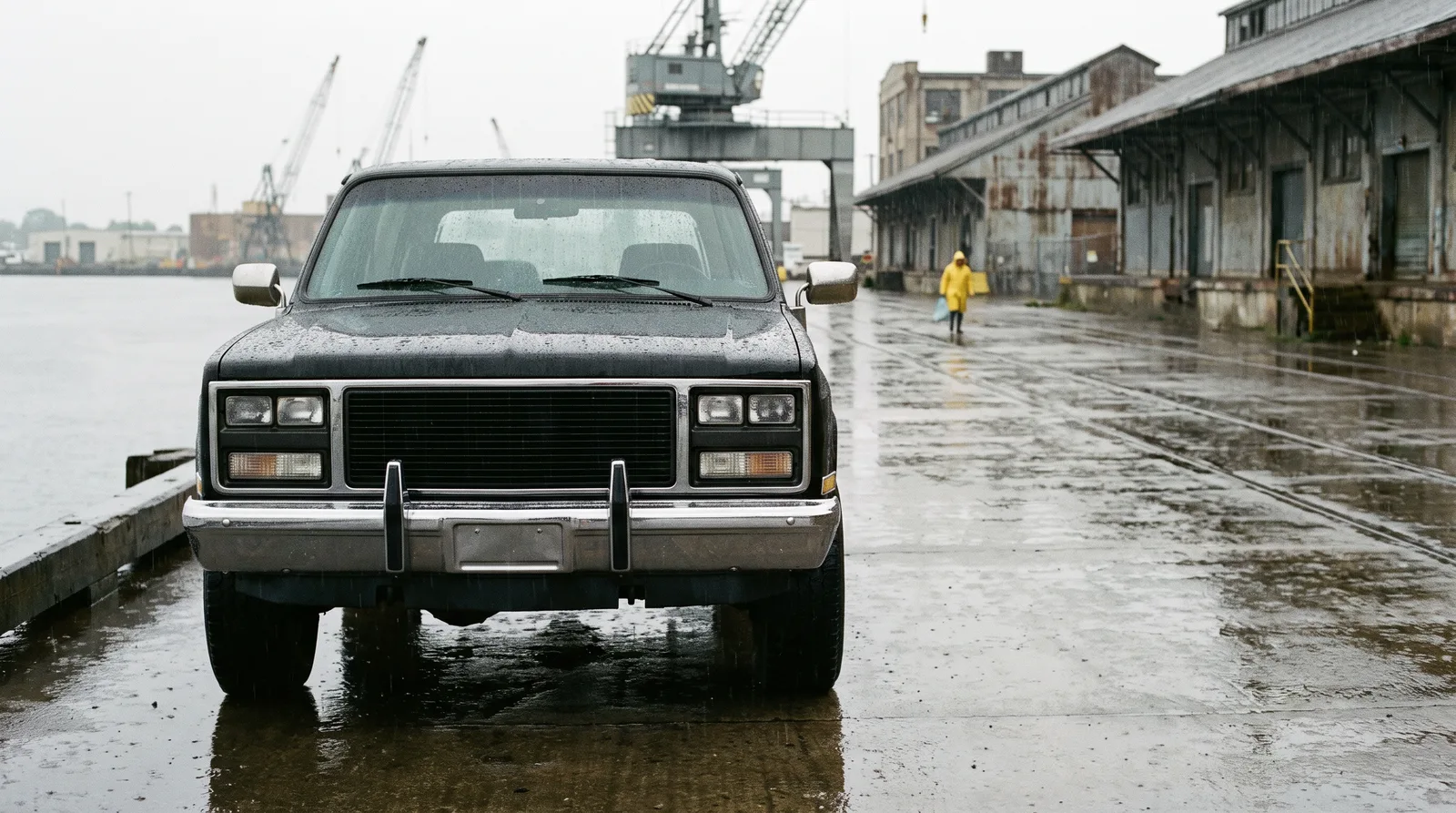
Why 1991 was always going to be the end
GM had committed to the GMT400 platform for its full-size trucks back in the late 1980s, and the rollout happened in stages. Pickups switched first, in 1988. The full-size Blazer and Jimmy, built on the shorter K5/Jimmy chassis rather than the pickup's full frame, lagged behind because GM's plan for them was different from a simple platform carryover. Rather than build a GMT400 version of the two-door Jimmy, GM decided to fold the nameplate into the Suburban-based four-door SUVs that debuted for 1992, badged Yukon at GMC and the familiar Blazer name shifted downstream at Chevrolet to a compact model that had nothing to do with the K5. That decision, made years before 1991 rolled off any assembly line, is why the model's final season carries no fanfare in period brochures. Dealers were selling out a design everyone already knew was walking out the door.
For readers who want the full arc from 1969 through this closing model year, our complete history covers the generational shifts, the engine changes, and the years that mattered most along the way.
What the final Jimmy actually offered
Mechanically, the 1991 Jimmy carried over the squarebody-era architecture that had underpinned the model since the 1973 redesign, dressed in the softened, more aerodynamic sheet metal GM introduced for 1988's minor facelift. Buyers chose between the 5.7-liter V8 and the 6.2-liter diesel option that had built a loyal following among GMC's more utilitarian customer base, paired with either a three-speed automatic or the increasingly common four-speed overdrive unit. Four-wheel drive remained the reason most people bought one in the first place, and the removable-top SUV formula, gone as a factory option since the early 1970s but still culturally attached to the nameplate, gave way entirely to the fixed-roof, two-door body that had defined the truck since 1973.
Trim levels stayed close to what GMC had offered for several years running, with the SLE and SLX designations carrying the model's upper end and cloth or vinyl base interiors filling out the rest of the range. There was no special "final edition" badge, no commemorative package, nothing that told a 1991 buyer they were closing out an era. That absence of ceremony is itself part of what makes the final-year trucks interesting to collectors now: they were sold, driven, and often worked hard, with zero expectation that anyone would care about them thirty years later.
Production numbers and why they are hard to pin down
Isolating exact 1991 model-year production for the full-size Jimmy specifically, separate from the Chevrolet Blazer it shared a body with, is not straightforward from public records, and readers should treat any single figure with caution. What is well documented is that combined K5-platform Blazer and Jimmy output had been declining through the late 1980s as GM's marketing dollars shifted toward the GMT400 pickups and the incoming Suburban-based SUVs. GM did not publish a separate, verifiable production count for the 1991 Jimmy specifically, and readers should treat any precise figure circulating online with caution absent a primary source. What collectors and appraisers generally agree on is that surviving four-wheel-drive examples in original condition, particularly with the diesel option or upper trim packages, are meaningfully scarcer than their Chevrolet counterparts simply because GMC always sold fewer units under its own badge.
| Spec | 1991 GMC Jimmy (full-size) |
|---|---|
| Body style | Two-door, fixed roof |
| Base V8 | 5.7L (350 cu in) |
| Diesel option | 6.2L V8 |
| Drivetrain | 4WD or 2WD |
| Platform | Squarebody-derived, carried since 1973 |
| Replacement | 1992 GMC Yukon (Suburban-based) |
The scarcity gap is one reason interest has grown steadily. Readers chasing more of the story, including the specific examples collectors point to as benchmarks, should keep exploring our coverage of standout trucks from across the model's history.
How the final year is remembered today
For a long time, the 1991 Jimmy sat in an odd spot in the hobby. It was too recent to be treated as a classic by owners who grew up around 1970s trucks, and too old to be a practical daily driver once parts networks thinned out. That has changed. As the broader squarebody GM truck market matured through the 2010s and into the 2020s, the final-year full-size Jimmy started getting looked at the way enthusiasts look at any closing chapter: as the version that combined the longest list of running improvements with the shortest production window. Buyers who understand what they are looking at now specifically seek out 1991 models for that combination.
"Nobody at the dealership in 1991 was telling customers this was the end of the line. That kind of significance only shows up in the rearview mirror, once you know what came after and what did not."
- Tom Ramirez
Buying a final-year full-size Jimmy today
Condition matters more than badge rarity when it comes to actual value, but for buyers who specifically want the last of the true full-size GMC SUVs before the Yukon took over, a documented 1991 model with clean sheet metal and a verified drivetrain is the target. Diesel trucks require a more careful pre-purchase inspection given the 6.2L's known service history, while gasoline V8 trucks are generally the easier ownership experience for a first-time squarebody buyer. Either way, this is the final expression of a body style GM built for over two decades, and that combination of maturity and finality is exactly what collectors are paying for. Anyone shopping the market seriously should look at a classic K5 Blazer for sale listing with the final model year specifically in mind, since the pool of clean survivors only gets smaller from here.
Sources and notes
Related Reading

About the author
Tom Ramirez
Corvette researcher and historian based in Bowling Green, Kentucky. Two decades documenting Corvette production history from original factory records.
Related Listings - Chevrolet Blazer





Comments
Be the first to comment on this article.