
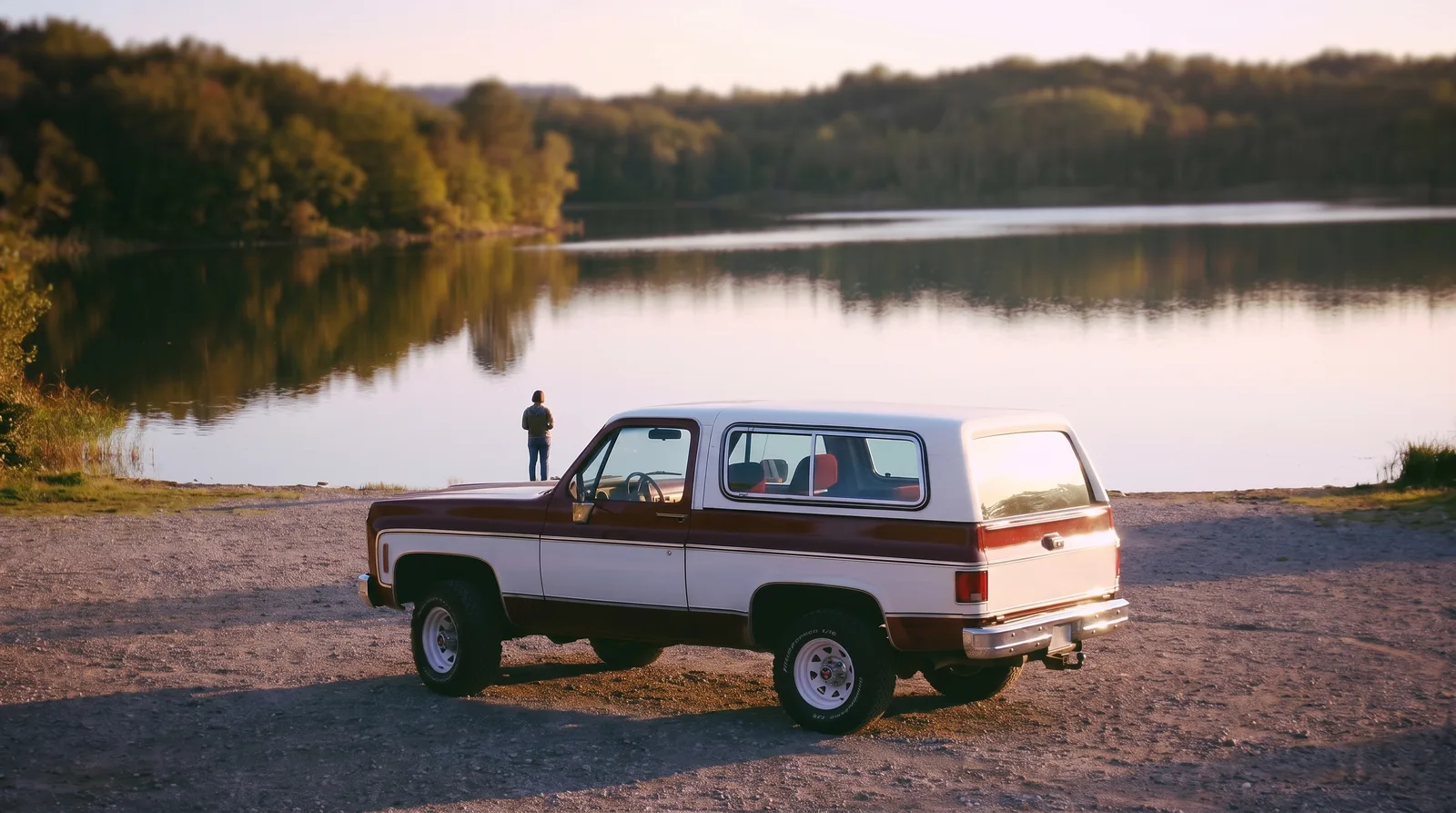
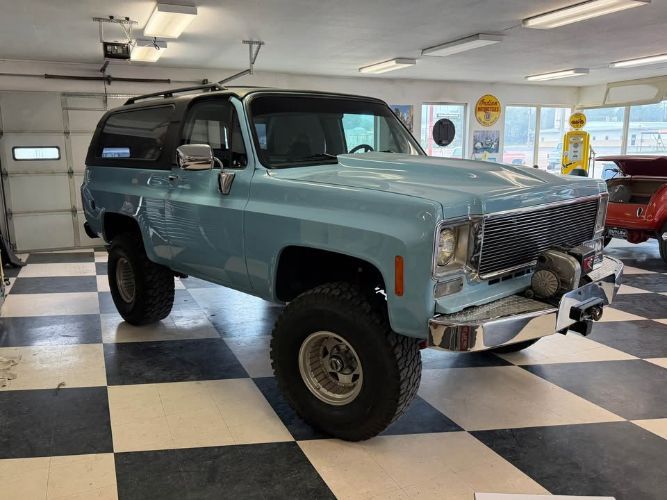
There is a specific shade of memory that comes back for people who grew up around ranches and small towns in the 1970s and 1980s: a GMC Jimmy parked in a gravel driveway, its lower body painted one color and its upper half another, the two separated by a thin chrome trim strip catching the last light of the afternoon. The K5 blazer jimmy two tone paint scheme was never just a factory option. It became a visual shorthand for an entire era of American trucks, and it still stops people at car shows decades later.
Car Features
6 min read
Two-Tone Paint and the Look of the Classic Jimmy
The factory two-tone paint scheme became a visual signature of the classic GMC Jimmy, and original examples now carry a real collector premium.
Where the look actually came from
Two-tone paint was not unique to GMC or even to trucks generally. The style traces back through decades of American automotive design, a way of visually breaking up a large vehicle's body panels so the truck read as sleeker and more considered than a single flat color could manage. GMC applied that same logic to the full-size Jimmy, offering factory two-tone combinations that split the body along the beltline, typically a darker or bolder color below and a lighter roof and upper section above.
The practical effect was a truck that photographed beautifully in bright daylight and looked genuinely different depending on the specific color pairing a buyer chose. A white-over-blue Jimmy read as clean and almost nautical. A tan-over-brown combination leaned rugged and outdoorsy. The paint scheme was not just decoration. It was a way for a buyer to signal something about how they saw their own truck and, by extension, themselves.
What two-tone paint says about the era
Step back far enough and the two-tone Jimmy fits into a broader story about how American trucks were marketed during this period. Manufacturers were working to convince buyers that a truck could be both a work vehicle and a source of personal pride, not just a tool but an extension of taste. Two-tone paint did that work visually in a way that spec sheets never could. It suggested a truck that had been chosen deliberately rather than simply purchased out of necessity, and that distinction mattered to a generation of buyers moving away from purely utilitarian vehicle ownership.
The color combinations themselves tell a small story about period taste. Earthy palettes, browns, tans, and warm golds, dominated much of the 1970s lineup, giving way gradually to cleaner, more contrasting combinations as the decade turned. Looking at a lineup of two-tone Jimmys ordered chronologically is almost like flipping through a color swatch of American design taste across an entire decade, one truck at a time.
"People remember the two-tone Jimmys the way they remember a specific song from a specific summer. It is not really about the paint. It is about what the paint was there for, the drive, the family, the version of themselves standing next to the truck."
- Nora Beckett
Why the paint scheme matters to collectors now
Original two-tone paint has become a genuine point of collector interest, and for good reason. Repainting a truck to a single color was common practice for decades among owners who simply wanted a quick, affordable respray rather than a period-correct restoration, which means original two-tone combinations have grown scarcer than the paint's original popularity would suggest. A well-preserved or accurately restored two-tone Jimmy carries a visual authenticity that a single-color repaint cannot replicate, no matter how well executed the newer paint job might be.
That scarcity has made documentation increasingly important. Buyers and appraisers alike now pay close attention to whether a truck's paint scheme matches its original build sheet or dealer invoice where those records survive, because an accurately restored two-tone combination tells a more complete, more trustworthy story than a truck wearing colors chosen simply because they looked good to a later owner.
Readers who want more on the gmc jimmy and how its design evolved across the full production run can find that context helpful when evaluating a specific truck's originality, and those interested in how the Jimmy's styling compared to its Chevrolet cousin can find our complete history of the shared platform's development.
The everyday rituals the paint scheme created
Two-tone trucks demanded a different kind of care than single-color ones, whether owners realized it at the time or not. A scratch or fade on one section stood out more obviously against a contrasting panel, which meant a two-tone Jimmy tended to show its age unevenly, the lower panel often weathering faster under road grime and stone chips while the upper section stayed comparatively fresh. Owners who paid attention noticed this and adjusted their habits, washing the lower half more often or touching up chips before they spread, small routines that became part of caring for the truck without anyone calling it maintenance.
That uneven weathering pattern is actually useful information today. A truck with heavier wear concentrated exactly where the factory paint break falls is behaving the way an original two-tone finish naturally ages, while a truck with suspiciously even wear across the whole body raises a quiet question about whether the paint was redone more recently than a seller's description suggests. Reading that pattern correctly takes a practiced eye, but it is one more piece of the puzzle for anyone trying to judge originality from photographs alone.
Finding the look today
For anyone drawn to that specific visual memory, whether it comes from a childhood ranch driveway or simply an appreciation for period design, tracking down a genuine two-tone example takes patience. It is worth taking time to browse classic K5 Blazers on the market with an eye specifically toward originality of the paint scheme rather than just overall cosmetic condition, since a truck repainted in the correct factory colors still lacks the same story as one that has carried its two-tone finish since it left the dealership. The look endures because it was never just about color. It was about a moment in American design that these trucks happened to capture perfectly.
Talk to enough owners of these trucks and a pattern emerges. The ones who kept their two-tone Jimmy through the decades rarely describe the paint as their favorite feature outright. They describe it the way you describe an old photograph, something that just happened to be there while the actual memory was forming somewhere else entirely, a road trip, a first solo drive, a truck loaded down for a move across state lines. The paint was never really the point. It was just the color the point happened to be wearing, and fifty years on, that color still knows exactly how to bring the rest of the memory back with it.
Sources and notes
Related Reading

About the author
Nora Beckett
Automotive features writer and photographer who tells the human stories behind the cars, from show fields to cross-country road trips.
Related Listings - Chevrolet Blazer





Comments
Be the first to comment on this article.