
Somewhere in a garage in the Midwest, an owner keeps a photograph of his father lifting the steel top off a K5 Blazer by hand, one corner at a time, on a warm evening sometime in the mid-1970s. It took two people and a fair amount of grunting, and by the time the truck stopped offering that option, an entire generation of owners had a version of that same memory, the summer ritual of turning a hardtop into something closer to an open-air truck for a season. 1976 is the year that ritual ended. The K5 Blazer squarebody moved to a half-cab design that model year, with a fixed steel roof over the front seats and a removable top only over the rear, closing out the fully removable top the truck had carried since its 1969 debut, and the shift changed the character of the vehicle more than a lot of casual observers realize.
1976 and the End of the Fully Removable Top
How the 1976 half-cab, a fixed steel roof up front with a removable rear top, ended the K5 Blazer's fully removable top and split the hobby into two camps.
What the removable top actually meant to the truck
From the very first K5 Blazer in 1969 through the 1975 model year, the truck's steel top could be unbolted and lifted off entirely, transforming the Blazer into something between a pickup and a genuinely open vehicle. It was not a convenience feature so much as an identity. Early Blazer advertising leaned into that flexibility, showing the truck working through the week and opening up for weekend recreation, a two-vehicles-in-one pitch that few other trucks on the market could match at the time. When the squarebody redesign arrived for 1973, Chevrolet kept the fully removable top for the first three model years, carrying that identity forward even as the rest of the truck changed underneath it.
Practically, the removable top came with real tradeoffs that owners lived with. The seal system had to actually keep water and dust out, the structure needed careful reinforcement since a permanently welded roof was not there to add rigidity, and lifting the top off was genuinely a two-person job that most owners did not do casually. Those tradeoffs are part of why, by the middle of the decade, Chevrolet moved away from the feature.
Why 1976 was the turning point
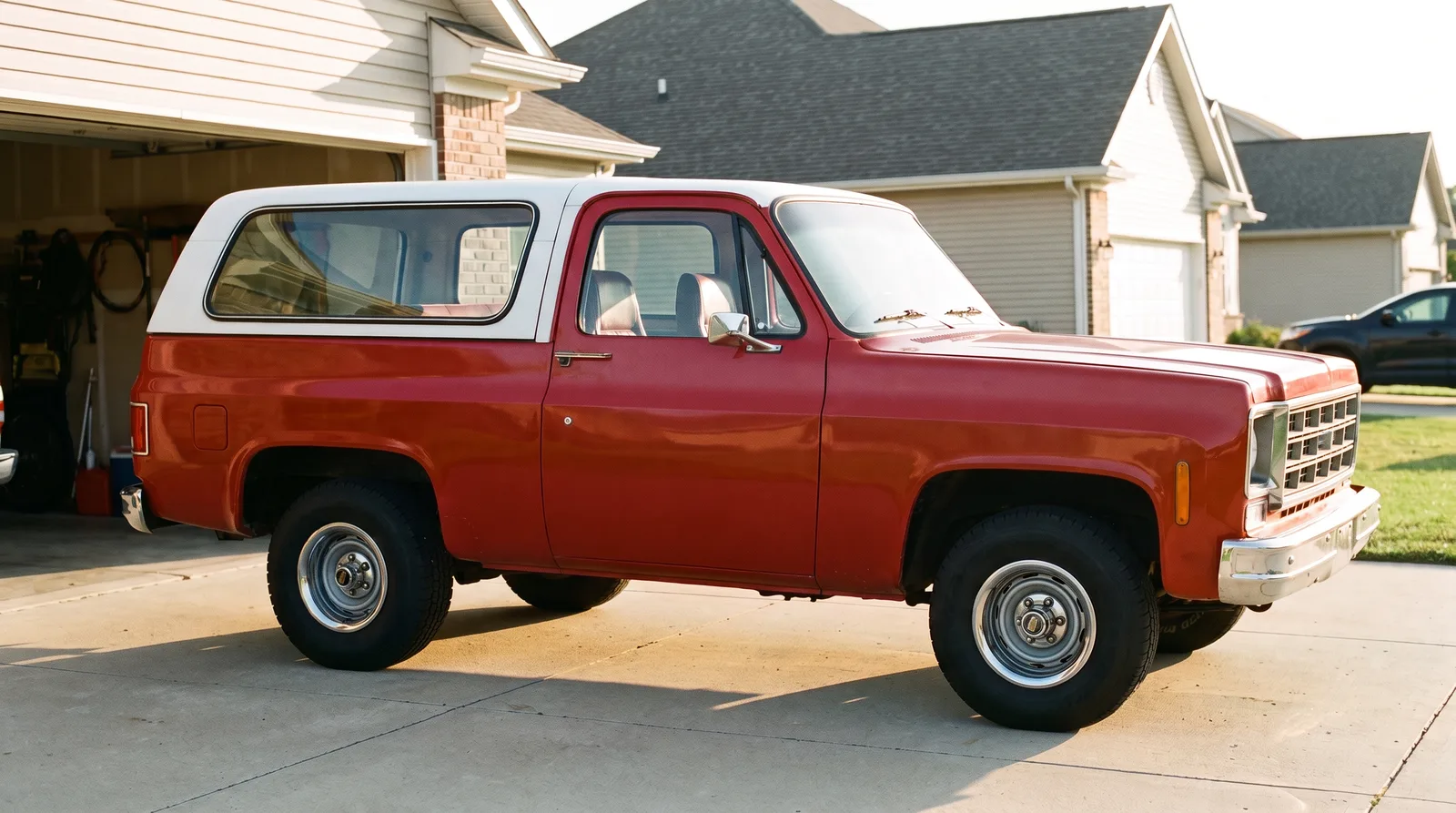
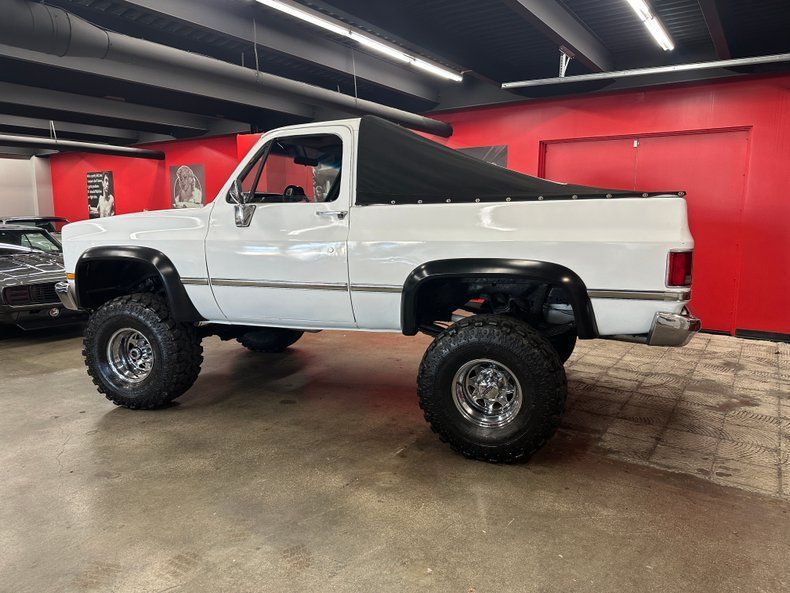
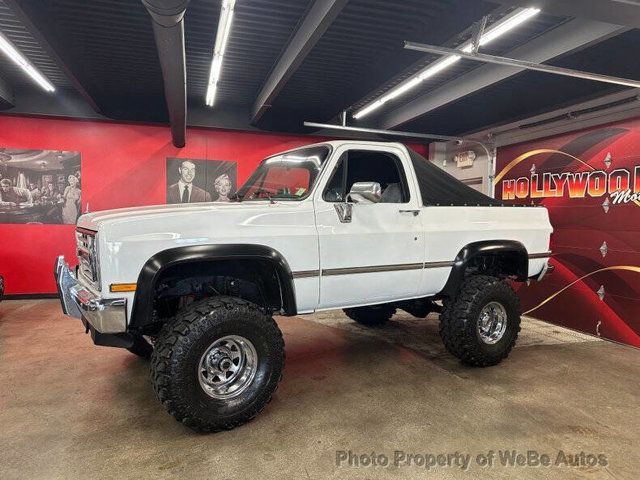
For the 1976 model year, the K5 Blazer switched to a half-cab design, with a fixed steel roof welded permanently over the front seats and a removable fiberglass top over the rear seat and cargo area, ending the era of the fully removable top. The rear top stayed removable on every K5 through 1991. The change brought real benefits. A fixed front roof meant a stiffer, more structurally sound truck, better sealing over the cab without relying entirely on a gasket system prone to leaks, and a simpler build process that likely helped Chevrolet manage costs as the truck's popularity grew through the decade. For a manufacturer moving more units and fielding more warranty claims, those were meaningful advantages, even if something intangible got left behind in the process.
The removable top years had never sold in overwhelming numbers relative to the truck's full run, and by 1976 the market was shifting toward buyers who wanted a comfortable, capable daily vehicle more than a novelty open-air feature. Chevrolet read that shift correctly. The half-cab Blazer that followed sold well and carried the model through its most commercially successful years, but it did so as a fundamentally different vehicle than the one that debuted in 1969.
How the change was felt beyond the roof itself
The fixed front roof did more than solve a leak problem. It changed how the whole cab behaved on the highway, cutting down on wind noise and flex that owners of the earlier trucks had simply learned to accept as part of the deal. Longer trips became noticeably more comfortable, and that comfort mattered as the Blazer's buyer base broadened beyond ranch and work use toward families who wanted a capable vehicle for regular driving. The change also simplified manufacturing in a way that likely helped Chevrolet keep pace with rising demand through the back half of the 1970s, since a welded roof removed an entire category of assembly steps and potential warranty issues tied to seal failures.
What owners lost and gained
Ask an owner of an early removable-top truck what the appeal is and the answer rarely centers on practicality. It is almost always about the experience, the specific feeling of a truck that could become something else entirely with an afternoon's work and a second set of hands. Ask an owner of a 1976 or later half-cab squarebody what they value and the answer usually centers on reliability and comfort, a quieter cab, fewer leaks, and a structure that holds up better to decades of use and, eventually, restoration work. Neither owner is wrong. They simply value different things about the same basic truck, separated by one production year and one significant engineering decision.
That split still shapes the hobby today. Some buyers specifically hunt pre-1976 trucks purely for the fully removable top, willing to accept the maintenance headaches that come with it. Others actively prefer the half-cab trucks, viewing the earlier feature as more trouble than it is worth on a vehicle they intend to drive regularly rather than treat as a seasonal novelty.
"1976 is the year the Blazer stopped being two vehicles in one and became one very good vehicle, full stop. Whether that's an improvement depends entirely on what you wanted from it in the first place."
- Nora Beckett
Identifying which era a truck actually belongs to
Because parts moved between years so freely over decades of ownership, a truck's roof structure is one of the more reliable ways to date it correctly, sometimes more reliable than trim or badging alone. A genuine pre-1976 truck has a top that runs the full length of the vehicle and bolts to the windshield frame, while a 1976 or later half-cab has a steel roof welded over the front seats and a seam behind them where the removable rear top meets the cab. Some owners, tired of chasing water leaks, welded or bonded their tops in place decades ago, which can make a truck look like a later model at a glance while still technically being an earlier-production example underneath. Careful inspection of the seam area, rather than relying on the model year alone, gives a much clearer answer than most casual buyers realize is necessary.
This distinction matters more to collectors and restorers than to someone simply looking for a reliable driver, but it is worth understanding regardless, since it directly affects how a specific truck should be priced, described, and eventually restored if that is the plan.
A quiet ending that reshaped the model
The transition to the half-cab in 1976 did not make headlines at the time, but it marks one of the clearest dividing lines in the entire squarebody K5 Blazer story, separating the trucks built in the direct spirit of the original 1969 concept from the trucks that carried the name forward as something more conventional and more durable. For the complete picture of how the squarebody generation developed across all its changes, the full story traces the era from the 1973 redesign through the final trucks built in 1991. Anyone drawn to either side of that 1976 divide, the open-air early trucks or the sturdier half-cab models that followed, can browse classic K5 Blazer listings to see what is currently available from both eras.
Sources and notes
Related Reading

Automotive features writer and photographer who tells the human stories behind the cars, from show fields to cross-country road trips.
Related Listings - Chevrolet Blazer

Comments (1)
Son, two men? I pulled mine with a chain hoist.