
Ask anyone who grew up in a small town during the 1980s what the county road foreman drove, or the volunteer fire chief, or the neighbor who plowed the cul de sac every January, and there is a fair chance the answer had square corners and a Bowtie on the grille. The full-size Chevrolet K5 Blazer built from 1973 through 1991 was so ordinary, so completely woven into ordinary American work, that almost nobody thought to photograph one. That is precisely why the survivors matter now. The square body blazer went from throwaway to trophy inside a single generation, and the people who saw it happen are still slightly stunned.
Car Features
11 min read
The Squarebody K5 Blazer 1973-1991
For nineteen model years Chevrolet built a shortened pickup with a lift off roof and nobody thought to photograph one. Here is how the square body K5 Blazer went from ordinary to collectible.
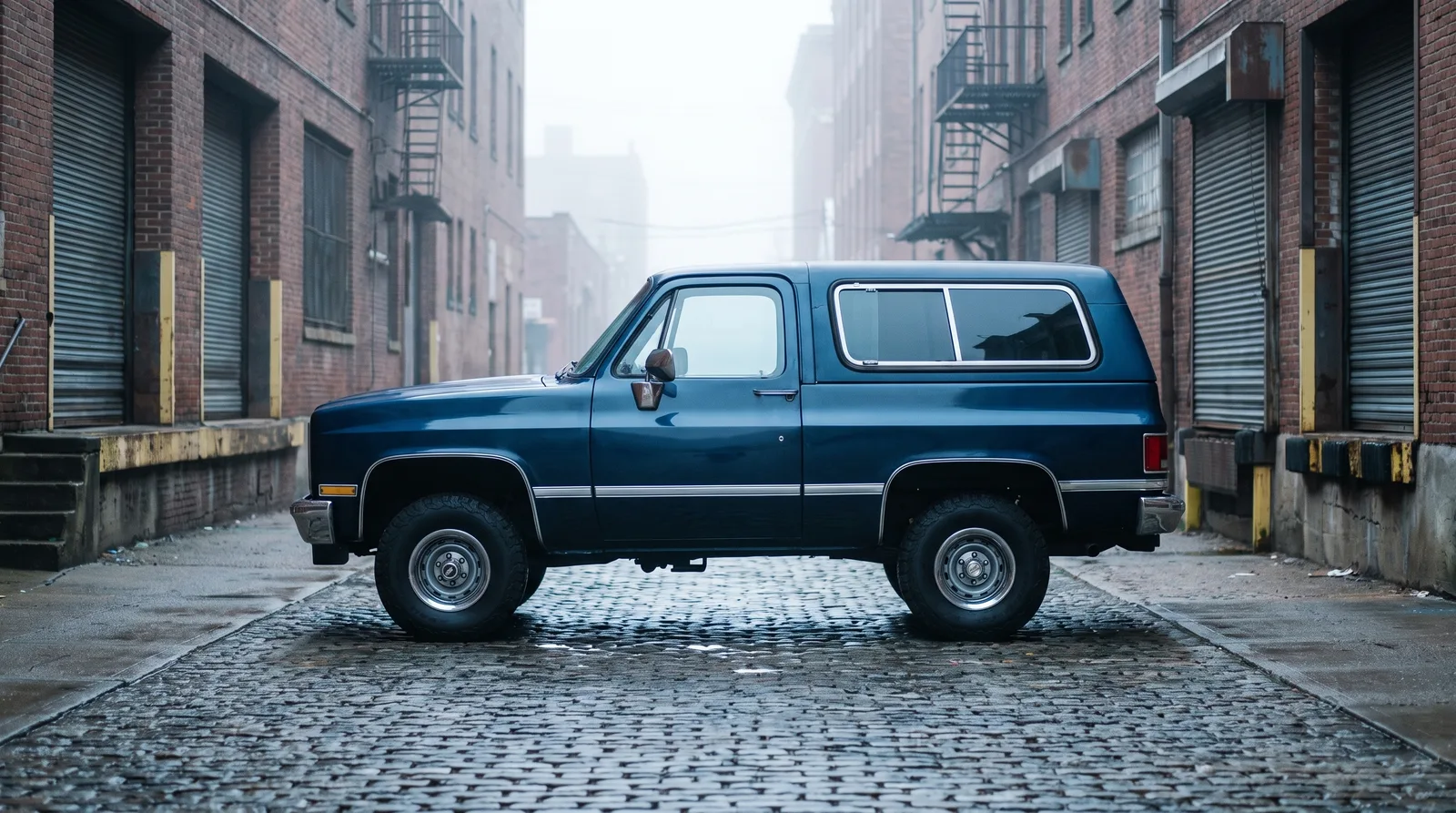
To understand why this truck earned a nickname that has outlived it, you have to start in the fall of 1972, when Chevrolet showed dealers a pickup cab that looked like nothing else on the road.
A new shape arrives for 1973
Chevrolet called the 1973 redesign the Rounded Line generation internally, which is one of the great misnomers in truck history. Nobody outside GM ever called it that. Buyers looked at the flat sides, the deep belt line and the crisp shoulder above the wheel arches and settled on something simpler. Squarebody stuck, and it stuck hard enough that the term now sells parts, magazines and entire swap meet aisles.
The engineering underneath deserved better press than the styling got. GM widened the cab, moved the fuel tanks out from behind the seat on pickups, and gave the whole C/K line a stiffer frame with a wider track. For the Blazer specifically, the important change was structural honesty. The 1969 to 1972 truck had a full convertible roof that came off in one enormous piece, and it flexed like a shoebox with the lid removed. The 1973 body brought a fixed windshield frame, real door glass in a real frame, and a body that behaved like a body even before the top went on. Anyone who has read our k5 blazer history knows the first generation had charm to spare and rigidity to spare nobody.
Wheelbase stayed at 106.5 inches for the second generation, up slightly from the first truck. The Blazer was still a short pickup with a lid, and Chevrolet never pretended otherwise. That honesty is a big part of why the thing lasted nineteen model years with only detail changes.
The 1976 half cab and what it cost
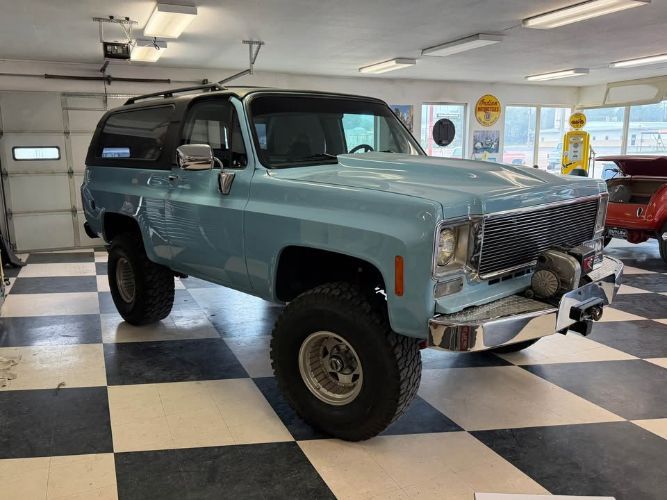
For 1973 through 1975, the K5 kept its full removable top. Pull the fasteners, gather three friends who owed you a favor, and the entire roof lifted away to leave a genuine full-size convertible four wheel drive. Then came 1976 and the half cab.
From that point the forward section of the roof was welded steel, fixed permanently over the front seats, and only the rear section came off. Chevrolet had reasons. Rollover legislation was circling, the full top was heavy and awkward, water leaks were a warranty headache, and the fixed roof let the company mount a proper interior headliner. Purists have never forgiven it. Everyone who ever owned one in a rainstorm quietly understood.
What the half cab actually did was split the model into two collector markets that behave very differently. The 1973 to 1975 full convertible trucks trade at a clear premium today because they are rarer, more dramatic and more fragile. The 1976 and later half cabs are the ones most people actually see, most people actually drove, and most people can still afford.
Engines, from the tired six to the big block
The engine list is where the square body blazer gets interesting, because Chevrolet treated it like a pickup and offered nearly everything in the truck catalog. The base inline six was there for fleet buyers who wanted the cheapest possible sticker, and it was exactly as slow as you would guess in a truck weighing well over two tons.
The 350 cubic inch small block was the heart of the range and remains the default expectation on any survivor. It is the reason parts are cheap, the reason mechanics do not flinch, and the reason a running example is rarely a running example for long before somebody rebuilds it. Above that sat the 400 small block and, in the first two model years only, the 402 cubic inch big block for buyers who intended to tow something serious, dropped from the Blazer lineup after 1974 as emissions rules tightened.
Transmission choices tracked the pickup line as well. A three speed manual was the price leader early on, a four speed with a granny low went to buyers who intended to work the truck, and the automatic gradually took over the volume as the decade wore on because customers stopped wanting to shift. By the end of the 1970s the automatic was the default expectation on a Blazer, and a manual truck today reads as either a genuinely spartan work unit or something a previous owner chose deliberately.
Horsepower figures from this era mislead badly. Net ratings arrived in 1972, emissions equipment arrived in earnest by 1975, and a late 1970s 350 producing something in the 160 to 175 horsepower range was not a weak engine by the standards of its moment. It was a torque motor in a truck geared for work, and it moved the Blazer with the unhurried confidence of a piece of farm equipment.
"The squarebody never asked you to be impressed. It asked you to load it, drive it somewhere unpaved and stop worrying. Forty years later that attitude reads as character, but at the time it was just Tuesday."
- Patrick Walsh
Trim, color and the two tone decade
Chevrolet stacked the trims the way it stacked pickups: Custom at the bottom, Cheyenne in the middle, Silverado at the top once that name arrived for 1975. A Silverado package brought carpet, a fuller headliner, brightwork around the glass and the kind of door panels that made the interior feel like a car instead of a tool.
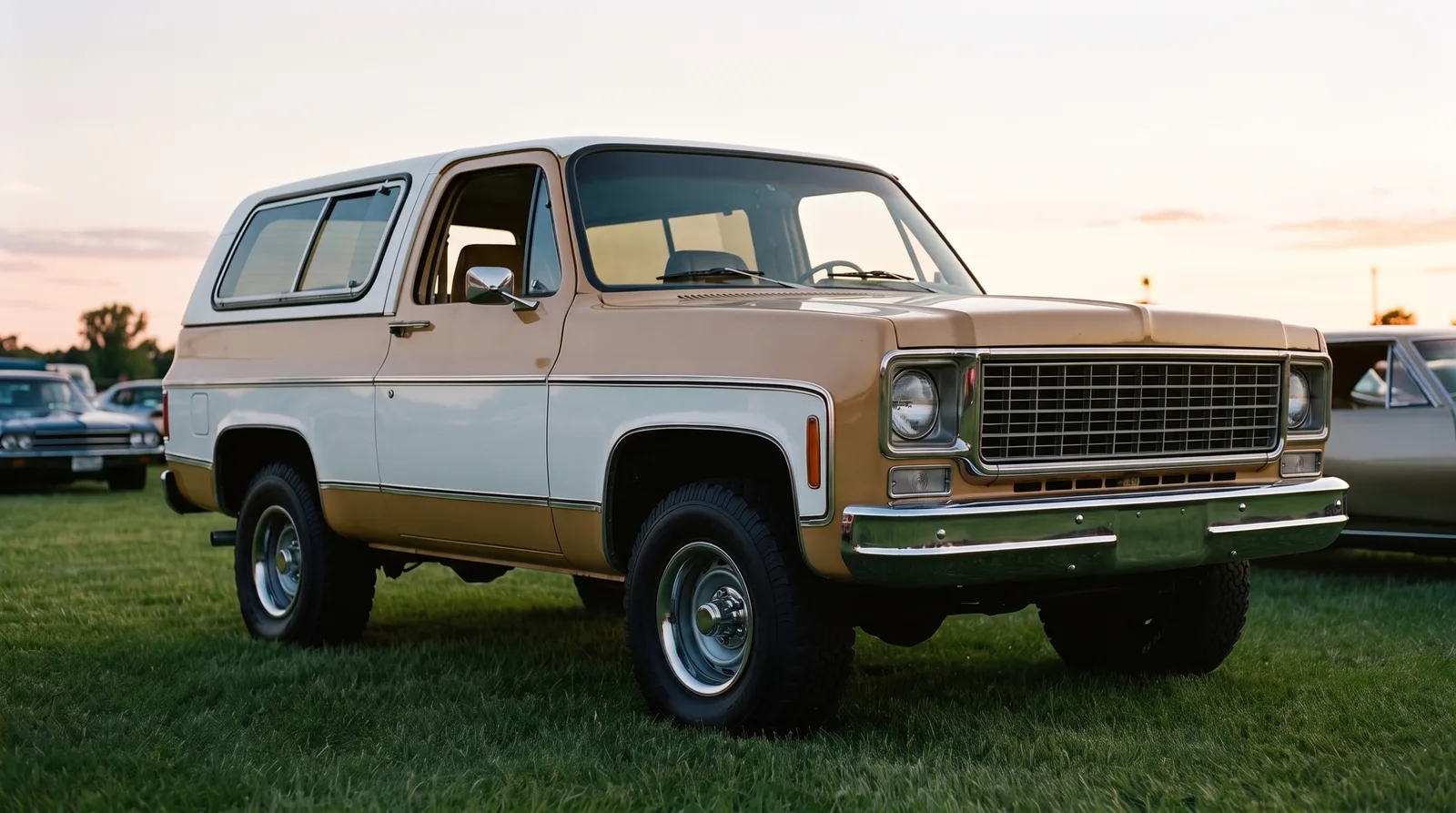
Color is where the decade shows its face. The mid seventies gave the Blazer earth tones with names that read like a paint chip poem, and by 1979 the two tone treatments were doing serious visual work on those flat sides. A wide painted band with a contrasting lower body, edged in chrome trim, turned a plain slab into something deliberate. Buyers who lived through it remember the combinations better than they remember the engine codes, and restorers today argue about correct tape stripe placement with the intensity other hobbies reserve for religion.
Interiors tell the same story from the inside out. Early second generation cabins were plain to the point of severity, with painted metal on display and vinyl that punished bare legs in August. By the early 1980s a well specified Blazer had cloth seating surfaces, a full instrument cluster with real gauges instead of warning lamps, and enough sound deadening to hold a conversation at highway speed. That improvement curve is one reason later trucks make better daily drivers even though earlier trucks bring more money at auction.
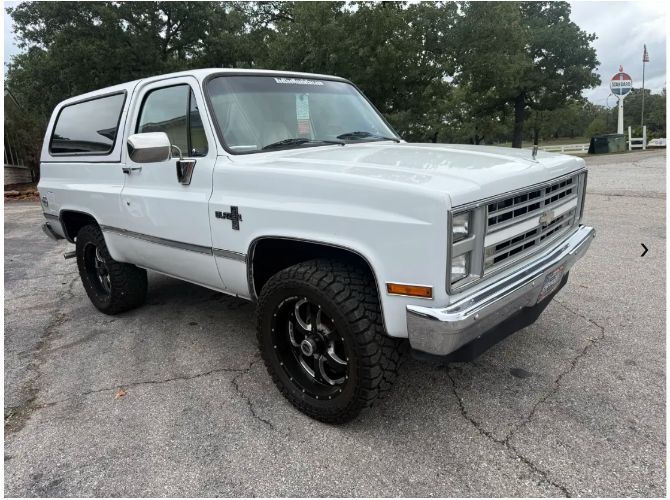
The 1981 model year brought the front end refresh that most people picture when they picture the truck: a lower hood line, a squarer grille opening and quad headlamps in a cleaner surround. GM was chasing fuel economy through aerodynamics, which sounds absurd on a brick, but the changes were real and they gave the last decade of production its own face.
| Model year milestone | What changed |
|---|---|
| 1973 | Second generation launch, fixed windshield frame, roll down door glass, wider cab |
| 1975 | Silverado trim name introduced across the C/K and Blazer range |
| 1976 | Half cab replaces the full removable roof, rear top only |
| 1981 | Front end restyle, weight reduction program, revised grille and hood |
| 1982 | 6.2 litre Detroit Diesel V8 joins the option list |
| 1987 | Throttle body fuel injection on the 5.7 litre gasoline V8 |
| 1991 | Final model year for the full-size K5 Blazer |
Diesel years and the military K5
The 6.2 litre diesel V8 arrived for 1982 and it changed who bought these trucks. It was never fast. It was never meant to be. What it did was idle all day, return fuel economy that a 350 could only dream about, and appeal to buyers who counted gallons instead of seconds.
That engine also carried the K5 into uniform. The military CUCV program, running from 1983 to 1987, took a lightly modified diesel Blazer, painted it green or desert tan, gave it a 24 volt electrical system and sent it to bases worldwide as the M1009. Thousands were built, and for a long stretch of the 1990s they were the cheapest way into a full-size Blazer because surplus auctions kept dumping them onto the market. Collectors ignored them for years. They do not ignore them now, and an honest unmolested M1009 with paperwork has become its own small category.
The long goodbye, 1988 to 1991
GM launched the GMT400 pickups for 1988 with rounded sheet metal and a modern cab, and then did something strange. It kept building the old Blazer. The R/V series designation covered the carryover trucks, the Blazer became the V1500 in the last years, and the square body soldiered on beside its own replacement for four more model years.
Why? Because there was no two door full-size utility on the new platform yet, and buyers kept coming. The final 1991 trucks were genuinely good, with fuel injection, better brakes and two decades of accumulated small fixes. Then the Tahoe and Yukon arrived, the removable top disappeared for good, and an era that started with a shortened pickup and a lift off roof closed quietly.
Those last four years produced some of the best trucks of the run and, for a long time, some of the least loved. Buyers in 1990 comparing a V1500 Blazer against a new Ford Explorer or a Jeep Cherokee were looking at a design that predated both by more than a decade. It sold on capability and on price, not on modernity. Collectors eventually caught up with the logic that the final examples had every accumulated improvement and none of the early teething trouble, and prices for clean 1989 to 1991 trucks have moved accordingly over the last few years.
Why the square body blazer is collectible now
Value in this market follows a simple hierarchy. Full convertible 1973 to 1975 trucks sit at the top. Clean early half cabs with documented low mileage follow. Diesel and military trucks occupy their own lane. Everything else is judged on rust, and rust is the whole game with these bodies, because the rear wheel arches, the rockers, the cab corners and the floor under the rear seat all trap moisture beautifully.
The other force pushing prices is nostalgia arriving on schedule. The people who rode in the back of one on a hunting trip in 1984 are now at the peak earning years of their lives, and they are buying the truck they remember rather than the truck they analyzed. That is how markets like this always work. If you are shopping, it is worth watching what actually sells rather than what gets listed, and you can shop classic K5 Blazer listings to see where real asking prices sit before you commit.
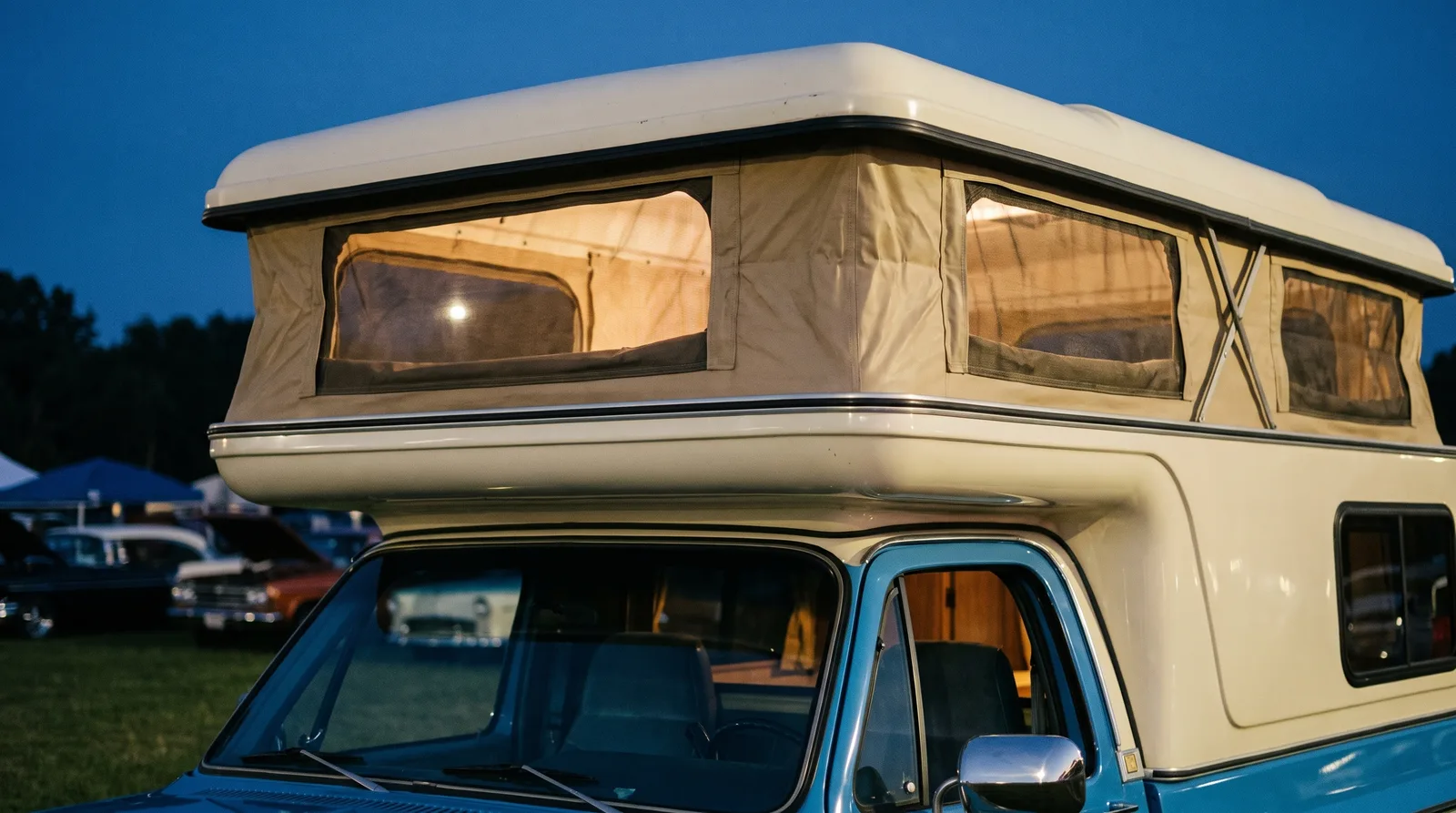
One last note for anyone falling down this particular hole. The Blazer story has a stranger branch involving a factory camper conversion that turned the truck into a pop top motorhome, and it is worth a look too if you enjoy the odd corners of GM history.
The square body blazer earned its following the slow way, by being useful for long enough that a generation stopped noticing it. Now that they have noticed, the good ones are not coming back down.
Sources and notes
Related Reading

About the author
Patrick Walsh
Automotive journalist covering classic car shows, events, and the enthusiast community across North America.
Related Listings - Chevrolet Blazer




Comments
Be the first to comment on this article.