
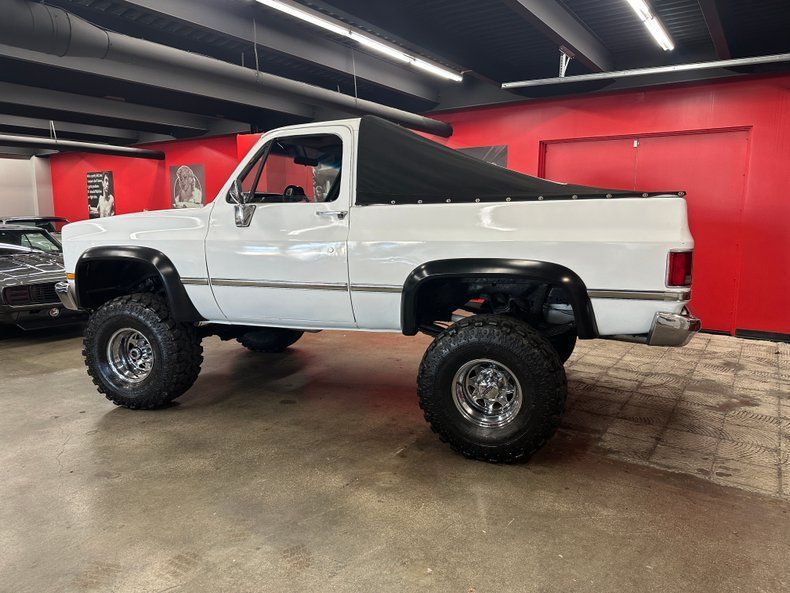
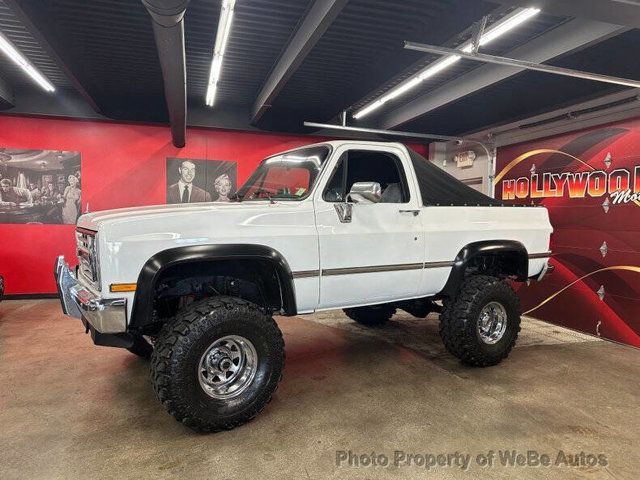
Somewhere on an assembly line in 1991, a worker torqued the last bolt on the last k5 blazer squarebody 1991 final year truck, and almost certainly did not know it was the last one. That is how most endings actually happen in manufacturing. Nobody rings a bell. A production run simply stops, quietly, and the significance gets assigned years later by people looking back at the paperwork.
Car Features
7 min read
1991: The Last Full-Size Squarebody Blazer
The 1991 model year quietly closed out eighteen years of the squarebody K5 Blazer, the most refined version of a platform nobody threw a farewell party for.
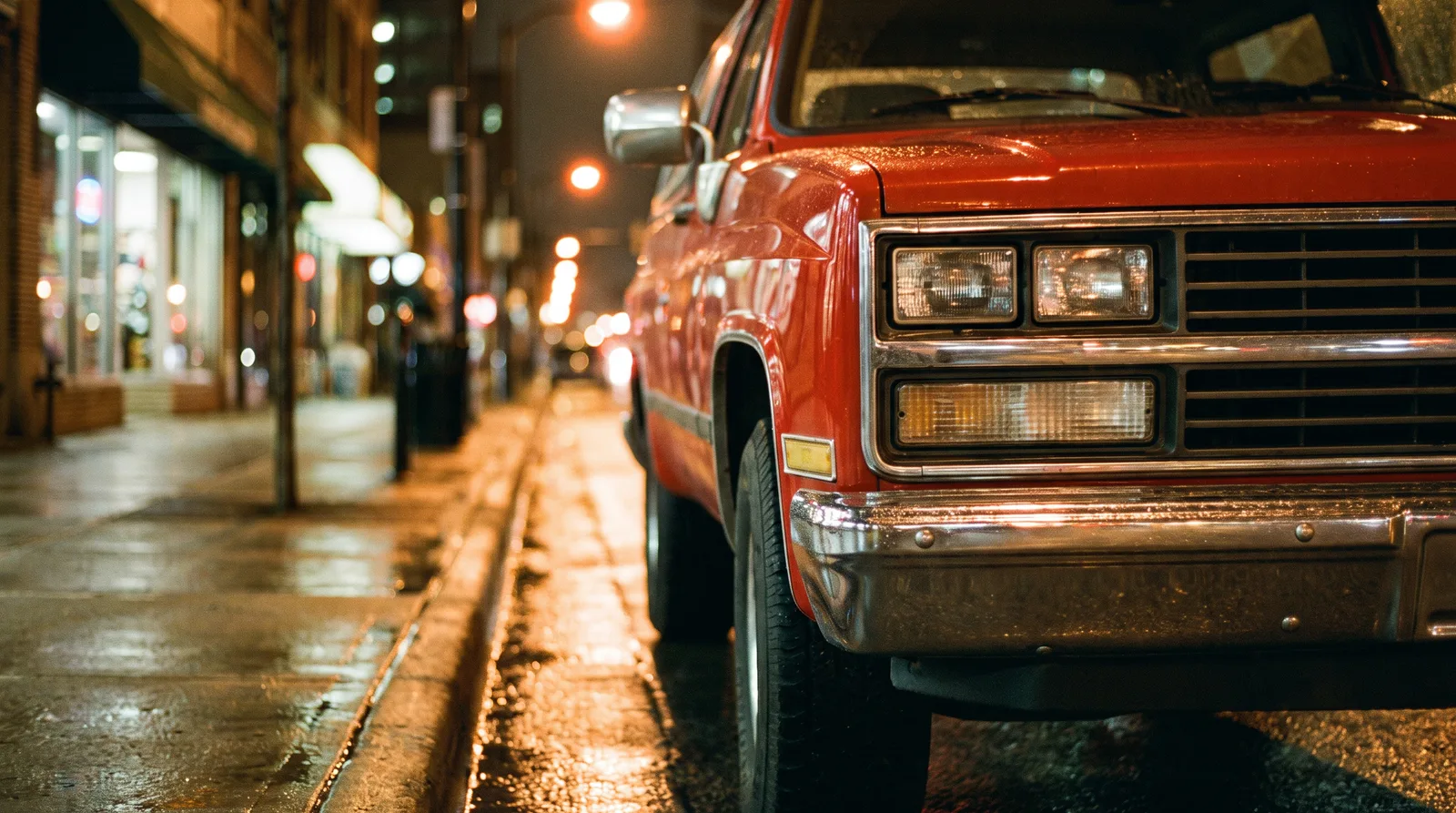
Why 1991 was actually the end
Chevrolet had already redesigned its full-size pickup line for the 1988 model year, giving it new sheet metal, a new interior, and independent front suspension on half-ton 4x4s. The two-door full-size Blazer stayed behind on the original squarebody platform, first introduced for 1973, and kept building through 1991 while its pickup siblings moved on around it. When 1991 ended, so did the squarebody generation of the K5 Blazer. The nameplate itself did not disappear, GM's full-size two-door SUV continued under new bodywork in the years that followed, continuing as the full-size, GMT400-based Blazer for 1992 through 1994 before being renamed the Chevrolet Tahoe for the 1995 model year, with GMC's version becoming the Yukon. But the specific truck built on the original 1973 platform, with its removable rear roof section and its solid front axle, ended its run in 1991 and never came back.
What made the last trucks different from the first
A 1991 K5 Blazer and a 1973 K5 Blazer share a basic silhouette and not much else underneath. Fuel injection had replaced carburetors across the gas engine lineup. Emissions equipment, safety features, and interior trim had all gone through nearly two decades of incremental change. The frame and body architecture stayed recognizably the same generation, which is exactly why enthusiasts group 1973 through 1991 together as one continuous era, but the 1991 truck was the most refined version of that era by a wide margin, benefiting from every small fix and update GM had made along the way.
That refinement is part of why 1991 trucks carry a specific kind of appeal for buyers today. They combine the classic squarebody look and the solid-axle mechanical simplicity that off-road builders prize with the most dependable drivetrain and electrical systems the platform ever received. A final-year truck is, in a real sense, the platform's finished statement.
The quiet handoff nobody noticed at the time
There was no farewell tour for the squarebody K5 Blazer. Dealers were already selling the redesigned trucks alongside it, and by the time the last squarebody rolled off the line, most of the public attention had already shifted to what came next. That lack of fanfare is common for platform transitions in the auto industry, but it means the significance of 1991 as an ending point is something collectors and historians have had to reconstruct after the fact, piecing together production records rather than pointing to a single dramatic announcement.
What production records tell us about the closing years
Piecing together the tail end of squarebody K5 production requires looking at dealer inventories, VIN sequences, and surviving factory documentation rather than any single dramatic press release, because GM did not treat the platform's end as a marketing moment. Regional dealer archives and enthusiast VIN registries have done much of this reconstruction work over the years, cross-referencing build dates and options to establish a clearer picture of how many 1991 trucks were built and in what configurations, though a single precise, publicly documented total remains elusive. That kind of after-the-fact research is common for platforms that ended quietly, and it is part of why enthusiast communities remain valuable resources for anyone trying to nail down specifics that the factory itself never bothered to publicize.
What is clear from the surviving records is that 1991 production continued at a meaningful volume right up until the changeover, rather than tapering off dramatically in a final, token run. GM kept building full-size squarebody Blazers as a normal part of its lineup until the moment it stopped, which reinforces the idea that the ending was a scheduling decision tied to platform planning rather than any sign the truck itself had fallen out of demand.
How the ending compares to other GM platform transitions
GM has closed out plenty of platforms over the decades, and the squarebody K5's ending follows a pattern seen elsewhere in the industry: a slow overlap period where old and new architectures share a lineup, followed by a quiet cutoff once tooling and supplier contracts finally wind down. What makes the K5's case notable is the length of that overlap, four full model years between the 1988 pickup redesign and the Blazer's own final year, longer than most comparable transitions in GM's truck history. That extended overlap gave buyers an unusually long window to choose between old and new architecture within the same showroom, a choice not every GM customer of that era got to make so deliberately.
Why final-year status matters to buyers now
Collectors chase final-year vehicles across the industry for the same basic reason: they represent the last, most developed version of a design before it disappears. A 1991 K5 Blazer carries that appeal honestly. It is not artificially rare in the way a limited edition might be, GM built plenty of them across the full-size truck lineup that year, but it is the definitive endpoint of a specific, beloved platform, and that endpoint status carries real weight with buyers who want the story attached to the truck to be as clean as the truck itself.
"Nobody threw a party when the last one came off the line. It just stopped, and everybody moved on to the new truck next to it. It took years for people to look back and say, wait, that was the end of something."
- Nora Beckett
What owning a final-year truck feels like day to day
Setting aside the historical framing, a 1991 K5 Blazer drives like exactly what it is: the most sorted version of an eighteen-year-old design. Owners who have driven both an early 1970s example and a final-year truck back to back consistently describe the 1991 as the smoother, more confident vehicle of the two, with fuel injection eliminating the cold-start fussiness that carbureted trucks are known for and a cabin that benefited from years of small ergonomic refinements to switchgear and seating. None of that changes the fundamental character of the truck, it still rides on the same solid-axle, body-on-frame architecture that defined the platform from day one, but it does mean a 1991 requires less patience from a daily driver than its earliest ancestors.
That combination, familiar character paired with the platform's most refined execution, is exactly why final-year squarebody Blazers appeal to buyers who want the classic experience without inheriting every rough edge that came with it in 1973.
The final word on the final year
The 1991 K5 Blazer did not go out with noise. It went out the way it had spent eighteen years operating, doing its job without asking for attention, and it happened to be doing that job the last time anyone built one on that platform. For readers who want the full arc of how the squarebody generation got to that closing chapter, our complete history of the era covers the years and changes in between.
And for anyone who has read this far and wants to see whether one of these final-year trucks, or any squarebody K5, is available right now, there are browse classic K5 Blazer listings worth a look, each one carrying a small piece of that quiet 1991 ending forward.
Sources and notes
Related Reading
Have a
Chevrolet Blazer
for Sale?
Reach thousands of serious classic car collectors across the US.
Sell It Here →
Selling a classic? Here's how: the best sites to sell a classic car
Are You a Classic Car Dealer?
List your full inventory and connect with targeted classic car buyers.
Join as a Dealer →

About the author
Nora Beckett
Automotive features writer and photographer who tells the human stories behind the cars, from show fields to cross-country road trips.
Related Listings - Chevrolet Blazer

Comments (1)
T
Ty Robinson
1 day ago
Uncle's '91 still fires up every morning. Respect.
K
Kenny
1 day ago
Hang onto it. Them last-year trucks bring silly auction money now, no lie.