
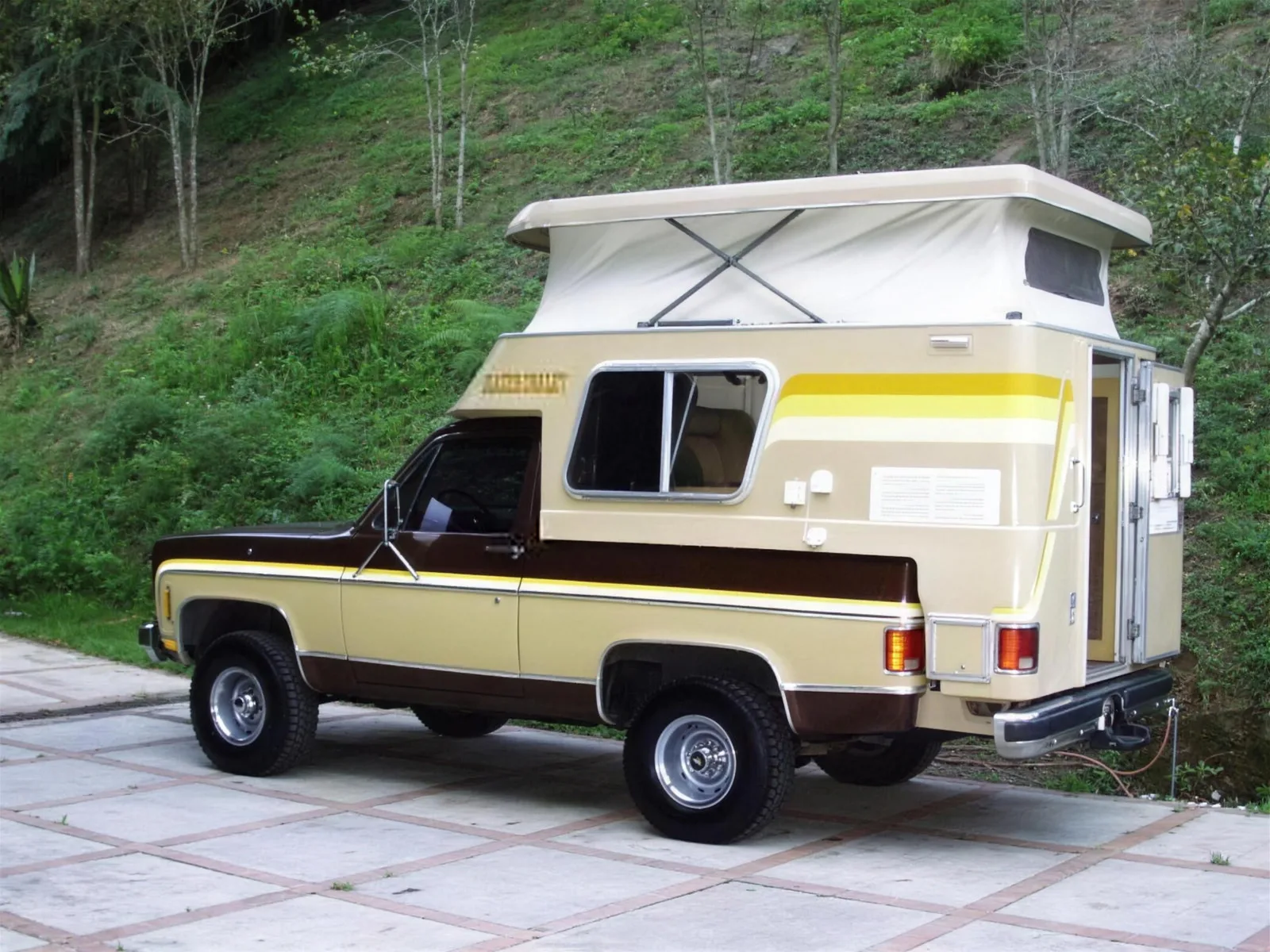
Ask anyone who spent weekends on a fire road in the 1980s what truck they trusted, and the k5 blazer squarebody 4x4 culture answer comes back the same way, over and over: a Blazer, lifted a little or a lot, with mud still drying on the rocker panels from the last trip out. The squarebody K5 did not become an off-road icon by accident. It earned that reputation one trail at a time, in the hands of people who needed a truck that would not quit on them miles from a paved road.
Car Features
7 min read
The Squarebody K5 in Off-Road Culture
The squarebody K5 Blazer became a trail favorite through decades of grassroots off-road clubs and hard use, not marketing, and that legacy still shapes the used market.
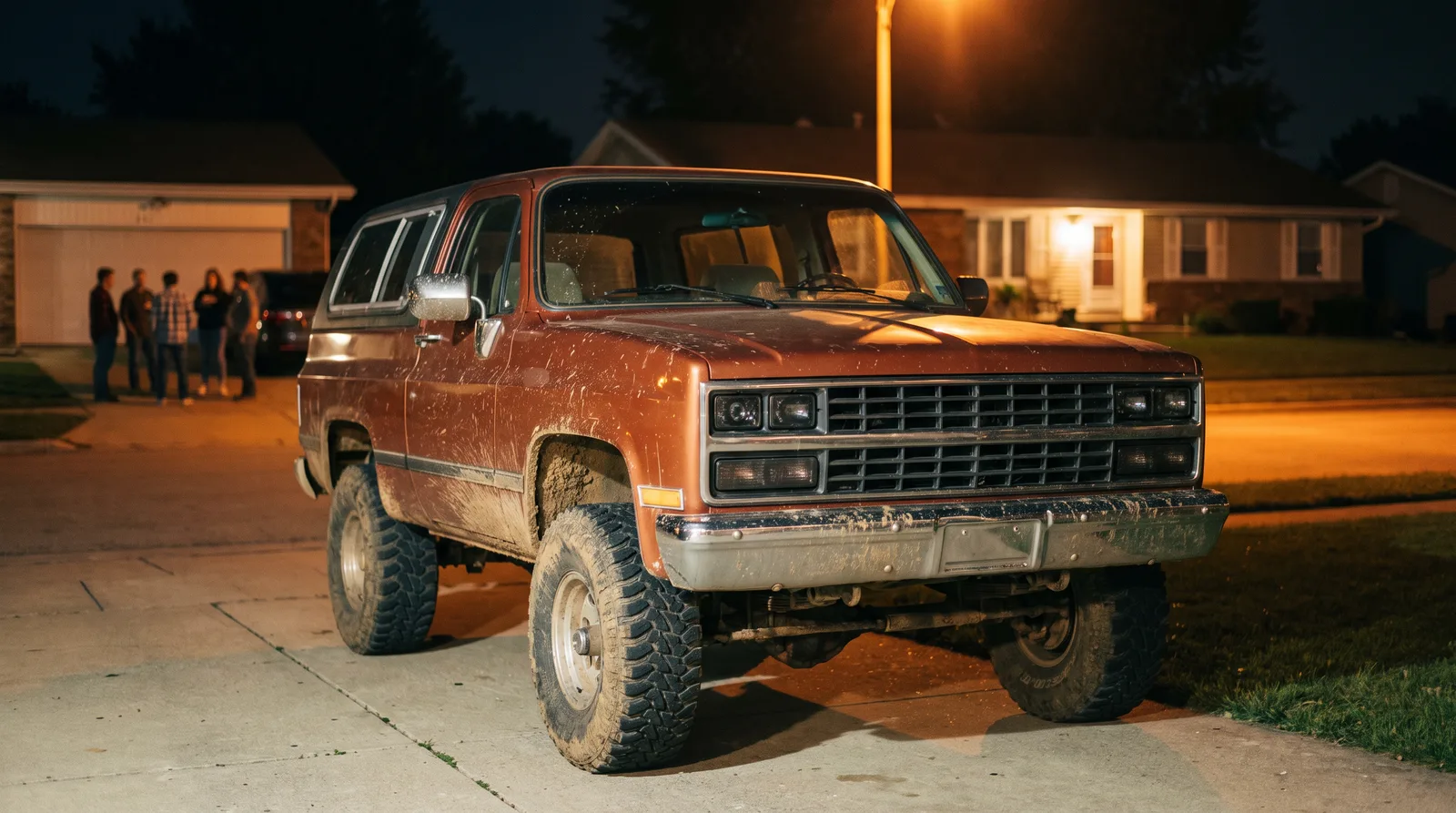
Why off-roaders gravitated to the K5 specifically
The squarebody Blazer's underlying appeal to off-road drivers came down to a handful of straightforward mechanical facts. It rode on a solid front axle for its entire eighteen-year production run, a setup that off-road builders prize for its durability and simplicity compared to independent suspension designs that came later. It shared its frame and running gear with Chevrolet's full-size pickups, which meant an enormous parts network and a deep well of aftermarket support almost from day one. And it came from the factory as a genuine two-door SUV with real ground clearance and real towing capacity, not a car-based crossover pretending to be capable off pavement.
Those factors mattered more to the trail community than styling or comfort ever did. A truck that could be lifted, re-geared, and pushed hard without punishing its owner with constant repair bills built loyalty fast, and that loyalty is exactly what turned the K5 into a fixture at off-road meetups and trail runs through the 1980s and beyond.
The community that grew up around it
Off-road culture around the squarebody K5 was never just about the truck. It was about the people who modified them, traded parts, and passed down knowledge before internet forums existed to do it for them. Regional four-wheel-drive clubs, informal trail groups, and word-of-mouth mechanics kept the K5's reputation alive through decades when the factory had long since moved on to newer platforms. That grassroots support network is a big part of why parts and knowledge for these trucks remain so accessible today, decades after the last one left the factory.
The K5's role in Baja-style desert racing and organized trail events also helped cement its status. It was not the only capable truck of its era, but it built a specific reputation for taking abuse without complaint, the kind of reputation that gets repeated at campfires and trailheads long after the specific incident that started it is forgotten.
What the K5 offered that stock trucks of the era did not
Compared to some competing trucks of the same period, the K5 Blazer's combination of a fully boxed frame shared with Chevrolet's heavier-duty pickups and generous factory ground clearance gave off-road builders a stronger starting point before a single modification was made. Lift kits, larger tires, and re-geared axles all work more predictably on a platform that was already engineered to carry real load, and the K5's pickup-derived underpinnings meant it handled those additions without the structural compromises that lighter, more car-based SUVs of the era sometimes revealed once pushed hard on rough terrain.
That structural headroom also meant the K5 aged well as a build platform even after the factory stopped supporting it directly. Builders in later decades, working with trucks that were already twenty or thirty years old, found the same fundamental strengths still held: a strong frame, a well-understood solid axle setup, and enough aftermarket support built up over the truck's active production years to keep new parts flowing long after GM had moved on to other platforms entirely.
Regional trail culture and its lasting influence
Off-road culture around the K5 was never uniform across the country. Desert-focused builders in the Southwest prioritized different modifications than mud-focused owners in the Southeast or snow-country drivers in the upper Midwest, and those regional differences shaped everything from tire choice to gearing to the specific aftermarket parts that became popular in each area. What stayed consistent across all of those regional variations was the underlying platform choice. Wherever off-road culture took root around a full-size 4x4, the squarebody K5 tended to be part of the conversation, adapted to local conditions but never fundamentally altered in its basic appeal.
How that culture shaped the used market today
Decades of off-road use left an uneven legacy in the surviving population of squarebody Blazers. Some trucks were driven hard, modified heavily, and eventually worn out or parted. Others were built thoughtfully by owners who understood the platform and maintained it with real care, and those trucks now represent some of the most desirable examples on the market, carrying documented history as capable, trail-proven vehicles rather than untouched garage queens. Buyers shopping the used market today will find both extremes, and the difference between them usually comes down to who did the work and how carefully they did it.
That split is part of the appeal for a certain kind of buyer, the one who wants a truck with a real history of doing the job it was built for, rather than one that spent its life sitting in a heated garage. The squarebody K5's off-road reputation gives that buyer plenty of honest, well-used trucks to choose from.
"People didn't buy these trucks to look tough sitting still. They bought them because the trail didn't care what year it was, and the Blazer kept coming back for more."
- Nora Beckett
What buying into that legacy looks like today
Shopping for a squarebody K5 with genuine off-road history means learning to read the truck rather than just the listing description. Underbody wear patterns, aftermarket skid plates that have clearly seen contact, and axle housings showing evidence of gear swaps all tell a more honest story than a seller's claim of light use. Buyers who take the time to have a trail-built K5 inspected by someone familiar with these platforms usually come away with a much clearer sense of whether the truck's off-road history was handled competently or simply survived by luck.
The payoff for that diligence is real. A K5 built and maintained by someone who understood the platform tends to be mechanically stronger, not weaker, than an unmodified example of the same age, because the work of upgrading axles, suspension, and driveline components often replaces original factory parts with stronger aftermarket equivalents before they have a chance to fail on their own. That is the opposite of what many buyers assume about a heavily used off-road truck, and it is worth remembering before dismissing a trail-worn K5 in favor of one that merely looks cleaner.
A legacy built on trust, not marketing
No advertising campaign built the squarebody K5's off-road reputation. It was built trail by trail, club by club, by owners who found a truck that held up under conditions the factory brochure never mentioned. That kind of reputation, earned rather than sold, tends to outlast the trucks that earned it, which is exactly why the K5's off-road legacy is still discussed at length decades after the last one rolled off the line. Readers who want the broader platform history behind that legacy can find square body blazer history covered fully elsewhere on this site, alongside a related story on the truck's other reputation as a high-performance icon.
For readers ready to put that trail-tested history to use in their own driveway, there are K5 Blazers for sale now, each one carrying a piece of that grassroots, hard-earned reputation forward.
Sources and notes
Related Reading
Have a
Chevrolet Blazer
for Sale?
Reach thousands of serious classic car collectors across the US.
Sell It Here →
Selling a classic? Here's how: where to sell your classic car online
Are You a Classic Car Dealer?
List your full inventory and connect with targeted classic car buyers.
Join as a Dealer →

About the author
Nora Beckett
Automotive features writer and photographer who tells the human stories behind the cars, from show fields to cross-country road trips.
Related Listings - Chevrolet Blazer
Comments (1)
L
Linda Kowalski
1 day ago
When my son bought his 1985 K5 last spring, we read the underbody the way you describe. The skid plate was scarred, but the axle housings were straight and the gear swap came with receipts from a shop in Gaylord. Old inspector's habit: I trusted the paperwork more than the shine. Linda K.