
Walk into any shop that specializes in squarebody builds and ask about the k5 blazer squarebody late run, and you will get a specific answer fast. The late run means 1988 through 1991, the years Chevrolet kept building the old-body K5 Blazer on the original squarebody platform right alongside the brand-new GMT400 pickups that had already replaced its own truck cousins. That overlap is the whole story, and it is why builders treat these last few years differently from everything that came before.
Car Features
7 min read
The Late Squarebody K5 of the Late 1980s
From 1988 to 1991 the K5 Blazer kept its solid front axle while GM's pickups moved to independent suspension, making the late-run squarebody a builder favorite.
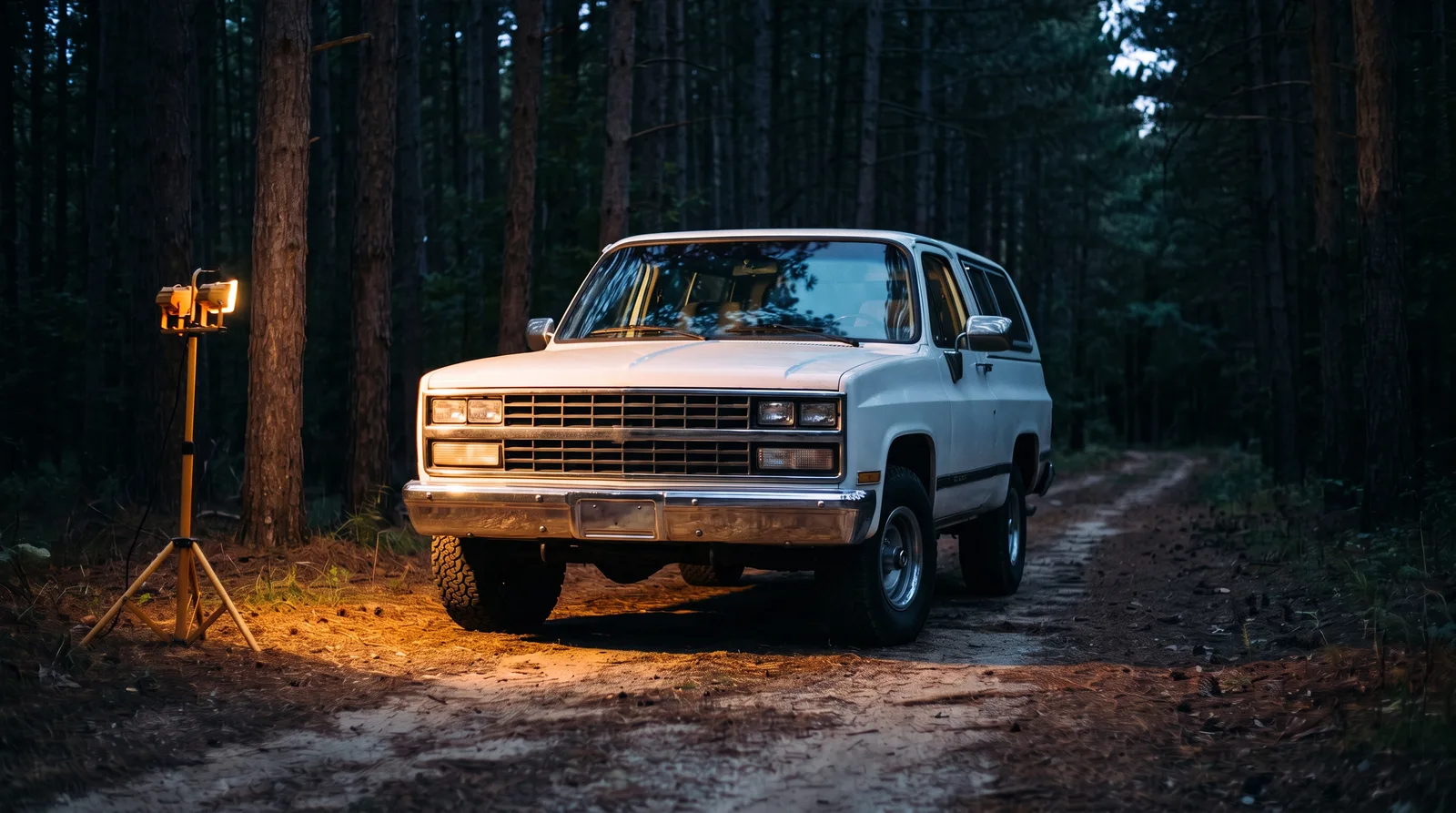
Why the old truck kept building after the new one arrived
GM redesigned its full-size pickup line for 1988, giving the C/K trucks new sheet metal, a new interior, and independent front suspension on half-ton 4x4 models. The K5 Blazer did not get that redesign. Chevrolet kept the two-door full-size Blazer on the older squarebody platform through 1991, letting it run out its production life while the pickup beside it on the same lot wore an entirely different body. From a manufacturing standpoint that is not unusual, automakers stagger platform changes across a lineup all the time, but it left the late-run K5 as a genuinely old-school truck built in genuinely new-truck years, and that gap is exactly what gives these trucks their character.
The suspension detail builders actually care about
Here is the part that matters if you turn wrenches on these things instead of just reading about them. The 1988 redesign brought independent front suspension to GM's half-ton 4x4 pickups. The late-run K5 Blazer did not get IFS. It kept the solid front axle straight through to the last truck built in 1991. For a lot of buyers that reads as the Blazer falling behind. For anyone who has actually wheeled one, it reads the opposite way. A solid front axle is simpler to lift, simpler to repair in the field, and simpler to keep alive with junkyard parts than an IFS front end from the same era, and that is a real reason serious off-road builders specifically hunt for late-run K5s over the redesigned trucks that came after.
What else separates a late-run truck from an earlier squarebody
By 1988 the interior and dash had been through several rounds of quiet updates, fuel injection was standard across the gas engine lineup by this point rather than an option, and the overall build had the benefit of a decade and a half of the same platform being refined. None of that shows up as a dramatic change from the outside. It shows up as a truck that starts easier in cold weather, runs cleaner, and generally has fewer of the carburetor headaches that plague earlier 1970s trucks. A late-run Blazer is, mechanically, the most sorted version of the squarebody formula that Chevrolet ever built, even though it is also the last one.
Why builders specifically target 1988 through 1991
Ask a builder shopping for a project truck why they specifically want a late-run K5 rather than a mid-1970s example, and the answer usually comes down to a short list of practical advantages stacked on top of each other rather than any single deciding factor. Fuel injection means fewer carburetor headaches during a build. The solid front axle means lift kits and locker installations follow well-documented, widely supported paths rather than requiring workarounds for an IFS front end. And nearly two decades of running changes mean electrical gremlins that plagued earlier trucks had mostly been engineered out by the time the last examples left the factory.
None of that makes an earlier truck a bad starting point, plenty of excellent builds start with 1970s trucks specifically because buyers want that earlier look or a particular trim package unique to those years. But for a builder prioritizing mechanical simplicity and a strong baseline to build from, the late-run years consistently come up as the preferred donor, and that preference shows up in how these trucks are priced and discussed within the build community.
The trade-off buyers should understand going in
Choosing a late-run truck over an earlier one is not a strictly better decision in every category. Earlier squarebody trucks, particularly those from the 1970s, sometimes carry a more distinct visual identity tied to that decade's trim and color choices, and some buyers specifically want that earlier look regardless of the mechanical tradeoffs. Late-run trucks also come from the tail end of a long production run, meaning total mileage and years of use can be just as high as an earlier truck if it was driven hard, model year alone does not guarantee lower wear.
The honest framing is that late-run status is a mechanical advantage worth seeking out, not an automatic guarantee of better overall condition. Buyers still need to inspect frame, rust, and drivetrain history on a late-run truck exactly as carefully as they would on any other squarebody Blazer.
What to look for when buying a late-run truck
The solid axle and fuel injection make a strong case for these years, but they are not automatically better condition than an earlier truck just because they are newer on the calendar. Rust, frame condition, and drivetrain history matter more than model year alone, and a well-kept 1978 will always beat a neglected 1990. What the late-run years add is a mechanical baseline worth seeking out specifically: solid axle simplicity paired with fuel injection reliability, in a body that had fifteen years of production refinement behind it.
| Feature | Late-run K5 (1988-1991) | Redesigned GMT400 pickup (1988+) |
|---|---|---|
| Front suspension | Solid axle | Independent front suspension |
| Body platform | Original squarebody (since 1973) | All-new for 1988 |
| Fuel delivery | Fuel injection standard | Fuel injection standard |
"I'll take a solid front axle from '91 over an IFS truck any day of the week. Simple stays fixed. Complicated just breaks in new ways."
- Jim Vasquez
How the late-run truck's reputation grew inside the build community
Word about the late-run K5's advantages did not spread through factory literature, since GM never marketed the outgoing squarebody Blazer as superior to anything, let alone to its own redesigned pickup lineup. It spread the way most practical knowledge does in truck communities: through builders comparing notes, swap meets where parts interchangeability got discussed in detail, and years of forum threads where someone asking about front suspension options got steered toward the solid-axle years by people who had already made the comparison themselves. That grassroots consensus is now well established enough that shopping listings specifically filtered to 1988 through 1991 has become a common strategy among buyers who know exactly what they are looking for before they start searching.
The last word on the last years
Calling the late-run K5 Blazer outdated misses what actually happened during those final four model years. Chevrolet was not neglecting the Blazer while it moved on to a new pickup. It was quietly finishing a fifteen-year-old design at its most refined point, then letting it go out on its own terms with a solid axle intact and a proven drivetrain underneath. Builders who understand that history stop treating 1988 through 1991 as an afterthought and start treating it as the sweet spot in the whole squarebody run.
Readers who want more background on how the platform got to this point can find the full story of the squarebody generation covered in depth. And for anyone convinced the late-run truck deserves a spot in their own garage, there is classic K5 Blazer for sale inventory worth a look right now, solid axles and all.
Sources and notes
Related Reading
Have a
Chevrolet Blazer
for Sale?
Reach thousands of serious classic car collectors across the US.
Sell It Here →
Selling a classic? Here's how: the best sites to sell a classic car
Are You a Classic Car Dealer?
List your full inventory and connect with targeted classic car buyers.
Join as a Dealer →

About the author
Jim Vasquez
Southern California hot rod and custom car builder with roots in the traditional kustom kulture scene.
Related Listings - Chevrolet Blazer
Comments (1)
B
Bill Cassidy
1 day ago
Gremlins engineered out? Somebody tell my buddy's '89 Blazer. Three fuel pumps since 2022, plenty annoying.
Bill, that's the TBI tax. The '87-up trucks put the pump in the tank, and when one dies you're dropping a tank on a Saturday. I've done plenty. Half the bad pumps I see are really a tired ground or a corroded connector at the tank, and the new pump dies early because it's starving for voltage. Fix the wiring first. Even so, I'll take a pump in a tank over a Quadrajet that floods every cold morning.