
The k5 blazer squarebody 400 is the engine option that promised more and delivered a footnote. Offered as a step above the standard 350, the small-block 400 cubic inch V8 gave Chevrolet's K5 Blazer buyers extra displacement and extra torque, at the cost of a cooling system that had to work harder than the truck around it was built to allow.
Car Features
7 min read
The 400 Small-Block in the Squarebody Blazer
The 400 small-block gave the squarebody K5 Blazer extra torque and a well-earned reputation for running hot. Here is what the tradeoff really means.
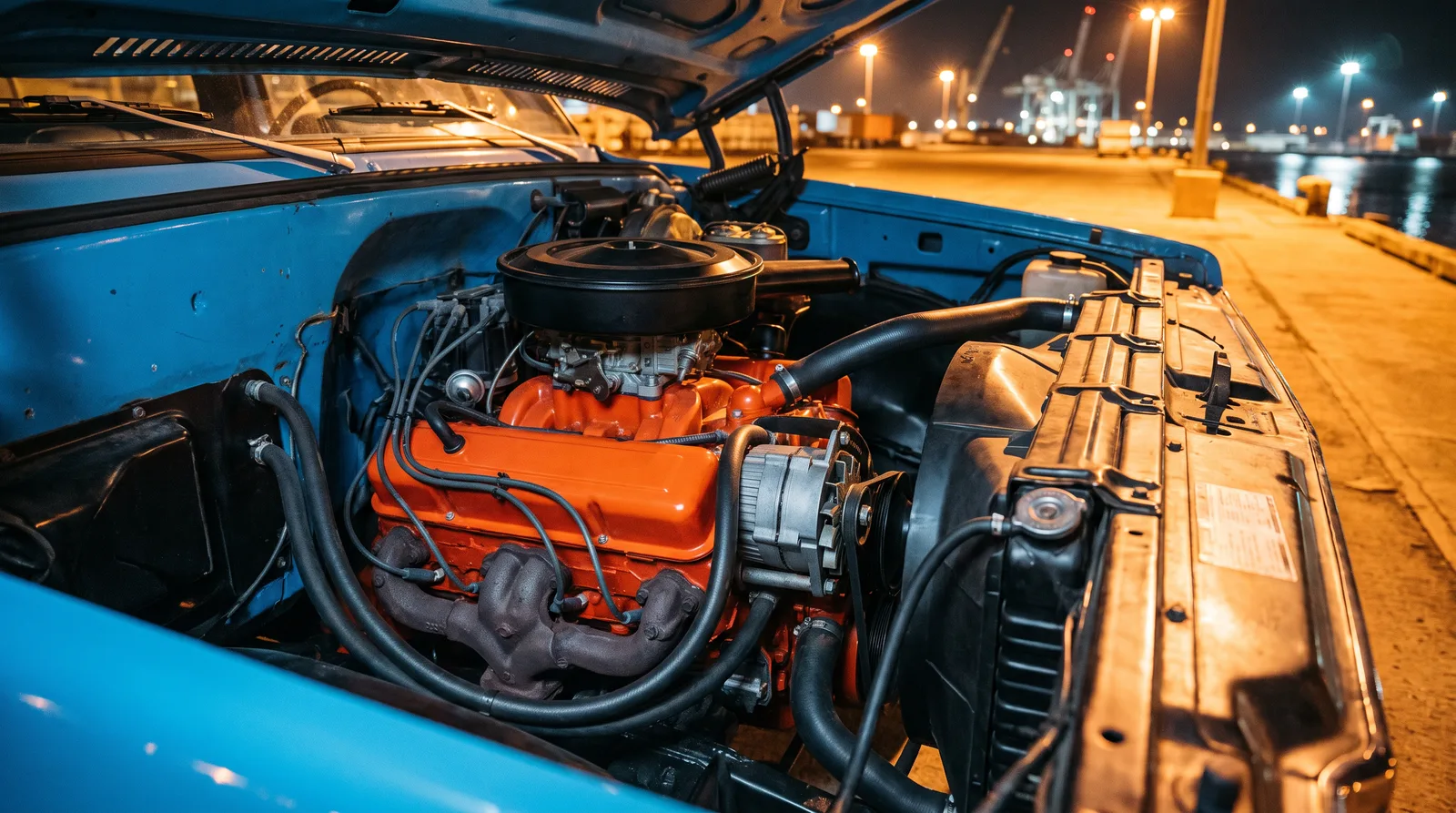
What the 400 actually was, mechanically
The 400 is often mistaken for a big-block because of its displacement, but it is a small-block, sharing the same deck height and basic architecture as the 350 and 305. Chevrolet opened the bore to 4.125 inches and lengthened the stroke to 3.75 inches to get from 350 to 400 cubic inches while keeping the external dimensions close enough to fit the same engine bay and accessory mounts. That decision is the source of most of the 400's reputation problems. Fitting bores that large into the same block meant siamesing the cylinders, with no coolant passage between neighboring bores, so Chevrolet drilled steam holes in the block, head gaskets, and heads to ease hot spots exactly where the engine runs hottest under load. In a passenger car doing highway miles, that is a manageable compromise. In a K5 Blazer towing a trailer up a grade at low RPM in August, it is a design constraint the truck runs into daily.
Why buyers chose it anyway
Torque, mostly. The 400's added displacement showed up as low-end pulling power rather than top-end horsepower, which matched exactly what a 4x4 utility buyer wanted for towing and plowing. Factory ratings for the 400 in truck tune generally landed in a similar horsepower range to the four-barrel 350, but with noticeably more torque at low RPM, and for a truck that spent its life at low RPM, that was the number that counted at the dealership.
The 400 also filled a gap once GM began phasing out big-block availability in light trucks through the 1970s as emissions rules tightened. A buyer who wanted more than a 350 but did not want (or could not get) a big block found the 400 sitting exactly where they were looking.
The overheating reputation, examined honestly
Any conversation about the 400 in a K5 Blazer eventually reaches the overheating question, and the reputation is earned rather than exaggerated. Siamesed cylinders with no water between the bores restrict coolant flow at the exact point where combustion heat is highest, and factory cooling systems from the mid-1970s were not oversized to compensate. Add a heavy 4x4 body, low gearing for off-road use, and stop-and-go towing, and the 400 runs warmer than the 350 in the same chassis under identical conditions. This is a documented characteristic of the engine family across GM's car and truck applications, not a K5-specific defect, but the Blazer's use case, heavy loads at low speed, is close to the worst-case scenario for the design.
That does not mean every 400-equipped Blazer runs hot. A healthy cooling system with a clean radiator, a functioning shroud, and coolant that has actually been changed on schedule keeps a 400 in a normal operating range. The problem shows up disproportionately in trucks with deferred maintenance, which, on a truck this age, describes a meaningful share of the surviving population.
How the 400 compares to its neighbors on the option sheet
Set the 400 next to the four-barrel 350 and the difference on a spec sheet looks modest, a few dozen cubic inches and a torque bump that matters more at low RPM than it does anywhere else. Set it next to the big block options that preceded it in earlier K5 model years, and the comparison flips: the 400 is lighter, fits in the same engine bay without the structural changes a big block sometimes required, and delivers a meaningful share of that low-end pull without the fuel economy penalty a big block imposes. That middle-ground positioning is exactly why GM kept offering it through the mid-to-late 1970s even as it became clear the thermal margin was tighter than buyers might have liked.
Engineers of the era were working within real constraints. Emissions rules were tightening year over year, big-block trucks were becoming harder to certify economically, and a torquey small-block stretched to 400 cubic inches solved a genuine product-planning problem, even if it created a new one in the cooling system. Judging the decision purely by its weakest attribute skips the tradeoffs GM was actually balancing at the time.
What a cooling system upgrade actually accomplishes
Owners who want to keep a 400 running cool without swapping the engine typically start with the basics rather than exotic solutions: a clean, unobstructed radiator with good core condition, a properly functioning fan clutch or shroud, and coolant that has actually been changed on schedule rather than topped off for years. Beyond that, aftermarket radiators with increased core thickness are a common and effective upgrade for owners who tow regularly or live somewhere hot, since they directly address the margin the factory system lacked without requiring any change to the engine itself.
None of these fixes eliminate the 400's underlying thermal design limitation. They manage it, the same way any known weak point in an older vehicle gets managed rather than erased. A well-cooled 400 in a truck with good airflow and a properly sized radiator can run reliably for years, which is worth remembering before writing the engine off entirely based on its reputation alone.
Buying or evaluating a 400-equipped squarebody today
A K5 Blazer with a documented, well-maintained 400 is not a truck to avoid. It is a truck to inspect more carefully than a 350-equipped example, specifically around cooling system history. Ask when the radiator was last serviced or replaced, whether the truck has a documented history of running hot, and whether any head gasket work has been done, since chronic overheating eventually shows up there first. A 400 with clean cooling records and no history of overheating is a perfectly usable engine with real torque advantages for towing.
The reverse is also true. A 400 with vague maintenance history and a seller who cannot answer basic cooling questions is a bigger risk than the same truck with a 350, purely because the margin for error is smaller.
"The 400 isn't a bad engine, it's an engine with a narrower operating window than people expect from a truck. Respect that window and it holds up fine."
- Emily Chen
Where the 400 fits in the bigger picture
Set against the full lineup Chevrolet offered in the squarebody K5 Blazer, from the base six-cylinder up through the diesel that arrived later in production, the 400 occupies a specific and fairly narrow slot: more torque than the 350, less complexity than a big block, and a known thermal limitation that buyers need to plan around rather than discover. Anyone wanting the fuller context on how the platform evolved around these engine choices can read the background on the squarebody generation as a whole.
For buyers who have weighed the tradeoffs and still want the added pulling power, the used market has 400-equipped trucks available now, and the right place to start that search is where the inventory actually lives: find a classic K5 Blazer currently listed for sale. The engine has a real, well-documented limitation. It also has real, well-documented strengths. Buyers who go in with both eyes open tend to be the ones who keep these trucks running for decades rather than trading overheating stories on forums.
Sources and notes
Related Reading
Have a
Chevrolet Blazer
for Sale?
Reach thousands of serious classic car collectors across the US.
Sell It Here →
Selling a classic? Here's how: sell my classic car
Are You a Classic Car Dealer?
List your full inventory and connect with targeted classic car buyers.
Join as a Dealer →

About the author
Emily Chen
Bay Area engineer with a deep focus on vintage Japanese and European performance cars. Approaches classic car research and restoration with an analytical eye.
Related Listings - Chevrolet Blazer
Comments (1)
C
carshow_cathy
4 days ago
Pro tip for anyone showing a 400 Blazer: the slow crawl through the registration line is exactly where they cook.
O
Owen
3 days ago
So bigger radiator first, then?