
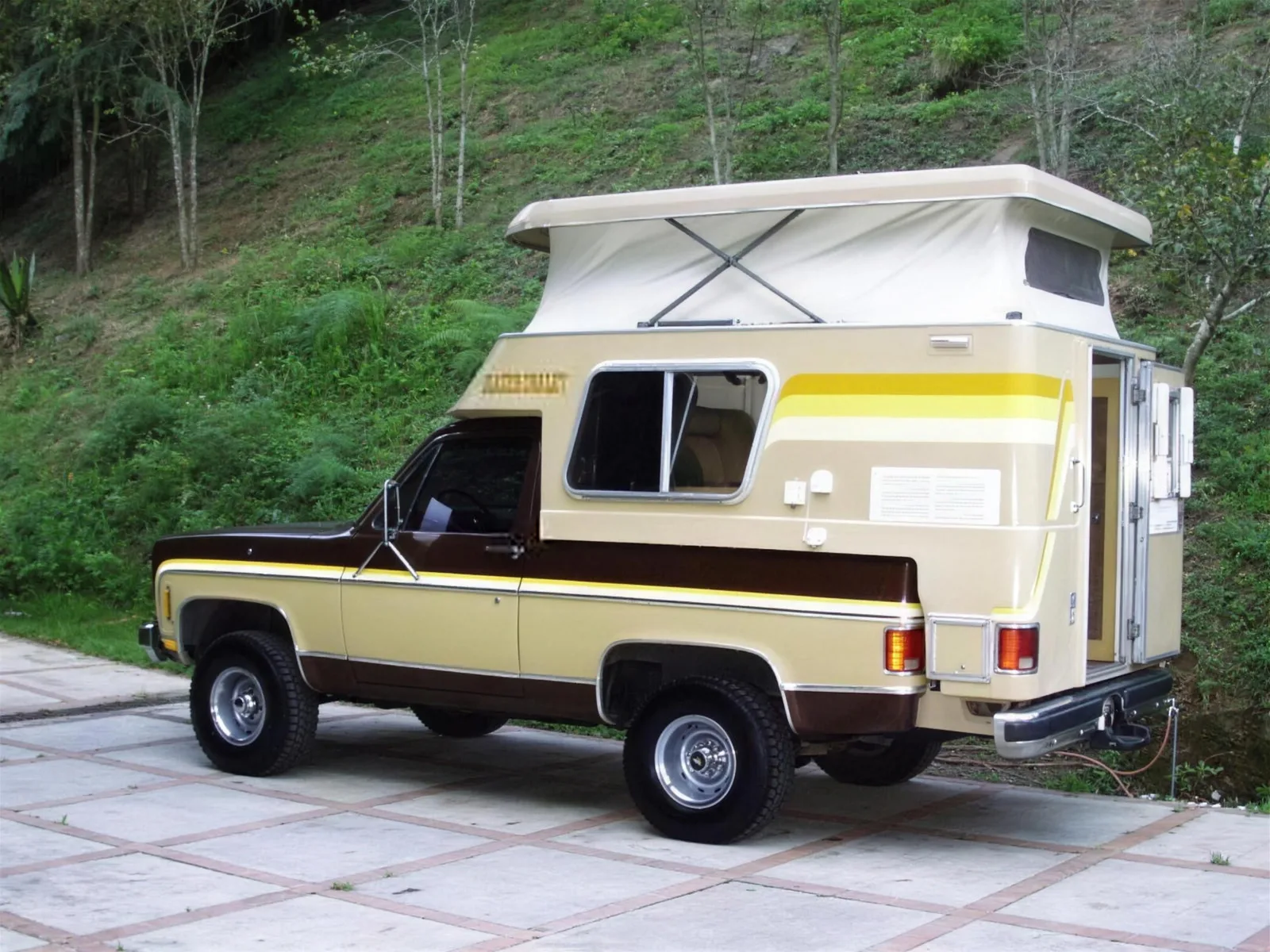
Ask a builder why their squarebody K5 Blazer has a GM LS engine under the hood instead of the original small block, and you rarely get a complicated answer. The k5 blazer squarebody ls swap culture is built on practicality as much as performance, a swap that solves reliability problems, adds real power, and does it with a drivetrain family that shares enough physical DNA with the original engine bay that the whole thing bolts up with less drama than swapping in almost anything else. That combination of ease and payoff is why the LS swap became close to a default choice rather than a niche one.
Car Features
7 min read
The LS-Swap Culture Around the Squarebody K5
The GM LS engine's close kinship with the original small block made it the default swap choice for squarebody K5 Blazer builders, and a whole community grew around it.
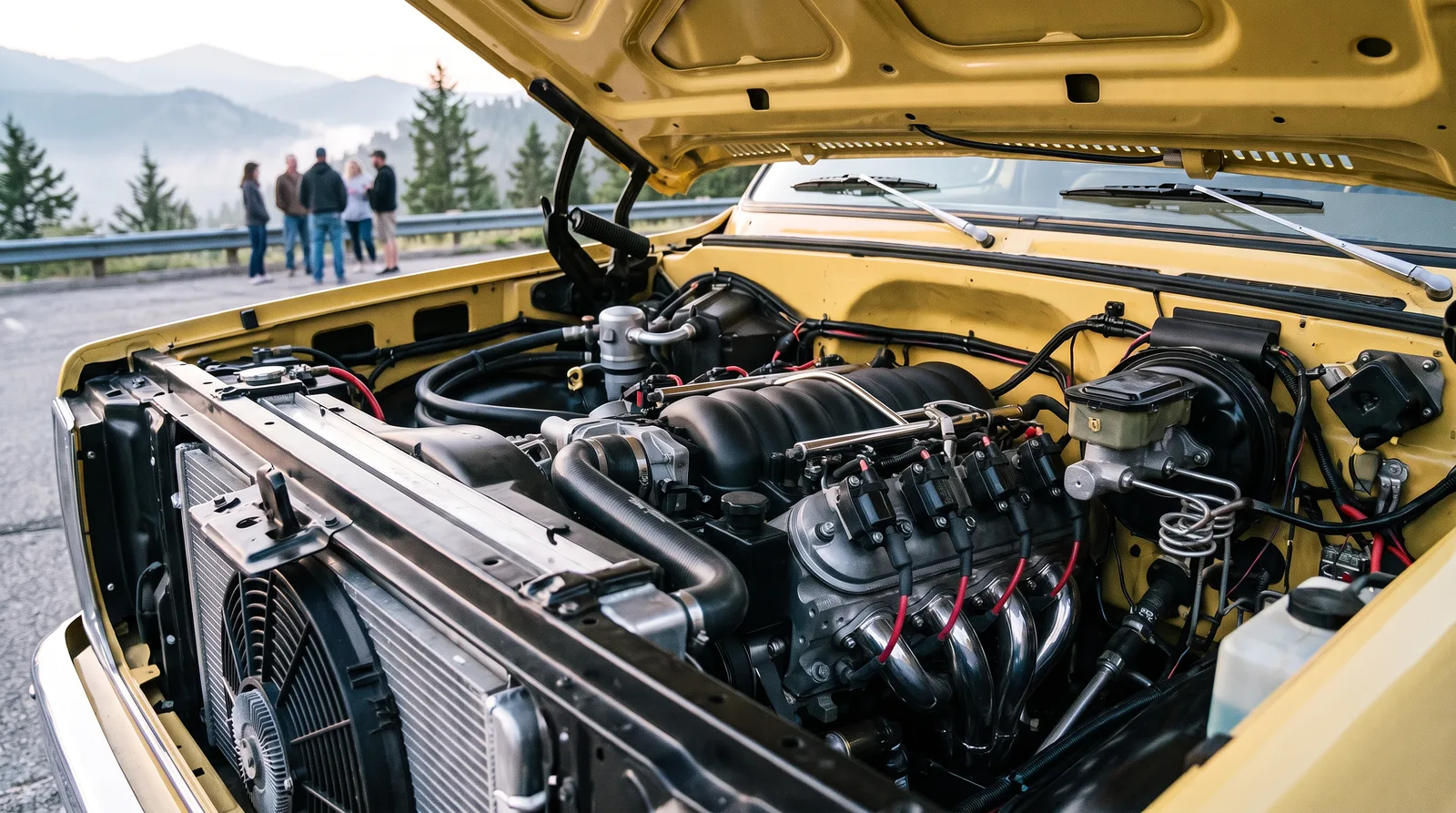
Why the LS specifically caught on
General Motors built the LS engine family as a modern successor to the small block Chevrolet V8 that originally powered so many squarebody trucks, and that lineage matters mechanically. The bell housing pattern and general engine dimensions are close enough to the classic small block that motor mount adapters and transmission crossmember kits are widely available and well proven, developed over roughly two decades of enthusiasts doing this exact swap across pickups, Blazers, and Camaros alike. That maturity means a builder doing an LS swap today is not solving new problems, they are following a documented path with parts, wiring harnesses, and tuning solutions already worked out by people who came before them.
Power and reliability are the other half of the appeal. A stock LS engine out of a wrecked late-model truck or SUV routinely makes more horsepower and torque than anything Chevrolet offered in a squarebody Blazer from the factory, while running on modern fuel injection that starts reliably in cold weather and does not need the constant carburetor tuning older owners remember fighting with. For a truck a lot of owners want to actually drive, not just trailer to shows, that reliability argument carries real weight.
What a typical swap actually involves
Beyond the engine itself, a proper LS swap into a squarebody K5 usually touches the transmission, the wiring harness, the fuel system, and often the exhaust and cooling systems as well. Builders pairing an LS with a modern overdrive automatic or manual transmission gain highway manners the original three-speed or four-speed setups never offered, quieter cruising rpm and better fuel economy on long hauls. The wiring side is where a lot of the real complexity lives, modern engine control units need a coherent harness and a tune, and getting that right is arguably a bigger factor in how well the finished truck runs than the mechanical installation itself.
None of this is a weekend project, and the culture around it reflects that. Builders trade notes on specific harness suppliers, motor mount kits, and tuning shops the way earlier generations of hot rodders traded notes on carburetor jetting, and a lot of that knowledge now lives in online forums and video build series rather than printed manuals.
"Nobody does an LS swap because they want to erase the truck's history, they do it because they want to keep driving the truck for another thirty years without babying it. That is a different motivation than people give the swap culture credit for."
- Nora Beckett
The community that formed around it
What started as individual builders solving a reliability problem grew into a genuine subculture with its own shows, social media presence, and informal mentorship structure. Builders post progress on long-running swap threads, answer questions from people attempting their first install, and in some cases turn a personal build into a small business selling brackets, adapters, or harness kits to the next wave of owners doing the same swap. That knowledge-sharing has compressed what used to be a genuinely difficult, trial-and-error swap into something a competent home mechanic can complete with a weekend's research and the right parts list.
The visibility of these builds on social media has also shaped expectations. A well-documented LS swap build thread can rack up real attention, and that attention has pushed the aesthetic side of these builds forward too, clean engine bays, tucked wiring, and a level of finish that goes well beyond just making the swap function.
Why donor engines are easy to find
Part of what kept the LS swap accessible instead of exclusive is how many donor vehicles General Motors built with the engine over its long production run. Trucks, SUVs, and sedans across multiple GM brands used LS variants for close to two decades, which means salvage yards and used parts markets stayed stocked with viable donor engines at reasonable prices for far longer than most swap platforms enjoy. A builder chasing a specific displacement or output level has real choice in the used market rather than being stuck bidding against a shrinking supply of one particular engine code, and that abundance has kept swap costs from climbing the way they have for rarer engine families.
That supply picture is starting to shift as the newest LS-powered vehicles age out of daily use and the oldest examples get harder to find in good condition, but for now builders still have meaningful choice in the used market, which keeps the swap culture growing rather than stalling out on parts scarcity.
Where it fits against originality-focused ownership
Not every squarebody owner wants an LS swap, and plenty of the community values a numbers-matching original as much or more than a swapped truck. The two camps mostly coexist without much conflict, because they are largely serving different goals, one group wants a driver that starts every time and keeps up with modern traffic, the other wants a documented piece of history preserved as close to factory as possible. What has changed is that the swap side of the hobby is no longer seen as a compromise or a lesser choice, it is recognized as its own legitimate discipline with its own standards for what counts as a well-executed build.
The LS swap culture around this generation of Blazer is really a story about a community solving the same problem independently and then sharing the solution until it became standard practice. For the wider context of how the squarebody Blazer earned the following that makes builders want to keep it on the road for another few decades, our square body blazer retrospective covers the full arc. If you are hunting for a donor truck to start your own build, you can look through K5 Blazers for sale now and see what condition of starting point is realistically available.
Sources and notes
Related Reading
Have a
Chevrolet Blazer
for Sale?
Reach thousands of serious classic car collectors across the US.
Sell It Here →
Selling a classic? Here's how: compare the places to sell classic cars
Are You a Classic Car Dealer?
List your full inventory and connect with targeted classic car buyers.
Join as a Dealer →

About the author
Nora Beckett
Automotive features writer and photographer who tells the human stories behind the cars, from show fields to cross-country road trips.
Related Listings - Chevrolet Blazer
Comments
Be the first to comment on this article.