
I still have the invoice. A member of our chapter, a retired parts manager named Curly, kept every scrap of paper that ever crossed his counter, and somewhere in a shoebox is a 1995 order form with "Tahoe" printed where "Blazer" used to sit. He shows it to new members like it is a relic from a lost civilization, because in a way it is. The K5 Blazer to Tahoe transition did not happen overnight, and it did not happen for the reasons most people assume.
Car Features
8 min read
From K5 Blazer to Tahoe: The 1995 Name Change
How Chevrolet split the Blazer name in 1995, why the full-size truck became the Tahoe, and why K5 collectors still correct people who call their truck by the wrong name.
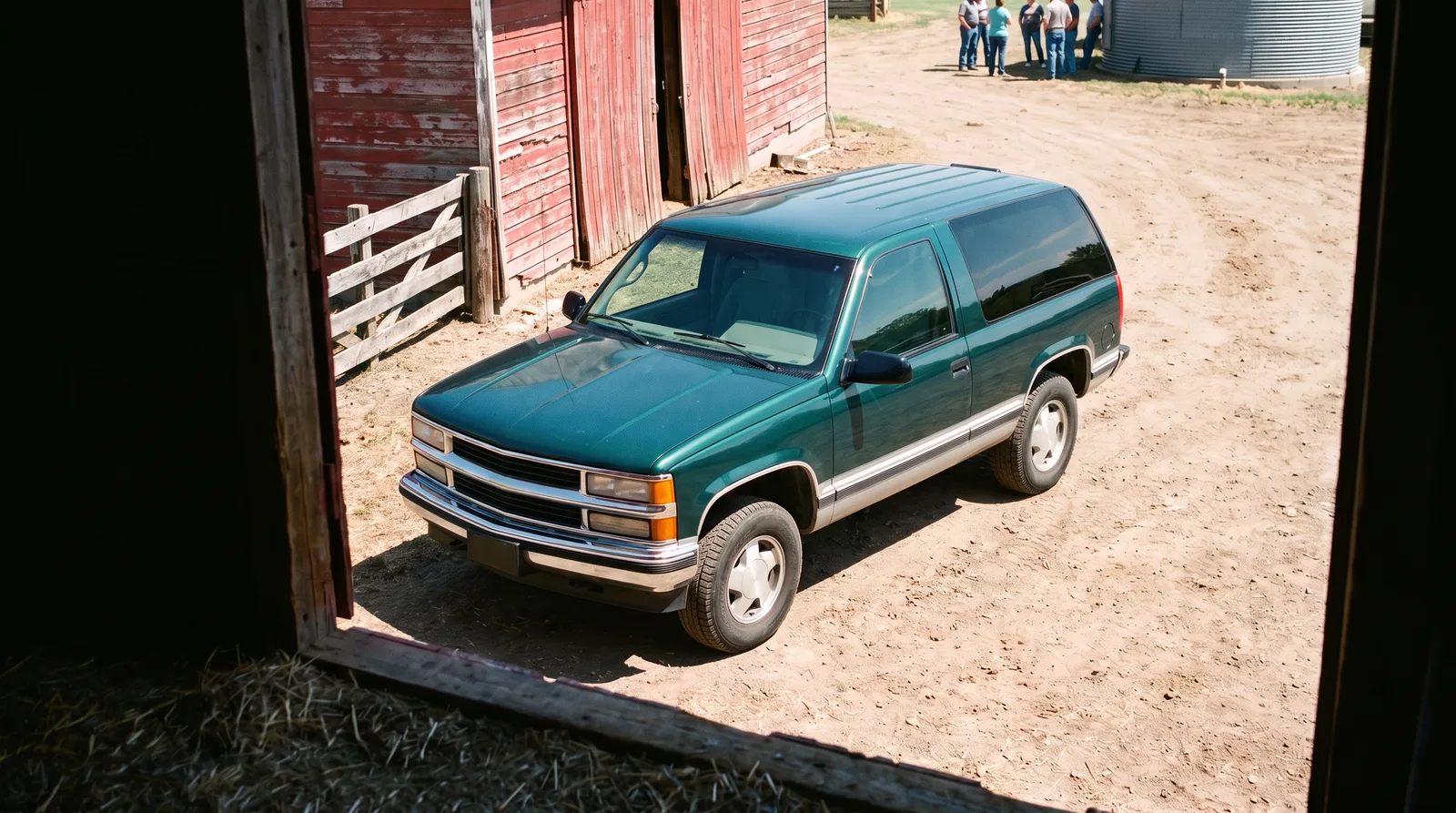
The name nobody wanted to lose
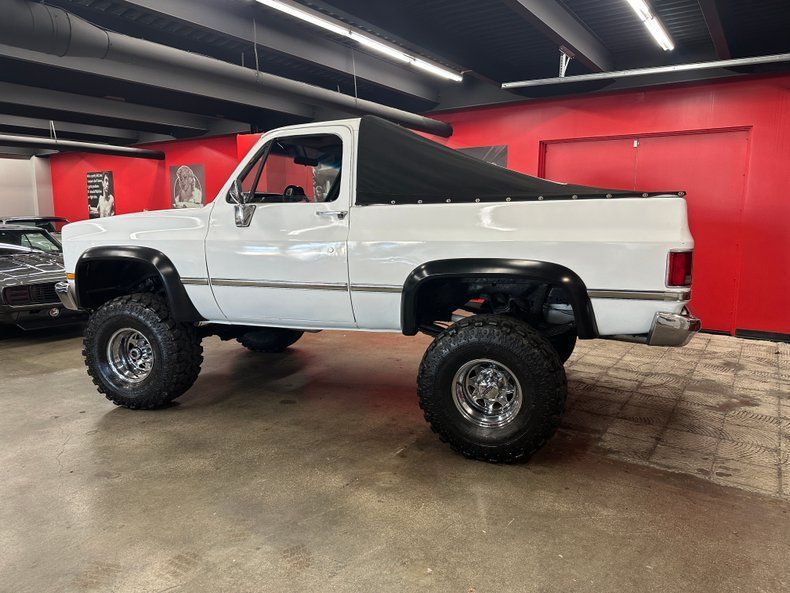
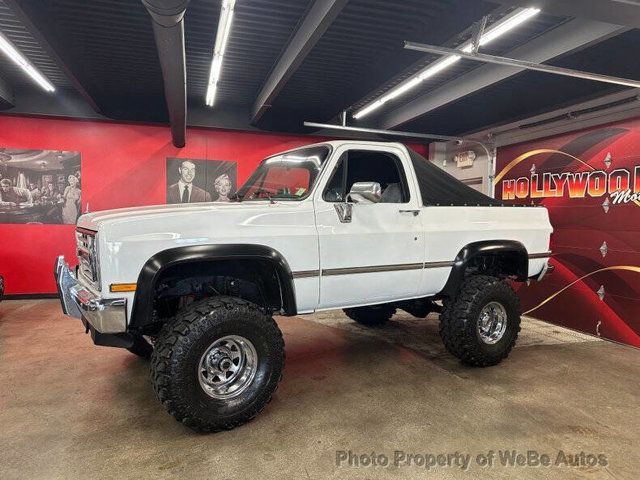
By the early 1990s, Chevrolet had a full-size sport utility with a lineage stretching back to 1969, when the original K5 Blazer showed up as a stubby, removable-top answer to the Ford Bronco and the International Scout. Two generations later, the squarebody-era K5 had turned into a suburban staple, the truck that hauled boats, kids, and hay bales without complaint. When GM rolled out the GMT400 platform for 1992, the two-door successor kept the Blazer name for a while, but a new trim level called Tahoe rode alongside it, aimed at buyers who wanted comfort over cargo space.
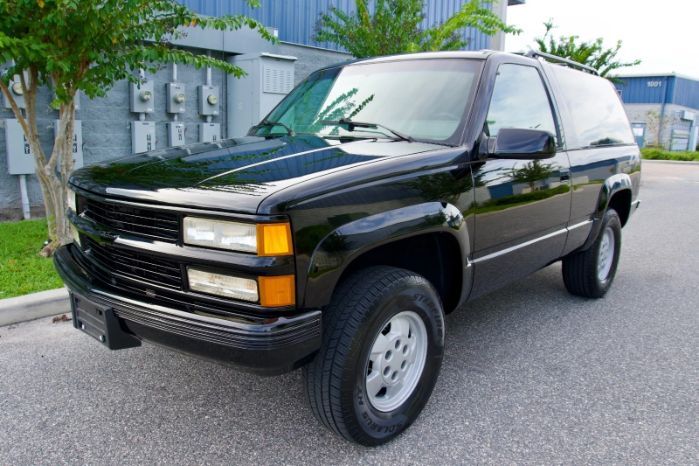
That Tahoe trim was the wedge. It sold. It sold well enough that when GM introduced a four-door version of the full-size utility for 1995, the marketing department made a decision that still gets argued about at swap meets: drop the Blazer name from the full-size truck entirely and let Tahoe carry the whole model line. The compact S-10-based Blazer kept its name and went on selling in its own lane, which is part of why the split confuses people to this day. There were, for a stretch, two completely different trucks answering to two different names, one of them being a name that used to belong to the other.
Why 1995 and not sooner
GM's product planners were watching Ford and Jeep as much as they were watching their own lineup. Explorer sales were climbing, and the compact SUV segment was pulling buyers away from the traditional full-size trucks. Chevrolet needed the full-size utility to read as a distinct product from the compact one, not a bigger version of the same thing. Splitting the names cleanly, Blazer for compact, Tahoe for full-size, solved a marketing problem more than it solved an engineering one, and it tracked the sales momentum Ford's Explorer was building in the same years.
GMC went through the same split on their side of the badge-engineering coin, just earlier. The Jimmy name, which had ridden alongside the K5 Blazer as a mechanical twin since the late 1960s, got demoted to the compact truck back in 1992, when the full-size GMC utility became the Yukon. So the naming split was not one clean move in 1995, it was staggered across both divisions, GMC leading with Yukon in 1992 and Chevrolet following with Tahoe three years later, and it happened as GM was trying to reposition the whole family away from its truck-based, ladder-frame image toward something that felt more like a family vehicle with off-road capability held in reserve.
"Every old-timer in the club has the same story. Their dad traded a K5 for a Tahoe and swore it was the same truck with a fancier name. It wasn't, but I understand why it felt that way."
- Wayne Coburn
What actually changed under the new name
The engineering gap between the last squarebody K5 Blazer and the first Tahoe is bigger than the naming suggests. The GMT400 platform that underpinned the Tahoe brought independent front suspension, a fully boxed frame, and a cab that felt like a different generation of vehicle because it was one. Buyers who stepped out of a 1991 K5 and into a 1995 Tahoe noticed the difference immediately, in ride quality, in noise levels, in the way the dash was laid out. The Tahoe was not a badge job. It replaced the K5's mechanical DNA with something GM had spent years developing.
What carried over was less tangible. The idea of a full-size, truck-based SUV that could tow, haul, and still get a family to church on Sunday, that idea belonged to the K5 Blazer long before Tahoe existed. Chevrolet built decades of trust into that shape, and the Tahoe inherited the customer base along with the reputation, even as the hardware moved on. If you want the fuller mechanical story of how the K5 got to that point, read the background on the squarebody years that set the stage.
The collector's take on the split
Here is the part that matters to people shopping today rather than reading history. The K5 Blazer and the Tahoe are not competing for the same buyer anymore, and they were not really competing for the same buyer even in 1995. The K5, especially the earlier removable-top trucks and the clean squarebody-era rigs, has become a collector vehicle in its own right, valued for the exact things that made it feel dated in 1994: the simple mechanicals, the boxy honesty, the fact that you can work on most of it with hand tools in a driveway. The Tahoe, meanwhile, kept evolving into the modern SUV people know today.
That divergence is good news if you are hunting for an original K5. You are not competing against Tahoe shoppers, and the values reflect a different market entirely, one built on nostalgia and restoration culture rather than daily-driver practicality. Club members trade stories about trucks that sat in barns for twenty years, about finding a straight axle version with no rust, about the difference between a 1976 and a 1978 dash layout. None of that conversation happens around a Tahoe. If that history has you looking for one of your own, there is usually a classic K5 Blazer for sale somewhere on the board, and it is worth chasing down before the good ones disappear.
The badges that got left behind
It is easy to forget how many nameplates GM shuffled around in that same window. Blazer moved from full-size to compact. Jimmy did the same shuffle on the GMC side, sliding down to the smaller truck while Yukon took over full-size duty. Suburban kept its name through the whole transition, largely because there was no compact Suburban competing for the badge. Looking at the family tree now, the K5 Blazer is the truck that anchors the whole story, the one every later name traces back to in some fashion, whether directly through Tahoe or sideways through the surviving compact Blazer nameplate.
Club members like Curly tend to know this genealogy cold, partly because they lived through it as customers and partly because sorting it out became a kind of parlor trick at meets. Ask a K5 owner to explain why there are two unrelated trucks both called Blazer at different points in history, and you will get a patient, slightly amused lecture that usually ends with them pointing at their own truck and saying, essentially, this is the real one.
What buyers actually gained and lost in translation
Setting nostalgia aside for a moment, the Tahoe was a genuinely better vehicle to live with day to day. Independent front suspension smoothed out the ride in a way the K5's solid front axle never could on pavement. Cabin insulation, seat comfort, and dashboard ergonomics all jumped forward a full generation. Fuel injection replaced carburetors across the lineup, which meant easier cold starts and steadier idle without the fiddling a squarebody K5 sometimes demanded.
What buyers lost, at least according to plenty of longtime K5 owners, was a certain mechanical honesty. The K5's solid axles, simple electronics, and body-on-frame simplicity meant a determined owner could diagnose and fix most problems with basic tools and a manual. The Tahoe, for all its refinement, asked owners to trust more electronics and more integrated systems, a trade-off that mirrors almost every transition from an older truck platform to a newer one. Neither approach is wrong. They just serve different priorities, and that difference is exactly why some people chase Tahoes for daily use while others chase K5s for something closer to a hobby.
Why the name still matters at car shows
Walk a show field today and you will see K5 owners correct people who call their truck a Tahoe, gently but firmly. It is not pedantry. It is a way of protecting a specific piece of history, a truck that did its job for over two decades before GM decided the name needed a fresh start. The Tahoe is a fine vehicle and a genuine sales success, but it is not the K5, and most of the people who own one of the originals want that distinction remembered. Curly's shoebox invoice sits in a frame at the clubhouse now, not because it proves anything mechanical, but because it marks the exact moment one era ended and another one, wearing a different name, began.
Sources and notes
Related Reading
Have a
Chevrolet Blazer
for Sale?
Reach thousands of serious classic car collectors across the US.
Sell It Here →
Selling a classic? Here's how: the best sites to sell a classic car
Are You a Classic Car Dealer?
List your full inventory and connect with targeted classic car buyers.
Join as a Dealer →

About the author
Wayne Coburn
Longtime Corvette owner, judge and club figure who knows the cars, the records and the people behind them.
Related Listings - Chevrolet Blazer
Comments
Be the first to comment on this article.