
Every club meeting eventually lands on the same argument, and it usually starts with somebody asking about the k5 blazer vs bronco four way, as if there was ever a real four-way shootout between the Blazer, the Bronco, the Ramcharger, and the Trailduster. There wasn't, not in any factory magazine test that pitted all four side by side. But there might as well have been, because these four trucks spent the better part of a decade parked next to each other in the same driveways, the same trailheads, and the same used car lots, and old timers who owned two or three of them over the years have plenty to say about how they actually stacked up.
Car Features
6 min read
K5 Versus Bronco Versus Ramcharger Versus Trailduster: The Four-Way Nobody Officially Ran
No magazine ever ran all four full-size open-top 4x4s side by side, but owners have been arguing the K5 Blazer, Bronco, Ramcharger, and Trailduster for decades.
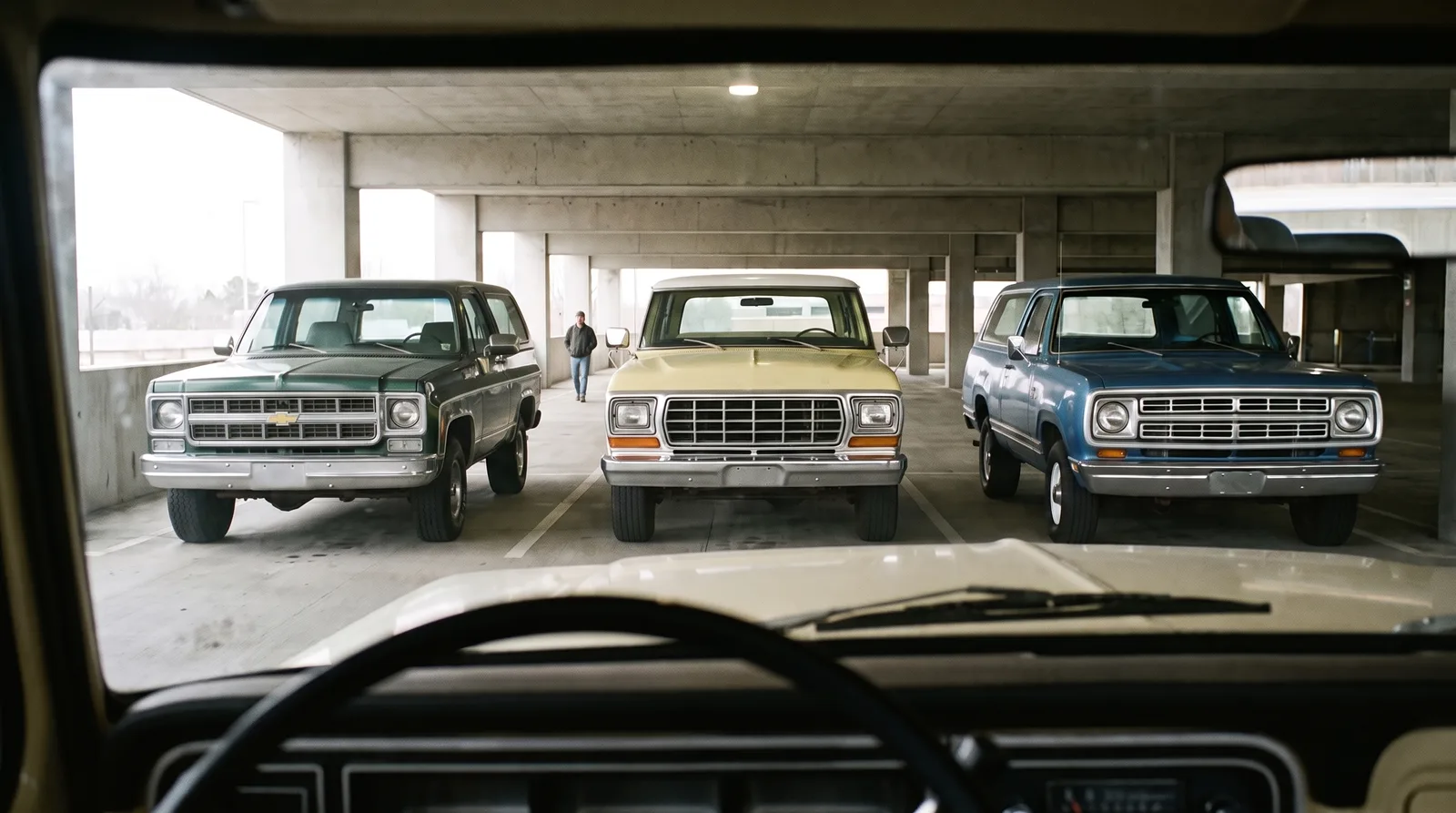
Four trucks, one basic idea, four different execution dates
Ford got there first with the Bronco in 1966. Chevrolet followed in 1969 with the K5 Blazer, building it on a proper half-ton pickup frame rather than the Bronco's own dedicated chassis, which gave the Blazer a bigger cabin and a smoother highway ride right out of the gate. Dodge and Plymouth showed up last, in 1974, with the Ramcharger and the Trailduster, essentially the same truck wearing two different badges. That five to eight year spread meant each new entrant had the benefit of watching what worked and what didn't before committing a dime to tooling.
I've heard fellows at the shows put it plainly: Ford started the whole thing, Chevrolet perfected it, and Dodge showed up with a good truck and terrible timing. There's truth in that, even if it oversimplifies what each company actually got right. It also leaves out Plymouth entirely, which tells you something about how thoroughly the Trailduster got overshadowed by its own corporate sibling before it ever had a fair shot at building its own reputation.
The Bronco stayed small while the others went big
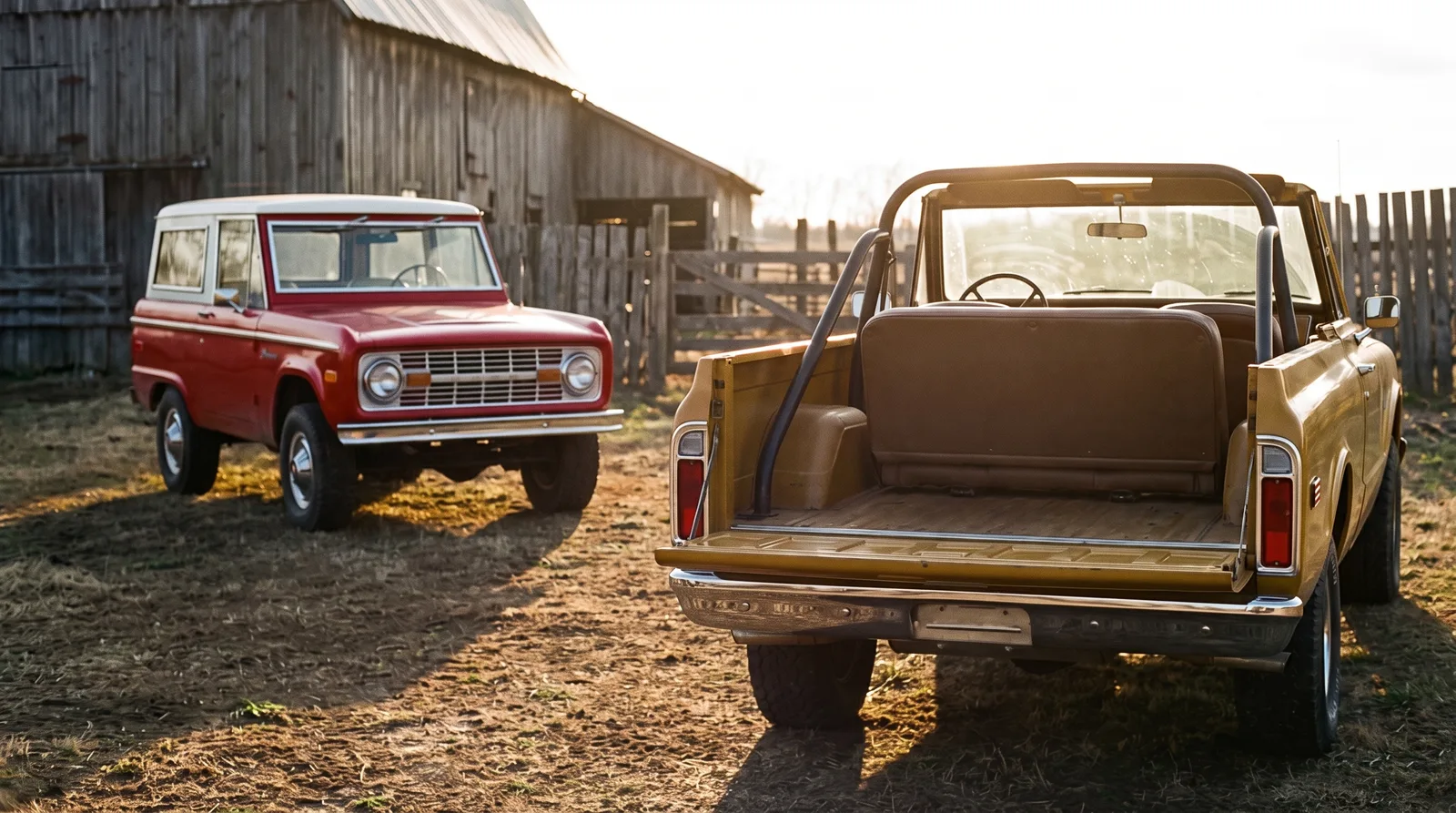
Ford kept the original Bronco compact through its entire first run, from 1966 to 1977, which gave it a nimbleness the bigger trucks couldn't match on tight trails but cost it interior room and towing capacity that family buyers wanted. Chevrolet, Dodge, and Plymouth all built their trucks on shortened full-size pickup frames, trading some of that agility for cabin space and V8 muscle. When Ford finally answered with a full-size Bronco in 1978, it was really acknowledging that Chevrolet's bigger-is-better approach had won the argument with the buying public.
Numbers nobody argues about
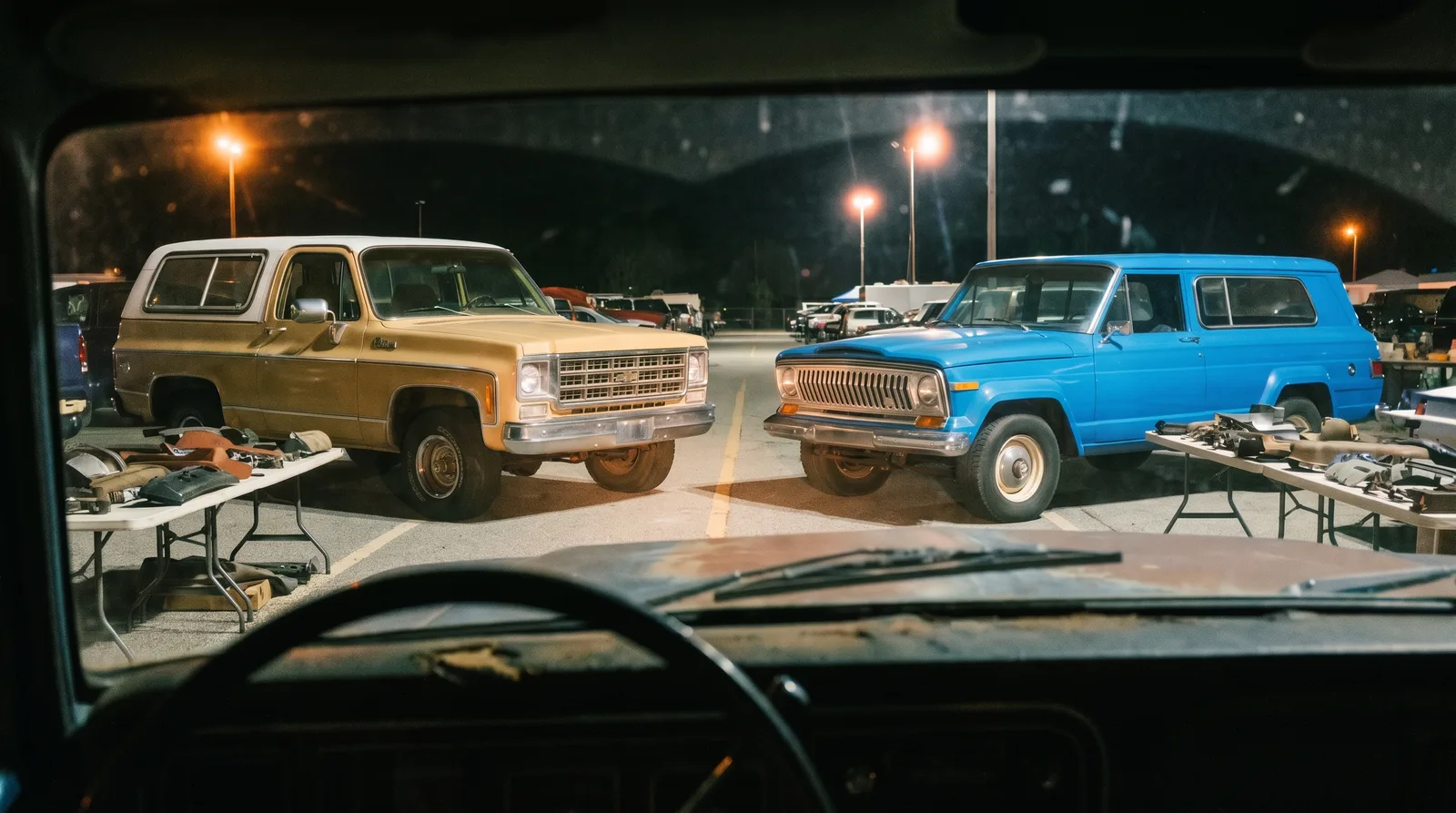
Production volume settles more of this argument than engine specs do. Chevrolet moved far more K5 Blazers through its dealer network than Ford moved Broncos, and both dwarfed what Dodge and Plymouth managed with the Ramcharger and Trailduster combined. That gap shows up today in parts availability and in how many trucks from each brand survive in driveable condition. A Blazer owner can usually find a part with a phone call or two. A Trailduster owner might need a weekend and a swap meet. Bronco owners sit somewhere in between, well served for the compact first generation thanks to a dedicated enthusiast community, and even better served for the full-size second and third generations that shared more parts with Ford's mainstream pickup lineup.
| Truck | First model year | Frame type | Removable top years |
|---|---|---|---|
| Chevrolet K5 Blazer | 1969 | Shortened C/K pickup frame | 1969 to 1975 |
| Ford Bronco (first gen) | 1966 | Dedicated compact chassis | 1966 to 1977 |
| Dodge Ramcharger | 1974 | Shortened D-series pickup frame | 1974 to 1980 |
| Plymouth Trailduster | 1974 | Shortened D-series pickup frame | 1974 to 1980 |
Where each one actually earned respect
Talk to enough owners and a pattern shows up. The Bronco earns respect for trail manners and that early compact agility, especially among people who never cared about towing a camper. The Blazer earns respect for being the truck you could actually live with every day, big enough for a family, tough enough for a job site, and common enough that keeping it running never turned into a scavenger hunt. The Ramcharger earns a nod for raw V8 power on the cheap, and the Trailduster earns respect mostly for being the one hardly anybody has, which counts for something at a show full of trucks people have seen a hundred times.
Anybody wanting the deeper history behind the biggest of these four rivalries should read the whole picture, because the Blazer versus Bronco fight ran the longest and shaped how the other two brands designed their own entries.
"I owned all four of these at one point or another over thirty years, and I'll tell you the honest truth, the Blazer is the one I regret selling."
- Wayne Coburn
Regional loyalty shaped which truck you actually saw
Ask owners where they grew up and you can often guess which of the four trucks they drove first. In the Mountain West and parts of the Pacific Northwest, the Bronco's compact trail manners made it a common sight among ranchers and hunters who valued its narrower footprint on tight forest roads. In the Midwest and South, where towing, farm work, and long highway miles mattered more than tight trail clearance, the K5 Blazer's bigger frame and roomier cabin made it the more practical daily choice, and Chevrolet's dealer density in those regions reinforced that preference. Dodge and Plymouth never built the same kind of regional stronghold, in part because they arrived so much later and never had the years needed to build that kind of loyalty before the segment itself started to change.
That regional pattern still shows up at shows today. A cruise night in Colorado is more likely to have an early Bronco or two mixed in with the Blazers, while a Midwestern show tends to be dominated by K5s with the occasional Ramcharger or Trailduster as the rare exception that draws a crowd.
What this means for a buyer walking a show field today
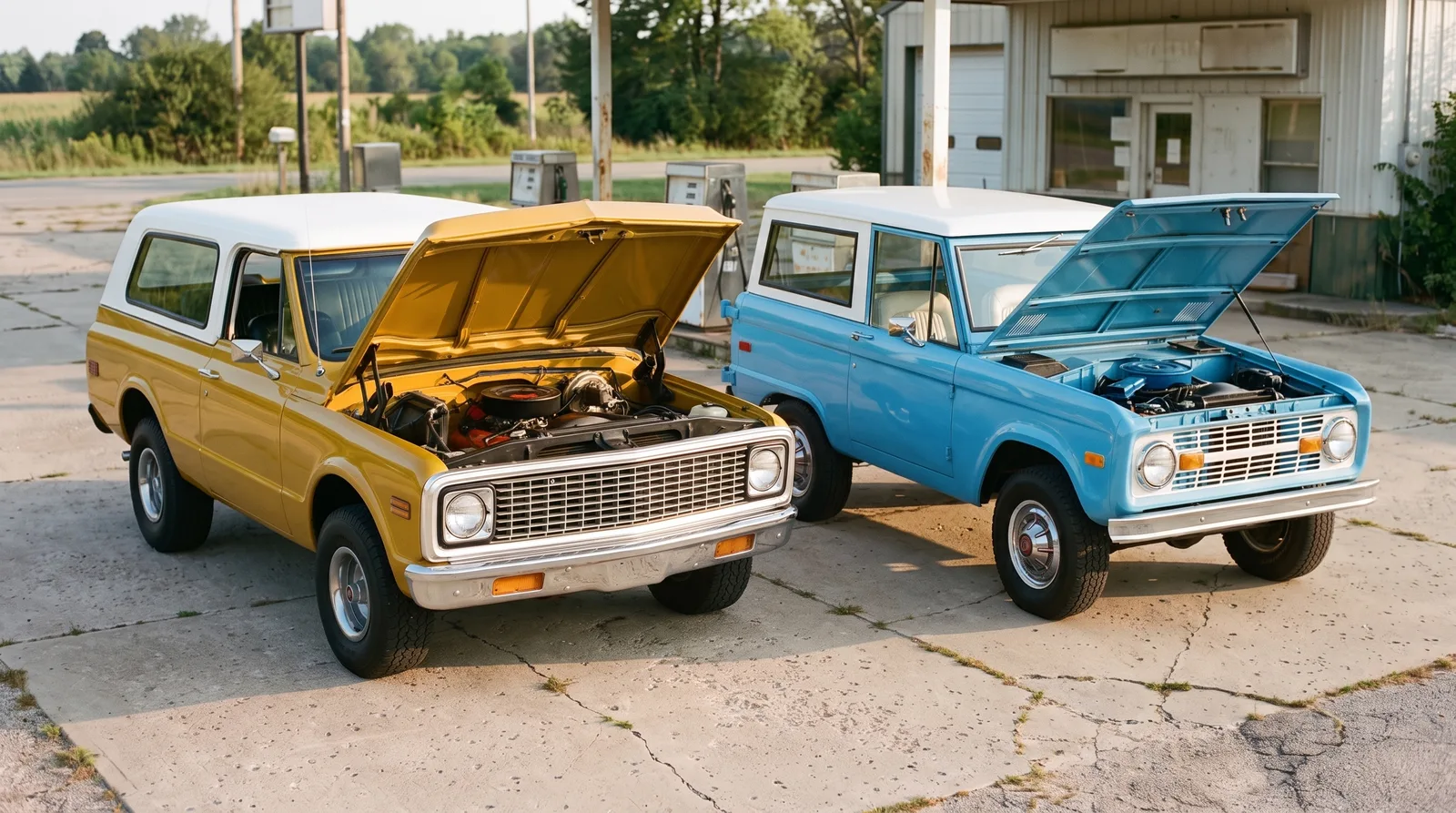
None of these four trucks is a wrong answer, but they reward different priorities. Buyers chasing the deepest parts network and the most trucks to choose from gravitate toward the Blazer. Buyers chasing trail agility lean Bronco. Buyers chasing V8 power on a budget look at the Ramcharger, and buyers chasing genuine rarity end up with a Trailduster almost by accident, because so few show up for sale. Anyone ready to compare real asking prices rather than just club talk can find a classic K5 Blazer and see where the most common of these four trucks actually lands today.
Whatever the choice, the four-way comparison itself proves something worth remembering: an entire era of American truck buyers wanted the same basic thing, a full-size 4x4 that could work during the week and go somewhere fun on the weekend, and four different companies built four different honest answers to that same question. None of them got everything right, and none of them got everything wrong, which is probably why all four still have owners willing to argue about it decades later.
Sources and notes
Related Reading
Have a
Chevrolet Blazer
for Sale?
Reach thousands of serious classic car collectors across the US.
Sell It Here →
Selling a classic? Here's how: sell my classic car
Are You a Classic Car Dealer?
List your full inventory and connect with targeted classic car buyers.
Join as a Dealer →
#Ford Bronco
#classic 4x4
#K5 Blazer
#Dodge Ramcharger
#full-size SUV comparison
#Plymouth Trailduster

About the author
Wayne Coburn
Longtime Corvette owner, judge and club figure who knows the cars, the records and the people behind them.
Related Listings - Chevrolet Blazer
More in Car Features
Comments
Be the first to comment on this article.