
Picture a Chevrolet dealership lot in 1975, gravel crunching under boots, a young family walking the row trying to decide between two trucks parked three spaces apart. One is trim and adventurous looking, a removable top promising open-air weekends. The other is long, boxy, and built for hauling every kid, cousin, and cooler the family owns. The k5 blazer vs suburban decision that family faced that afternoon is the same one plenty of buyers still wrestle with today, decades after both trucks left the model lineup they came from.
Car Features
6 min read
K5 Blazer vs Chevrolet Suburban: Two Ways to Haul the Family
Same dealer lot, same full-size Chevrolet bones, two completely different missions. The K5 Blazer chased open-air versatility while the Suburban chased seats and cargo room.
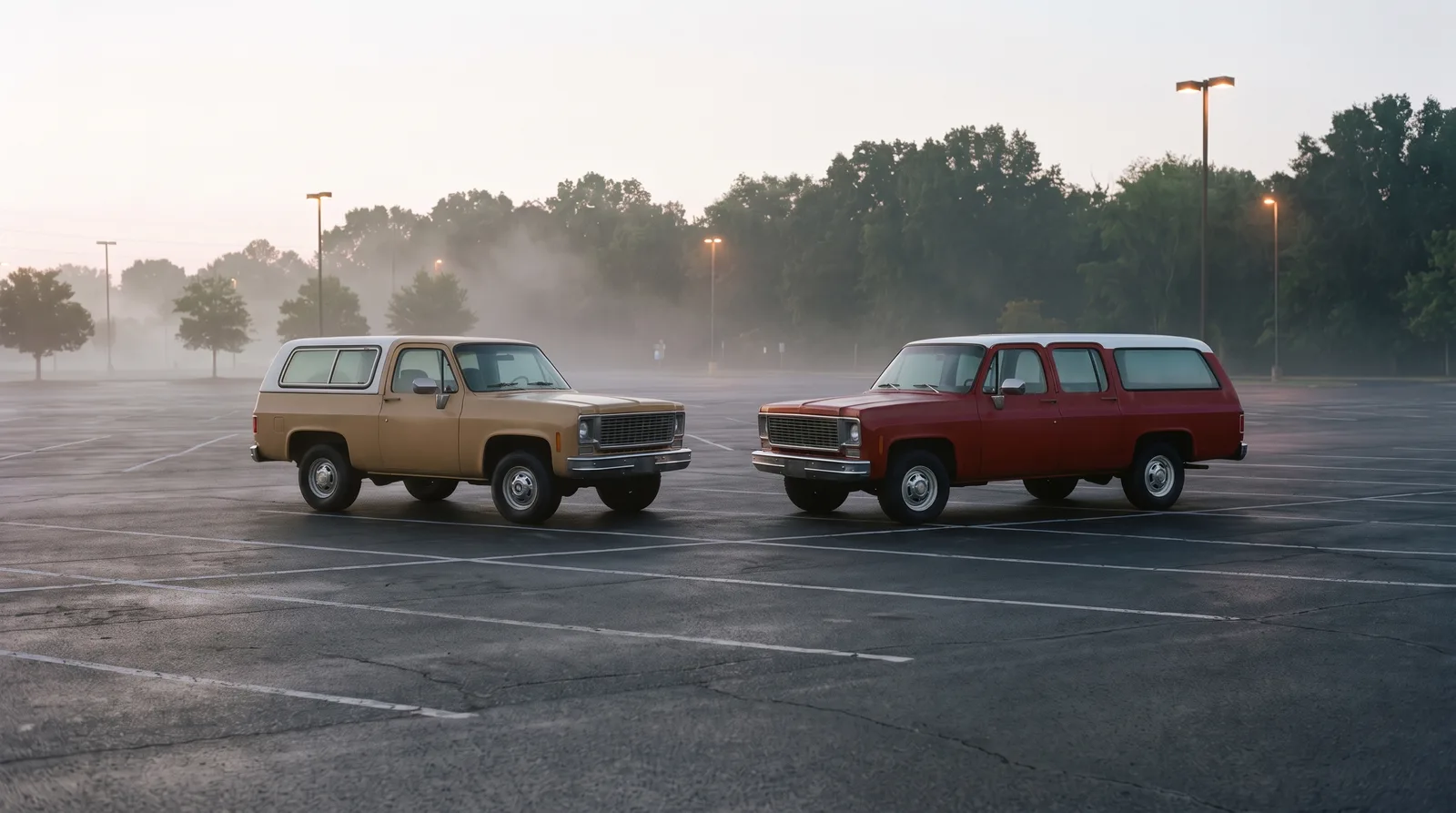
These two Chevrolets shared a badge, a dealer network, and a fair amount of mechanical DNA. What they never shared was a mission. Understanding the gap between them tells you almost everything you need to know about which one belongs in your driveway.
Same family, different jobs
Both the K5 Blazer and the Suburban rode on Chevrolet's full-size truck architecture, and for years they shared engines, transmissions, and a lot of the parts bin underneath the sheet metal. But the Suburban was built from the start as a full-time family and cargo hauler, three rows of seating in later configurations, a wheelbase stretched to swallow gear that would never fit in a Blazer's shorter bed. The K5, by contrast, was built around versatility and a shorter footprint. That removable top was never an option on the Suburban, and it signals the real philosophical split between the two trucks. The Blazer wanted to be a weekend adventure vehicle that could still do honest work. The Suburban wanted to be the family's one and only vehicle, full stop, with room for everyone and everything they owned.
The seating math that decided a lot of purchases
For a family of six planning a cross-country trip, the math was not complicated. The Suburban's extra length translated directly into extra seats and extra cargo room that the K5 simply could not match, top on or top off. That size advantage made the Suburban the default choice for larger families from the start, a reputation the nameplate has never really lost even as it evolved into the modern three-row SUV people know today. The K5 answered a different question entirely, one closer to "what single vehicle can be a work truck Monday through Friday and an open-top trail rig on Saturday." Smaller families, single buyers, and anyone who valued that dual identity gravitated toward the Blazer, while anyone doing the actual math on car seats and luggage space leaned Suburban almost automatically.
Towing, hauling, and the honest tradeoffs
Once you get past seating, the two trucks trade blows depending on what exactly you are hauling. The Suburban's longer wheelbase generally gave it a smoother ride and better stability towing a heavy trailer over long highway miles, the kind of stability a family actually notices on an eight-hour drive to a lake house. The K5's shorter wheelbase made it more agile in tighter spaces, better suited to trail work and situations where maneuverability mattered more than outright hauling capacity. Neither truck was objectively better at towing in every configuration, since both could be optioned with similar drivetrains and axle ratios depending on the model year. What actually separated them in practice was cargo volume behind the rear seats, where the Suburban's extra length gave it a real and consistent edge that no engine option on the K5 could fully answer.
"I once asked a Suburban owner why he never considered a Blazer, and he just laughed and pointed at his three kids in the back seat. Some decisions get made for you before you ever walk onto the lot."
- Patrick Walsh
What the market says about each nameplate now
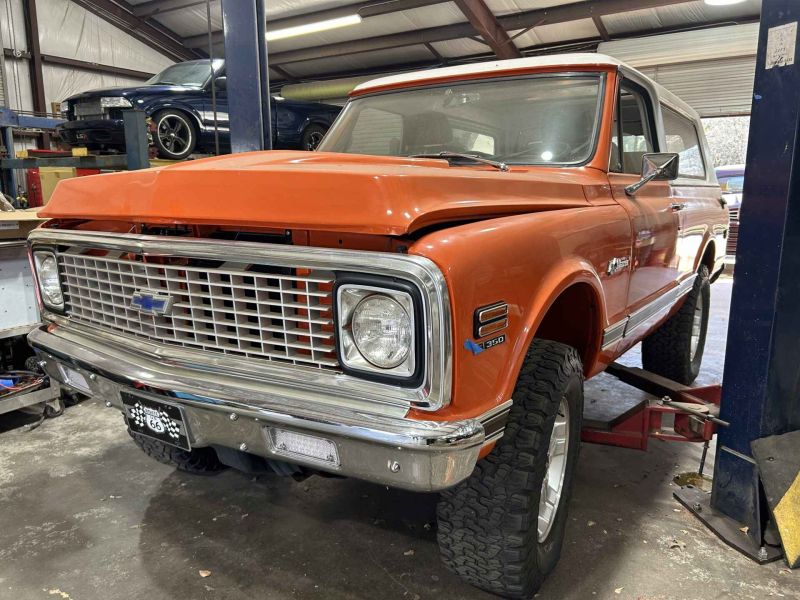
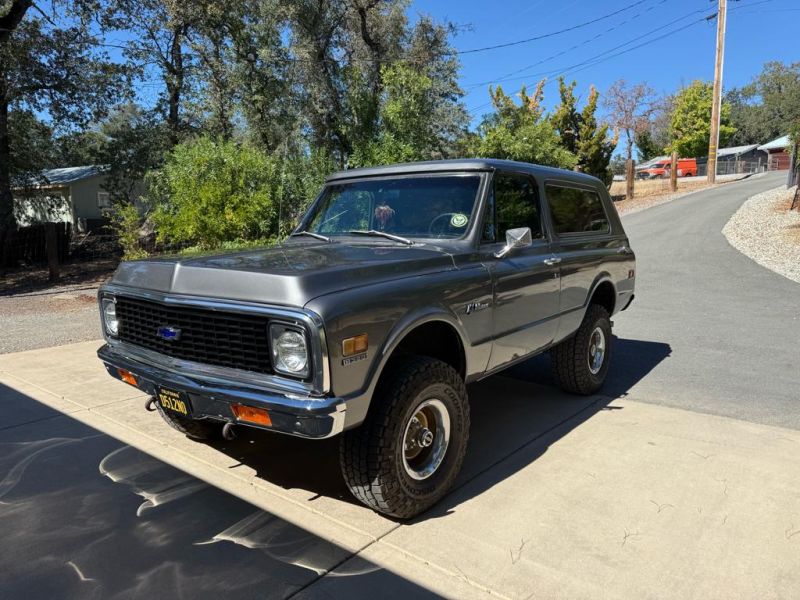
Values for both trucks have climbed steadily over the past decade, but they have not climbed for identical reasons. Early K5s with the removable top, especially clean 1969-72 examples, get chased hard because that top made them genuinely unusual among full-size trucks of the era, and unusual sells at a premium once a segment matures into collector territory. The Suburban's value story runs differently. Because the nameplate stayed in continuous production for so long, older Suburbans compete less on scarcity and more on originality and condition, since the sheer number built over the decades means survivors are more common than K5s from the same years. That distinction matters if you are buying with resale in mind rather than just personal enjoyment. A K5 with strong documentation and an intact top mechanism will often appreciate faster than a comparable Suburban simply because fewer clean examples exist to satisfy demand. A well-kept Suburban, meanwhile, tends to hold value more steadily rather than spiking, a slower and arguably safer bet for a buyer who wants a classic that will not lose money but is not necessarily chasing rapid appreciation either. Fuel and maintenance costs also separate the two in ways that still matter to a modern owner, not just a 1975 buyer. The Suburban's added length and weight generally means it drinks more fuel and puts more strain on brakes and tires over time, an honest tradeoff for the extra room it offers. The K5's smaller footprint keeps running costs a touch more manageable, one more small reason it appeals to buyers who want a fun weekend truck rather than a full-time family hauler.
Which one still makes sense today
The modern used market has sorted these two trucks into fairly distinct buyer camps, and that sorting mostly mirrors how they sold new. Collectors chasing that open-air, do-anything character gravitate toward the K5, especially early removable-top examples that carry a kind of charm the Suburban never tried for. Buyers who want genuine passenger and cargo capacity in a vintage full-size Chevrolet, without sacrificing daily usability, tend to end up with a Suburban instead. For the fuller history of how the K5 stacked up against its other great full-size rival, the k5 blazer vs bronco story is worth reading alongside this one, since the two comparisons together give a much more complete picture of where the K5 sits in Chevrolet's own lineup, let alone against Ford's. If the Blazer's blend of open-top character and honest capability is calling to you specifically, the smartest move is to go look at real trucks rather than debate the spec sheet forever. There are classic K5 Blazers on the market right now in a wide range of condition and price, and nothing settles a driveway debate faster than seeing both trucks in person.
That family in the gravel lot back in 1975 eventually walked away with the Suburban, kids and cargo winning the day like they usually do. But somewhere down the same block, another family made the opposite call, and both of them were right for their own reasons. That is really the whole story here.
Sources and notes
Related Reading
Have a
Chevrolet Blazer
for Sale?
Reach thousands of serious classic car collectors across the US.
Sell It Here →
Selling a classic? Here's how: the best sites to sell a classic car
Are You a Classic Car Dealer?
List your full inventory and connect with targeted classic car buyers.
Join as a Dealer →
#buying guide
#Chevrolet history
#K5 Blazer
#full-size SUV history
#Chevrolet Suburban
#classic Chevrolet trucks

About the author
Patrick Walsh
Automotive journalist covering classic car shows, events, and the enthusiast community across North America.
Related Listings - Chevrolet Blazer
More in Car Features
Comments
Be the first to comment on this article.