
Among the forty-odd vehicles at the Model T Museum in Richmond, Indiana, is a 1923 town car that was not built in Michigan at all. It was built in England. To a casual visitor it reads as one more black Ford. To anyone who studies the cars as objects, it is a reminder that Model T international production was a real industry with its own plants, its own records and its own surviving artifacts. The car that Americans think of as their own was assembled on several continents, and the last one of all came off a line in Ireland.
Car Features
7 min read
Model T Around the World: Canada, Britain and Overseas Assembly
Walkerville, Trafford Park, Cork and Ford's overseas plants: how the Model T was built far beyond Michigan, and where the last one came from.
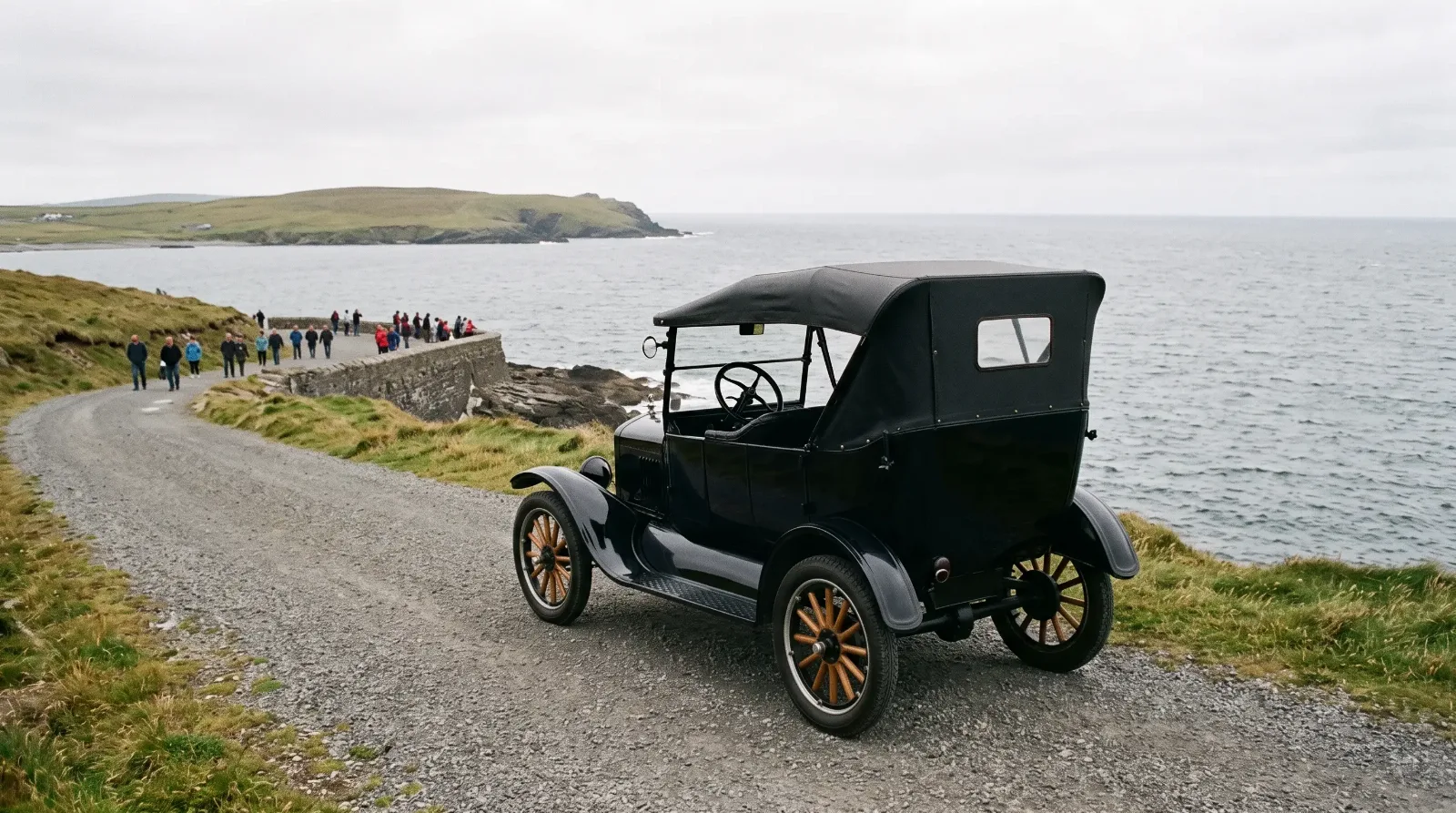
The American story, from Piquette Avenue to the moving line, is told elsewhere, along with more on the Model T history cars. This article follows the car outward: to Canada first, then Britain, then Cork, and then to the long list of assembly plants Ford opened between 1912 and 1926.
Ford of Canada and the Walkerville line
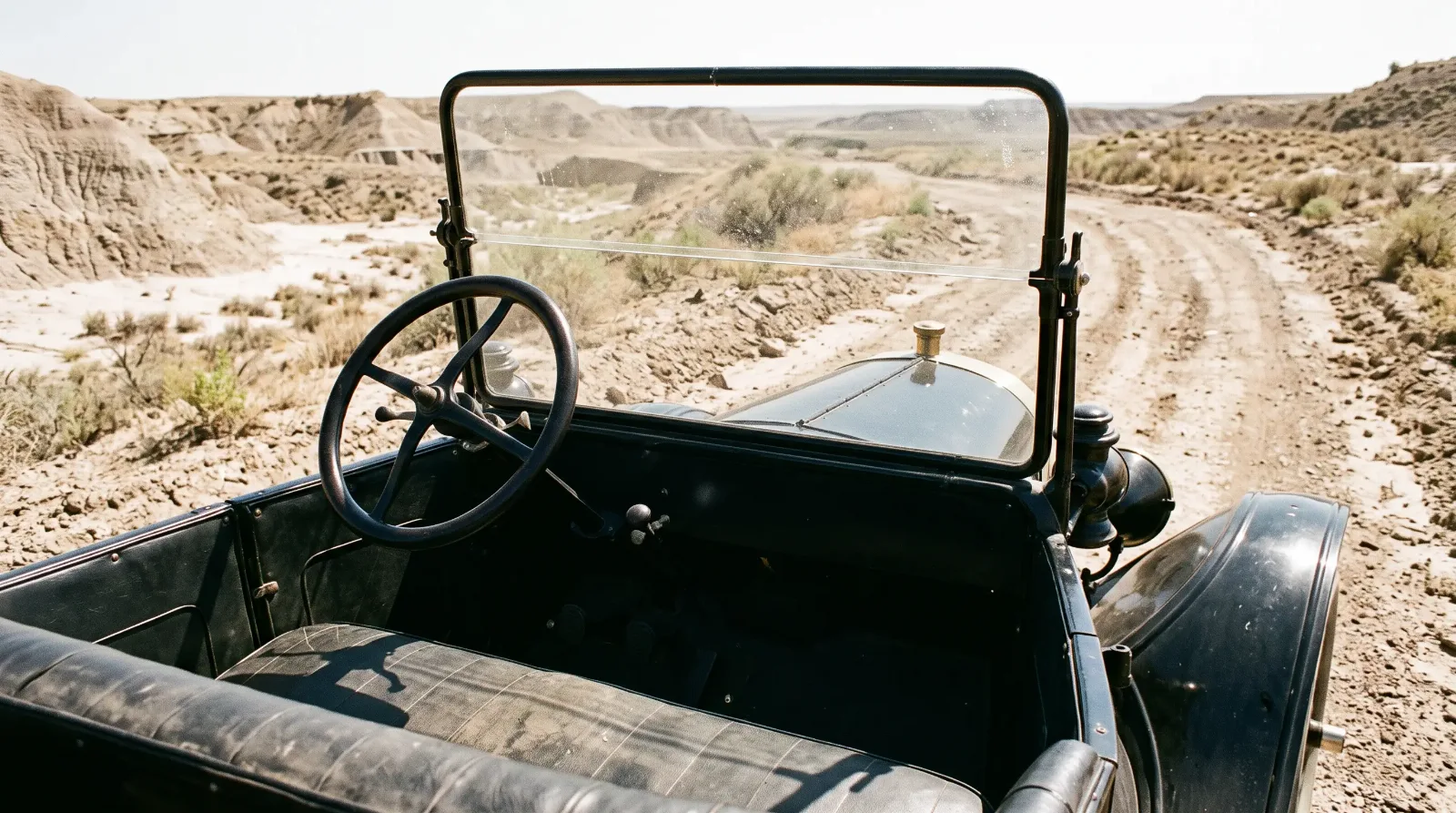
Ford's first move abroad was a short one, across the Detroit River. Gordon Morton McGregor obtained the Canadian franchise on August 14, 1904, and the first car left the Walkerville line, in what is now Windsor, Ontario, on October 10, 1905. The Henry Ford's own plant list dates the Walkerville and Windsor operation from 1905 to 1954, which makes it one of the longest-lived Ford sites outside Michigan.
Canadian output peaked late. The best Canadian Model T year was 1926, with 100,611 cars built, at a moment when American demand was already sliding toward the end of the run. A full Canadian production total is harder to pin down. A figure of 757,030 circulates among enthusiasts, but no primary record supports it, and I would not repeat it on a placard.
That gap matters for anyone dating a car. American production tables do not count Canada, and Canadian figures are often missing from the totals people quote. When a Canadian-built Model T appears at a show or a sale, its plant of origin is part of its history and should be documented, not assumed.
Trafford Park: the Model T in Britain
Ford's first factory outside North America opened in 1911 in a former tram works at Trafford Park, Manchester, with about 60 staff. Wikipedia credits Walkerville and Trafford Park as the two plants building the Model T from 1911. In Britain the car was priced at £150 in a 1912 advertisement, and it sold quickly.
By 1913 Trafford Park was building about 6,000 cars a year, and the Model T was Britain's best-selling car, with roughly 30 percent of the market. The plant installed the first moving assembly line in the United Kingdom in 1914, running at 21 cars an hour. By 1919, 41 percent of the cars registered in Britain were Fords. Over the whole run, Trafford Park built about 150,000 Model Ts.
Those numbers explain why surviving British-built Model Ts are worth studying on their own terms. They were not curiosities shipped over in small numbers; they were a local product built in a local factory. The English-built town car in Richmond is one of the cars that keeps that chapter visible to American audiences.
Cork and the last Model T anywhere
Ford's plant in Cork, Ireland, began with tractors. Grace's Guide dates the opening to 1917; The Henry Ford's plant list gives 1919. Car assembly followed in 1921. Cork's place in Model T history comes at the very end: when Highland Park stopped building the car on May 26, 1927, the Irish plant kept going. Production there ran until December 31, 1927, and the last Model T built anywhere in the world came out of Cork that month.
The detail is worth fixing in memory because it corrects a common shorthand. The famous fifteen-millionth car, driven off the Highland Park line by Henry and Edsel Ford, marked the end at Highland Park; a few American branch plants finished their last cars within days. It was not the last Model T. Ford was still assembling them overseas for seven more months.
"A Model T's plant of origin is part of the object, the same way a coachbuilder's tag is part of a body. Two cars can share a design and still carry different histories. Record where yours was built before you record anything else."
Sarah Whitfield
Model T international production beyond North America
Beyond Canada, Britain and Ireland, Ford spread assembly across Europe, South America, Africa, Asia and Australia. The Henry Ford's research staff keep a list of overseas assembly plants with their start years. It comes with two caveats from the museum itself: the list has gaps, and these plants assembled Fords in general, not only the Model T. Read it as a map of where Ford was building, not as a count of Model Ts.
| Start year | Overseas assembly plants |
|---|---|
| 1912 | Bordeaux |
| 1916 | Buenos Aires |
| 1919 | Copenhagen, Cadiz |
| 1920 | Sao Paulo, Montevideo |
| 1922 | Antwerp |
| 1923 | Trieste, Port Elizabeth |
| 1924 | Santiago |
| 1925 | Mexico City, Yokohama, Geelong |
| 1926 | Berlin, Asnieres, Bombay, Singapore |
The pattern is plain. The overseas build-out accelerated in the 1920s, and several of these plants opened only in the last two or three years of the Model T's life. Yokohama, Geelong, Berlin and Bombay came on line as the car itself was nearing its end, which means many of them went on to build the Model A after 1927. The exact date for Geelong is itself unsettled: a July 1925 start appears in some accounts, but the heritage record could not confirm it, so 1925 is as precise as the evidence allows.
Exports from American factories show the same peak. In 1925 they reached 303,000 vehicles. At home, the same cars were feeding the push for paved roads; abroad, they were often arriving in places where roads had barely been thought of.
Reading a foreign-built Model T today
For a collector or a judge, the international story has practical consequences. A car assembled in Manchester, Walkerville or Cork can differ from a Highland Park car of the same year. The most visible difference is the steering: the Windsor Public Library's history of the Walkerville plant notes that Canadian models were built with both left and right hand drive for many years, because driving customs differed between provinces. Other differences vary by plant and by year, and they are best checked against club research and period documentation rather than general rules. What should never be done is to "correct" a foreign-built car to American specification on the assumption that the American version is the original. For that car, it is not.
The paper trail is the other half. Factory records, import papers, registration documents and old photographs taken in the country of origin are what turn a black Ford into a documented British, Canadian or Irish car. Without them, the plant of origin is a claim. With them, it is history, and history is what separates an interesting Model T from an ordinary one.
The Model T is remembered as the car that put America on wheels. The record shows something broader: a design built by a Canadian company that had been making Fords since 1905, in Britain from 1911, in Ireland until the very last day of 1927, and assembled on six continents. The cars that survive from those plants are small, specific pieces of that record.
Sources and notes
- Windsor Public Library: Ford Motor Company of Canada, Walkerville
- Grace's Guide: Ford Car (Trafford Park and Cork)
- The Henry Ford: Ford assembly plants and their start years
- The Henry Ford: the Fifteen Millionth Ford
- Visit Indiana: the Model T Museum in Richmond
- Wikipedia: Ford Model T (production abroad and the last car at Cork)
Related Reading
Have a
Ford Model T
for Sale?
Reach thousands of serious classic car collectors across the US.
Sell It Here →
Selling a classic? Here's how: the best sites to sell a classic car
Are You a Classic Car Dealer?
List your full inventory and connect with targeted classic car buyers.
Join as a Dealer →

About the author
Sarah Whitfield
Third-generation classic car collector specializing in pre-war American and European coachbuilt automobiles. Researcher and concours enthusiast.
Related Listings - Ford Model T
More in Car Features
Comments
Be the first to comment on this article.