
Picture a Dodge dealer lot in the fall of 1974, salesman leaning against a fender, pointing out that this new Ramcharger has a twin over at the Plymouth store called the Trailduster, same truck, different badge, same fight against Chevrolet's K5 Blazer. The k5 blazer vs trailduster comparison rarely gets its own spotlight because the Trailduster is usually treated as a footnote to its Dodge sibling. That is a mistake. Plymouth's version had its own dealer network, its own buyers, and its own quiet place in the story of how Chevrolet's Blazer came to dominate the full-size open-top SUV segment.
Car Features
7 min read
K5 Blazer Versus Plymouth Trailduster: The Badge Job That Never Caught Up
Plymouth's Trailduster shared its bones with the Dodge Ramcharger but never overcame a dealer network built for cars, not trucks. See how it stacks up against the K5 Blazer.
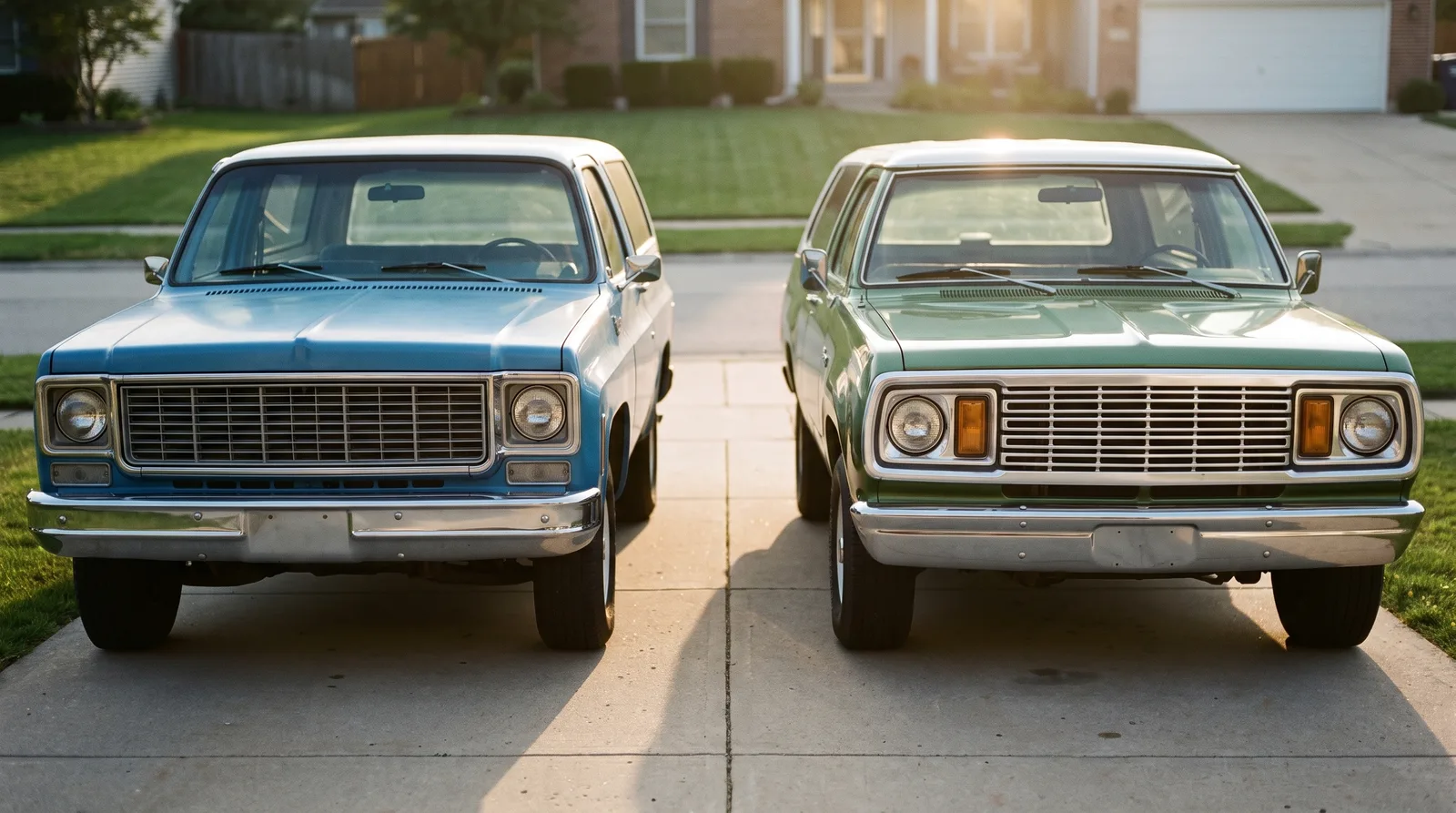
A badge job with real consequences
The Trailduster and the Ramcharger came off the same Chrysler platform, wore the same removable fiberglass top, and used the same engine lineup, but Plymouth dealers were not truck dealers in the way Chevrolet or Dodge outlets were. Plymouth's showroom identity leaned toward passenger cars, and a big square 4x4 sitting next to a Duster or a Valiant sent a mixed message to shoppers. Sales staff trained to talk trunk space and fuel economy on a compact car were suddenly expected to explain axle ratios and transfer case operation to a truck buyer, and that mismatch in expertise showed up in how confidently a Plymouth salesman could close a Trailduster deal compared to a Chevrolet salesman closing a Blazer deal. Chevrolet never had that problem. The K5 Blazer sat comfortably in a truck store next to full-size pickups and Suburbans, surrounded by buyers who already understood what a body-on-frame 4x4 was for.
That dealer mismatch matters more than it sounds. A truck needs a sales floor that treats it like a truck, with staff who can talk towing capacity and transfer case ratios instead of trim packages. Chevrolet had built that expertise into its truck stores over years of pickup sales before the K5 Blazer even launched in 1969. Plymouth was starting from a different kind of store entirely, and the Trailduster never fully overcame it.
On paper, closer than the sales numbers suggest
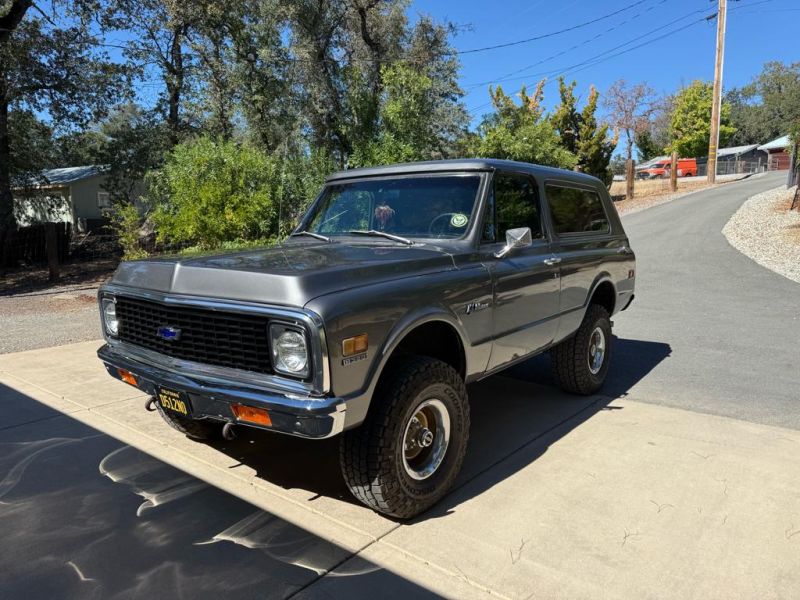
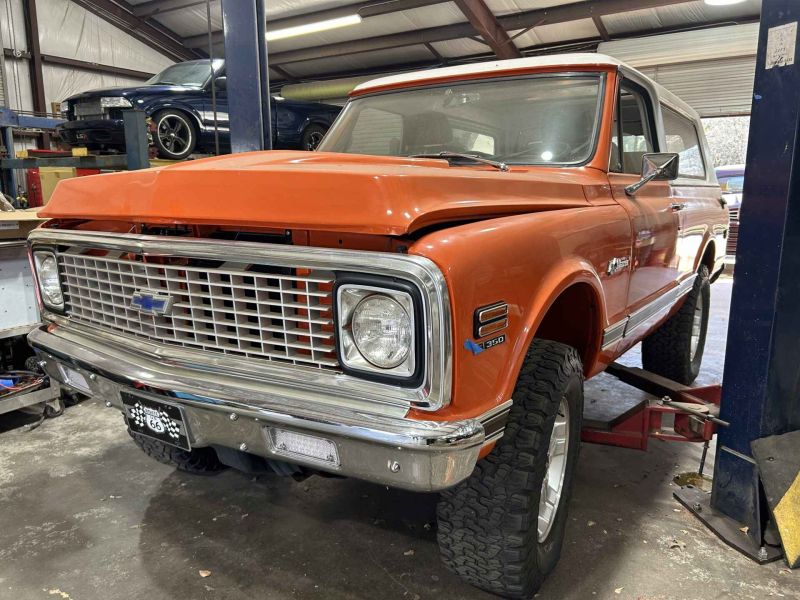
Strip away the badges and the two trucks were legitimately competitive with the Blazer through the mid to late 1970s. Both offered a removable top, both had a stout frame borrowed from Dodge's D-series pickups, and both could be optioned with a 360 or 440 cubic inch V8, the 440 offered from the 1974 launch through the 1980 model year, that gave them real towing muscle. Chevrolet's small block 350 in the K5 was smoother and easier to service at a wider range of shops, which mattered to buyers who planned to keep a truck for a decade rather than trade it in after three years.
Where the Trailduster held its own was interior space and a simpler, more utilitarian dashboard that appealed to buyers who wanted a work truck rather than a family hauler. It never chased the K5 Blazer's growing reputation as a lifestyle vehicle, and in hindsight that decision cost it market share as the segment shifted toward buyers who wanted a 4x4 for weekend recreation as much as job site duty.
Production numbers explain the survivor gap
Plymouth sold the Trailduster in far smaller numbers than Dodge sold the Ramcharger, and both fell well short of Chevrolet's K5 Blazer output across the 1970s. Fewer trucks built means fewer surviving today, and that scarcity has started to work in the Trailduster's favor among collectors who want something genuinely uncommon rather than another squarebody Blazer at a cruise night. A well kept Trailduster now draws attention specifically because most people at the show have never seen one.
Chevrolet's advantage was never really about engineering superiority. It was about being first, being everywhere, and being sold by people who understood trucks. Read the full story of how Chevrolet handled its bigger, longer-running rival for the fuller context on that dominance.
Where the Trailduster actually beats the K5 today
Rarity cuts both ways in the collector market. A Trailduster in good condition costs less to buy than a comparable K5 Blazer simply because fewer collectors are actively chasing one, which can be an advantage for a buyer who wants a period-correct full-size 4x4 without competing against a deep pool of Blazer bidders. Parts availability is the tradeoff. Reproduction and NOS parts support for the K5 Blazer is considerably deeper than for the Trailduster, so a buyer taking on a Trailduster project should expect more hunting and more patience.
"Every time I see a Trailduster at a show, I ask the owner how they found it, because the honest answer is almost always that it found them first."
- Patrick Walsh
What survives tells its own story
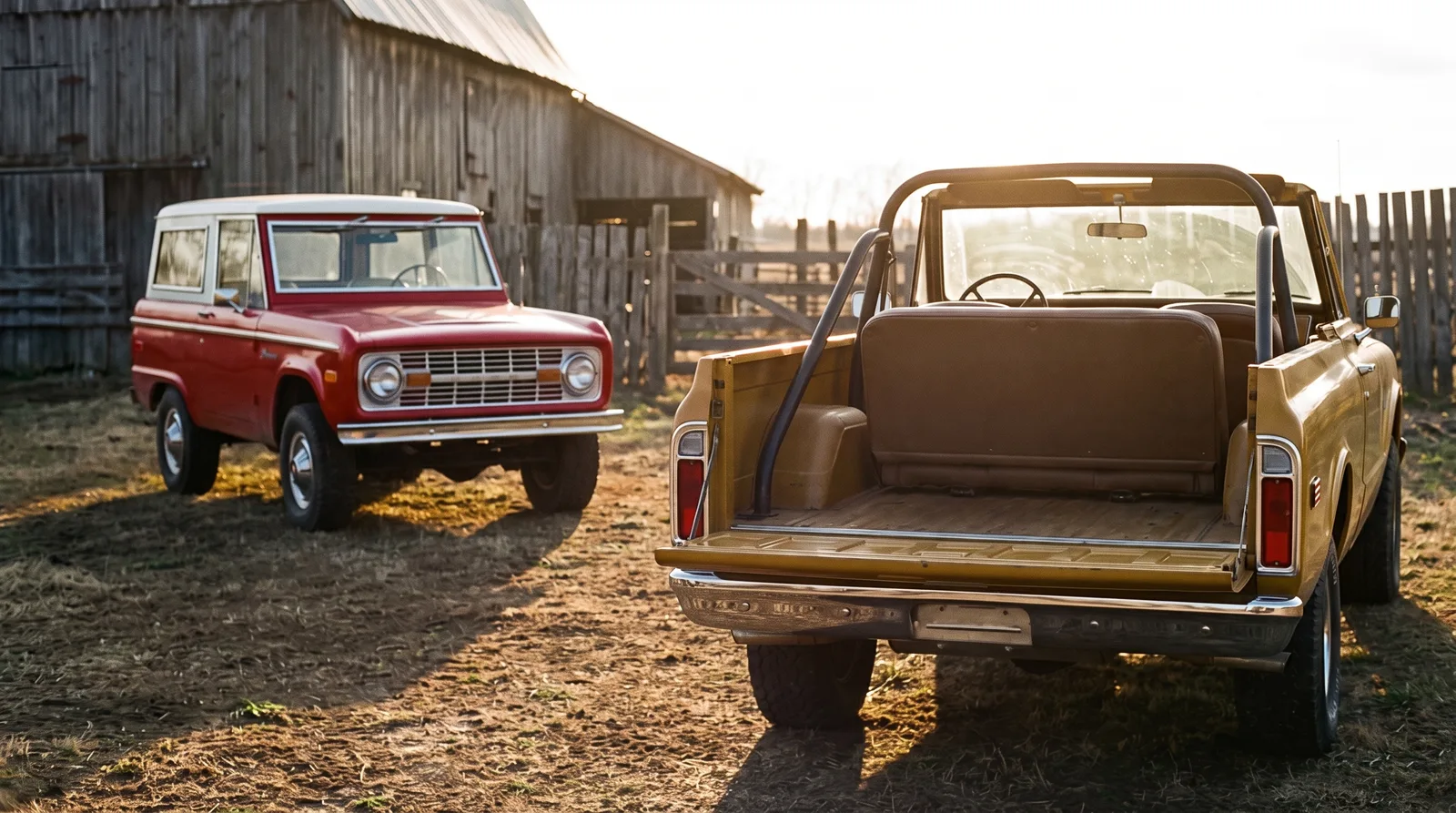
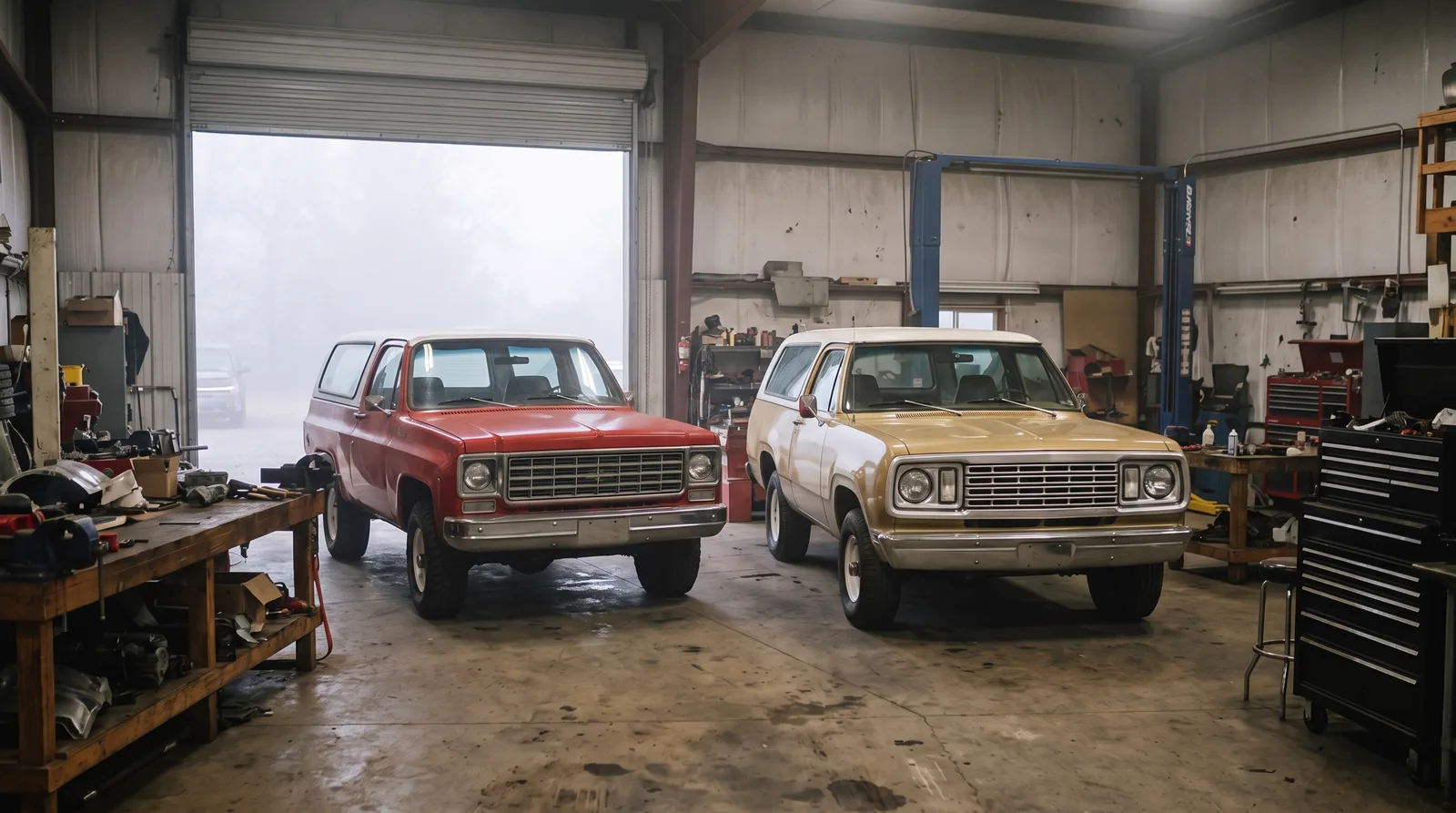
Walk a swap meet field today and the imbalance between these trucks is obvious before you even check a badge. K5 Blazers show up in every condition imaginable, from barn-fresh project trucks to fully restored show pieces, simply because Chevrolet built so many of them across such a long run. Traildusters are scarcer at every point on that spectrum. A rough Trailduster project is harder to find than a rough K5 Blazer project, and a concours-quality Trailduster is harder still, since so few were built and fewer still were kept original rather than modified or parted out over the decades.
That scarcity changes how owners treat the trucks they do find. A Trailduster owner is more likely to preserve a truck exactly as built, patina and all, because sourcing a correct replacement part or panel can take months of searching swap meets and online forums. A K5 Blazer owner has more freedom to modify, upgrade, or restore aggressively, knowing that reproduction parts and donor trucks remain relatively easy to find. Neither approach is right or wrong, but it explains why Trailduster owners as a group tend to be more protective of originality than the broader, larger community of K5 Blazer owners.
The verdict for a modern buyer
Neither truck is the wrong choice, but they reward different priorities. The K5 Blazer offers a deeper parts network, stronger resale demand, and a longer production run to shop from. The Trailduster offers scarcity, a lower entry price, and a genuine conversation starter at any gathering of classic trucks. Anyone weighing both should start with condition and documentation rather than badge loyalty, and a browse through classic K5 Blazer for sale listings is a reasonable place to see what the more common option actually costs before deciding whether the Trailduster's rarity is worth the extra search time.
There is also a simpler, more honest reason the Trailduster keeps its small but devoted following. It never had the chance to become common, never got worn out by decades of daily use in every corner of the country the way the K5 Blazer did, and that scarcity has quietly turned into its own kind of appeal. A Plymouth badge on a full-size 4x4 still catches people off guard at a show, and for owners who like standing out more than they like easy parts runs, that reaction is worth more than any spec sheet comparison.
Sources and notes
Related Reading
Have a
Chevrolet Blazer
for Sale?
Reach thousands of serious classic car collectors across the US.
Sell It Here →
Selling a classic? Here's how: where to sell your classic car online
Are You a Classic Car Dealer?
List your full inventory and connect with targeted classic car buyers.
Join as a Dealer →
#classic 4x4
#K5 Blazer
#Plymouth Trailduster
#Chrysler trucks
#full-size SUV history
#rare collector trucks

About the author
Patrick Walsh
Automotive journalist covering classic car shows, events, and the enthusiast community across North America.
Related Listings - Chevrolet Blazer
Comments
Be the first to comment on this article.