
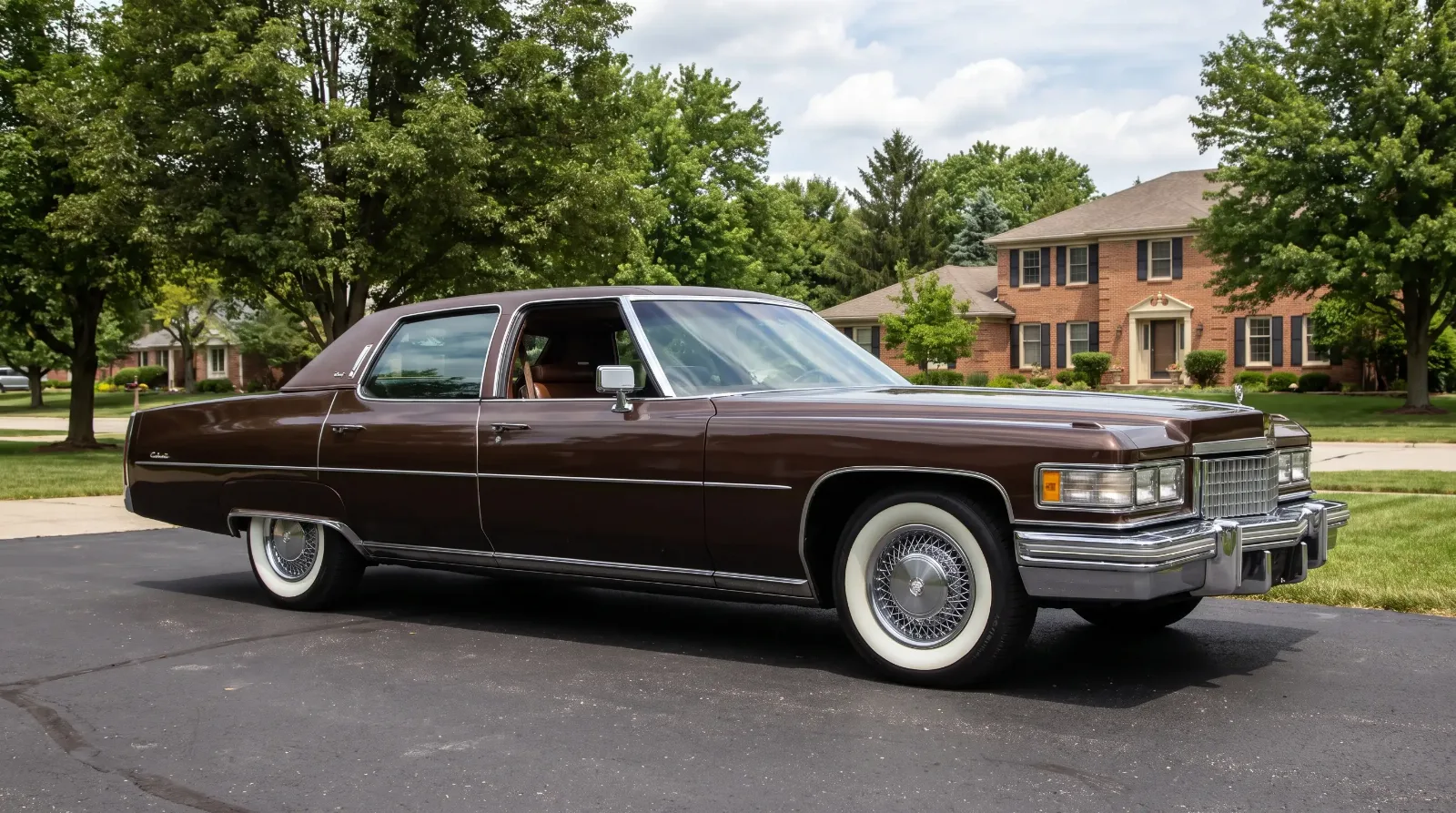
People ask me all the time what one of these big Cadillacs or Lincolns really gets for mileage, and they usually want to hear a nicer number than the truth. So here it is up front. A running, decently tuned 1970s land yacht with a big-block V8 and a two-and-a-half-ton curb weight gets somewhere between 8 and 12 miles per gallon in normal driving. If somebody tells you their 500-cube Cadillac does 18 on the highway, either they coasted down a mountain or they're doing the math wrong.
Car Features
6 min read
Land Yacht Gas Mileage: The Real Cost of Driving a Classic Cadillac or Lincoln
What a classic Cadillac or Lincoln land yacht really costs at the pump, why the big V8s drink so hard, and how to claw back a mile or two.
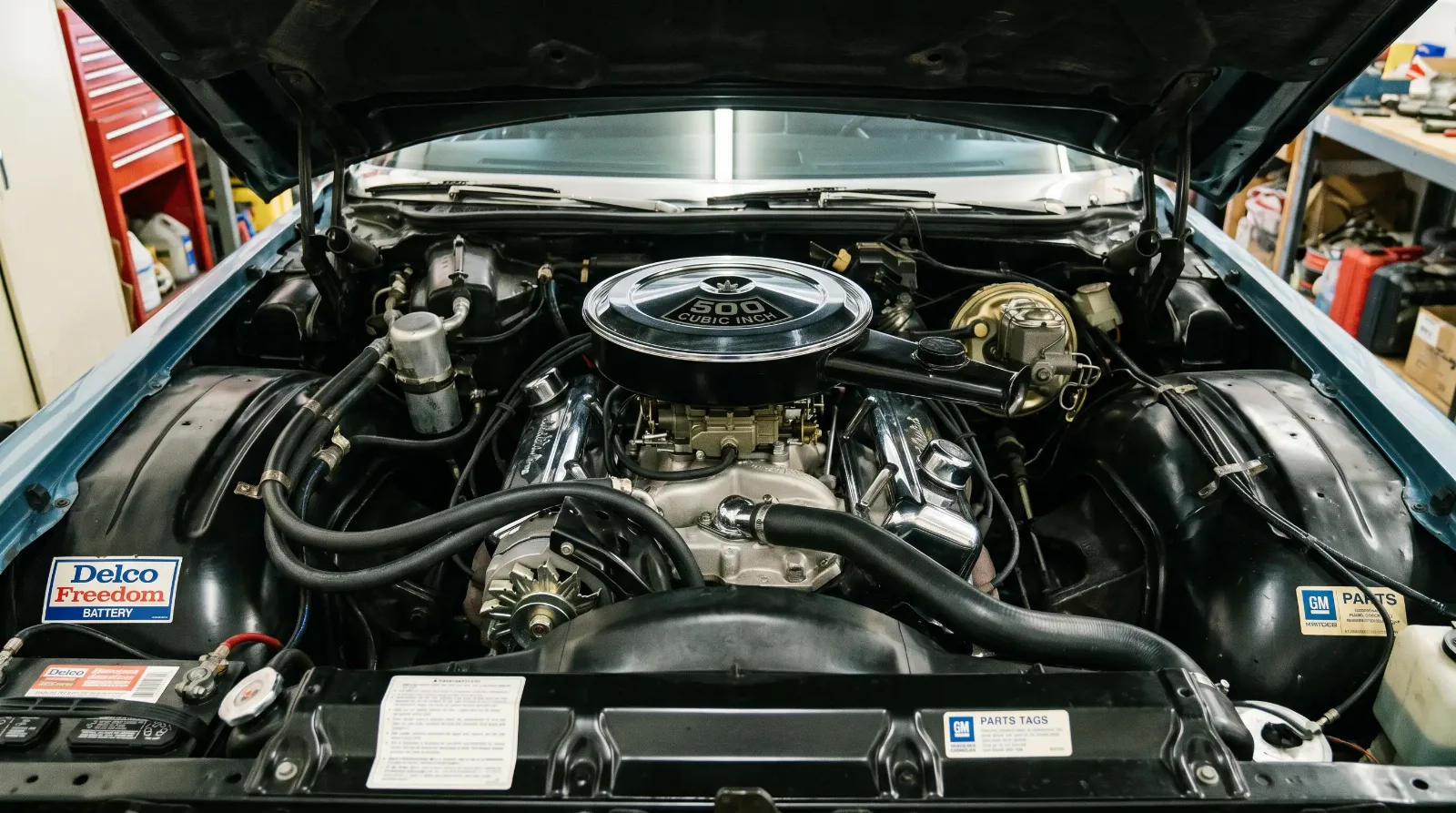
That's not a knock on the cars. They were built in an era of cheap fuel to move a lot of steel quietly and smoothly, and they do that better than almost anything since. But if you're thinking about buying one, the fuel bill is part of the ownership, and it helps to know the real figure before you're standing at the pump watching the dial spin.
Where the thirst comes from
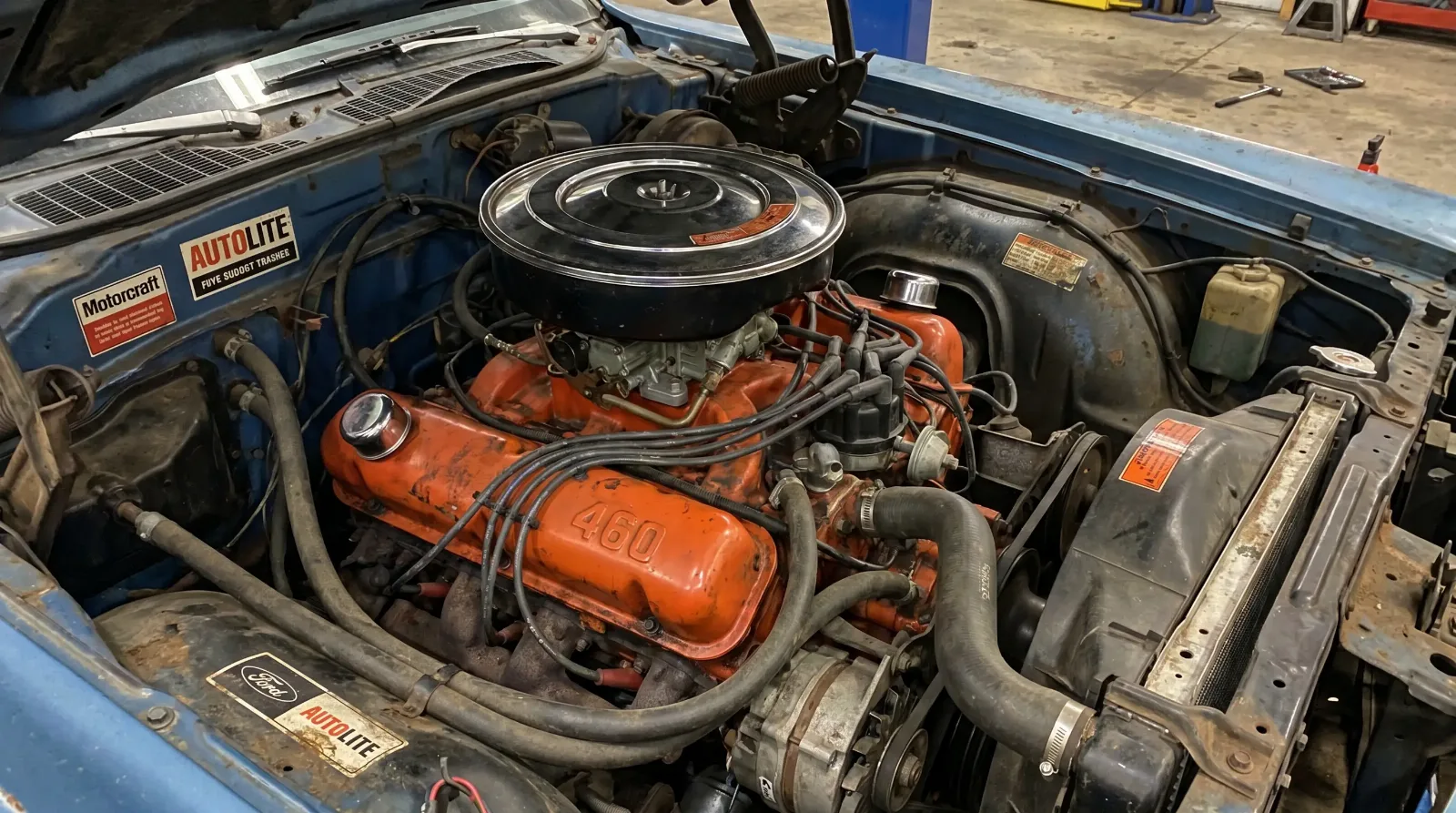
Start with what's under the hood. Cadillac's 472 arrived in 1968, and the 500 cubic inch version followed in 1970, first in the Eldorado and then across the big cars. Lincoln ran a 460 in the Continental and the Mark series. These are enormous engines by any standard, and they were tuned for torque down low, not efficiency. Displacement moves fuel. There's no way around it.
Then add the weight. A mid-1970s Cadillac Fleetwood or Lincoln Continental runs well over 5,000 pounds at the curb, and the Mark IV is heavier still. Every stoplight means accelerating that mass from a dead stop, and the Turbo-Hydramatic behind these engines was built for smoothness, not for squeezing out fractions of a gallon. The result is a car that drinks hardest exactly where most people drive it, which is in town.
There's a gearing piece too. Most of these cars ran tall rear axle ratios and no overdrive, because a locked torque converter and an extra gear weren't in the cards yet. On the highway that keeps the engine spinning higher than you'd like at cruising speed, which is part of why the highway number never climbs the way people expect. A modern car loafs along at low rpm in overdrive. A 1975 Fleetwood is turning the big V8 harder just to hold 65.
What the numbers actually look like
Here's a rough picture of what these drivetrains return in the real world. Treat these as approximate, because tune, gearing, and how you drive move them more than anything on a spec sheet.
| Car (mid-1970s) | Engine | City mpg | Highway mpg |
|---|---|---|---|
| Cadillac Fleetwood Brougham | 500 V8 | ~8 | ~11-12 |
| Cadillac DeVille | 472 / 500 V8 | ~9 | ~12 |
| Lincoln Continental | 460 V8 | ~8 | ~11 |
| Lincoln Continental Mark IV | 460 V8 | ~8 | ~11 |
Notice there's no big spread between city and highway, and no car in the group breaks into the teens with any confidence. That's the honest range. These cars got so heavy and so soft for a reason, and if you want the background on how Detroit talked itself into building them this way, the the land yacht story lays out the thinking behind the size.
"I've had a lot of guys swear their land yacht gets fifteen on the road. Then we actually fill it, drive it, and fill it again, and it's eleven. The car isn't lying to them. A worn choke, a lazy carb, and forty-year-old timing will do that. Fix the tune and you might claw back a mile or two, but you're not turning a 500 Cadillac into an economy car."
Mike Sullivan
What you can actually do about it
You can't change the physics, but you can stop leaving mileage on the table. Most of these cars are running on tunes that drifted out of spec decades ago, and a big-block that's rich, retarded, or dragging a stuck choke will punish you at the pump on top of running poorly.
🔧 Inspection Priorities
- Carburetor and choke. A Quadrajet with a choke that never fully opens runs rich all day. This is the single most common mileage killer and one of the cheapest to fix.
- Ignition timing and points. Late timing wastes fuel and cooks the engine. On a points car, worn or misgapped points throw everything off. Convert to electronic if you drive it regularly.
- Dragging brakes. A sticking caliper or a frozen drum wheel cylinder scrubs mileage and you may not even feel it. Jack it up and spin the wheels.
- Tire pressure and rolling resistance. Soft tires on a 5,000-pound car cost you real fuel. Set them to spec and check them often.
The fuel crisis put it in context
It's worth remembering when these cars were sold. The 500-cube Cadillac arrived in 1970, when gas was cheap and nobody was counting. Then the 1973 oil embargo hit, prices jumped, and lines formed at the pumps. Suddenly the biggest luxury cars in America were the thirstiest cars in America at the worst possible moment. Sales of the full-size cars took a beating, and the writing was on the wall for the whole format.
The 1975 model year added another wrinkle. Catalytic converters became standard on most cars, which meant these engines now required unleaded fuel, and the emissions tuning that came with them sapped power without helping economy much. So the mid-'70s land yacht is the worst of both worlds on paper: heavier, weaker, and legally stuck with a specific fuel. None of that stopped people from buying them, but it explains why the era ended when it did.
Is the fuel bill a dealbreaker
Honestly, no, not for most people who want one of these. Do the arithmetic before you fall for the car, not after. At 10 miles per gallon, a 200-mile weekend of cruising burns 20 gallons. These aren't daily drivers, and nobody buys a Fleetwood to commute. If you use it the way it was meant to be used, for relaxed weekend miles and the occasional long, quiet highway run, the fuel cost is a footnote next to insurance, tires, and finding good parts.
The mistake is buying one expecting it to make economic sense as transportation. It doesn't, and it never did. Buy it for the ride and the presence, budget the gas honestly, and you'll enjoy it. If you want to see where this excess actually crested, go next: Peak Land Yacht, because the thirstiest cars were also the biggest, and that was no accident.
Related Reading
Have a
Classic Car
for Sale?
Reach thousands of serious classic car collectors across the US.
Sell It Here →
Are You a Classic Car Dealer?
List your full inventory and connect with targeted classic car buyers.
Join as a Dealer →

About the author
Mike Sullivan
Detroit-area muscle car enthusiast and restoration specialist with three decades of hands-on experience working on American iron.

Comments
Be the first to comment on this article.