
For roughly a decade, the fastest way to signal that a car was special was to cover part of its roof in textured vinyl. Not paint. Not chrome. A layer of grained plastic stretched over the steel, stitched at the seams, and often padded underneath to suggest the convertible top it was imitating. The vinyl roof personal luxury coupe was one of the strangest and most successful ideas Detroit ever committed to, and by the middle of the 1970s it had reshaped what an American luxury car looked like from the curb.
Car Features
6 min read
The Vinyl Roof Boom: How the Personal Luxury Coupe Took Over America
How the vinyl roof personal luxury coupe took over America, the cars that defined it, the details that sold it, and the rust it left behind.
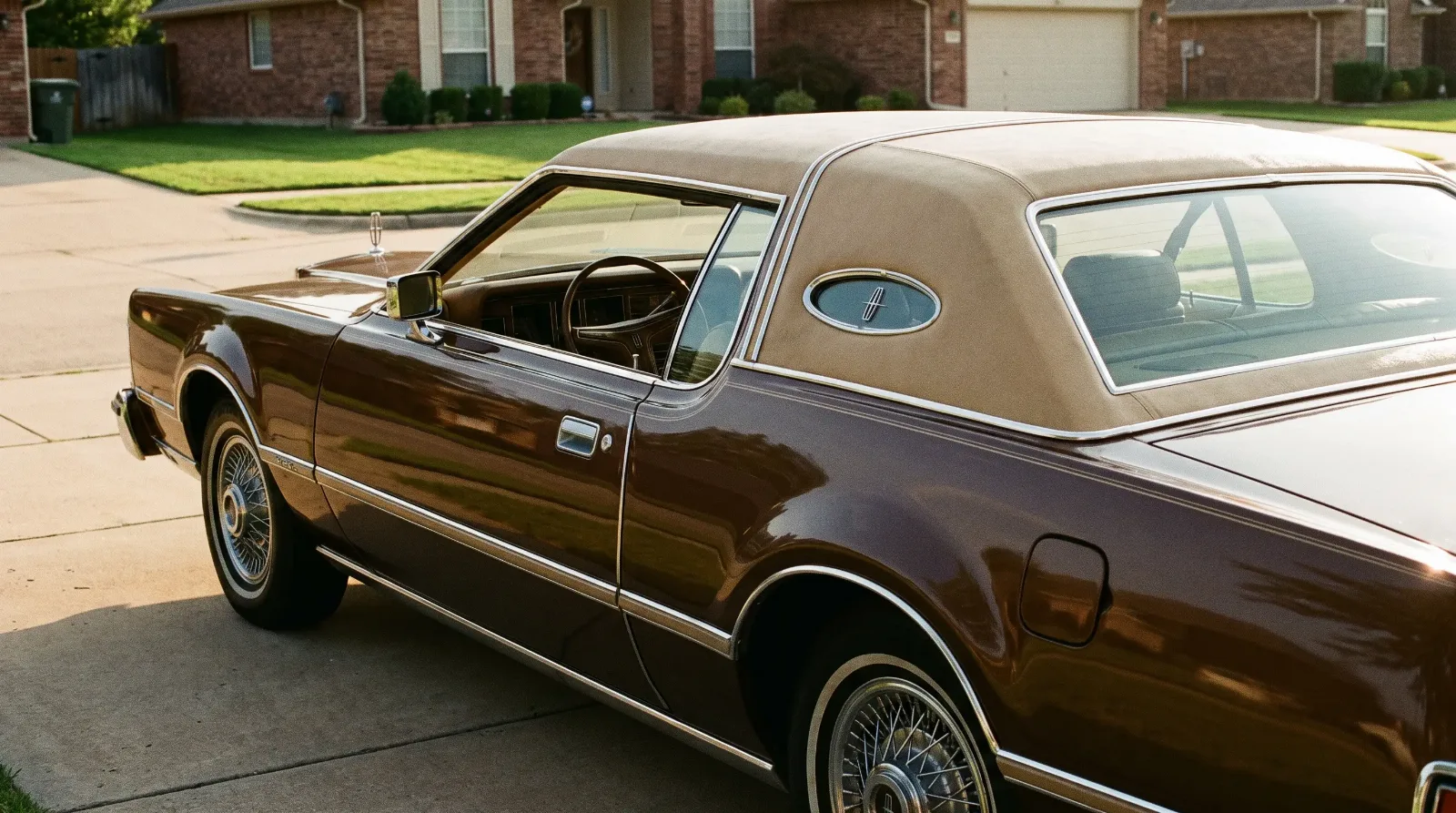
The genre was born from a simple observation. Buyers wanted the look of exclusivity without the price of a true limited-production car, and manufacturers wanted volume. The personal luxury coupe answered both. It borrowed styling cues from expensive coachbuilt cars, applied them to a shared platform, and sold in numbers that would have been unthinkable for anything genuinely rare.
Where the vinyl roof came from
The vinyl roof was not a 1970s invention. Its ancestry runs back to the fabric-covered landau and cabriolet bodies of the pre-war era, when a padded top over a fixed roof imitated a folding convertible mechanism, complete with decorative landau irons on the rear quarters. Those irons were functional on a true cabriolet and purely ornamental on a fixed-roof car. That tension between real and suggested luxury never left the vinyl roof.
By the early 1960s the treatment reappeared as a factory option, and it spread quickly. Part of the appeal was practical for the maker. A vinyl top could hide the weld seam where a roof panel met the body, which saved finishing labor. Part of it was pure fashion. A contrasting textured roof broke up the slab sides of a large car and gave the eye something to read as formal. To understand how these cars grew so large and so ornamented in the first place, it helps to read why land yachts got so big during the same years.
The cars that defined the boom
The four-seat Ford Thunderbird of 1958 is usually credited with establishing the format, trading the original two-seater's sportiness for a comfortable coupe aimed at prosperous buyers. Buick answered in 1963 with the Riviera, a cleaner and more restrained design. But the true explosion came later, once General Motors realized how much margin a mid-size coupe could carry when dressed in luxury trim.
The 1970 Chevrolet Monte Carlo brought the formula to a lower price point and sold in enormous numbers. The Pontiac Grand Prix, the Oldsmobile Cutlass Supreme, and the Buick Regal followed the same recipe on related platforms. Chrysler entered late but memorably with the 1975 Cordoba, whose television advertising leaned on soft leather upholstery and a certain continental accent to sell the idea of affordable indulgence. At the top of the market, the Lincoln Continental Mark series, from the Mark III of 1969 through the Mark V, carried the personal luxury idea into genuinely expensive territory with a long hood, a short deck, and a formal roofline.
"What interests me about these cars is how openly they borrowed. The opera window, the landau roof, the hidden headlamps behind a formal grille, none of it was new. It was the vocabulary of the coachbuilt era, reproduced on an assembly line and sold to a middle-class buyer who understood exactly what it was meant to say."
Sarah Whitfield
The details that carried the message
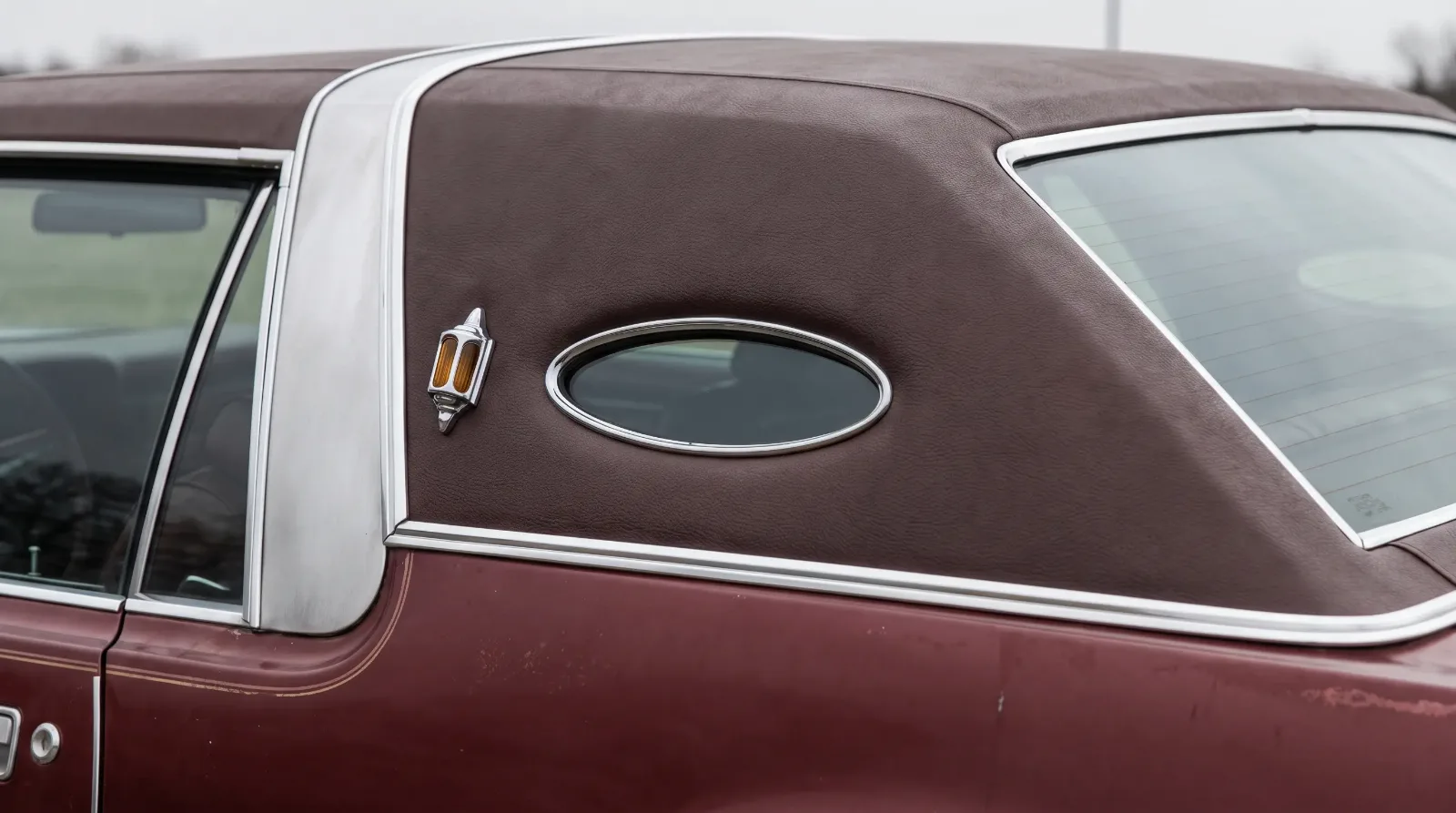
A personal luxury coupe communicated through a small, consistent set of features. The vinyl roof was the foundation, but it rarely worked alone. Opera windows, small fixed panes set into the rear roof pillar, appeared across nearly the whole segment and did little for visibility while doing a great deal for the impression of privacy. Opera lamps, tiny coach lights mounted on the roof pillar, added another borrowed carriage detail. Stand-up hood ornaments, wire wheel covers, and thin coachlined pinstripes completed the language.
These cars sat at the affordable end of a much older story about status and ornament. The same instinct that produced the padded roof and the fake carriage lamp runs through the complete classic luxury car story, from pre-war coachwork to the vinyl-topped coupes in a 1976 dealer showroom.
Vinyl roof styles buyers could choose
- Full top. Vinyl covering the entire roof, the most common and least expensive treatment.
- Landau or half top. Vinyl on the rear portion only, terminating in a chrome molding, meant to look like a folding top stowed down.
- Cabriolet top. A padded rear section with landau irons, the closest imitation of a true convertible.
- Halo or Carriage roof. A band of vinyl leaving a body-color strip around the windows, a later variation.
What the vinyl roof cost owners later
The vinyl roof aged badly, and this is the part collectors know well. Moisture worked its way under the vinyl through seams and around trim moldings, then sat against the steel it was glued to. Rust formed from the outside in, hidden beneath a top that still looked presentable until the day a bubble appeared. By the time the vinyl showed a blister, the metal underneath was often well past saving. A car that had been garaged and cared for could still hide a rotted roof panel under an intact-looking top.
That failure mode makes originality a genuine question today. Many surviving personal luxury coupes have had their tops replaced at least once, sometimes over rust that was patched rather than properly repaired. For a buyer, the roof is not a cosmetic afterthought. It is the first place to look and the most expensive place to be wrong. Anyone shopping the segment today can start with the current selection of classic luxury cars for sale and treat the roof as the opening question, not the last one.
The vinyl roof coupe defined a decade of American taste, then fell out of fashion almost completely once the padded top came to read as dated rather than distinguished. What replaced the conversation was a harder practical one about running these cars, starting with fuel. That is a fair place to go next: Land Yacht Gas Mileage, because the same buyers who loved the look eventually had to pay for the tank.
Related Reading
Have a
Classic Car
for Sale?
Reach thousands of serious classic car collectors across the US.
Sell It Here →
Are You a Classic Car Dealer?
List your full inventory and connect with targeted classic car buyers.
Join as a Dealer →

About the author
Sarah Whitfield
Third-generation classic car collector specializing in pre-war American and European coachbuilt automobiles. Researcher and concours enthusiast.




Comments
Be the first to comment on this article.