
If the land yacht has a single high-water mark, it sits in the years just before 1977, when the largest American luxury cars reached a size and weight that would never be repeated. The 1970s Fleetwood and the Lincoln Continental Town Car were the fullest expression of an idea that had been building for two decades. They were long, heavy, formally styled, and unapologetic about all three. Then the fuel crisis and federal regulation ended the era almost overnight.
Car Features
6 min read
Peak Land Yacht: The 1970s Fleetwood and Continental Town Car Era
The 1970s Fleetwood and Continental Town Car were the biggest American luxury cars ever built. Inside the peak land yacht era and collecting them today.
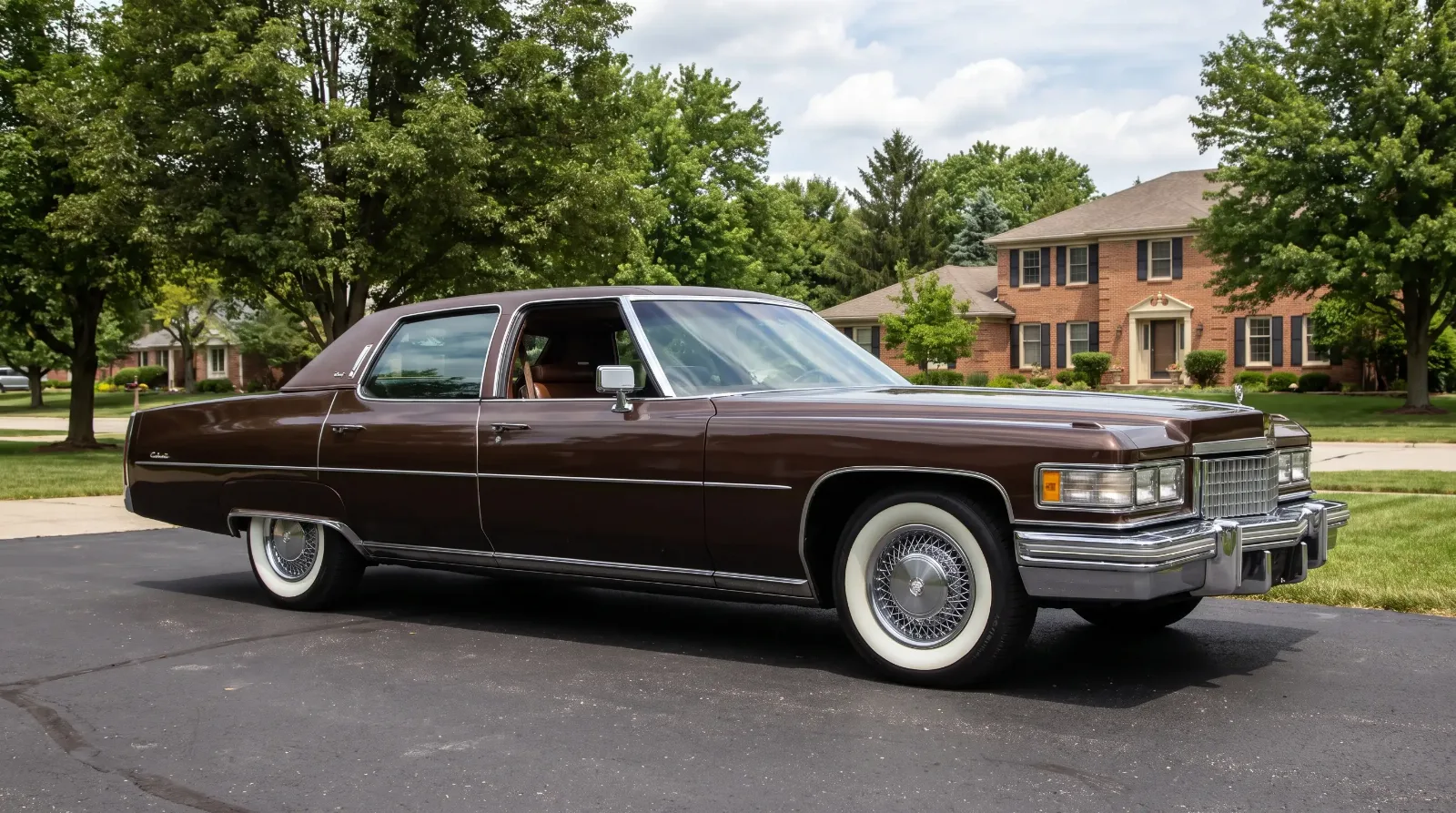
What makes these cars worth studying is not just their scale. It is that they represent a design philosophy taken to its logical conclusion. Every instinct that produced the postwar American luxury car, more length, more isolation, more ornament, arrived here at once, and there was nowhere left to go.
The two flagships
At Cadillac, the Fleetwood name covered the marque's most formal offerings. The Fleetwood Brougham was the long-wheelbase sedan positioned above the DeVille, and the Fleetwood Seventy-Five was the factory limousine, a genuinely enormous car built in small numbers for those who needed the rear compartment. The Brougham d'Elegance option added tufted upholstery, thicker carpeting, and the kind of interior appointments that separated it from the merely expensive.
Lincoln's answer evolved through the decade. The Continental sedan sat at the top of the Lincoln range, and Town Car began as a luxury interior option before growing into the defining trim. By the late 1970s the Continental Town Car was Lincoln's most formal four-door, and when Lincoln finally downsized in 1980 and made Town Car a model in its own right in 1981, the name carried the full weight of this era with it. To place these two flagships in their proper context, it helps to understand the era of the land yacht that produced them.
Just how big they got
The numbers are the story here, so it is worth setting them out plainly. These figures are approximate and vary slightly by model year, but they capture the scale of the peak years.
| Model (mid-1970s) | Approx. length | Approx. curb weight | Engine |
|---|---|---|---|
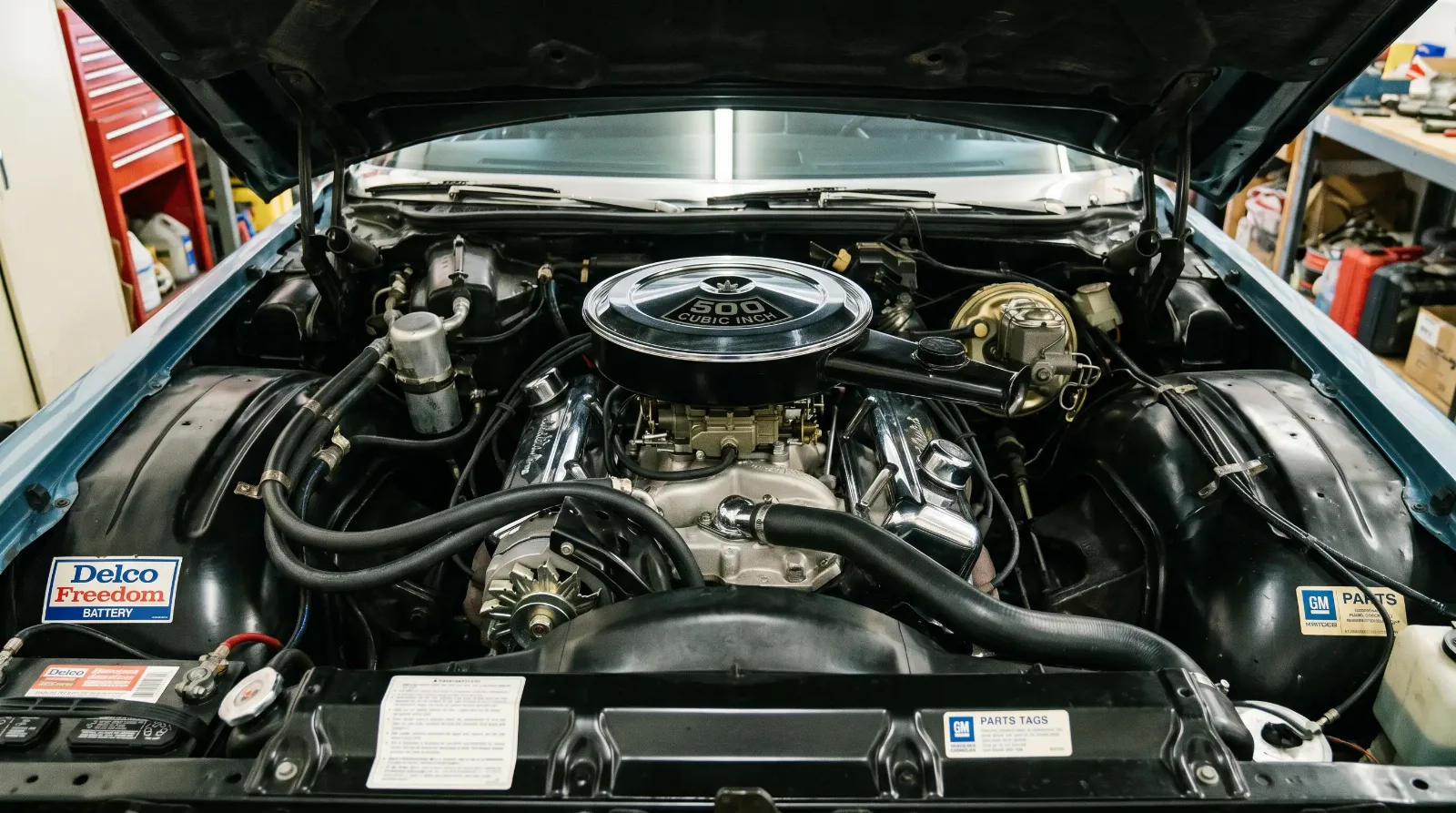
| Cadillac Fleetwood Brougham | ~233 in | ~5,200 lb | 500 V8 |
| Cadillac Fleetwood Seventy-Five limo | ~252 in | ~6,000 lb | 500 V8 |
| Lincoln Continental | ~233 in | ~5,000 lb | 460 V8 |
| Lincoln Continental Mark IV | ~228 in | ~5,300 lb | 460 V8 |
A 233-inch car is more than nineteen feet long. Parked next to a modern full-size sedan, the difference is close to comical. The Seventy-Five, at better than twenty feet, was longer than some modern pickups and needed a driveway to match.
What buyers were actually paying for
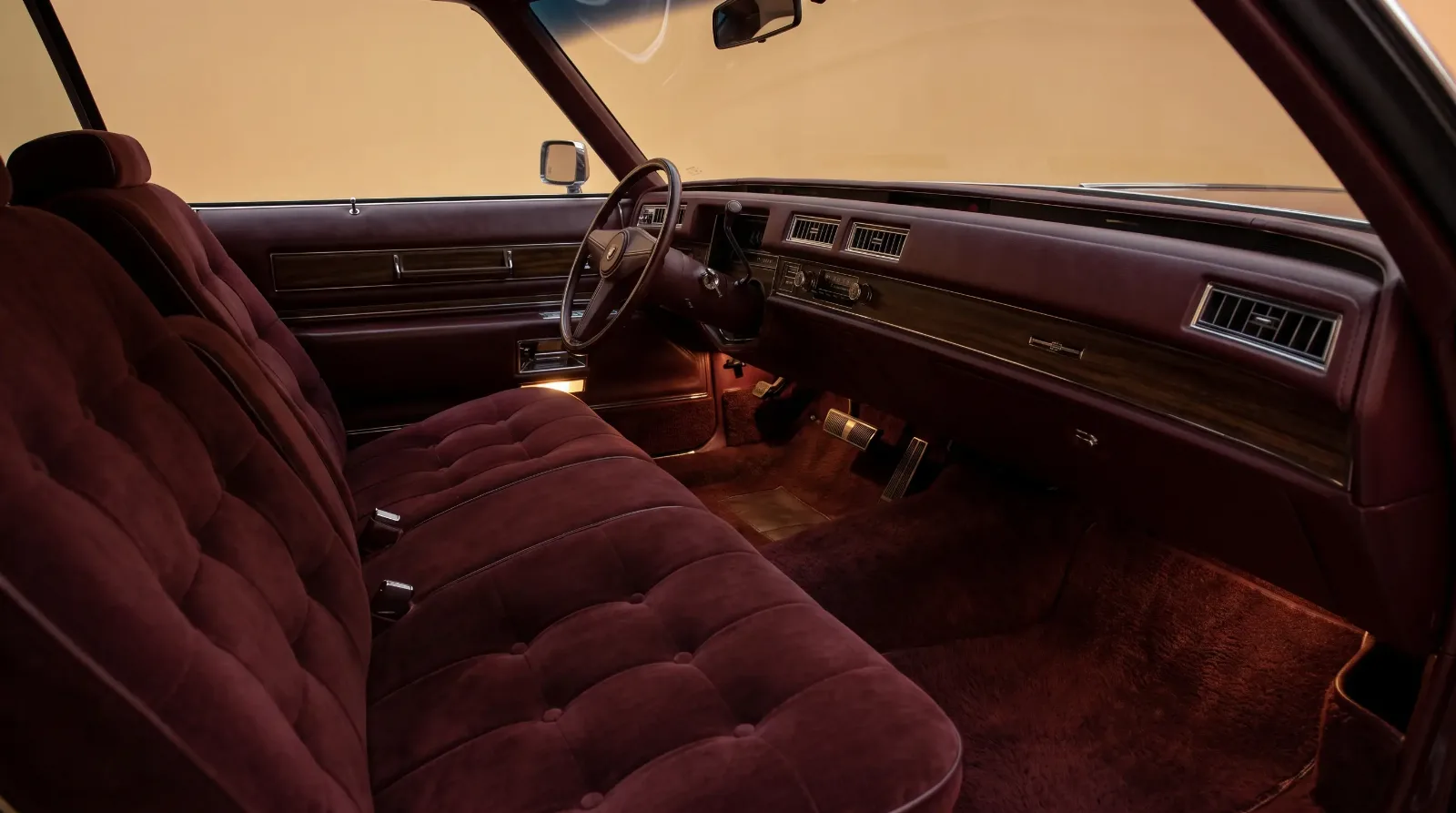
Size at this level was never really about carrying people or cargo. As the 1977 downsizing later demonstrated, a much smaller car could seat six just as comfortably. What the length and weight bought was a specific driving character and a specific social message. The long wheelbase soaked up road imperfections in a way a shorter car could not. The mass filtered out noise and vibration. The sheer visual bulk announced the owner's arrival before anyone saw who was driving.
The interiors matched the exteriors. Tufted velour or leather, deep pile carpet, power everything, and acres of woodgrain trim were standard equipment at this level. These were rolling parlors, designed to isolate the occupants from the road and the world. The whole approach belongs to a much longer arc, and the story of the classic luxury car traces how American makers arrived at this particular definition of luxury.
The social message was equally deliberate. In the years these cars were designed, size still read unambiguously as success, and the two flagships were positioned above everything else their makers built. A Fleetwood Brougham or a Continental Town Car in a driveway said something specific to the neighbors, and both Cadillac and Lincoln understood that they were selling that statement as much as they were selling transportation. The length was not an accident of engineering. It was the product itself.
"I think of the 1976 Fleetwood the way I think of a late Baroque building. It is the point where a style has said everything it has to say and begins to repeat itself in ever-larger form. The craftsmanship is real, the materials are genuine, and yet you can sense that the idea has run its course. A year later the whole segment was smaller, and it never came back."
Sarah Whitfield
Collecting the peak-era cars today
For a collector, these final full-size cars occupy an interesting position. They are affordable relative to their size and equipment, in part because so many were built and in part because their thirst and their footprint limit the buyer pool. A clean, well-documented Fleetwood Brougham or Continental Town Car from the mid-1970s remains one of the more accessible ways into genuine American luxury of the period.
The cautions are practical. Parts for the specialized trim and power accessories can be hard to source, rust in the lower body and around vinyl roofs is common, and storage is a real consideration when the car is nineteen feet long. Buyers who want to see what the market offers can browse the current classic luxury cars for sale and compare condition against the equipment level, which matters more on these cars than on almost anything else.
Condition is everything with these cars, precisely because so many survive and few were treated as investments when new. A tired Fleetwood with faded velour, a soft headliner, and a dozen dead power accessories can be bought for very little, and it will cost far more than its purchase price to set right. A well-kept original, by contrast, rewards the buyer with a driving experience that is genuinely hard to find elsewhere, a car that isolates and glides in a way modern engineering deliberately abandoned. The gap between those two cars is wide, and it is worth being patient for the good one.
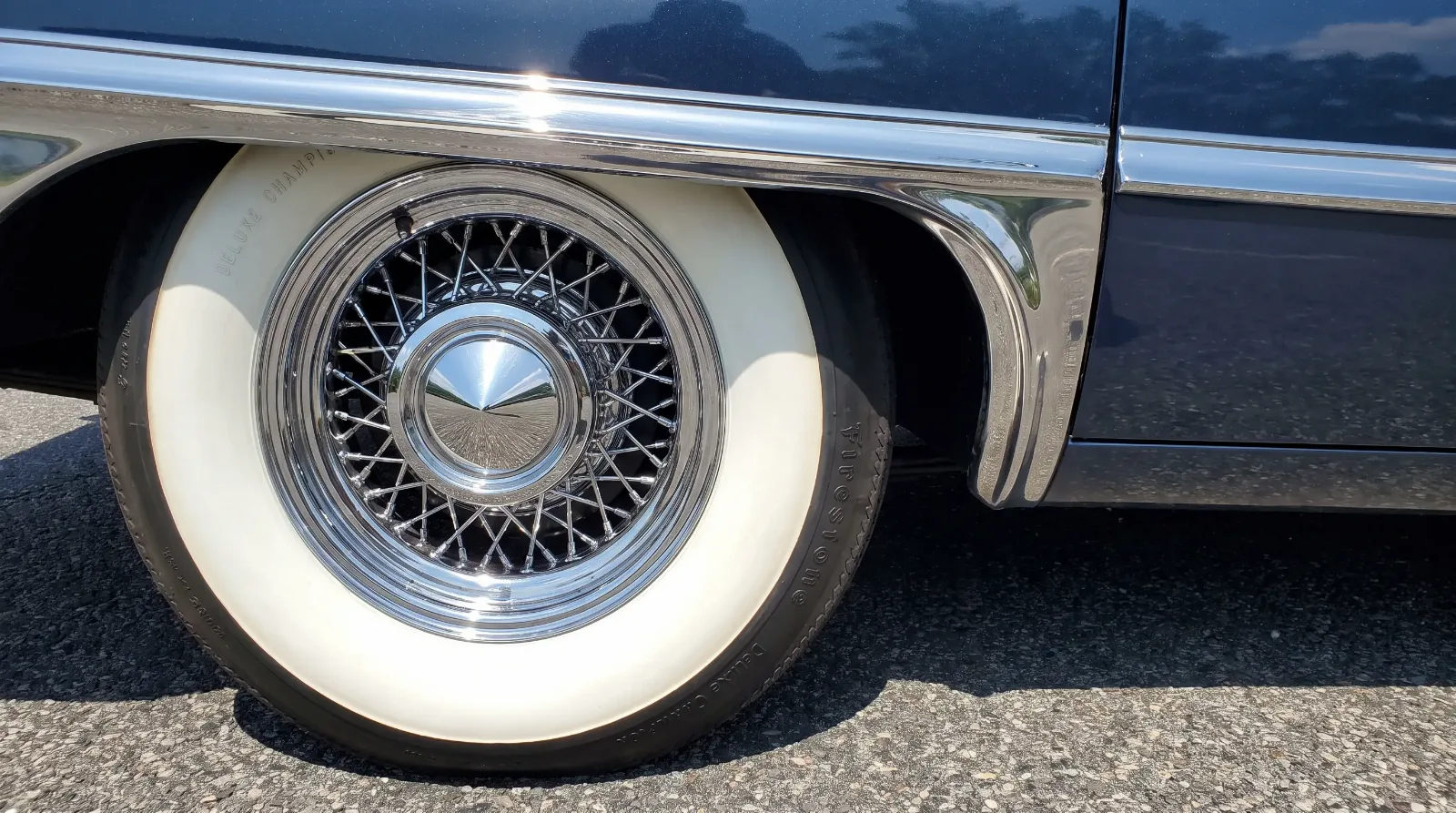
The peak land yacht was a car built to be seen, and the way it announced itself was as deliberate as its dimensions. The brightwork, the whitewalls, and the ornaments all carried meaning, which is a good place to go next: Whitewalls and Chrome.
Related Reading
Have a
Classic Car
for Sale?
Reach thousands of serious classic car collectors across the US.
Sell It Here →
Are You a Classic Car Dealer?
List your full inventory and connect with targeted classic car buyers.
Join as a Dealer →

About the author
Sarah Whitfield
Third-generation classic car collector specializing in pre-war American and European coachbuilt automobiles. Researcher and concours enthusiast.




Comments
Be the first to comment on this article.