
Ask any old-timer in a bomb club what a real lowrider looks like and half of them will point you past the candy-painted Impalas to something rounder, heavier, and slower off the line. They mean a bomb. A pre-1954 Chevrolet with fat fenders, a split windshield, and a stance that sits low without trying too hard. These cars came out of Chicano garages in East LA long before hydraulics were a thing, and they still carry the most respect in the culture. When people talk about lowrider bombs, this is the exact metal they mean.
Car Features
6 min read
Lowrider Bombs: The Pre-War Classics
The pre-1954 fat-fender Chevys that started it all: what makes a bomb, the dealer accessories that define one, and why the clubs revere them most.
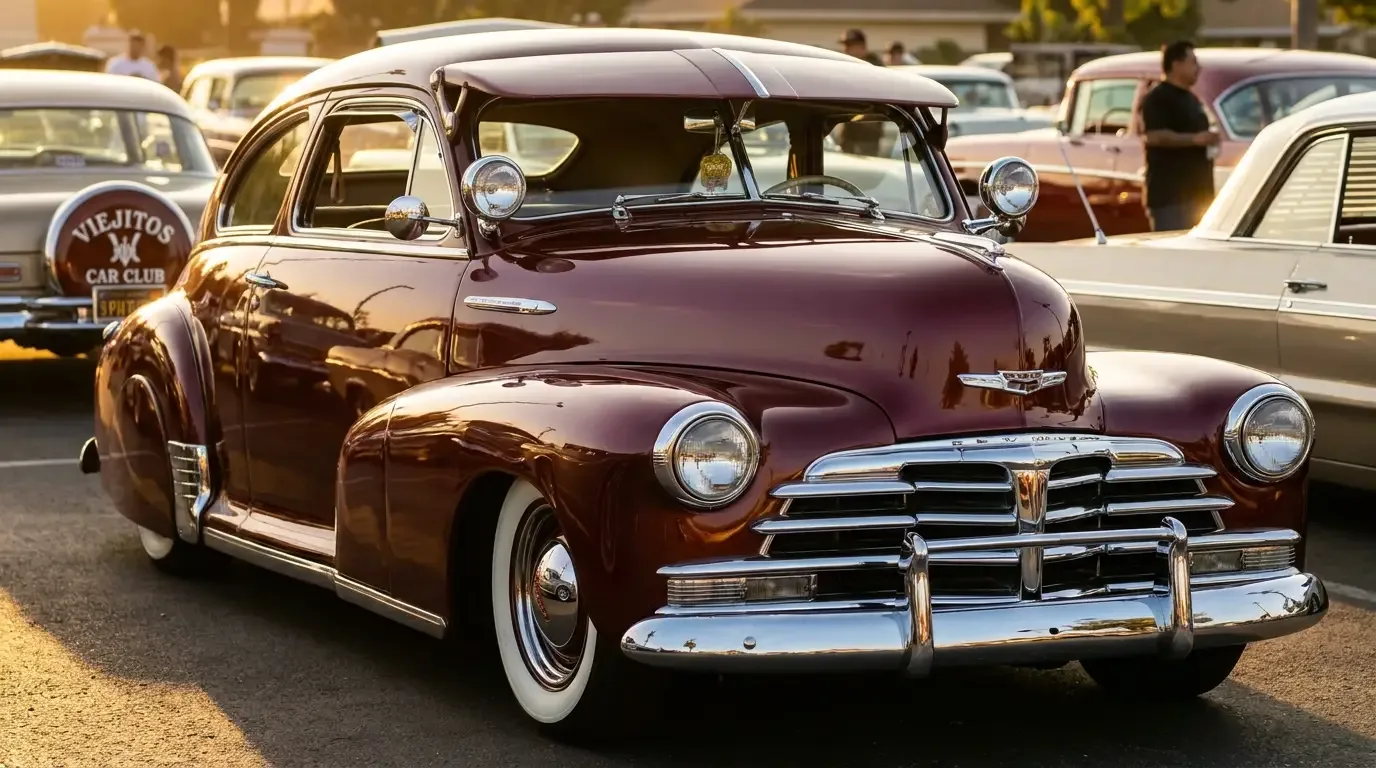
I have built plenty of later cars, and I love a clean G-body, but a bomb is a different animal. You do not chop it up. You honor it. Below is what makes these fat-fender classics the backbone of the whole scene, and why a properly done bomb will outlast every trend that comes after it.
What actually counts as a bomb
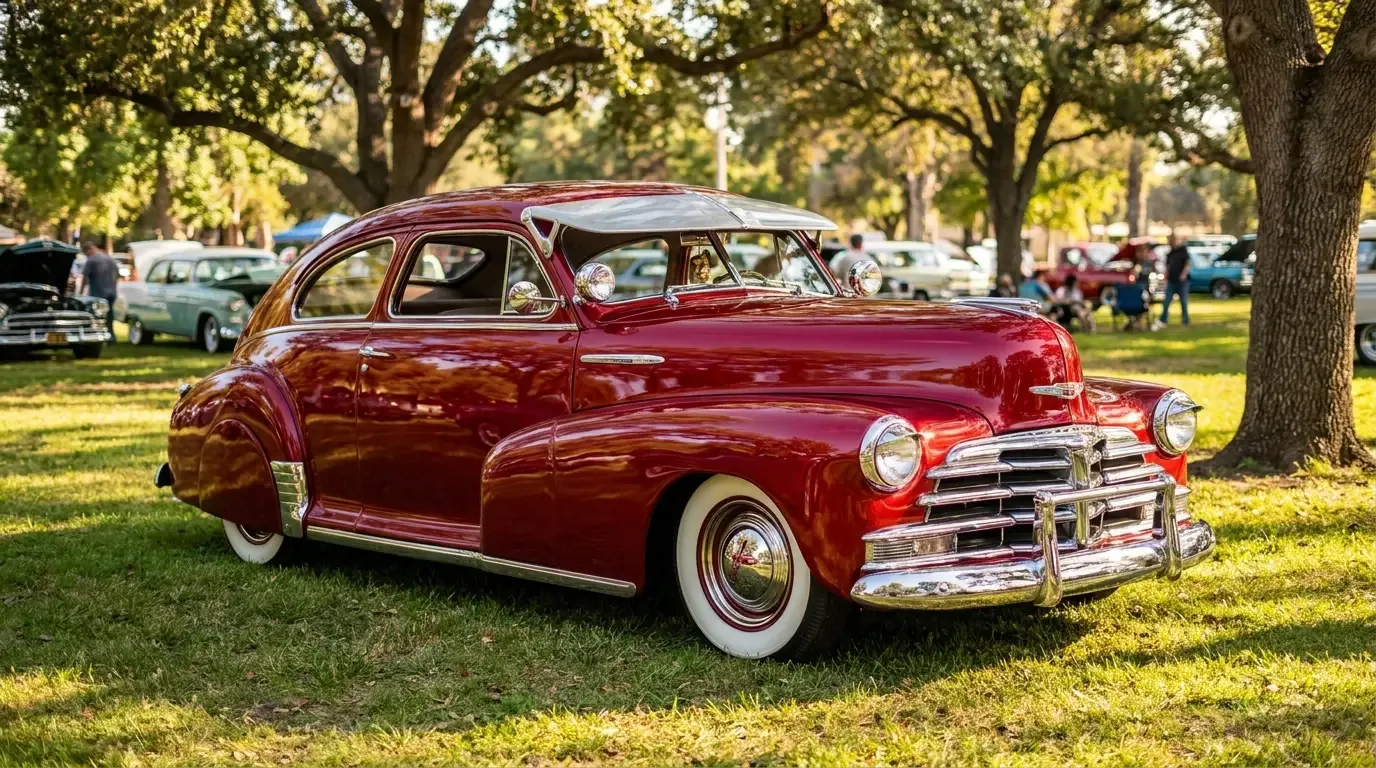
The word gets thrown around loose, so let me draw the line the way the clubs draw it. A bomb is generally a General Motors car from roughly 1938 through 1954, most often a Chevrolet, though Buicks and Oldsmobiles of the same era get accepted too. The look is the fat-fender body: rounded fenders that swell out over the wheels, a tall greenhouse, suicide or standard doors depending on the year, and that heavy, bulbous shape the whole industry dropped the second the flat-slab 1955 Chevy arrived.
The sedans and the Fleetline fastbacks are the classics people chase. A 1948 Fleetline Aero with the two-door sloping roof is close to the holy grail. Panel deliveries and suburbans got pulled in later, and a bomb truck is now its own respected class at shows. What does not count is anything from 1955 on. Once the body went square, it stopped being a bomb and became something else entirely.
The accessories are the whole game
Here is where a bomb lives or dies. On a bomb, the accessories are not extras. They are the build. These cars were dressed with genuine period General Motors dealer accessories, and finding the real ones is half the hobby. Reproductions exist, and plenty of guys run them, but a car wearing all original NOS accessories is what makes the judges lean in.
- Sun visor. The exterior visor that hangs over the windshield like a cap brim. A real Fulton or GM visor is the single most recognizable bomb accessory.
- Fender skirts. They close off the rear wheel opening and drop the visual weight of the car right where you want it.
- Spotlights. Usually a matched pair of Appleton spotlights mounted at the A-pillars. Chrome, functional, and expensive when they are the correct vintage.
- Grille guards and bumper guards. The extra chrome up front that fills the face out.
- Fog lights, curb feelers, gravel guards, and rear antenna. The small details that separate a finished car from a project.
Chrome trim rings, wide whitewall tires, and small-window smoothie or wire wheels round it out. The wheels stay modest on a true bomb. You are not there to show off billet. You are there to show taste.
"A bomb tells on you. You can hang fake visors and swap-meet spots on a car and it will read wrong from across the field. Correct accessories are the difference between a costume and a car that earned its place."
Jim Vasquez
Why the clubs revere them
The reverence is about history, not just looks. Bombs were the first cars the community made its own. Before the Impalas, before hydraulics, guys in East LA and the Southwest took these cheap postwar Chevys, dropped them, dressed them in dealer chrome, and drove them slow down the boulevard on Sunday. That was the start of the whole thing. If you want the long arc of how it grew, read the story of the lowrider through the decades, because the bomb is chapter one.
Bomb clubs today carry that memory on purpose. A club plaque in the rear window of a 1950 Fleetline is a direct line back to families who have owned these cars for three generations. Some bombs on the show circuit have been in the same family since the 1960s, restored and passed down rather than bought and flipped. That continuity is why a bomb outranks a flashier, faster build in the eyes of the people who matter.
It is also a slower, more patient way to build. A hopper is about performance. A bomb is about restraint. The suspension usually stays on a modest drop, sometimes on air now for drivability, but the point was never to jump. The point is to glide.
The Chevrolet years worth knowing
If you are shopping or just want to speak the language, these are the bread-and-butter bomb years and the shapes that go with them. Values swing hard with condition, accessory count, and whether the sheet metal is straight, so treat any figure as a rough guide rather than a quote.
| Model / range | Body notes | Bomb standing |
|---|---|---|
| 1938-1942 Chevy Master / Special Deluxe | Early fat-fender, prewar chrome | Rare, high respect, harder parts hunt |
| 1946-1948 Fleetline / Fleetmaster | Postwar, fastback Aero available | Classic bomb sweet spot |
| 1949-1952 Styleline / Fleetline | Restyled, still rounded | Very popular, good parts support |
| 1953-1954 Bel Air / 210 | Last of the fat-fender look | The final true bomb year |
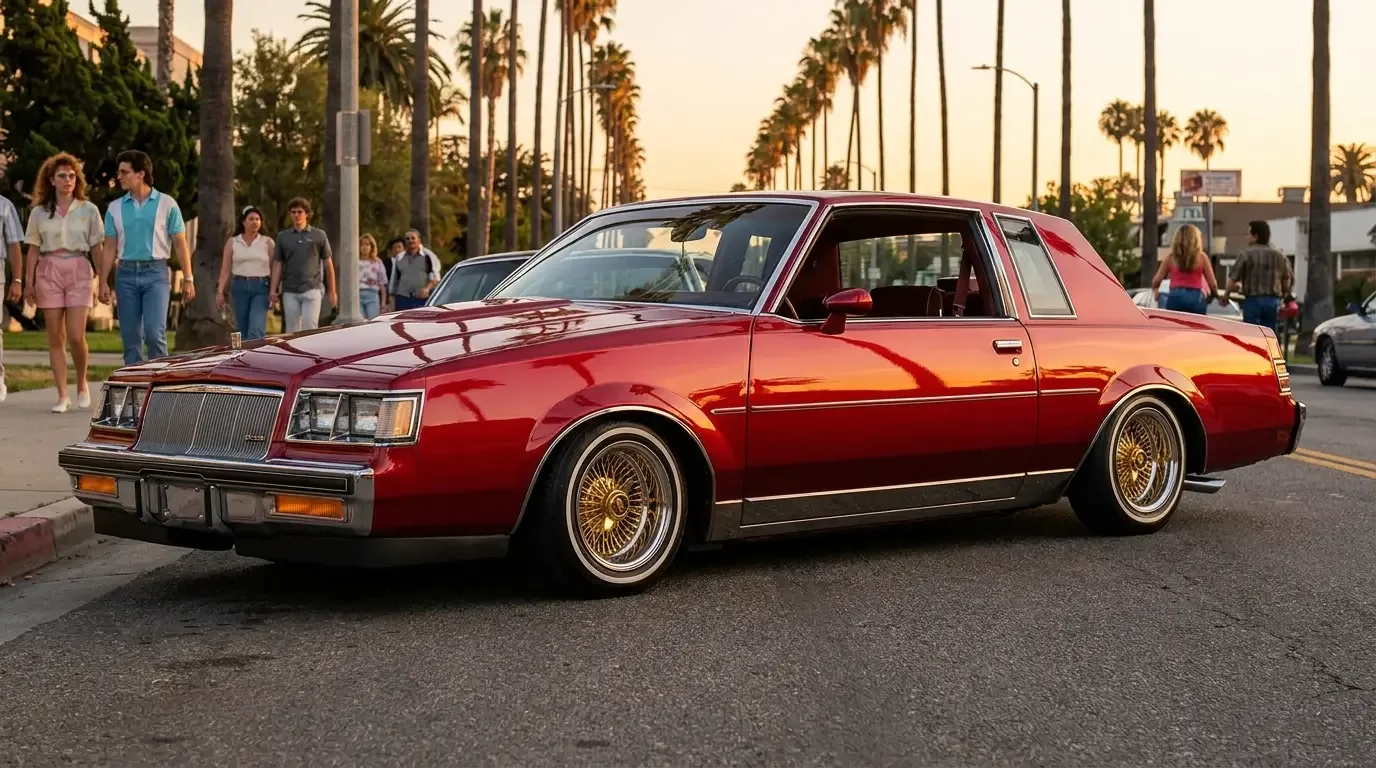
People chase the 1948 Fleetline Aero and the 1950 two-door sedan hardest, but a clean 1953 or 1954 is often the smarter first bomb because parts and trim are easier to source. When you have lived with a bomb and want something you can build faster and drive harder, that is usually when guys move to a later platform like The G-Body Lowrider, which offers cheaper entry and a deep aftermarket.
Sources and notes
- Period General Motors and Chevrolet dealer accessory catalogs and parts references
- Bomb club and car club registry records and show class descriptions
- Builder and owner interviews on accessory sourcing and restoration practice
- Auction and classified records for value ranges on fat-fender Chevrolet models
Related Reading
Have a
Classic Car
for Sale?
Reach thousands of serious classic car collectors across the US.
Sell It Here →
Are You a Classic Car Dealer?
List your full inventory and connect with targeted classic car buyers.
Join as a Dealer →

About the author
Jim Vasquez
Southern California hot rod and custom car builder with roots in the traditional kustom kulture scene.




Comments
Be the first to comment on this article.