
Walk any cruise night in Southern California and count the frames sitting low: you will see more General Motors G-bodies than anything else. The Regal, the Cutlass, the Monte Carlo, and the El Camino built between 1978 and 1988 have become the working backbone of the modern lowrider scene. They are not the trophy cars people photograph first, but they are the cars that actually get built, driven, and hopped week after week. That is a different kind of importance, and it is worth explaining why these particular GM coupes ended up carrying the culture.
Car Features
6 min read
The G-Body Lowrider
The Regal, Cutlass, Monte Carlo, and El Camino became the working backbone of the lowrider scene. Here is why the G-body carries the culture.
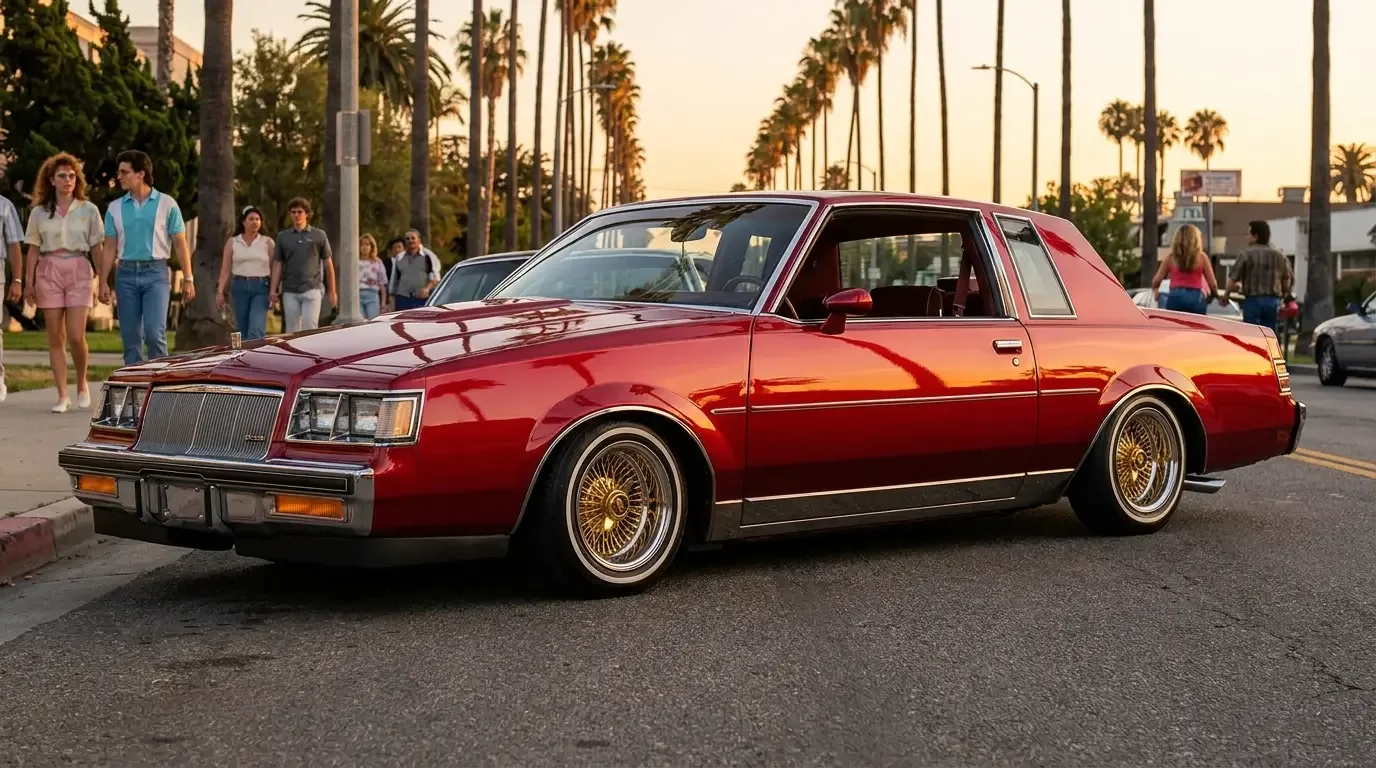
What a G-body actually is
G-body is GM's internal platform name for its rear-wheel-drive intermediate coupes and wagons of the downsized era. The badges that matter to builders are the Buick Regal, the Oldsmobile Cutlass Supreme, the Chevrolet Monte Carlo, and the Chevrolet El Camino, all riding on roughly the same 108-inch wheelbase. GM shrank these cars for 1978 in response to fuel-economy pressure, which is why a Regal from this run is noticeably lighter and shorter than the boat-sized Chevys of the early 1970s.
For a lowrider, that downsizing was a gift. A lighter body sits and lifts more predictably, and the shared platform means suspension geometry, control arms, and rear ends interchange across all four badges. Builders learned one recipe and applied it to whatever clean shell showed up on the market. The G-body is the muscle-era Impala's practical younger cousin, and if you want the deep history of where the whole movement started, that thread runs back through the lowrider story.
Why they became the affordable modern-classic staple
The Impala is the crown of the culture, and prices have climbed to match. That created a gap. A clean 1964 hardtop had become a serious investment car, while a running Cutlass could still be found for the price of a used commuter. For a builder who wanted to actually cut into the frame and lay a car out, spending less on the shell mattered. You do not want your most expensive decision to be the one before you start welding.
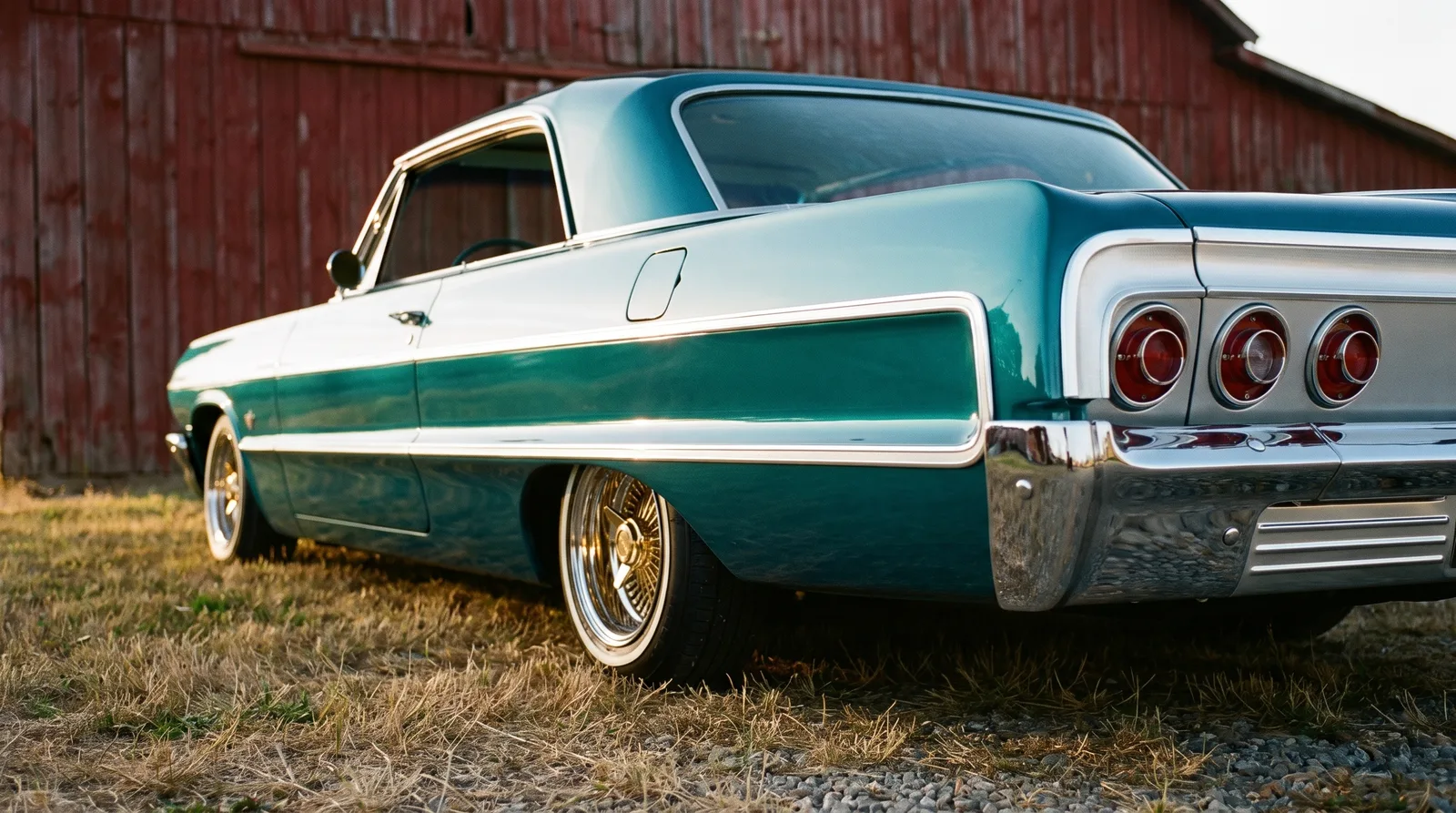
G-bodies filled that gap on every front. They were produced in enormous numbers, so parts cars and clean examples stayed common. The bodies are simple, with honest body lines that take candy paint and patterns well. And the platform's popularity fed itself: the more people built them, the more knowledge, jigs, and bolt-in kits existed, which made the next build cheaper and faster. If you have priced out where the icons now sit, compare a project Regal against The Impala Lowrider and the math explains itself.
- High production volume kept donor shells cheap and easy to find.
- Shared platform meant one set of parts and know-how covered four badges.
- Clean, flat body panels are friendly to candy paint and mural work.
- Enough aftermarket support that a first-time builder is not inventing anything.
Hydraulics fitment on a G-body frame
Here is where the platform earns its reputation. The G-body uses a separate perimeter frame, not a unibody, which means you can modify the suspension mounting points without cutting into the passenger cell. That separation is the whole reason hydraulics work cleanly on these cars. Up front, the coil-over-shock arrangement gives you a natural home for a hydraulic cylinder once the stock spring comes out.
The standard approach is a cylinder in each front spring pocket feeding off a pump, with the rear coils swapped for cylinders or a bridged setup depending on how much travel and lift you want. Because so many people have done exactly this, the fabrication is well understood: where to reinforce the frame, how to notch for clearance, and how to keep the geometry sane so the car still drives. A G-body is where a lot of builders learn the craft before they touch anything more valuable.
| Attribute | Detail for lowrider builders |
|---|---|
| Production years | 1978 to 1988 (RWD G-body run) |
| Core badges | Regal, Cutlass Supreme, Monte Carlo, El Camino |
| Wheelbase | Around 108 inches, shared across the coupes |
| Chassis type | Separate perimeter frame (body-on-frame) |
| Front suspension | Coil spring over control arm, cylinder swaps in the spring pocket |
| Rear suspension | Coil-sprung live axle, converted to cylinders or a bridge |
| Why it matters | Frame-off hydraulics work without touching the body shell |
"A G-body is the car I hand a first-time builder. The frame lets you learn hydraulics without ruining anything you can't replace, and when you get it right, that Cutlass lays out just as clean as a car worth ten times more. Real is real, no matter the badge."
Jim Vasquez
Club popularity and the culture around them
The G-body's affordability made it the entry car for a whole generation of club members. When a young builder wants in, the car that gets them there is usually a Regal or a Cutlass, because it is the one they can afford to buy, paint, and set up without waiting years. That means these cars show up in large numbers at car shows, cruise nights, and club plaques, and the community around them is deep and active.
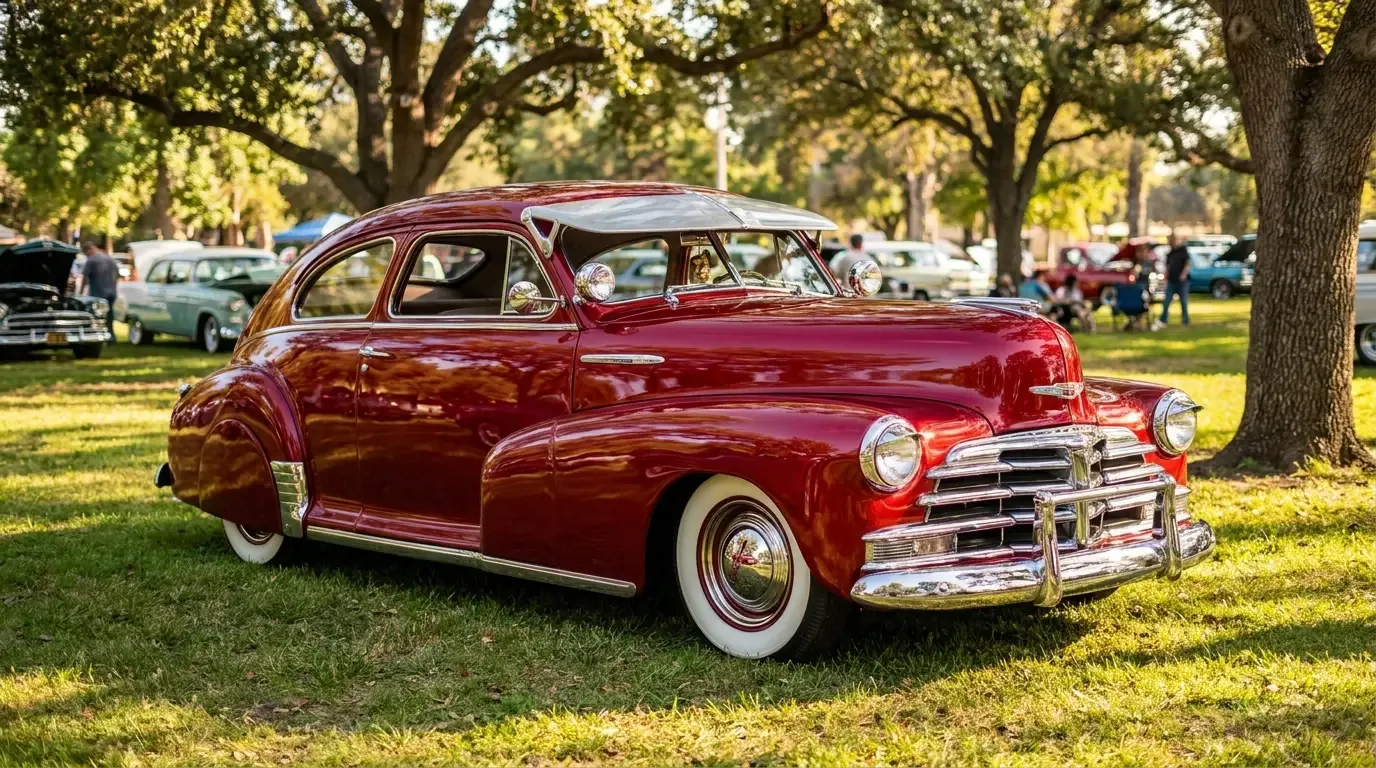
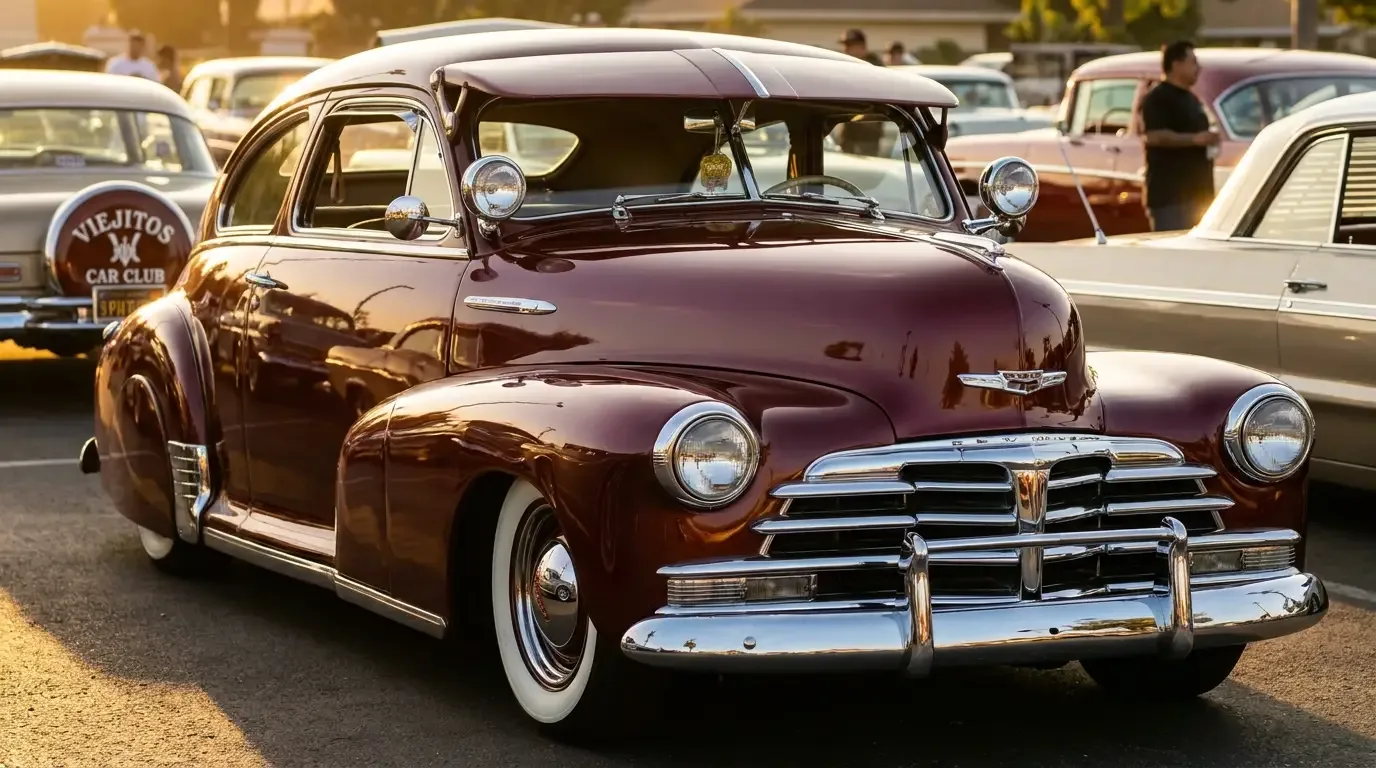
They also sit comfortably alongside the older machines. A club lineup will mix G-bodies with the pre-war and post-war classics known as lowrider bombs, and nobody thinks less of the newer cars for being cheaper to build. The point of the culture was never to price people out. The G-body kept the door open, and that is why it matters as much as any headline Impala.
Sources and notes
- GM platform and model references for the 1978 to 1988 rear-wheel-drive G-body coupes and wagons.
- Period and enthusiast press covering downsized GM intermediates and their aftermarket support.
- Lowrider club and cruise-scene records documenting G-body prevalence and build practice.
- Builder and shop interviews on perimeter-frame hydraulic fitment and reinforcement.
Related Reading
Have a
Classic Car
for Sale?
Reach thousands of serious classic car collectors across the US.
Sell It Here →
Are You a Classic Car Dealer?
List your full inventory and connect with targeted classic car buyers.
Join as a Dealer →
#lowrider hydraulics
#lowrider builds
#g-body lowrider
#cutlass lowrider
#monte carlo lowrider
#gm g-body

About the author
Jim Vasquez
Southern California hot rod and custom car builder with roots in the traditional kustom kulture scene.

Comments
Be the first to comment on this article.