
Walk any lowrider show and you learn to read a car before you read its plaque. A fat-fendered '47 Fleetline sitting flush to the pavement tells one story. A '63 Impala rolling on 13-inch wires tells another. Both are lowriders, but they come from different chapters of the same culture, and the platforms underneath them are not interchangeable. If you want to understand why certain body styles became the icons of this whole thing, you have to understand what a "bomb" is, why the Impala took over, and how the G-body kept the movement affordable when everything else got expensive.
Car Features
11 min read
Bombs and Classic Lowrider Platforms
From fat-fendered bombs to the '64 Impala and the affordable G-body, here is why certain cars became the icons of lowrider culture.
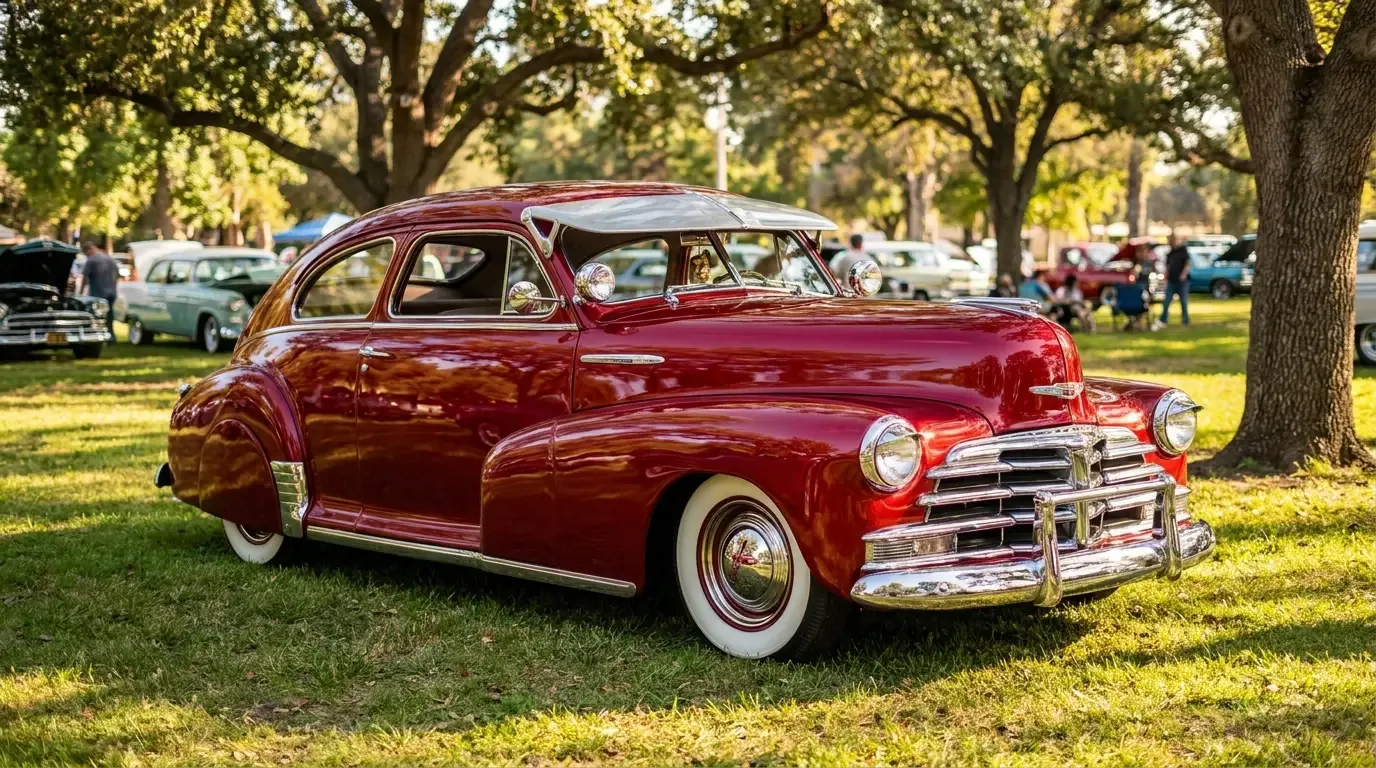
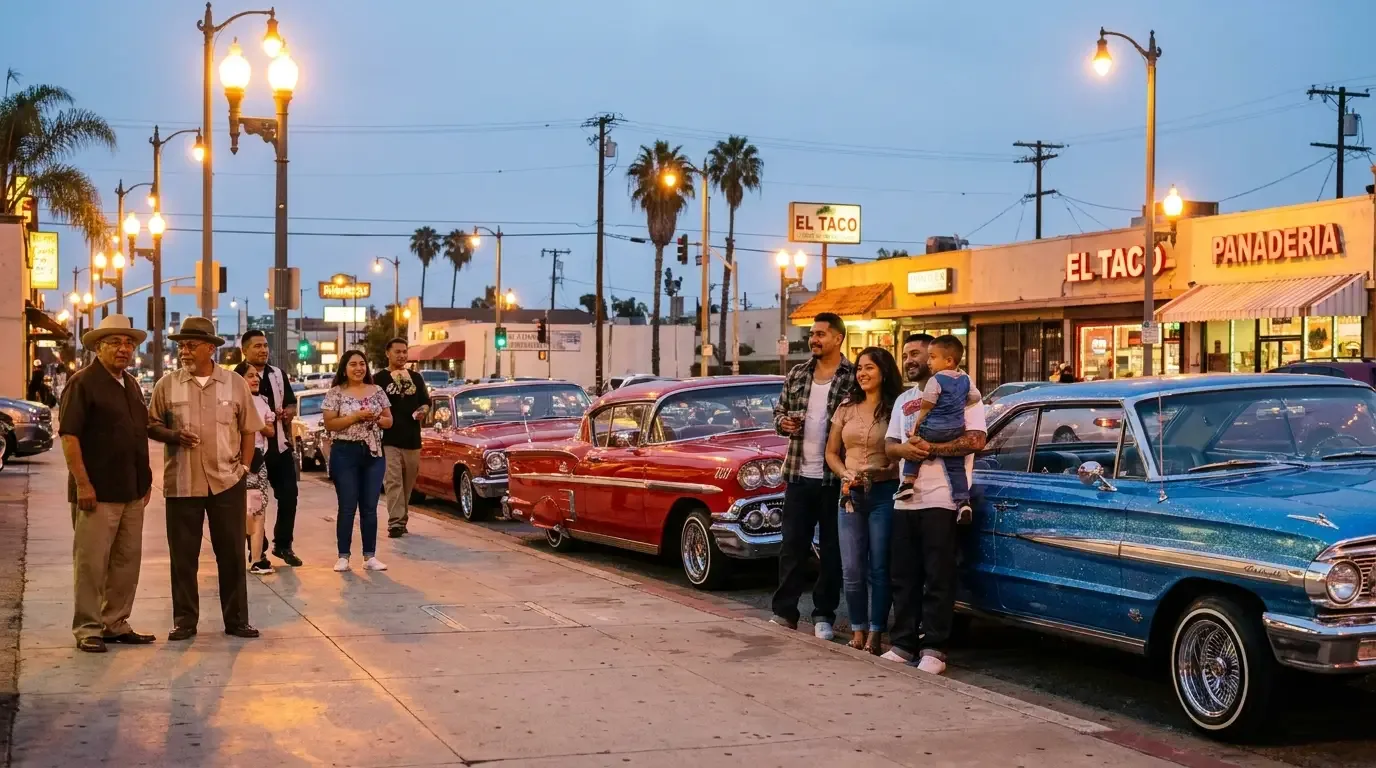
I've built and repainted enough of these with my own hands to have real opinions, and I'll give them to you straight. Some platforms earned their reputation. Some got popular because they were cheap and plentiful, and that counts too, it's how our familias could actually build. To see how these cars fit into the bigger picture, it helps to know how lowriders began in the barrios of postwar Los Angeles, because the choice of car was never random for us. It was about what was around, what was cheap, and what looked right laid low.
What a "bomb" actually is
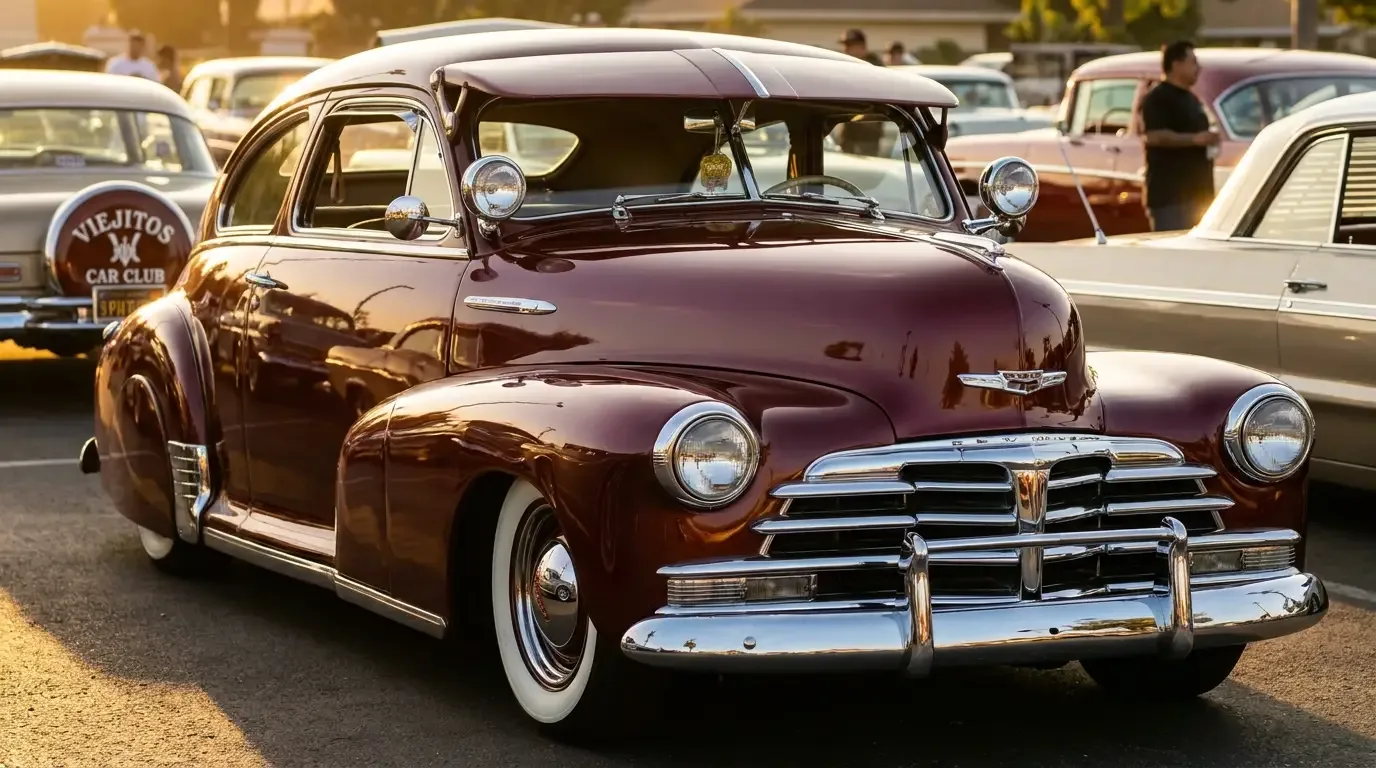
A bomb is a pre-1954 fat-fendered American car, and in lowrider circles it almost always means a Chevrolet. Think 1936 through 1954 Master Deluxe, Fleetline, Fleetmaster, Styleline. Rounded fenders, running boards, a tall greenhouse, chrome that looks like jewelry. The name is old street slang, and the community has used it for generations to mean these heavy, curvy prewar and early-postwar cars specifically.
People mix up bombs with regular hot rods all the time, and that drives me up the wall. A hot rod takes an old body and chases horsepower and speed. A bomb goes the other direction. It stays stock or near-stock in the drivetrain, gets loaded with genuine period accessories, and rides low and dignified. The whole point is elegance, not aggression. A proper bomb wears things like a chrome grille guard, fog lamps, a sun visor over the windshield, fender skirts, and the correct badging. Owners hunt for real vintage accessories for years. That patience is part of the culture.
Bombs are also where the deepest respect lives. These were the cars the first generation of cruisers drove, so a well-kept bomb is a rolling piece of family and neighborhood memory. You do not chop a bomb up. You honor it. That attitude changes how you build one. On a bomb, you leave the body lines alone, you keep the ride height dignified rather than slammed into the weeds, and you spend your money on chrome, glass, and interior work instead of a big motor. A tuck-and-roll interior in the right color, a set of correct wheel covers or wire wheels, and years of accessory hunting will do more for a bomb than any amount of horsepower ever could.
The other thing worth saying is that bombs reward patience in a way modern platforms do not. You can finish a G-body in a couple of seasons. A serious bomb build can take a decade because so much of it depends on finding the right period parts at the right price. Guys who run these cars know every swap meet within a day's drive and keep lists in their heads of the accessories they still need. That slow accumulation is not a bug. It is the whole ritual, and it is why a finished bomb carries so much weight at a show.
The Impala and why 1958 to 1964 rules everything
If the bomb is the elder statesman, the Impala is the crown. And within the Impala family, the 1958 through 1964 cars are the ones everybody chases. There are reasons, and they are not just fashion.
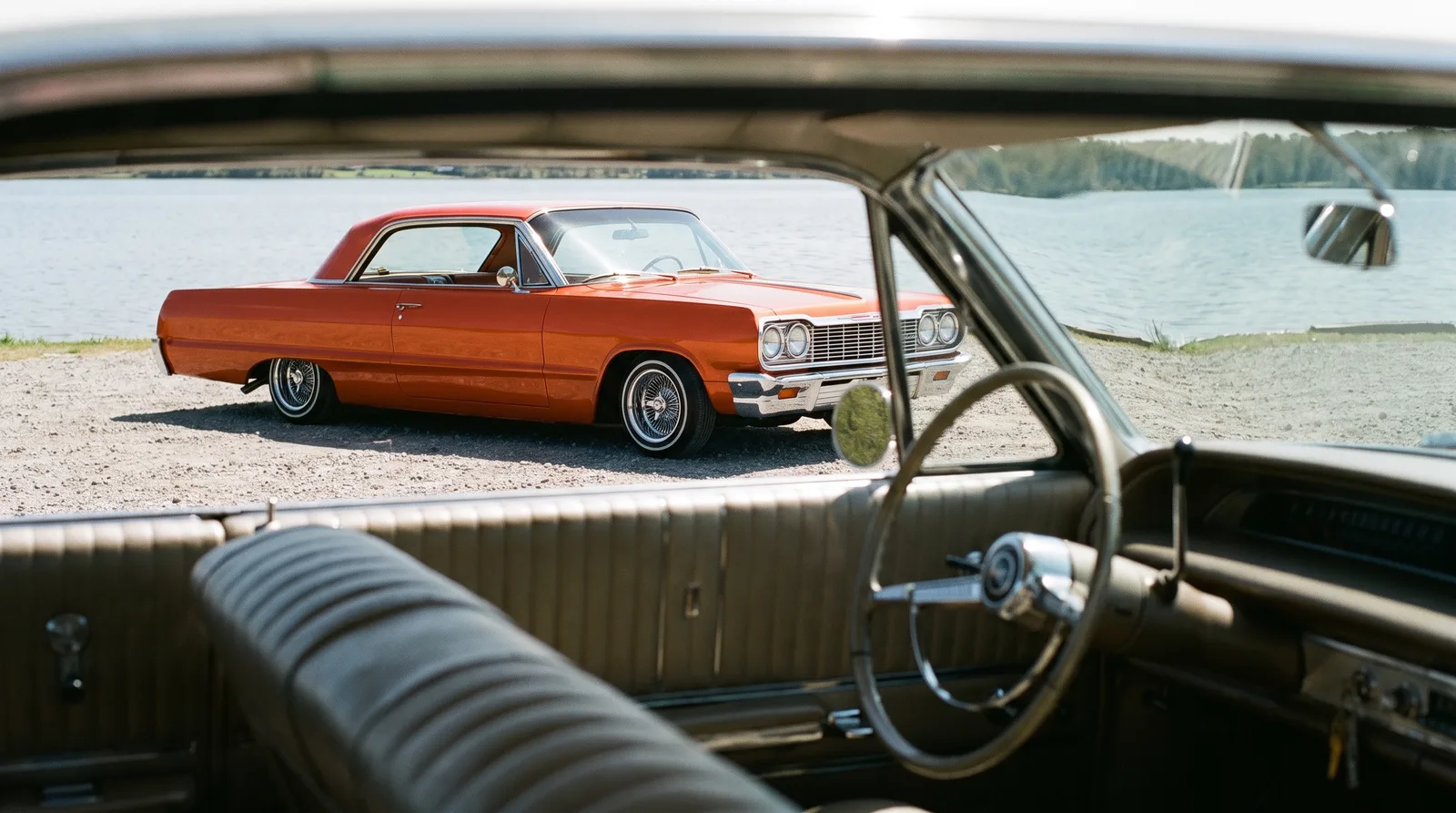
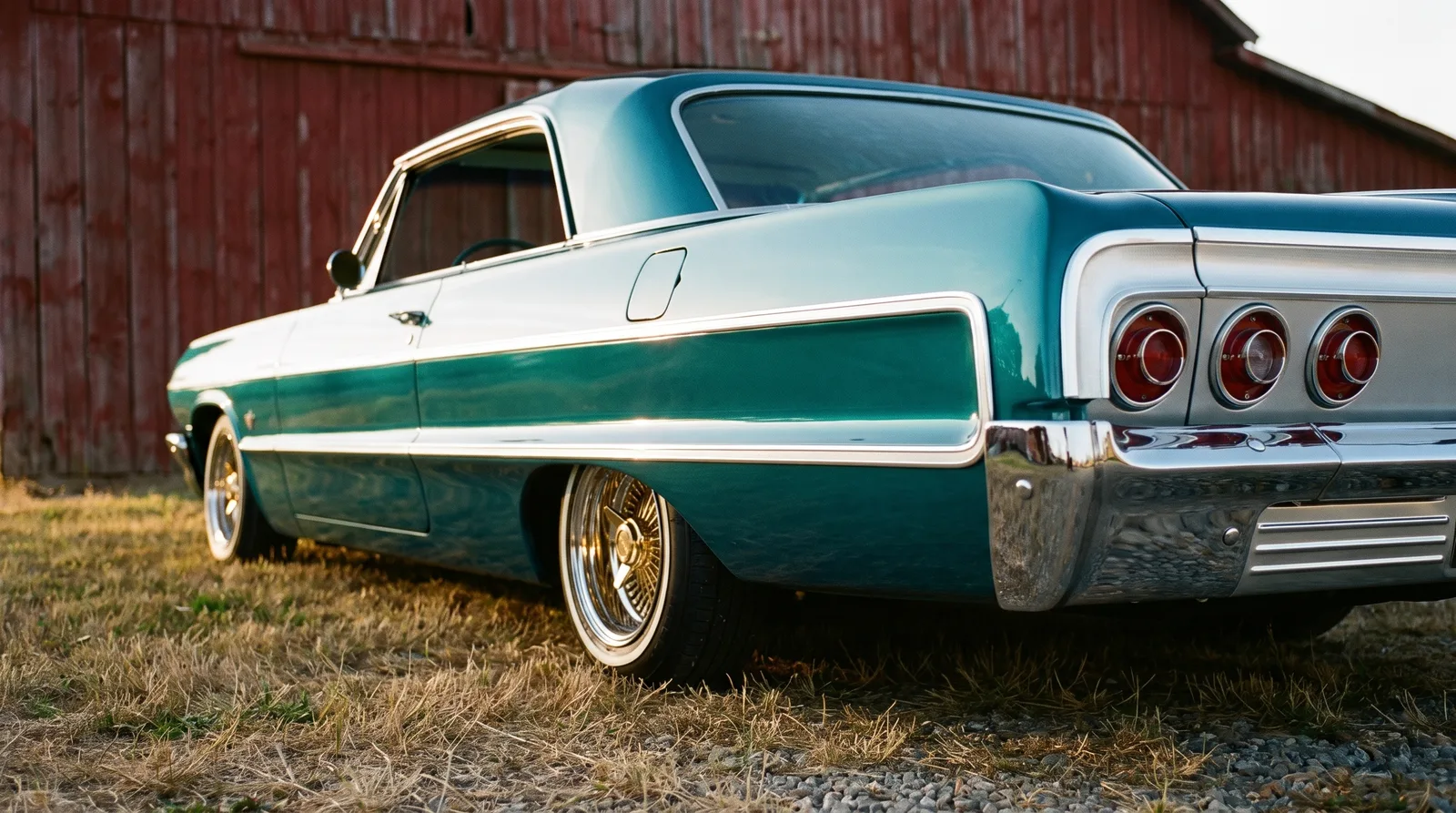
The 1958 Impala arrived as a longer, lower, wider Chevrolet with real presence. Then the body kept evolving in ways that happened to suit lowriding perfectly. The 1959 has those wild batwing rear fins. The 1960 softened them. The 1961 and 1962 tightened up into cleaner lines. And the 1963 and 1964, especially the '64, became the single most recognizable lowrider platform on earth. Wide flat panels that take candy paint and murals beautifully, a roofline that sits right when the car drops, and an X-frame on many of these years that builders learned to work with for hydraulics.
The '64 in particular got locked into the culture through decades of music, film, and car-club history until it became shorthand for the whole scene. When someone outside the community pictures a lowrider, they are almost always picturing a '63 or '64 Impala on wire wheels, bouncing at the front. That image did not happen by accident. The car was affordable and everywhere when the movement matured, and it simply looked better laid out than anything else on the lot.
There is also a practical builder reason these years dominate. The convertible and hardtop body styles both work, the trunk has room for a hydraulic setup and batteries, and the front suspension geometry is well understood by every shop that has been doing this for decades. When a platform has that much accumulated knowledge behind it, a new builder is never starting from scratch. Somebody has already figured out the cylinder sizes, the frame reinforcement, and the wheel fitment that works. That shared knowledge is part of why the classic Impala stayed on top even as the cars themselves got rare and pricey.
| Platform | Rough era | Why it became iconic | Builder notes |
|---|---|---|---|
| Bomb (fat-fender Chevy) | 1936 to 1954 | Elegance, period accessories, first-generation heritage | Keep it near-stock, hunt genuine accessories |
| Tri-Five Chevy | 1955 to 1957 | Clean styling, strong parts support | Popular but shared with hot rod world |
| Impala | 1958 to 1964 | Wide panels for paint, roofline sits right low | '63 and '64 are the crown jewels |
| G-body | 1978 to 1988 | Cheap, plentiful, easy to lay frame | The affordable modern entry point |
The tri-fives and the in-between years
Between the bombs and the classic Impalas sit the 1955, 1956, and 1957 Chevrolets, the tri-fives. They show up in the culture, they look great low, and they have some of the best parts availability of any old American car. But I will be honest about them. The tri-five is a car the lowrider world shares with the hot rod and restomod crowds, which pushes prices up and means a clean one is expensive to start with.
That shared demand is the whole story of the in-between years. A car that only lowriders want stays reachable. A car that everybody wants gets priced like a collectible. This is why plenty of builders skip straight past the tri-five to either an earlier bomb project or a later, cheaper platform. The look matters, but so does the math.
"People ask me what platform to start with, and I always say the same thing. Buy the cleanest body you can afford, not the fanciest year. I have seen a straight, honest G-body turn into a showstopper and a rusted-out '64 dream car eat somebody's whole budget before it ever hit paint. The metal underneath is what you are really buying."
Hector Morales
G-bodies and the affordable modern platform
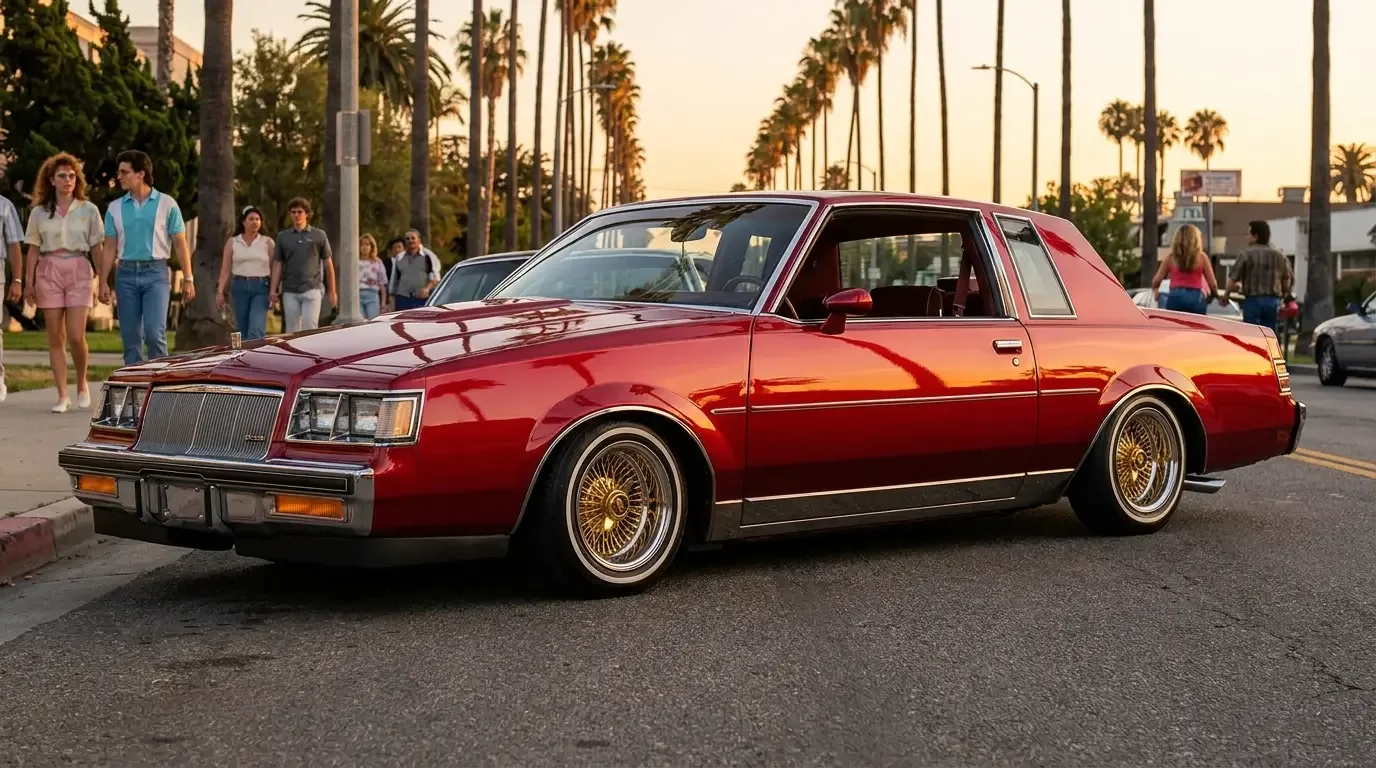
Here is the platform that keeps the culture alive for new builders: the GM G-body. That covers the rear-wheel-drive Regal, Cutlass, Monte Carlo, Malibu, and Grand National family from roughly 1978 to 1988. These cars were built in enormous numbers, they use a body-on-frame layout that is friendly to hydraulic and airbag setups, and until recently you could find them cheap.
The G-body did for the 1980s and beyond what the Impala did for the 1960s. It put a lowrider within reach of a kid with a job and a dream. The proportions work low, the flat sides take graphics well, and the aftermarket for suspension and drivetrain is deep. A young builder can start with a Cutlass, lay the frame over time, and end up with a real car without needing Impala money on day one.
I love the G-body for exactly that reason. It's the on-ramp for our people. Half the folks running Impalas today learned everything they know on a G-body first. Anybody who looks down on that doesn't understand the culture. This platform carried us forward through the decades when the classic metal was getting scooped up and priced out.
Why these platforms and not others
Step back and a pattern shows up. The cars that became lowrider icons share a few traits, and cars that miss those traits never caught on no matter how nice they were.
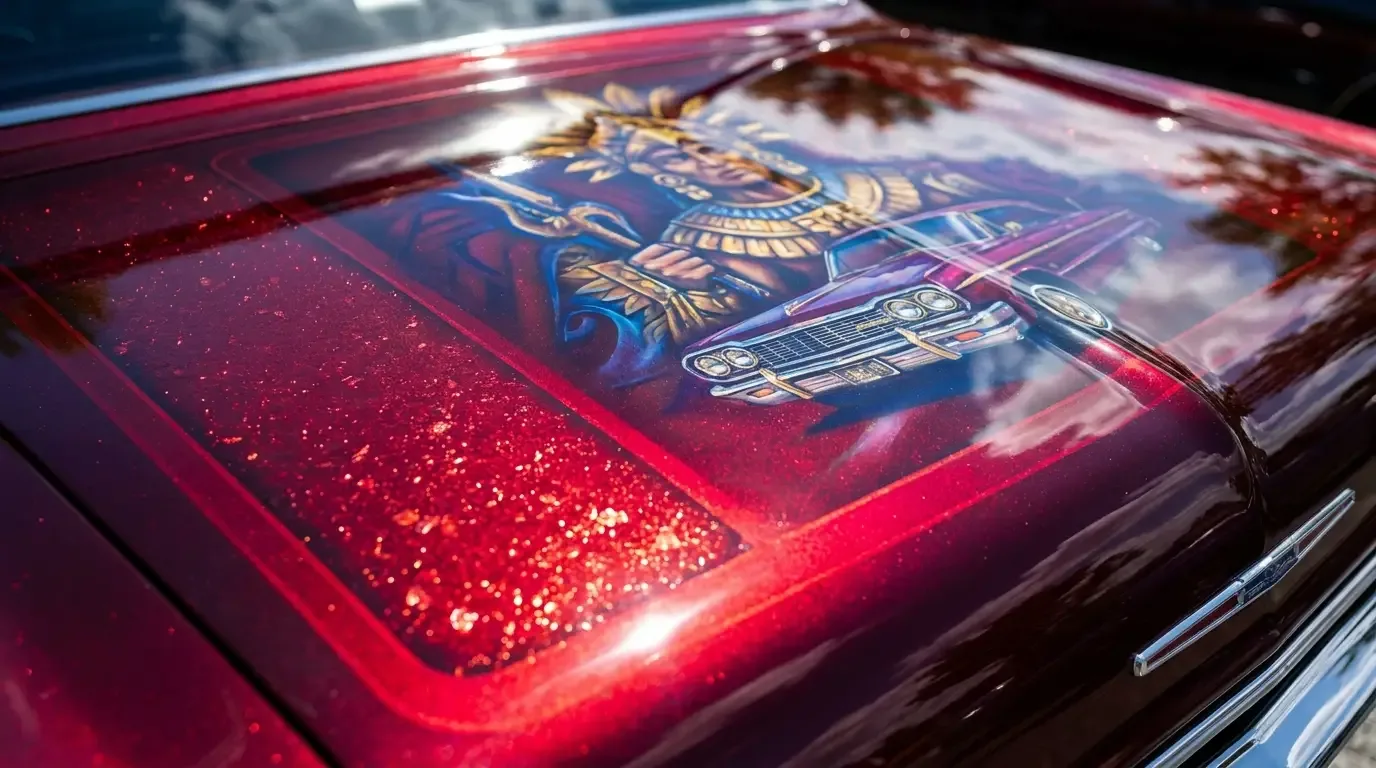
- Wide, flat body panels. Candy paint, murals, and pinstriping need canvas. Slab-sided Impalas and G-bodies give you that. Fussy, heavily sculpted bodies fight the paint.
- A roofline that sits right when dropped. Some cars look mean low and some look awkward. The classic Impala roofline was almost made for it.
- Body-on-frame or a workable frame. Hydraulics and airbags need somewhere to live and something to push against. These platforms cooperate.
- Cheap and plentiful when it mattered. Culture grows on what people can actually buy. The Impala in the '60s and the G-body in the '80s were both everywhere.
- Chrome and trim worth showing off. Bombs won on this alone. All that factory brightwork is the whole aesthetic.
Notice that "fast" is not on the list. This is not a horsepower culture. A lowrider is judged laid out and standing still as much as it is rolling, which is the opposite of nearly every other American car scene. That single difference explains most of the platform choices. Builders picked cars that looked right low, wore paint well, and took hydraulics, and they left the muscle cars to the drag strip crowd.
Where these platforms stand in 2026
Prices have moved, and not gently. A clean 1963 or 1964 Impala is now a genuinely expensive car, priced alongside collector muscle in many cases, because demand comes from lowriders and traditional collectors at the same time. Bombs have climbed too, especially anything with a documented accessory collection and honest sheet metal. Even the G-body, the people's platform, has crept up as the supply of rust-free examples thinned out.
None of that has cooled the culture. It has just shifted where new builders enter. More people are starting on G-bodies and other cheaper bodies, building slowly, and treating a real Impala as the goal rather than the starting line. That is a healthy thing. It keeps the movement rooted in patience and craft instead of chargecards. If you are shopping, spend time studying real examples and current asking prices before you commit, and browse used lowriders for sale to see how the market actually values each platform right now.
Whatever you choose, remember what you are buying into. These platforms are not just cars. They carry a history that ties directly to the neighborhoods and the families who built this scene, and understanding that lowrider history matters as much as knowing which year Impala takes candy paint the best. Pick the body honestly, respect what it means, and build it right.
Sources and notes
- Period Chevrolet accessory catalogs and dealer literature (late 1940s through 1960s)
- Marque references on Impala and GM G-body body styles and production eras
- Lowrider club and community oral history on bomb culture and platform preferences
- Builder and shop interviews on hydraulic and airbag installation by platform
- Collector-car auction and classified records for current platform values
Related Reading
Have a
Classic Car
for Sale?
Reach thousands of serious classic car collectors across the US.
Sell It Here →
Are You a Classic Car Dealer?
List your full inventory and connect with targeted classic car buyers.
Join as a Dealer →

About the author
Hector Morales
East LA lowrider builder and lifelong member of the car-club scene, writing lowrider culture, hydraulics and custom paint from the inside.




Comments (1)
R
Ray Staubach
3 months ago
Appreciate the honest take on condition grades. Too many sellers call a driver-quality car 'show quality' and it wastes everyone's time.