
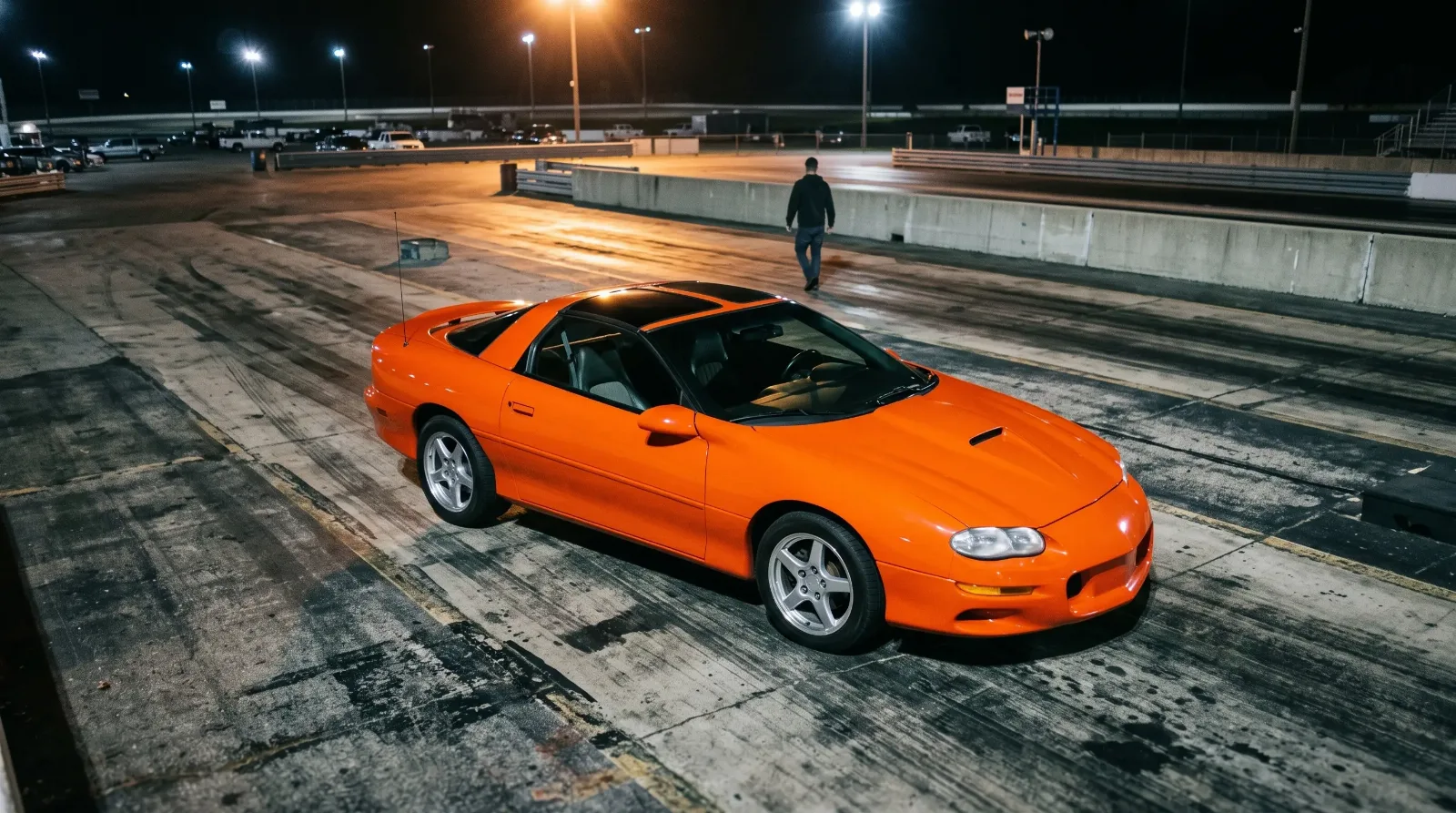
The LS1 Camaro SS is the quickest classic Camaro most people can still afford to buy and fix. Chevrolet built it for five model years, 1998 to 2002, put an aluminum small block from the Corvette under a hood that actually breathed, and sold it for a few thousand dollars over a Z28. It ran 0 to 60 mph in the low five-second range in period tests. It also came off a production line, with a warranty, and for 1999 you could even get one in Hugger Orange.
Car Features
7 min read
The LS1 Camaro SS, 1998 to 2002
The LS1 Camaro SS put a Corvette aluminum V8 under a forced-air hood. Ratings, prices, production, period tests and which year to buy.
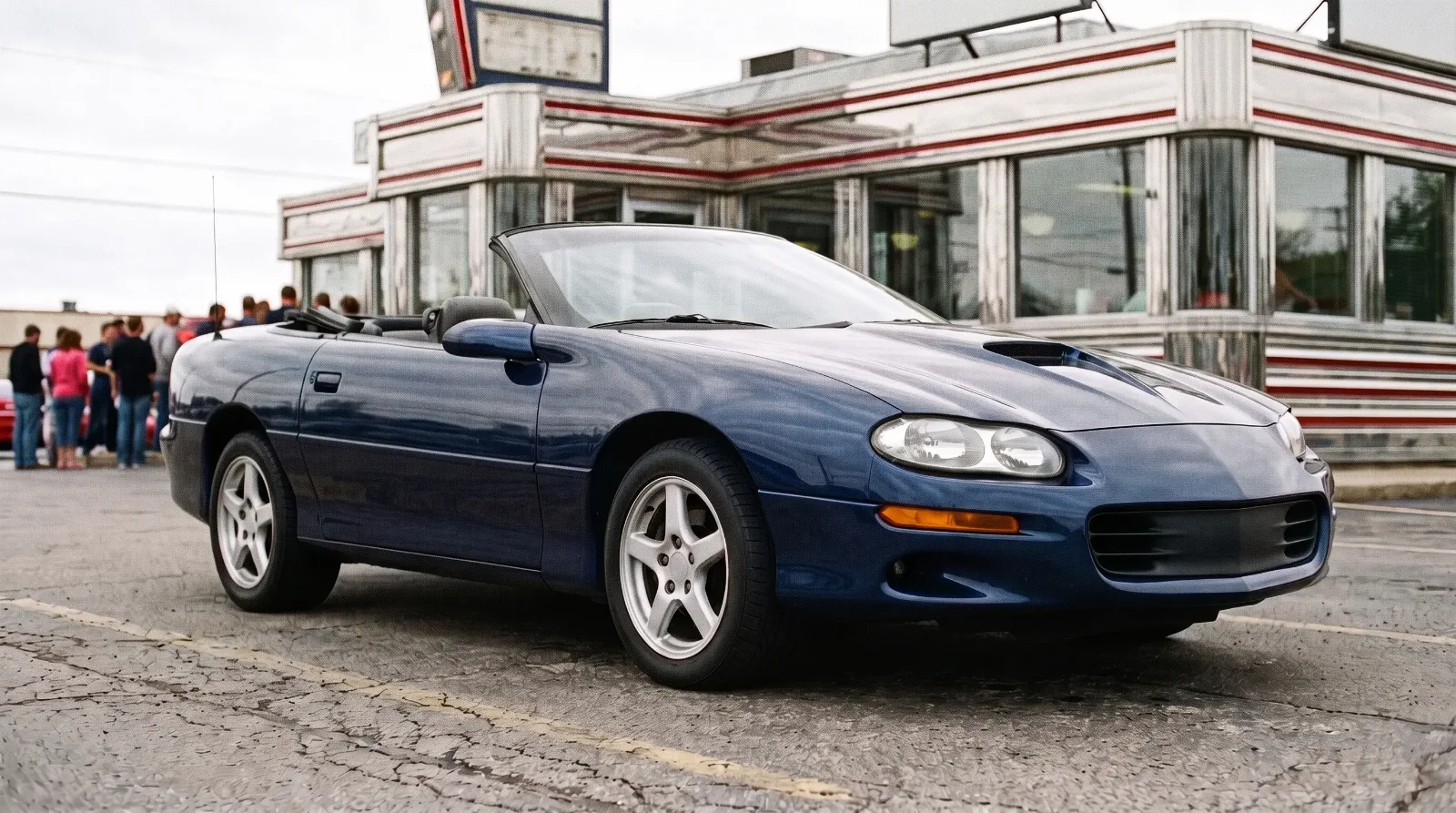
The wider fourth-generation story, from the 1993 launch to the end of production, lives in the LT1 and LS1 era. This piece sticks to the SS with the LS1: what you got, how fast it really was, which year to look for, and what to check with your own hands before you buy one.
What changed when the LS1 Camaro SS arrived
The engine came first. For the 1998 model year the all-aluminum 5.7 liter LS1 replaced the iron-block LT1, a year after it debuted in the 1997 C5 Corvette. It was about 95 lb lighter than the LT1. It also dropped the Opti-Spark distributor, the LT1's famous weak spot, which on its own is a good reason to want the later car.
It was not a straight transplant. The F-body version got an accessory drive moved to fit the Camaro engine bay, an F-body-specific oil pan, and a cable throttle instead of the Corvette's drive-by-wire. Parts guys still care about that last one. You should too, if you plan to buy pieces off a Corvette.
The SS itself changed status in 1998. It became a regular Chevrolet option, RPO WU8, priced at $3,500 on top of a Z28. The package was a forced-air hood, a special spoiler, 17-inch wheels and tires, and a special suspension. The cars were still finished partly outside the plant, though. Camaros built at Sainte-Thérèse, Quebec, were shipped to SLP in nearby LaSalle for the hood, spoiler, wheels and suspension. So every LS1 SS is a factory car with a contractor's fingerprints on it.
Power, price and production by year
Here are the numbers that matter, in one place. Horsepower is the factory rating. Price is the SS package alone, added to the Z28 coupe price beside it.
| Model year | SS rating | Z28 rating | Z28 coupe price | SS package price | SS built |
|---|---|---|---|---|---|
| 1998 | 320 hp | 305 hp | $20,995 | $3,500 | 3,025 |
| 1999 | 320 hp | 305 hp | $21,485 | $3,700 | 4,829 |
| 2000 | 320 hp | 305 hp | $21,800 | $3,950 | 8,913 |
| 2001 | 325 hp | 310 hp | $22,200 | $3,950 | 6,332 |
| 2002 | 325 hp | 310 hp | $22,870 | $3,625 | 11,191 |
Fifteen horsepower on paper, every year. The SS gain came from the cold-air intake and a freer exhaust, which is exactly what you would do yourself with a weekend and a credit card. Whether that is worth the money on a used car is a fair argument, and the details are covered in SS versus Z28. The short version: the SS also brought the suspension, the wheels and the hood, and those are the parts a buyer should check first.
Look at the last column too. Production ramped from 3,025 in the first year to 11,191 in the last. In 2002 the SS went on about 45 percent of the Z28-based cars Chevrolet built. A last-year SS is the easiest one to find, and it is not rare.
How fast the LS1 Camaro really was
Period tests line up with the ratings, more or less. Car and Driver got a 1999 SS to 60 mph in 5.3 seconds and to 100 mph in 12.8, with a 160 mph top speed. A 2000 SS convertible with the automatic, tested by the Auto Channel, ran 0 to 60 in 5.5 seconds and the quarter mile in 14.5 seconds at 103.5 mph, and it weighed 3,557 lb. MotorWeek's 2002 35th Anniversary SS with the manual did 0 to 60 in 5.2 seconds and the quarter in 13.5 at 108 mph.
Then there is the bar-stool number. You will hear that the LS1 made 350 hp at the flywheel and GM printed less to protect the Corvette. No primary source backs that up. John Heinricy, who won SCCA titles in a 1LE Camaro, denied underrating, though he also said not much more than tuning software separated a Camaro LS1 from a Corvette LS1. The fair way to put it: the ratings are widely thought to be conservative, and the documented figures are 320 and 325 hp for the SS. Quote those. Let the other guy quote the legend.
"Everybody's LS1 makes 350 at the flywheel until you put it on a dyno. Buy the car for what the sticker says it made. Anything extra is a nice surprise, not a line item."
Mike Sullivan
Which year of LS1 Camaro SS to look for
1998 is the first year and the lowest production SS of the run. The new front end and the LS1 arrived together that year. If you want the origin car, that is it.
1999 fixed small things that add up. The steel 15.5 gallon fuel tank used since 1982 gave way to a 16.8 gallon plastic one. An oil-life monitor showed up, the Z28 and SS got a Torsen differential, and Hugger Orange joined the color chart, in practice for that one year only. For a driver, 1999 is a sensible floor.
2000 brought an optional four-spoke steering wheel with radio controls, new colors including Monterey Maroon Metallic, which the SS could not be ordered in, and the second-highest SS count of the five years. Nothing mechanical to chase.
2001 is where the engine got better. The Z28 and SS picked up the LS6 intake manifold and a revised camshaft, lost the EGR system, and manual cars got a new clutch slave cylinder and the LS6 clutch. That is the 325 hp car. If you are shopping on hardware alone, 2001 and 2002 are the ones.
2002 was the end of the line, and it carried the 35th Anniversary package, RPO Z4C, which cost $2,500 on top of the SS package. 3,369 buyers paid for it. It was an appearance package with no extra horsepower, so price it as paint, stripes and paperwork. It is still a nice paperwork story.
What to check before you buy one
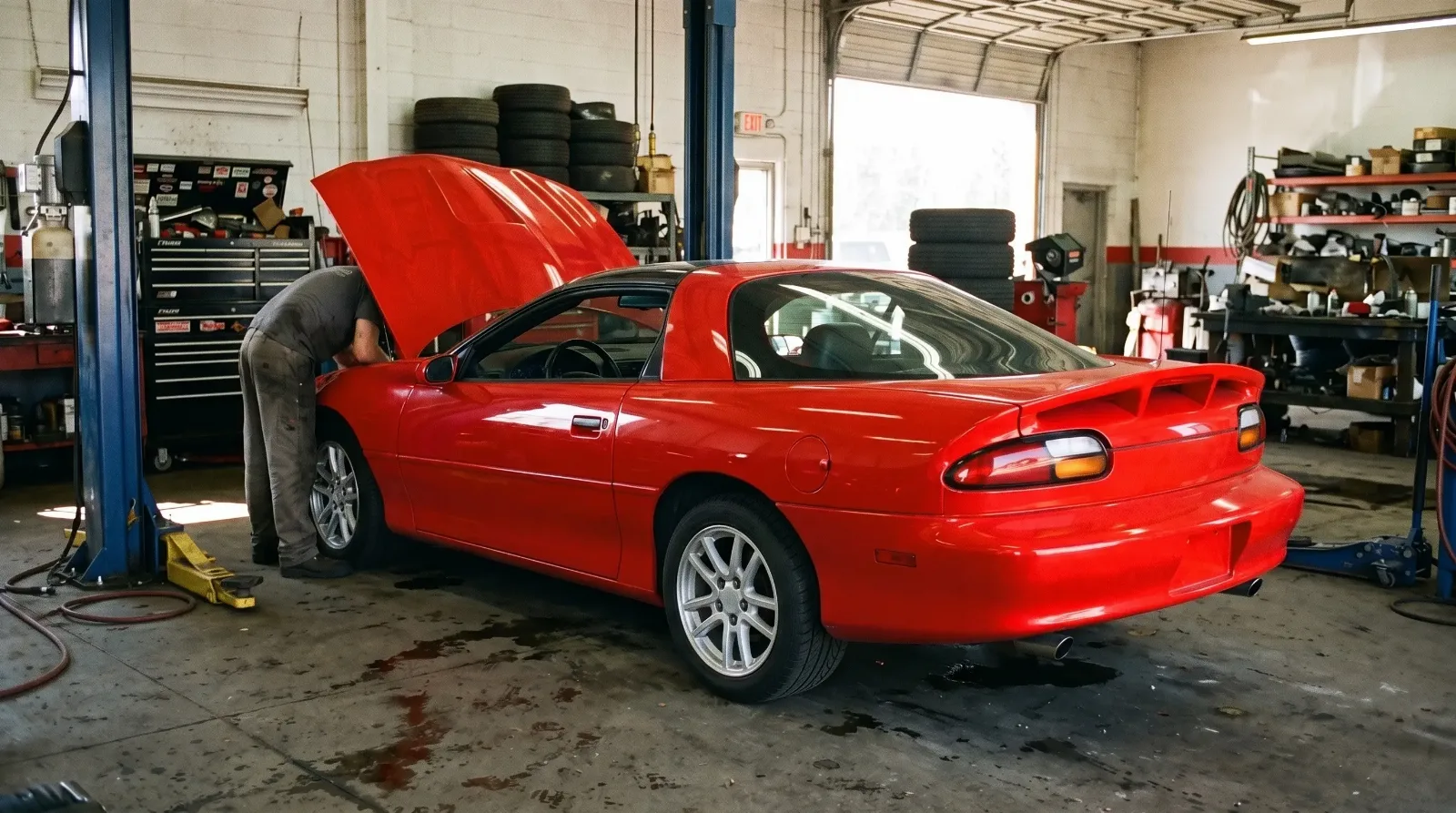
These cars are new enough that a lot of them were modified by owners who had receipts for the parts and none for the labor. The SS is also easy to imitate, because the visual parts were bolt-ons at SLP. Assume nothing.
Hagerty's Greg Ingold said in 2018 that the 1996 to 2002 SS had the best collectibility outlook of the standard fourth-gen cars. That does not mean every SS is an investment. It means an original, documented one with sane miles is the version worth paying up for. A modified car with a loud cam can still be a great weekend toy, but it is a different purchase, and it should cost less.
The LS1 Camaro was the last classic Camaro with real speed and a factory warranty behind it. Chevrolet brought the name back for 2010 on a new platform, but that is a different car. The 1998 to 2002 SS is the one people mean when they say the old F-body finally got the engine it deserved.
Sources and notes
- Wikipedia: Chevrolet Camaro (fourth generation)
- The Auto Channel: 2000 Camaro SS convertible road test
- MotorWeek: 2002 Chevrolet Camaro and Pontiac Firebird road test
- Hagerty: the fourth-gen Camaro, 1993 to 2002
- Hagerty: is the fourth-gen Camaro collectible?
- LSX Magazine: the 2002 35th Anniversary Camaro SS
Related Reading
Have a
Chevrolet Camaro
for Sale?
Reach thousands of serious classic car collectors across the US.
Sell It Here →
Selling a classic? Here's how: compare the places to sell classic cars
Are You a Classic Car Dealer?
List your full inventory and connect with targeted classic car buyers.
Join as a Dealer →

About the author
Mike Sullivan
Detroit-area muscle car enthusiast and restoration specialist with three decades of hands-on experience working on American iron.
Related Listings - Chevrolet Camaro




Comments
Be the first to comment on this article.