
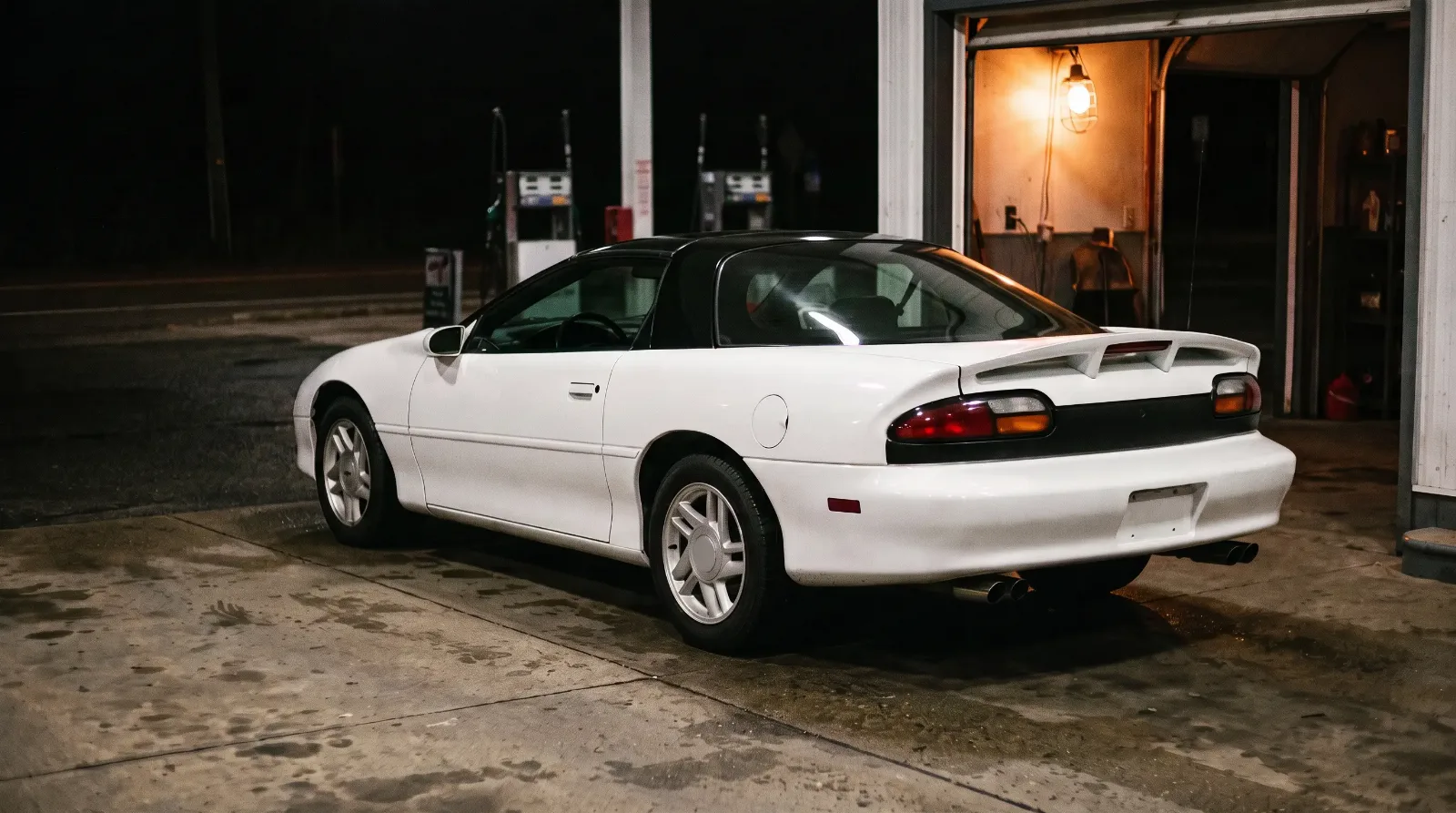
Start with the result. The 1993 LT1 Camaro Z28 ran 0 to 60 mph in 5.3 seconds and the quarter mile in 14.0 seconds in a Car and Driver test, from a 275-horsepower 5.7-liter V8 that cost $16,799 in a base Z28 coupe. That is the whole case for the car in one sentence. For five model years, 1993 to 1997, the LT1 Camaro Z28 sold that kind of acceleration at a mainstream price, and the numbers below explain why it still matters. The broader generation is covered in the fourth generation Camaro; this page stays with the LT1 cars.
Car Features
6 min read
The LT1 Camaro Z28, 1993 to 1997
The LT1 Camaro Z28 ran 0 to 60 in 5.3 seconds on 275 hp. Ratings, production, prices, 1994 changes and the weak points, 1993 to 1997.
The LT1 Camaro Z28 by the numbers
The engine came from the Corvette, which had introduced the LT1 in 1992. In the Camaro it was rated at 275 horsepower and 325 lb-ft, SAE net. Those were honest ratings, not the optimistic gross figures of the muscle car years. The comparison that mattered in 1993 was simple: 275 horsepower was 30 more than the outgoing Camaro and 70 more than the 205-horsepower 1993 Mustang GT. Even Ford's 1993 SVT Cobra, at 235 horsepower, was 40 short.
The rating rose to 285 horsepower for 1996, when the car gained OBD-II and dual catalytic converters. Price rose with it.
| Model year | LT1 rating | Z28 built | Z28 coupe base price |
|---|---|---|---|
| 1993 | 275 hp | 17,850 (coupes only) | $16,799 |
| 1994 | 275 hp | 40,940 | $16,999 |
| 1995 | 275 hp | 38,359 | $17,915 |
| 1996 | 285 hp | 17,844 (14,906 coupes, 2,938 convertibles) | $19,390 |
| 1997 | 285 hp | 21,252 | $20,115 |
Two caveats on that table. The production totals are a single data set, and it is not stated whether the 1996 and 1997 SS cars are counted inside the Z28 figures. The 1996 price also has a second published value of $19,930, which looks like a transposed figure; $19,390 comes from a period review.
Gearboxes, 1994 updates and the options that mattered
The 1993 Z28 came with either a Borg-Warner T56 six-speed manual or the four-speed 4L60 automatic. Across the whole 1993 line, which also included the V6 coupes, buyers chose the automatic in large numbers: 31,695 of the 39,103 cars built. Which of the two was the standard Z28 gearbox that first year is disputed. Hagerty lists the automatic as a $595 option, while Wikipedia and the many listings that copy it call the automatic standard and the six-speed a no-cost alternative. Neither side cites the order guide, so be careful with any claim that rests on it.
For 1994 the drivetrain changed more than the body did. The hydraulic 4L60 became the electronic 4L60E, the speed-density engine management gave way to mass airflow, fuel injection became sequential, and the six-speed got the CAGS first-to-fourth skip-shift. The six-speed rear axle ratio went from 3.23 to 3.42, which helps the launch. Traction control followed for 1995 as a $450 option.
Two low-volume options are worth knowing. The 1LE track package found 19 buyers in 1993 at $330, with no air conditioning allowed, then 106 in 1995, 55 in 1996 and 48 in 1997. The B4C Special Service police package put Z28 mechanicals in a base body, with 135 sold in 1993 and 668 in 1994. Both are rare enough to deserve paperwork. Without it, either one is just a Z28 with a story.
Real power against the catalog
The LT1 sat far back in the chassis, tucked under the cowl. Engineer John Heinricy described the result as "almost a mid-front-engine car." The car still kept the third-gen floor pan and a live rear axle, so the handling gains came from a new short-and-long-arm front suspension and rack-and-pinion steering rather than a new rear end.
The ratings tell you where the Z28 sat in its own family. The 1996 and 1997 SS, developed with SLP Engineering, got 305 horsepower from the same LT1, 20 more than the Z28 of those years, mostly through a cold-air intake and a freer exhaust. Car and Driver reported a 4.9-second 0 to 60 run for the 1996 SS. In 1997 SLP built 108 LT4 SS cars with 330 horsepower. Those are the outliers. The plain Z28 is the baseline, and at 275 or 285 horsepower it already outgunned the Mustang GT by a wide margin.
"Strip out the stripes and the hype and the LT1 Z28 is a 5.3-second car for under seventeen grand in 1993 money. The SS is quicker, but the Z28 did the hard part first."
Dan Reeves
Where the LT1 costs you money
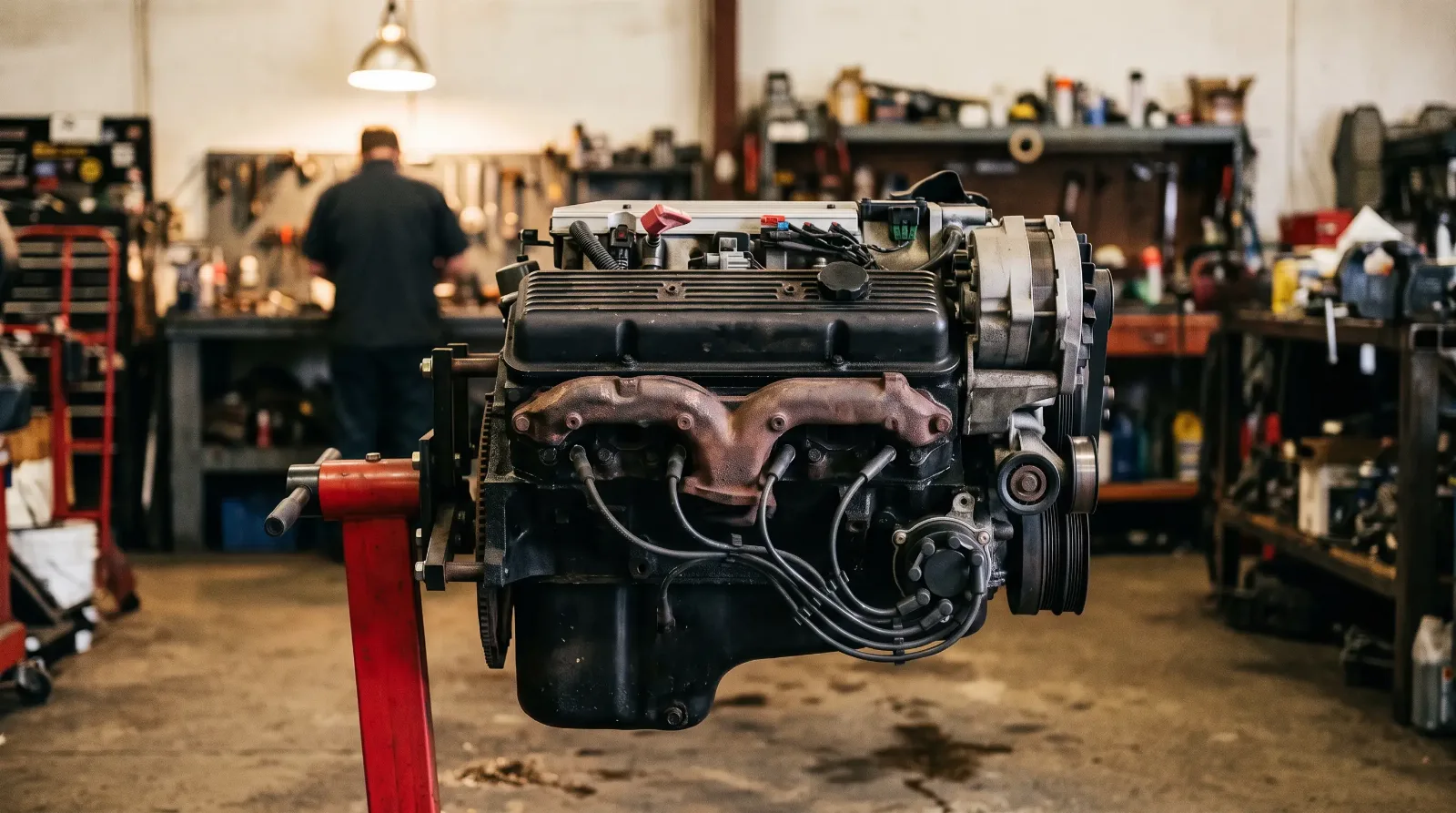
The weak points are documented and consistent across sources. The LT1 uses reverse-flow cooling, which sends coolant to the heads first and lets the oil run hot; synthetic oil and an oil cooler are the usual answer. The rear intake manifold seal leaks oil. And the Opti-Spark distributor sits under the water pump, where a coolant leak or moisture can kill it.
The Opti-Spark is the big one. To reach the cap, rotor or unit, the water pump and crank pulley have to come off, so most owners replace the pump and the Opti together. Early 1993 and 1994 F-body units had no vent; vented units arrived for 1995. The full history is in the Optispark story.
LT1 vs LS1: why 1997 is the line
For 1998 the all-aluminum LS1 replaced the iron-block LT1, a year after it appeared in the C5 Corvette, and the LS1 was about 95 pounds lighter. The Opti-Spark went away with the LT1. The two cars also differ up front: the 1998 facelift brought a new hood, fenders and nose, and a stock LT1 hood will not close over an LS engine with its factory airbox, which matters if you plan to swap one for the other.
That makes the 1993 to 1997 Z28 a distinct group. It was the first fourth-gen V8 car, it set the performance benchmark the LS1 later raised, and it carries its own known costs. Price it on condition, records and maintenance history, in that order. For how it fits into thirty-five years of the nameplate, see the classic Camaro story.
Sources and notes
- Chevrolet Camaro (fourth generation), Wikipedia: engines, gearboxes and the 1994 changes
- Hagerty valuation tools: 1993 Chevrolet Camaro, prices, options and production
- Hagerty: fourth-gen F-body values, including the Car and Driver test figures
- The Auto Channel: 1996 Camaro Z28 review and price
- Deseret News, 17 September 1993: Chevy got it right with the '93 Z28
- LSX Magazine: fitting an LS engine under an LT1 hood
Related Reading
Have a
Chevrolet Camaro
for Sale?
Reach thousands of serious classic car collectors across the US.
Sell It Here →
Selling a classic? Here's how: compare the places to sell classic cars
Are You a Classic Car Dealer?
List your full inventory and connect with targeted classic car buyers.
Join as a Dealer →

About the author
Dan Reeves
Performance engine builder from North Carolina's motorsports corridor, focused on swaps, forced induction and making real, repeatable power.
Related Listings - Chevrolet Camaro
Comments
Be the first to comment on this article.