
Wash an LT1 Camaro, start it, and listen. If it stumbles, misfires and runs like it lost two cylinders, you have probably just met the Optispark. GM spelled it Opti-Spark. Owners spell it with other words. It is the distributor on every LT1 Camaro built from 1993 to 1997, and it sits in the worst spot on the engine: down at the front, behind the balancer, right under the water pump. Good idea, bad address. Here is how it works, how it dies, and what to do about it before it strands you.
Car Features
7 min read
Optispark: The LT1 Camaro's Famous Weak Spot
Every 1993 to 1997 LT1 Camaro has an Optispark under its water pump. How it works, why it fails and how to fix it once.

What the Optispark is and why GM built it
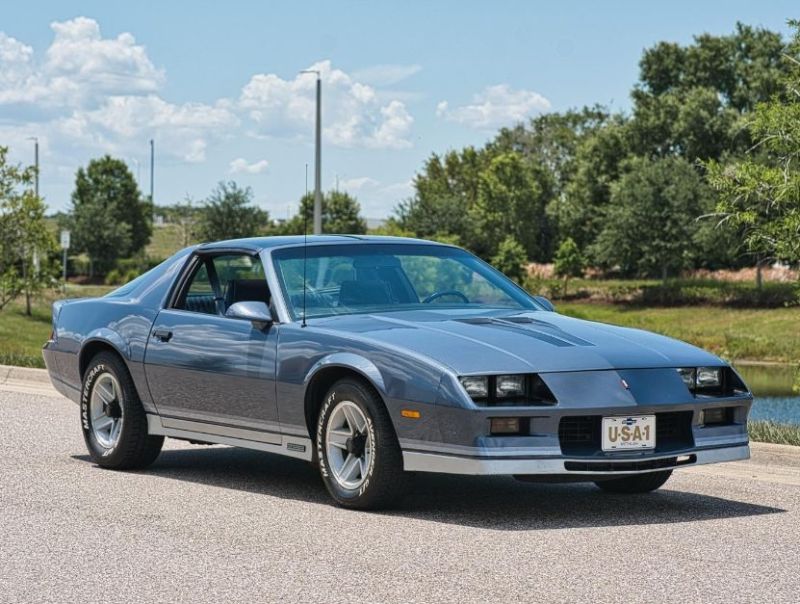
The Optispark first showed up on the 1992 Corvette LT1. The fourth-gen Camaro got it from 1993, and the big B-body cars got it for the 1994 model year. Every LT1 Camaro carried one: the Z28 from 1993 to 1997, the SS in 1996 and 1997, and the LT4-powered SS of 1997. That makes it standard equipment on the 275 hp Z28s of 1993 to 1995, the 285 hp cars of 1996 and 1997, the 305 hp SS and the rare 330 hp LT4 SS. If you want the background on those years, there is more on that here.
On paper it is clever. Instead of a magnetic pickup, it uses optical sensors, LEDs and phototransistors, reading a disc with two tracks. The outer track has 360 slots. The inner track has eight slots of different widths, one for each cylinder. Read both edges of every slot and the computer gets 720 signals per turn of the disc and one-degree crankshaft resolution. It is driven straight off the nose of the camshaft, and there is no mechanical timing adjustment. No turning the distributor with a timing light. The computer runs the show.
GM had numbers to back it up. In its own cold-start testing at minus 35 C, the old time-based ignition needed about four seconds of cranking. The LT1 system needed about 1.5. GM also claimed timing error of no more than one degree, against as much as 30 degrees for a conventional distributor while cranking. Those are factory claims, not mine, but nobody argues the thing was precise when it was new and dry.
The problem is where they put it
The Optispark is fine. Its neighborhood is not. It lives at the front of the engine, beneath the water pump and behind the harmonic balancer. Water pumps leak. That's what they do. And when an LT1's pump weeps, coolant goes downhill, straight onto the ignition. One reviewer called a pump leak on these engines potentially "terminally expensive." He was not wrong.
Heat doesn't help. The LT1 runs reverse-flow cooling, with the heads cooled first, and the oil runs hot. The Optispark spends its life in that heat at the front of the block, and it wears early. Add the LT1's other known leak, the rear intake manifold seal, and you have an engine that sheds fluids near its most sensitive part.
"GM built a precision optical sensor and then mounted it under the one part on the engine guaranteed to leak. It's like keeping your camera under the kitchen sink."
Mike Sullivan
How an Optispark fails, and how GM changed it
Moisture is the main killer. Water upsets the optical sensor, and the engine misfires or runs badly. Worse, high voltage tracks through that moisture and burns the rotor or the slotted disc. Coolant from a leaking pump, corrosion from ozone and nitric acid, and leaking oil seals are all on the list too. The car washing story at the top is not a joke. It's a symptom.
GM knew. The early units, used on 1992 to 1994 Corvettes and 1993 to 1994 Camaros, had no vent, a small drive hole and a short cam dowel. The 1994 B-body got a revised unit with a vent that used vacuum to draw air through it from the throttle body, plus a serviceable cap and rotor and a new drive. That design moved to the Camaro and Corvette for 1995. For 1996 the timing cover gained a crank sensor for OBD-II, but the Optispark itself stayed the same.
| Model year | Optispark on the LT1 Camaro | What to know |
|---|---|---|
| 1993 to 1994 | Early unit: no vent, small drive hole, short cam dowel | No ventilation inside the unit; the 1994 convertible uses it too |
| 1995 | Vented unit from the 1994 B-body, with serviceable cap and rotor | Better breathing, same location under the pump |
| 1996 to 1997 | Same unit; crank sensor added to the timing cover for OBD-II | Z28 rated 285 hp, SS 305 hp, 1997 LT4 SS 330 hp |
| 1998 | Dropped | LS1 replaces the LT1, and the Optispark goes with it |
The convertible is no exception. When the fourth-gen convertible arrived for 1994 with a Z28 version, it carried the same LT1 and the same early Optispark as the coupe. Top down or top up, the pump still sits on top of the ignition.
Fixing it without doing the job twice
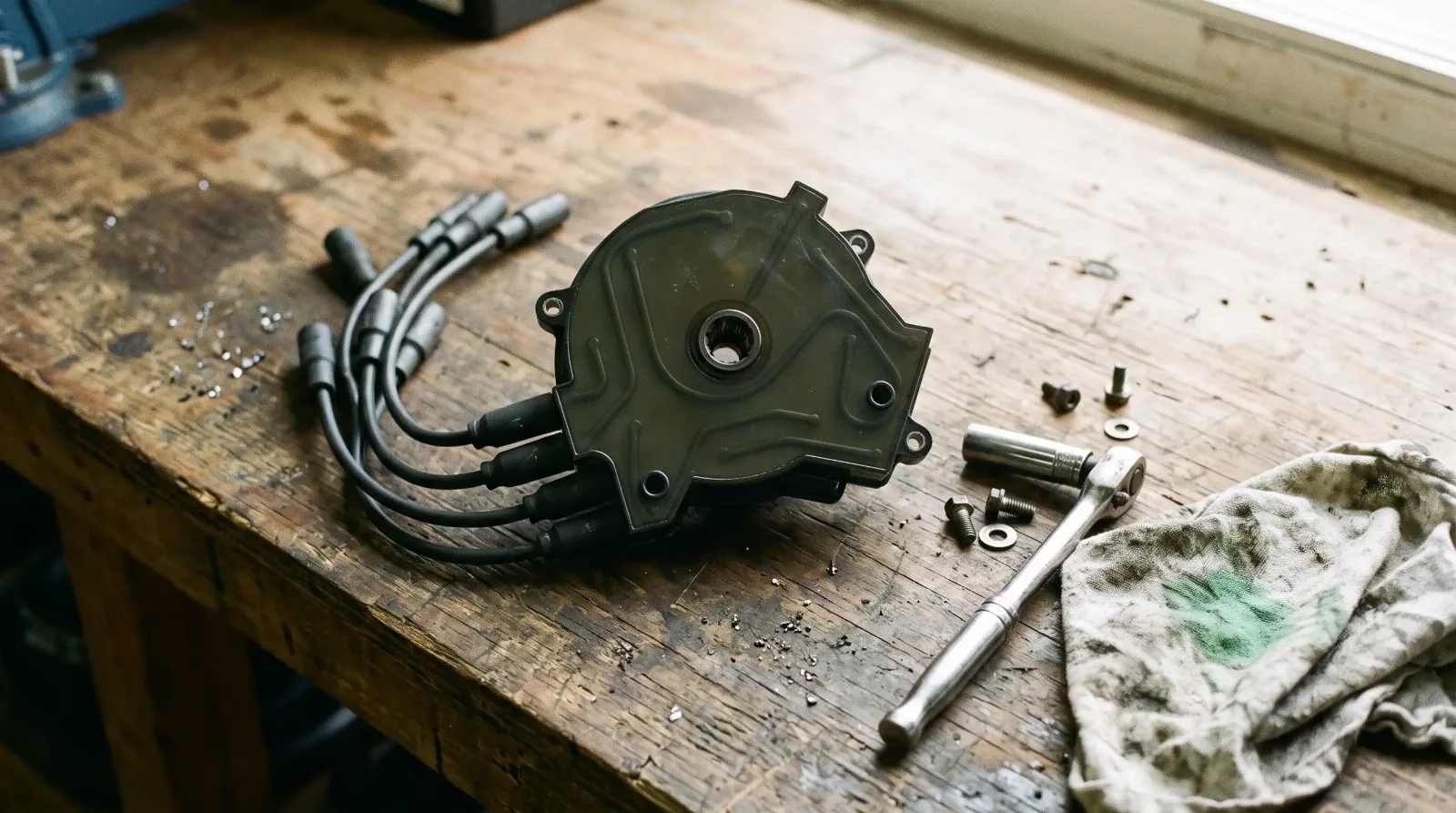
Here's the bad news. You can't just pop a cap off the side like a 1970s small-block. To reach the Optispark's cap, rotor or the unit itself, the water pump has to come off, and the crank pulley with it. That's a good part of the front of the engine on the floor before you even see the part you came for.
Which leads to the only advice that matters: if one is coming off, replace both. The standard recommendation is to do the water pump and the Optispark together. If you replace a burned Optispark and bolt the old pump back on, you have just set a timer. When that pump weeps, you'll be pulling it all apart again, and labor is the expensive part of this job.
What the Optispark means when you buy an LT1 Camaro
It shouldn't scare you off the car. It should change how you read the paperwork. A seller who can show a recent pump and Optispark replacement, done together, has handled the biggest known chore on the engine. A seller who says "it's never been touched" on a car pushing 30 years old is either lucky or about to make you unlucky. Price that in. If the receipts aren't there, budget for the job as soon as you get it home.
Originality matters for some LT1 cars, especially the special ones. The 1993 pace car replicas are covered in this piece, and for those a correct, period-type replacement is worth chasing. For a driver Z28, function wins. If you're putting a whole fourth-gen back together and want the bigger picture of what to keep stock, read more here.
The Optispark ended with the LT1. The 1998 LS1 Camaros don't have one, and Hagerty calls the later engine "far superior." But a well-maintained LT1 with a dry pump and a fresh Optispark runs fine. It just has to be kept dry, which on a car with a water pump parked on top of the distributor is easier said than done.
Sources and notes
- Getting to know the Opti-Spark: design, cold-start claims and failure modes (reproduces Ray T. Bohacz, GM High-Tech Performance)
- WS6.com F-body FAQ: Opti-Spark revisions by model year
- Corvette Magazine: replacing the Opti-Spark on an LT1
- Auto123: 1993 to 2002 Chevrolet Camaro pre-owned review
- Hagerty: fourth-gen F-body values and LT1 weak points
- Wikipedia: Chevrolet Camaro (fourth generation)
Related Reading


Have a
Chevrolet Camaro
for Sale?
Reach thousands of serious classic car collectors across the US.
Sell It Here →
Selling a classic? Here's how: sell my classic car
Are You a Classic Car Dealer?
List your full inventory and connect with targeted classic car buyers.
Join as a Dealer →

About the author
Mike Sullivan
Detroit-area muscle car enthusiast and restoration specialist with three decades of hands-on experience working on American iron.
Related Listings - Chevrolet Camaro




Comments
Be the first to comment on this article.