
The Funny Car did not come from a rulebook. It came from money, specifically the appearance money a track promoter would pay to put two famous cars in front of a paying crowd. That is match racing, and it is the reason one of the wildest classes in the sport exists. Nobody sat down and designed the Funny Car. Builders chased the payday, bent the rules until they broke, and what fell out the other side was a fiberglass body flopped over a tube frame burning nitro. I love it precisely because it wasn't planned.
Car Features
6 min read
Match Racing and the Roots of the Funny Car
How match racing appearance money and 1965 altered-wheelbase cars gave birth to the flip-top Funny Car. The real Funny Car history.
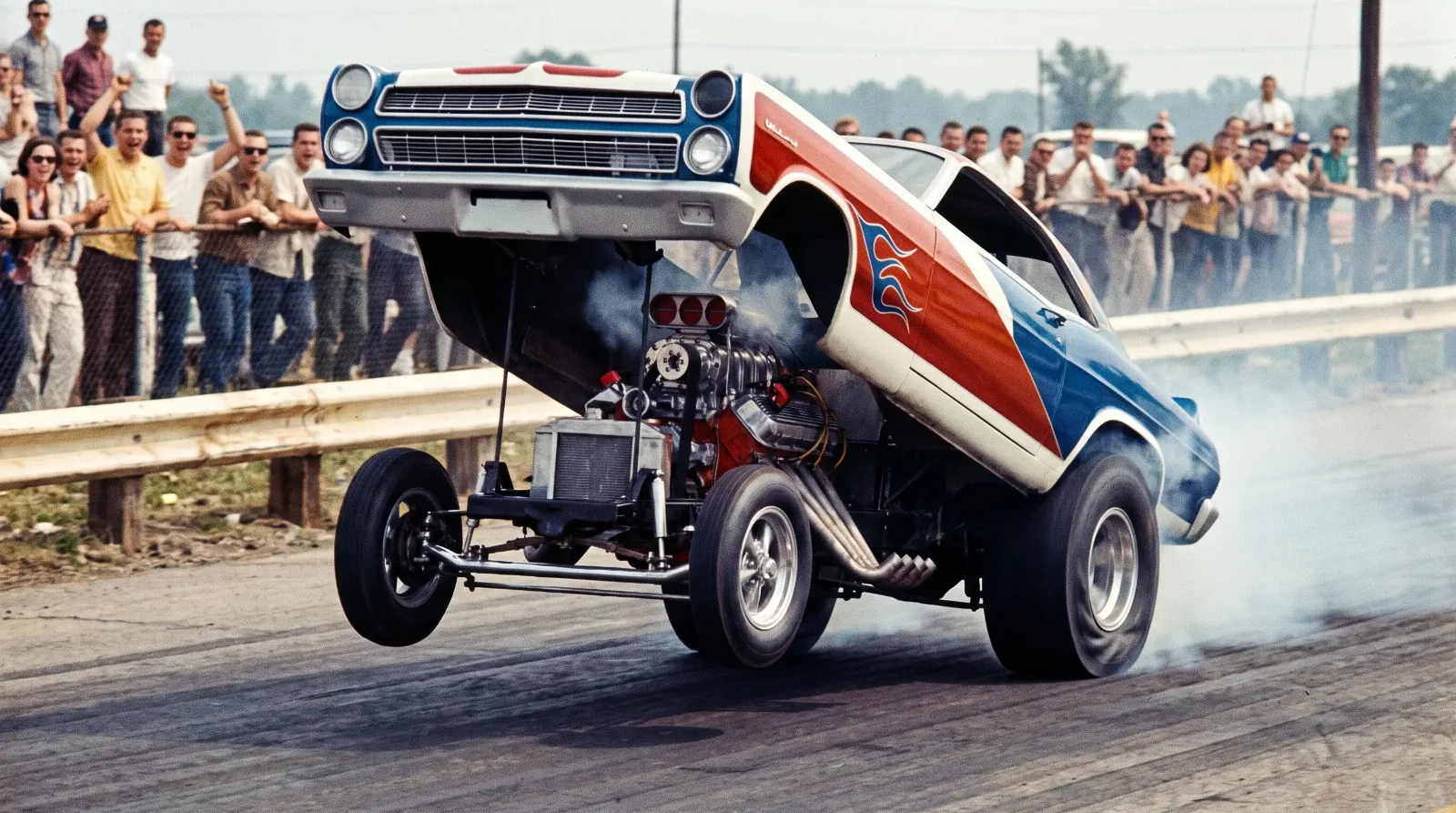
If you came up thinking Funny Cars were always the flip-top nitro machines you see at nostalgia events, you're missing the good part. The roots are stranger than that, and they run straight through the factory experiments of the mid-1960s. The wider Drag Racing History gives you the strips. This is how the show cars got weird.
What match racing actually was
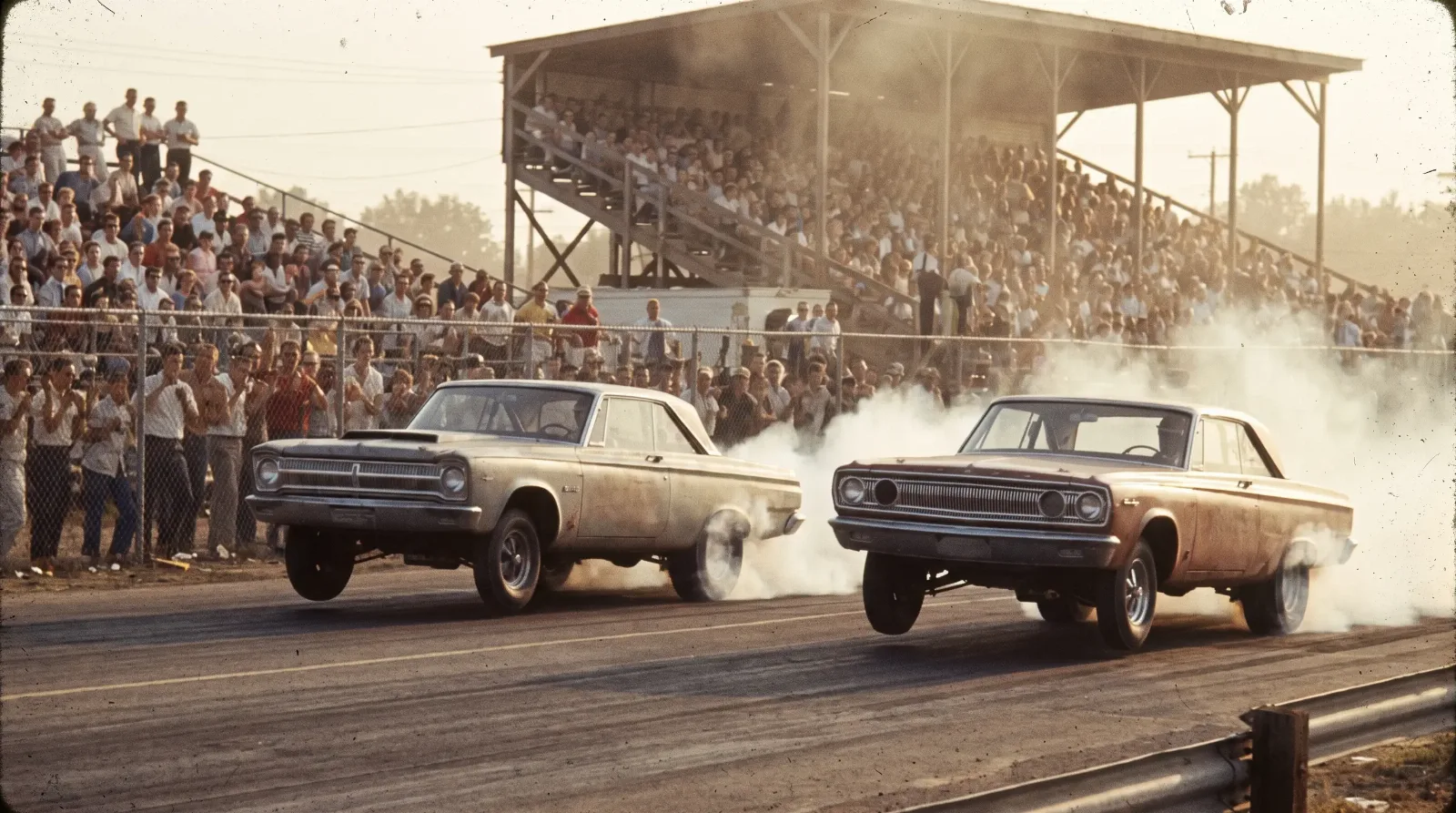
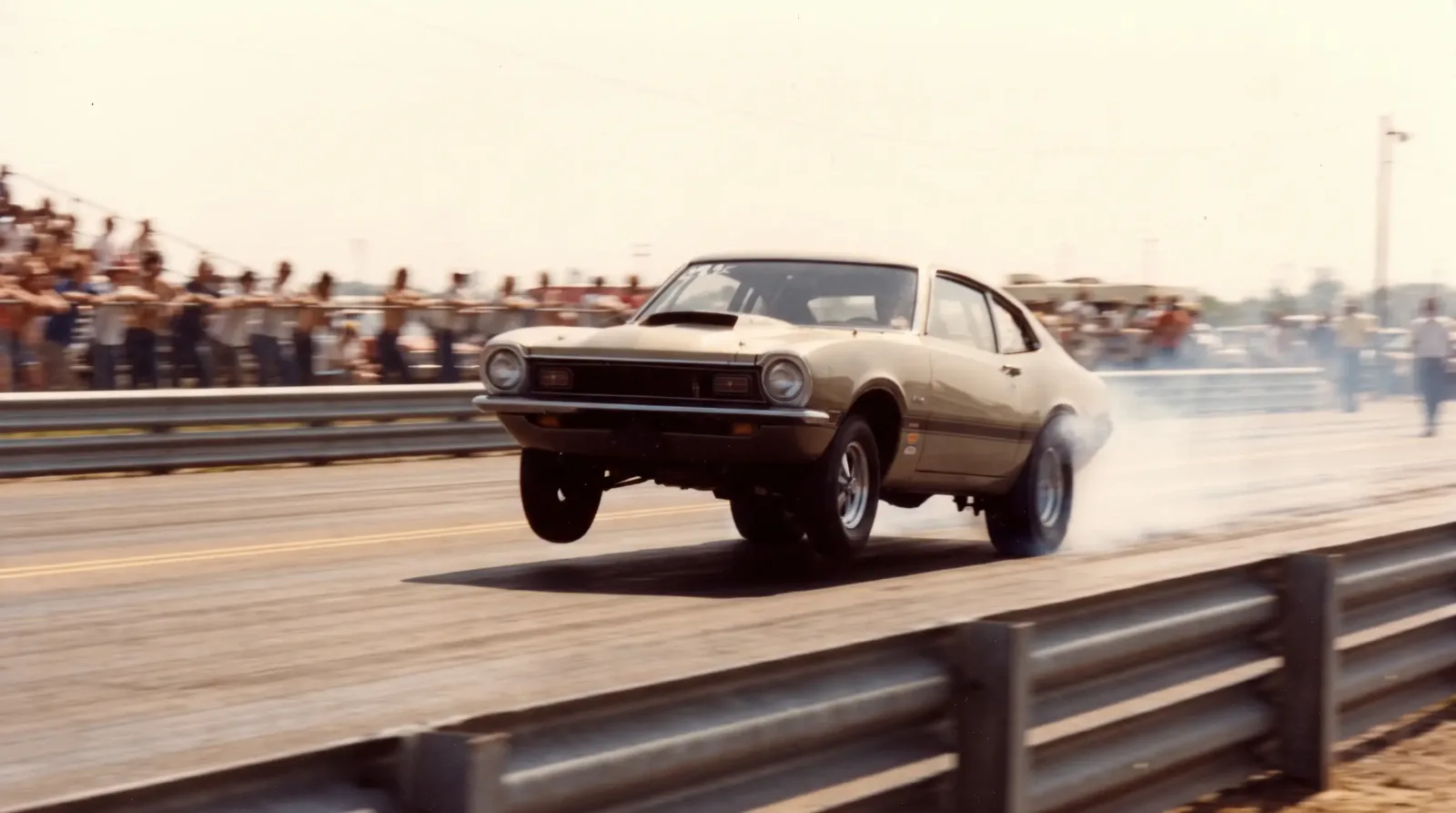
Match racing is simple to explain and was brutal to survive. A promoter booked two known cars to run each other, head to head, for a guaranteed appearance fee. No points, no season, no class trophy. You showed up, you put on a show, you collected, and you drove to the next town to do it again the following night. The crowd came to see a name they knew, so the game was to have the loudest, fastest, most crowd-pleasing car on the circuit.
That economic setup did something no sanctioning body could. It rewarded spectacle over legality. A match racer didn't need to fit a class. He needed to win, or at least run hard and put on a show, in front of people who paid at the gate. So builders stopped asking what was legal and started asking what was fast, and the cars ran away from the rulebook in a hurry.
The schedule was punishing and that shaped the cars too. A booked-in racer might run three or four tracks in a week, hundreds of miles apart, which meant the car had to be fast and it had to survive the tow. Parts got beefed up not for the rulebook but for the road between shows. The famous names on the circuit, the guys whose cars filled grandstands, learned to be mechanics and showmen and truck drivers all at once. That grind is why match racing produced some of the toughest, most developed hardware in the sport. You couldn't fake it over a full season of bookings.
The altered-wheelbase cars
The first real step toward the Funny Car came in 1965, when Chrysler's factory drag people started moving the wheels. The idea was weight transfer. Shift the axles forward, get more bite on the rear tires, and the car launches harder. The Dodge and Plymouth altered-wheelbase cars of 1965 looked wrong, and that was the whole point everyone noticed. The wheels sat in the wrong spots and the proportions were off.
People started calling them "funny" looking, and the name stuck to the whole breed. These were factory experimental cars, running injected and then nitro-fed engines, and they were barely street cars at all anymore. They were the bridge. Still recognizably a Dodge or a Plymouth, but engineered like a match racer, built to win bookings rather than championships.
The flip-top revolution
The altered-wheelbase cars were a dead end mechanically, because you can only relocate a stock chassis so far before it stops being a stock chassis. The answer was to quit pretending. Builders started dropping a lightweight one-piece fiberglass body over a purpose-built tube frame, and the modern Funny Car was born.
Don Nicholson's 1966 Mercury Comet is one of the cars usually credited as an early flip-top, and chassis builders like the Logghe brothers were doing the frame work that made it possible. Once the body was just a fiberglass shell you tilted up to get at the engine, the "car" underneath could be anything the builder wanted. Blown nitro engines, wheelbase where the fabricator put it, a driver sitting behind the motor. From there the class became its own thing, and match racing kept feeding it because the crowds loved the spectacle.
| Stage | Roughly when | What it was |
|---|---|---|
| Match racing circuit | Early to mid 1960s | Booked head-to-head runs for appearance money |
| Altered-wheelbase cars | 1965 | Factory cars with relocated axles, the first "funny" cars |
| Flip-top Funny Cars | From ~1966 | Fiberglass body over a tube frame, blown nitro |
Why it mattered to the muscle car
You could argue the Funny Car left the muscle car behind, and in a literal sense it did. But the match racing circuit kept the factory names in front of huge crowds, and that visibility sold street cars. A Dodge or a Mercury or a Ford burning nitro under the lights on a Friday night was an advertisement with wheels. The connection between the wild strip cars and the showroom stayed alive because match racing put it in front of paying fans week after week.
It also created a whole class of driver-showmen who became stars in their own right. These were not corporate test pilots. They were owner-operators with a personality and a paint scheme, and the fans came as much for them as for the machinery. That star system is a direct inheritance from match racing, where the name on the door was the draw that filled the seats. The class kept that flavor long after the cars stopped resembling anything from a dealer lot.
"Nobody drew up the Funny Car. Guys chasing appearance money kept cutting and moving parts until the thing didn't look like a car anymore, and that's exactly why it's beautiful."
Jim Vasquez
The lesson of match racing is that the best builds often come from the least official corner of the sport. While the sanctioning bodies wrote careful class rules, the match racers were out on the circuit inventing the future one booking at a time. If you'd rather see where the sanctioned heads-up classes went instead, read the full story of Pro Stock. And if all this has you wanting one of the street machines these cars advertised, you can explore muscle cars up for grabs and find one with the right kind of history under the hood.
Related Reading
Have a
Classic Car
for Sale?
Reach thousands of serious classic car collectors across the US.
Sell It Here →
Are You a Classic Car Dealer?
List your full inventory and connect with targeted classic car buyers.
Join as a Dealer →

About the author
Jim Vasquez
Southern California hot rod and custom car builder with roots in the traditional kustom kulture scene.




Comments
Be the first to comment on this article.