
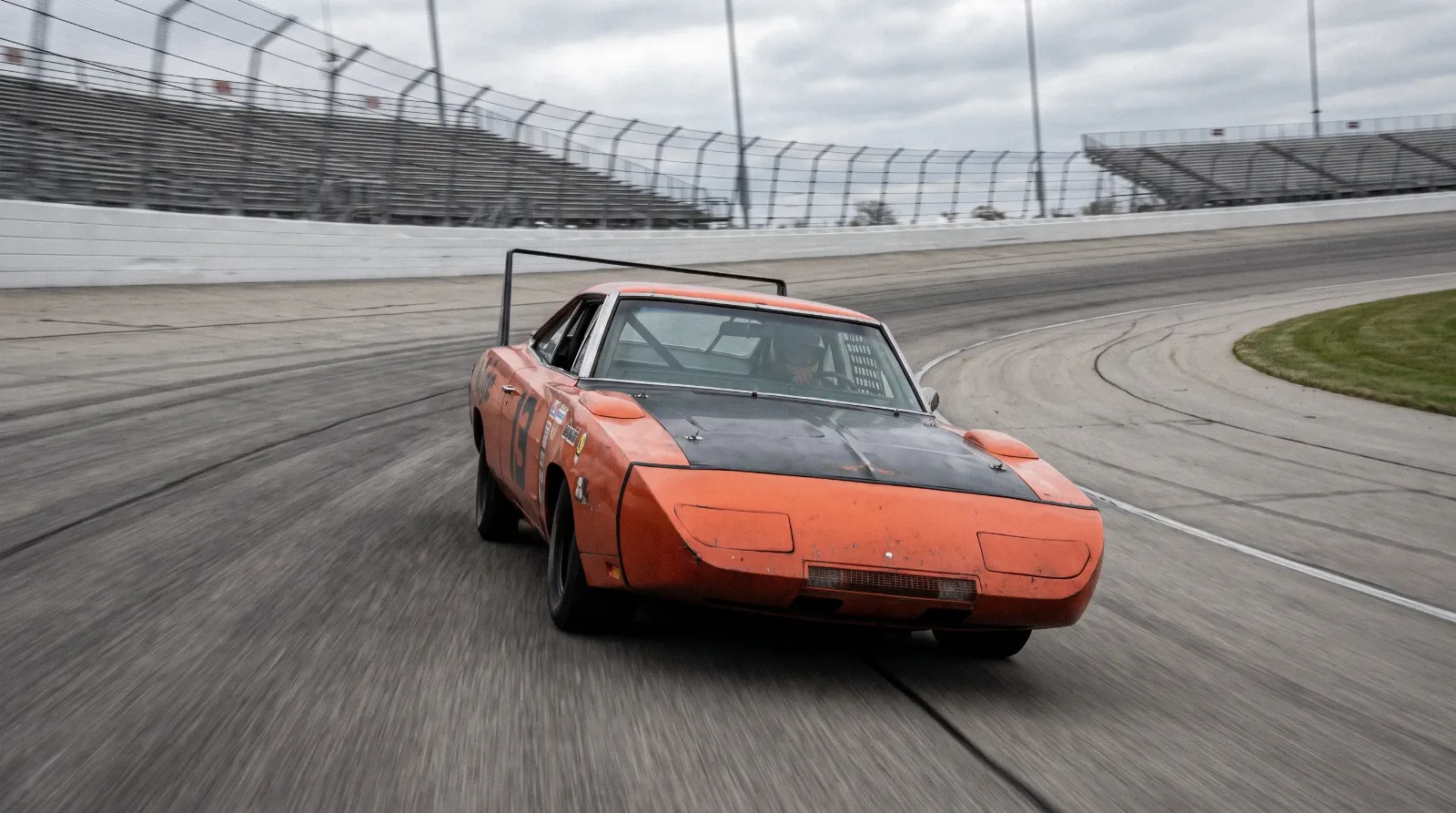
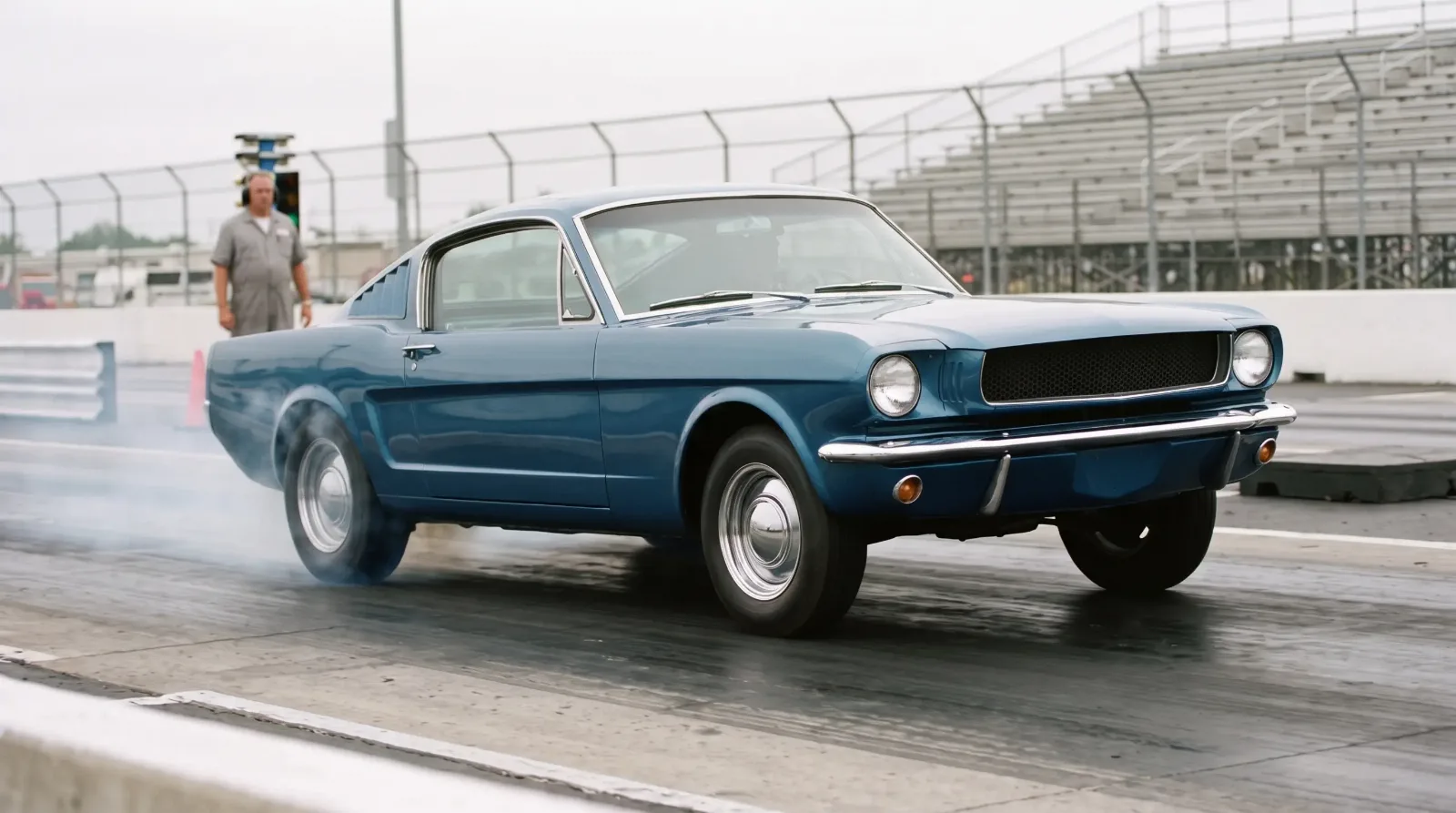
Pro Stock is the class that took the showroom muscle car and made it a professional. No handicap, no dial-in, no games. Two cars stage, the tree drops, and the first one to the stripe wins. That is heads-up racing, and when the NHRA made it a professional category in 1970 it gave the factory hot rods a stage of their own. I respect Pro Stock because it never stopped looking like a real car even while the guts underneath got more serious every season.
Car Features
6 min read
Pro Stock and the Rise of Heads-Up Racing
Pro Stock racing history: how NHRA's 1970 class, Grumpy Jenkins, Sox and Martin, and the weight break wars defined heads-up drag racing.
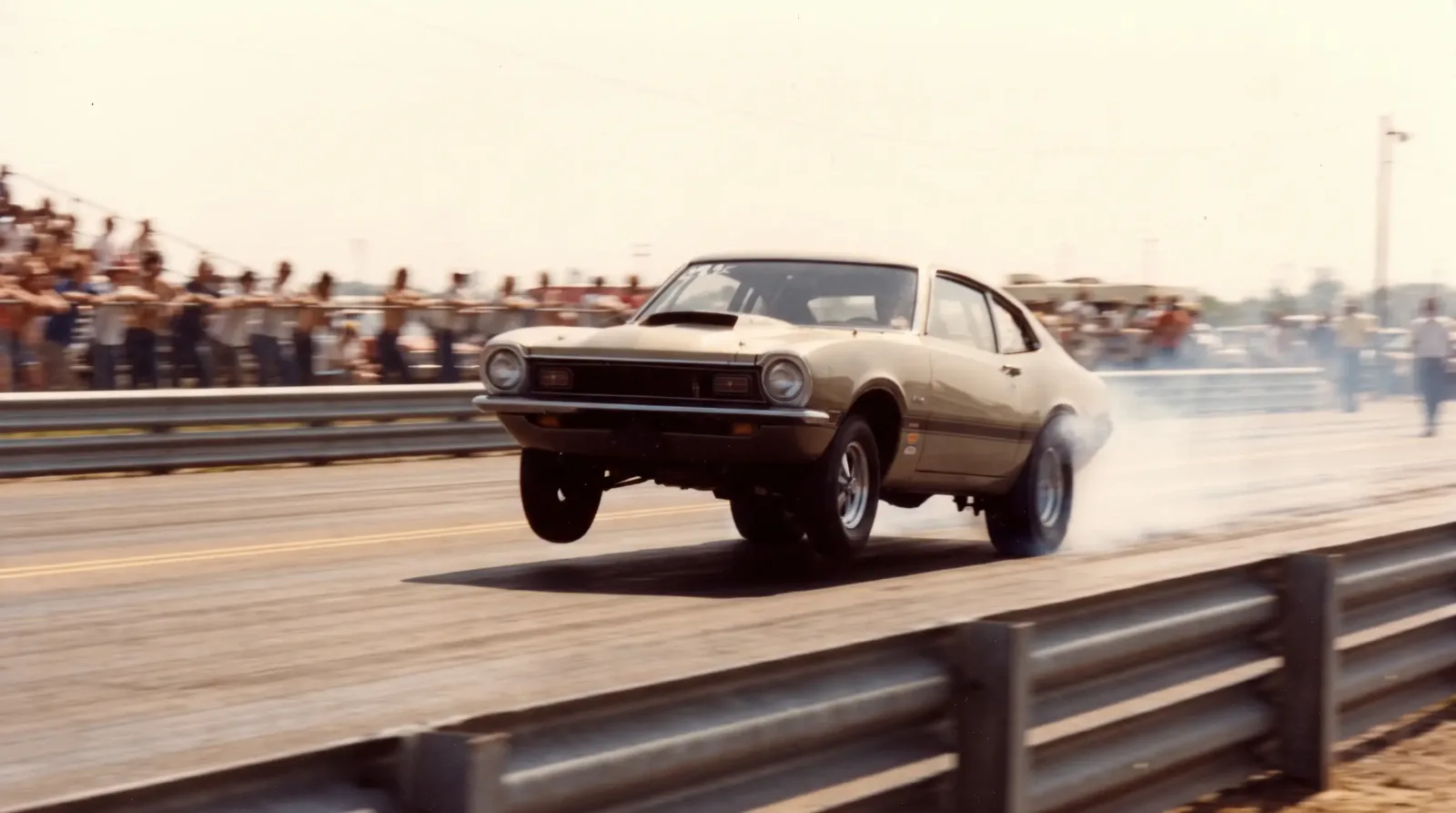
This is the class where the Camaros and the 'Cudas and the Mavericks fought it out with the same badges you could buy at a dealer, at least at first. If you want the full context, here's the full breakdown of the racing world these cars lived in. Pro Stock is the part of it that stayed closest to the street.
Where Pro Stock came from
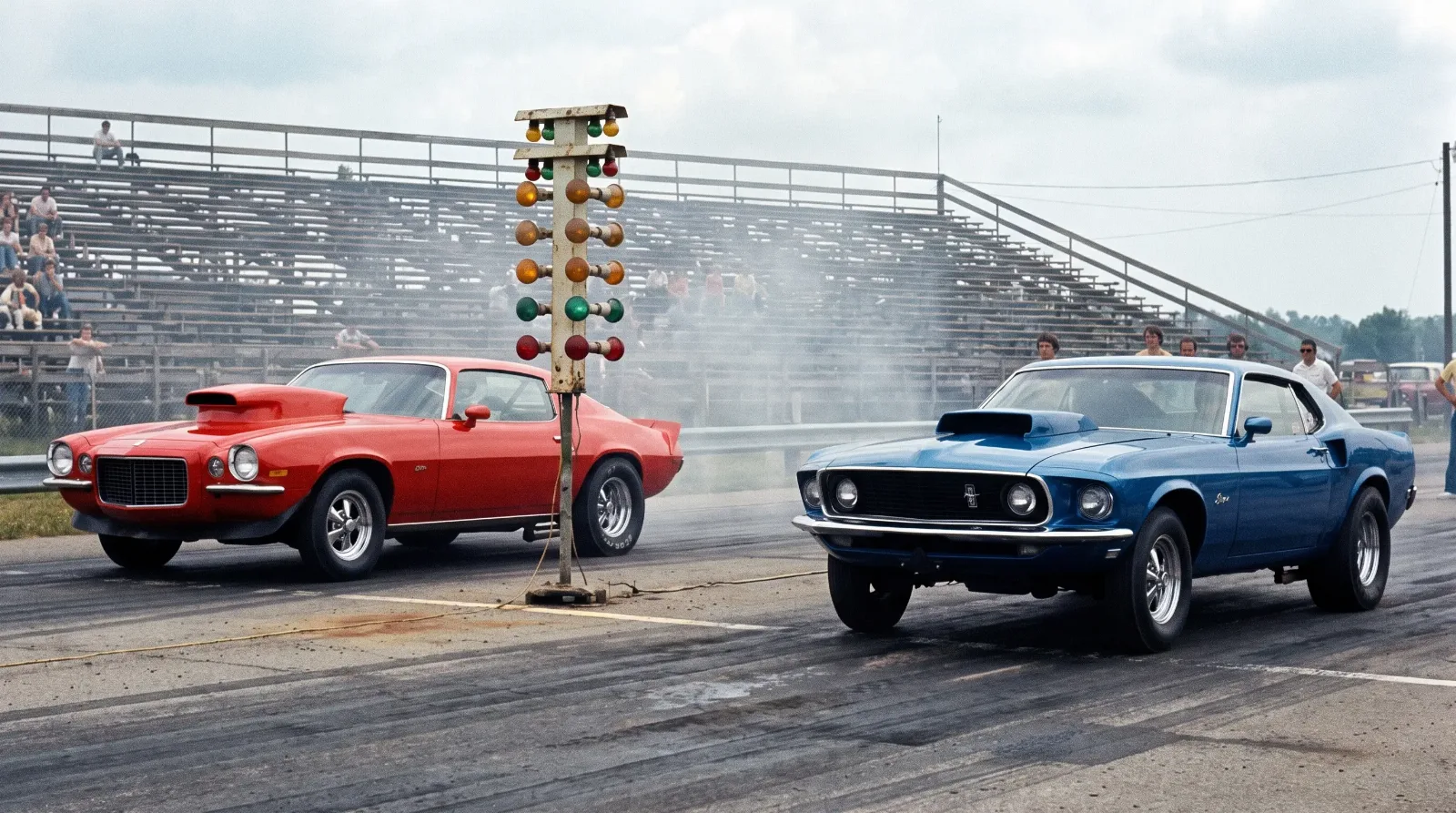
By the late 1960s the factory Super Stock cars had gotten so specialized that the line between a stocker and an out-and-out race car was disappearing. The sport needed a professional heads-up class for door cars, something between the wild fuel machines and the bracket stockers. The NHRA answered in 1970 by making Pro Stock an official professional category.
The idea was clean. Take recognizable production body styles, hang big American engines in them, write rules around weight and cubic inches to keep it competitive, and then let them run heads-up for real money. It plugged straight into the muscle car boom. This was the racing version of the same argument being had in showrooms, Chevy against Ford against Chrysler, and you can read the muscle car feature for how that showroom war set the stage.
Grumpy, Sox, and the early stars
The first NHRA Pro Stock national event ran at the 1970 Winternationals, and Bill "Grumpy" Jenkins won it in a Chevrolet Camaro. That mattered, because Jenkins was a small-block Chevy guy going up against the big Chrysler Hemis, and he was as much engine builder as driver. The Grumpy nickname fit and the reputation was earned in the shop, not just the seat.
Then Sox and Martin showed up with Hemi 'Cudas and went on a tear. Ronnie Sox was famous for rowing a four-speed faster than anybody thought possible, and the Sox and Martin cars dominated the 1970 and 1971 seasons. Dick Landy ran Dodges, "Dyno Don" Nicholson brought Fords into the fight, and for a few years Pro Stock was the best factory-versus-factory show in drag racing. These were builders and shifters, guys whose skill with a wrench and a clutch decided races by inches.
The weight break wars
Here is where it got political, and where I have opinions. Pro Stock was governed by weight-per-cubic-inch rules, which meant the NHRA was constantly adjusting how much a car had to weigh based on how big its engine was. The Chrysler Hemi cars carried one weight, the smaller engines carried another, and every adjustment shifted the balance of power between the brands.
Racers screamed about it every season, because a rule change could hand the advantage to a rival overnight. That is the nature of a factory class. The sanctioning body is trying to keep the racing close, and the racers are trying to find the one combination the rules accidentally favor. The weight break fights are a big part of why Pro Stock stayed interesting, and also why it slowly drifted away from anything you could actually buy.
There was a brand loyalty to it that the fans felt in their gut. A Chevy guy wanted Jenkins to beat the Hemis, a Mopar guy lived and died with Sox, and a Ford guy pulled for Nicholson. The weight rules turned that into a running argument that never really ended. Every time the numbers moved, one camp claimed the sanctioning body was playing favorites and the other camp said it was about time. It was the showroom rivalry acted out with timing slips, and it kept people coming back to see whether their brand could get the last word this weekend.
| Element | Pro Stock in the early 1970s |
|---|---|
| Format | Heads-up, first to the finish wins |
| Became NHRA pro class | 1970 |
| First event winner | Bill "Grumpy" Jenkins, Camaro |
| Balancing rule | Weight per cubic inch |
| Dominant early team | Sox and Martin, Hemi 'Cuda |
From factory hot rod to purpose-built racer
Pro Stock started as a factory hot rod class and it did not stay one. As the years went on the rules tightened around a few approved combinations, the bodies became fiberglass and the chassis became tube frames, and the "stock" in Pro Stock turned into a shape rather than a real car. That is the same drift you see in every class that gets serious. The rulebook chases the racers, the racers chase the rulebook, and the production car gets left behind.
The homologation angle is part of this. To be legal, a car and an engine combination usually had to exist in enough real examples to count as production, which is a rule that shaped a lot of the era's specials. For that side of it, read the full story of the homologation specials and why the magic number kept coming up.
"Pro Stock is heads-up honest. No handicap to hide behind. You either built the better car and drove it better, or you loaded up and went home. I've always respected a class that simple."
Jim Vasquez
The early Pro Stock cars are some of the most collectible muscle machines out there now, precisely because they looked like the street cars while being anything but. If you want one of the road-going relatives that shared their badges, you can find classic muscle cars for sale and get close to the era that Pro Stock made famous.
Related Reading
Have a
Classic Car
for Sale?
Reach thousands of serious classic car collectors across the US.
Sell It Here →
Are You a Classic Car Dealer?
List your full inventory and connect with targeted classic car buyers.
Join as a Dealer →
About the author
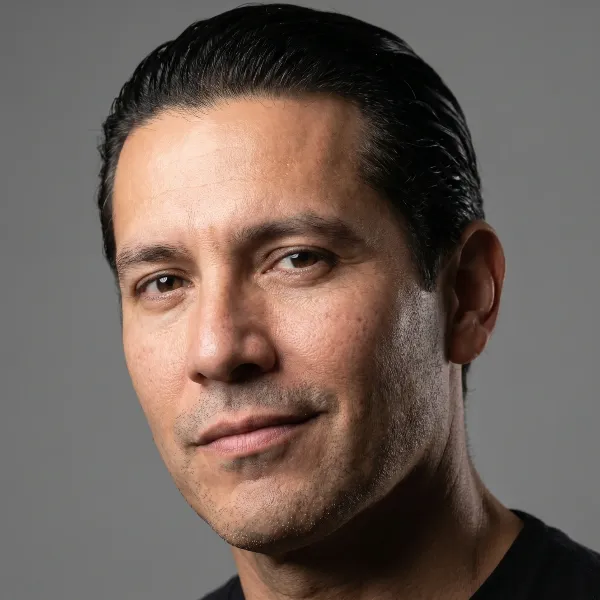
Jim Vasquez
Southern California hot rod and custom car builder with roots in the traditional kustom kulture scene.
Comments (1)
L
Lisa Nguyen
4 days ago
Funny how the stock became just a shape. The proportions outlived every real part (didn't they?).
C
Cheryl Dombrowski
3 days ago
Not even the proportions, honestly. Later bodies got stretched and narrowed to cheat the wind. I did my own Chevelle fenders. I know the real shape. Seriously.