
When Ford listed what was new on the Model A in 1928, one line was easy to miss next to the 40 hp engine and the four-wheel brakes: a shatterproof windshield. Model A safety glass was laminated glass, two layers of plate with a plastic sheet between them, and Ford fitted it to the windshield as standard. That made the Model A the car that brought laminated safety glass to the low-price market as standard equipment. It did not make the Model A the first car with safety glass, and it did not put safety glass in every window. Those two distinctions are where most retellings go wrong, so this article sticks to what the records support.
Car Features
6 min read
Safety Glass on the Model A
The 1928 Model A put a laminated safety windshield on a low-price car as standard. What the glass was, why Edsel pushed for it, and two myths to drop.

What Model A safety glass actually was
Ordinary plate glass breaks into long, sharp shards. In a collision, a windshield made of it could do as much harm as the impact itself. Laminated glass solves that by bonding two sheets of glass to a clear interlayer. When it cracks, the pieces stay stuck to the interlayer instead of flying into the car. Ford's own history of the 1928 car calls it a "Triplex shatterproof safety windshield" and pairs it with hydraulic shock absorbers: both a first for Ford, and both, in Ford's words, "unheard of in the low-priced field."
For the side and rear windows, the picture is mixed. Both plate glass and laminated glass were used in Model A (and later Model B) side and rear windows. Laminated panes of that era are specified at 0.200 to 0.268 in thick, with two glass plates around a celluloid interlayer. Celluloid was the plastic of the day, and it is the reason old laminated glass often shows a yellow or milky edge now: the interlayer ages even when the glass does not.
| Window | What the records support |
|---|---|
| Windshield, 1928 to 1931 | Laminated safety glass, standard |
| Side and rear windows | Both plate and laminated glass used |
| Laminated pane thickness | 0.200 to 0.268 in, two plates around celluloid |
| 1931 change | Laminated safety glass optional from mid-year |
Edsel Ford and the 1926 accident
The push for safety glass came from Edsel Ford, not from Henry. Ford's heritage account says Edsel pressed for it after a friend was badly cut in a 1926 accident. That timing matters. In 1926 the Model T was still in production and the replacement was being planned, so the idea arrived at the one moment when Ford was redesigning almost everything at once. As covered in the 1927 changeover, the Model A carried over no parts from the Model T, which left room for a change like this one.
Edsel's role in the Model A is usually told through its styling, its colors and its lower body. The windshield belongs on the same list. It was an engineering decision with a personal reason behind it, and the record attributes it to him clearly.
"The claim people want to make is 'first.' The claim the records support is 'standard, at that price.' The second one is the more impressive fact, because it put the glass in front of a few million ordinary drivers."
Tom Ramirez
Correcting the two common myths
The first myth is that the Model A was the first car with safety glass. Laminated glass existed long before the Model A: the French chemist Édouard Bénédictus patented it in 1909, and Triplex glass was reportedly being fitted to cars during World War I. What Ford did was make it standard on a car priced from $385 for the 1928 Roadster to $570 for the Fordor, f.o.b. Detroit. On a car at that price, a safety windshield was no longer an extra for the well-off. Ford's own wording, "a first for Ford" and "unheard of in the low-priced field," is careful, and it is the version to repeat.
The second myth is that every window on every Model A was safety glass. The windshield was. The side and rear glass was a mix of plate and laminated, and The Henry Ford's record of the 1931 car notes optional laminated safety glass from the middle of that model year. Exactly when laminated side and rear glass became available, and which supplier made it, is not settled in the sources reviewed for this article. One claim, that laminated side glass came as a special order from 1932, traces only to forum posts and should not be repeated as fact.
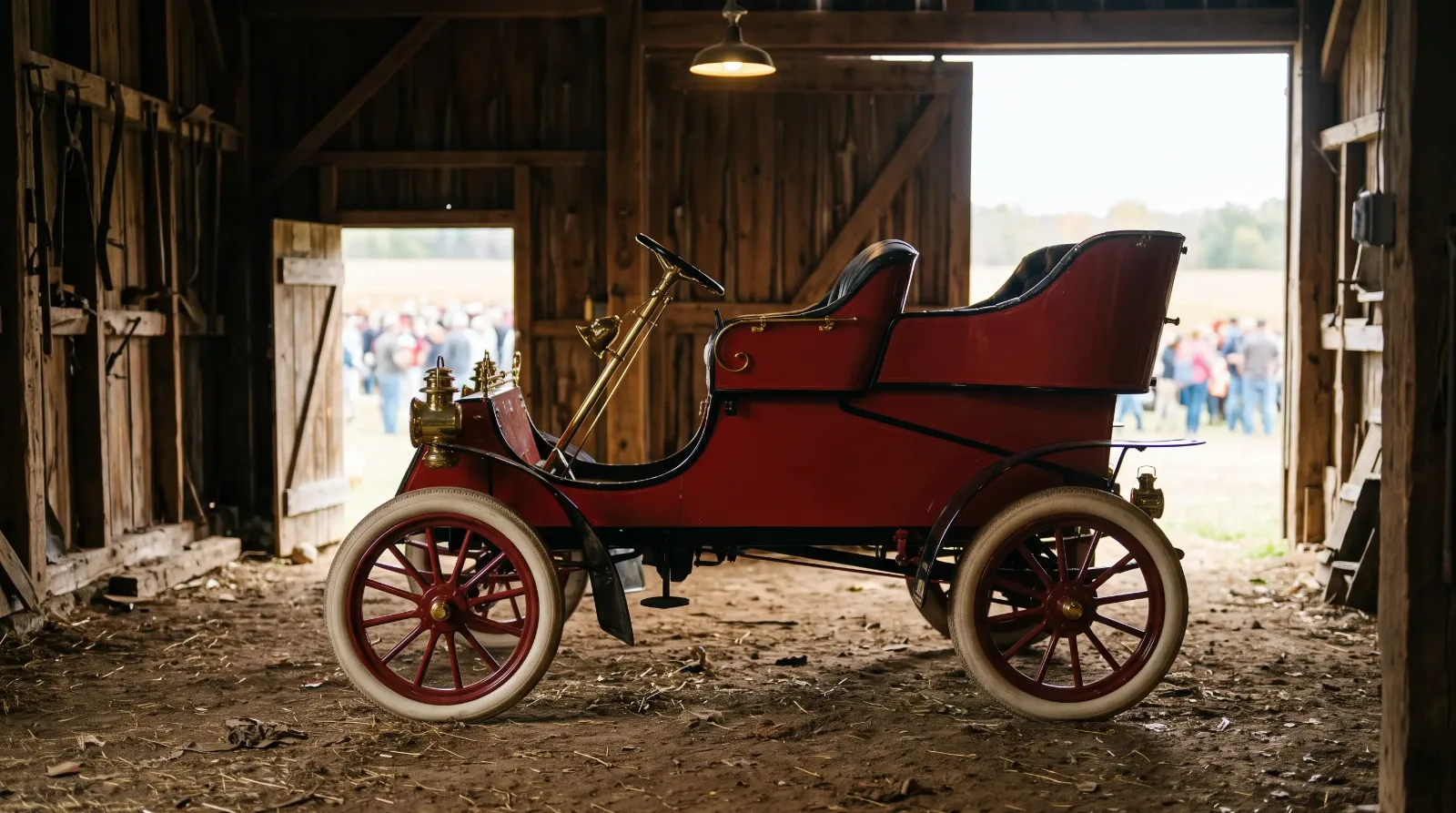
Readers sometimes ask whether the name "Model A" means this glass goes back to the 1903 Model A. It does not. That was a different car, and it has nothing to do with the 1928 windshield.
Did a safety windshield help Ford against Chevrolet? Ford's material presented it as a feature, but no sales record isolates its effect. The broader four-cylinder against six-cylinder contest is covered here.
Checking the glass on a surviving car
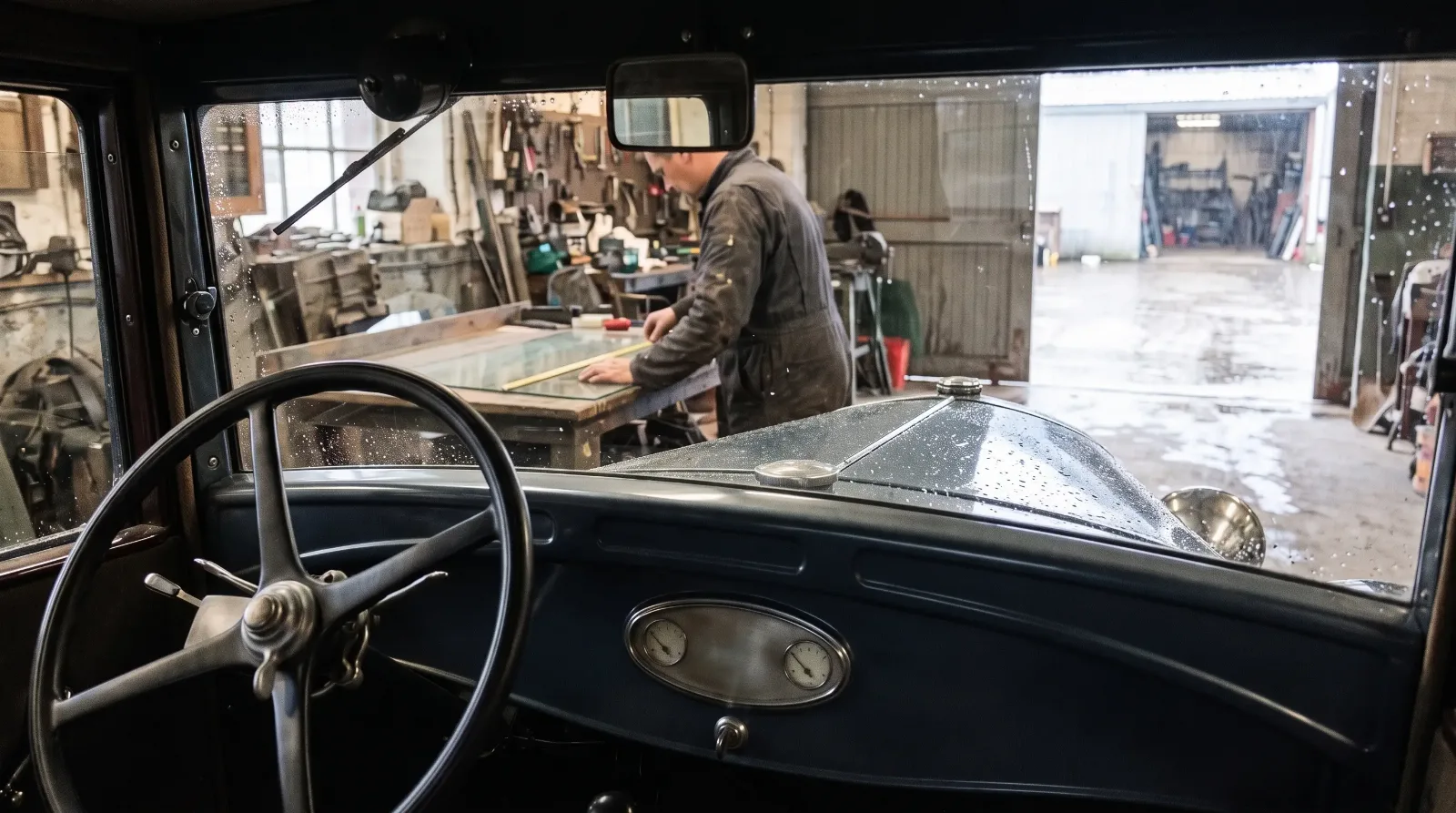
For a restorer or a judge, the windshield is one of the simpler originality checks on a Model A. A plain plate or modern tempered windshield in place of laminated glass is a fault, though an easy one to correct. Side and rear glass is harder to judge, because the factory itself used both types.
Safety glass is not the most visible change between the Model T and the Model A. It does not show up in photographs the way the new radiator shell or the colors do. But it is one of the most clearly documented, it had a clear reason behind it, and it reached millions of buyers who had never been offered it before. Stated accurately, as standard in the windshield and new to the low-price field, it needs no exaggeration.
Sources and notes
- Ford Motor Company: The 1928 Ford Model A
- The Henry Ford: laminated safety glass on the 1928 to 1931 Model A
- The Henry Ford: 1931 Ford Model A, optional laminated safety glass from mid-year
- Ford Garage: Model A and Model B side and rear glass details
- Ford heritage (archived): Edsel Ford and safety glass
- Wikipedia: Triplex Safety Glass
Related Reading

Have a
Ford Model A
for Sale?
Reach thousands of serious classic car collectors across the US.
Sell It Here →
Selling a classic? Here's how: sell my classic car
Are You a Classic Car Dealer?
List your full inventory and connect with targeted classic car buyers.
Join as a Dealer →

About the author
Tom Ramirez
Corvette researcher and historian based in Bowling Green, Kentucky. Two decades documenting Corvette production history from original factory records.
Related Listings - Ford Model A
More in Car Features
Comments
Be the first to comment on this article.