
Before the Model T, a small town that wanted motorized fire protection had a problem. A purpose-built fire engine cost serious money, and a town of a few thousand people did not have it. Horses and hand-drawn carts were what most of them had. The Model T fire truck changed that arithmetic. Take a cheap, common Ford chassis, add chemical tanks, hose, ladders and a bell, and a village could put a motor rig in the firehouse for a fraction of the price of a big-city engine.
Car Features
8 min read
Model T Fire Trucks
How small towns turned the Model T into a fire truck, what American LaFrance built, what the rigs carried and what to check before buying one.
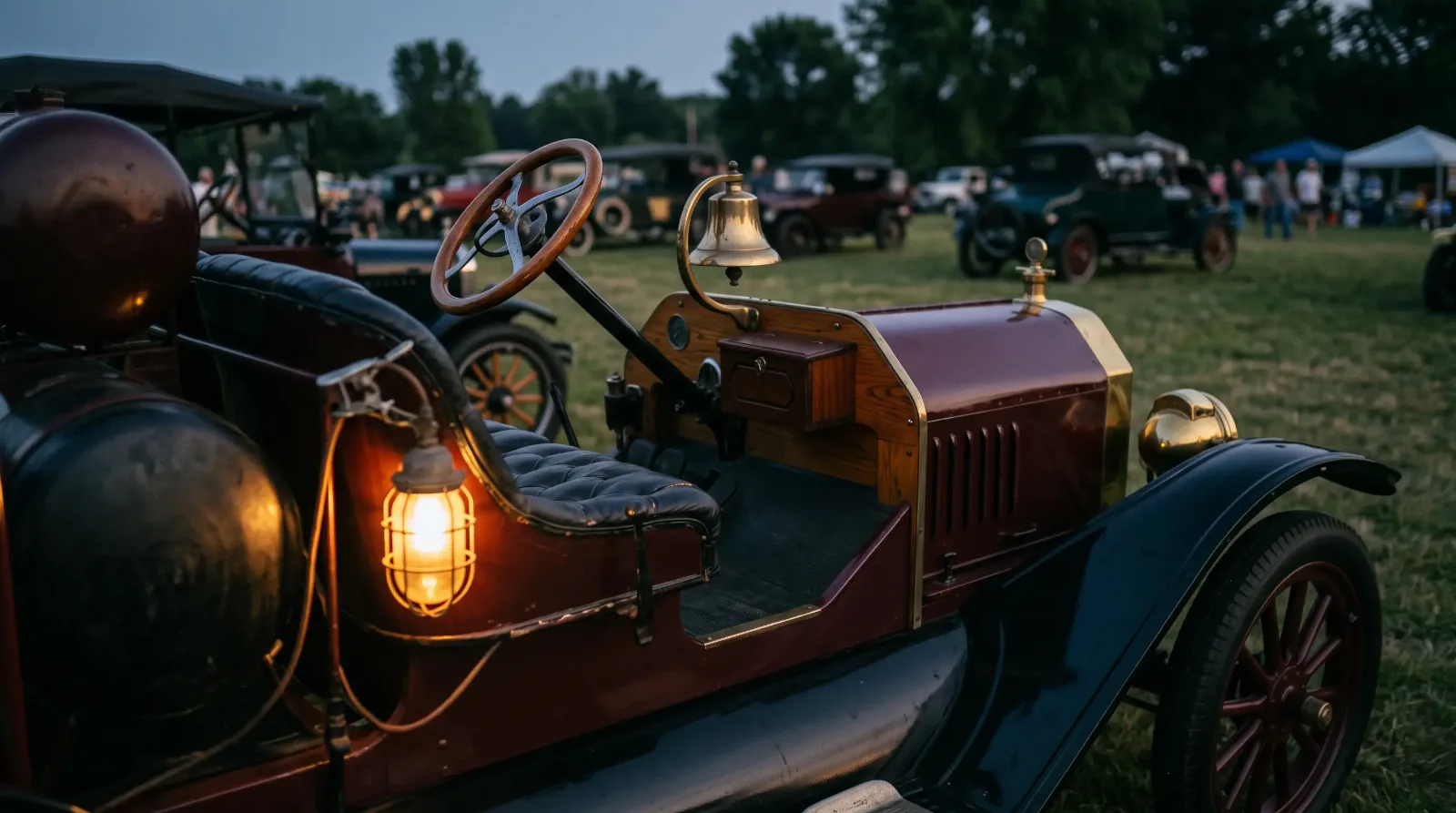
Hundreds of towns did exactly that. Some bought their rigs from the established fire apparatus builders. Some had a local shop do the work. A good many of those trucks are still around, in museums, firehouse lobbies and parade lines, and they are among the more practical old Fords you can own. This is a side road off the main Model T truck story, but it is a busy one.
Why towns turned the Model T into a fire truck
The reasons were the same ones that sold Model Ts to farmers. The car was cheap. It was everywhere, so parts and people who could fix it were close at hand. It was light enough to get through mud and snow that would stop a heavier machine. And it started, more or less, on a cold night when the bell rang.
Firefighters were already among the working people who used Ford chassis for their jobs, along with mail carriers, doctors and undertakers. A fire department needed what those trades needed: something dependable that could be bodied for the work and kept running by a local mechanic. The Model T fit that bill better than anything else at the price.
The other draw was that a Model T rig did not have to do everything. A small town did not need a big pumper. It needed to get a few men, some water or chemical and some hose to a barn fire or a house fire fast, before it got away. A light Ford truck could do that.
American LaFrance and the local builders
The biggest name in this business was American LaFrance. When RM Sotheby's sold a 1919 American LaFrance-Ford chemical car in 2026, its catalogue said that over 900 Model Ts were reportedly rebuilt for firefighting by the American LaFrance factory and its offices around the country. That figure is the best one available and it should be treated as approximate, but it gives you the scale. This was not a handful of curiosities. It was a product line.
The truck Henry Ford got from Milan is the best documented example. It was a 1926 Model T, converted by American LaFrance, and it worked for the town for 12 years. The Henry Ford's own record says Ford saw it in Milan and wanted it for his museum, and Milan tradition holds that he gave the town a new 1938 fire truck in exchange. That tells you something about how long these rigs stayed in service. A small department did not replace a working truck just because a newer one existed. The Milan truck is now on loan to the Savoy Automobile Museum in Cartersville, Georgia.
Plenty of other rigs were built by local body shops, blacksmiths and the firemen themselves. Those are harder to document and they vary a lot. One town's truck might be a factory-style conversion with brass fittings. The next town's might be a homemade bed with a couple of tanks strapped on. If you are looking at one to buy, that variation matters, and we will get to it.
Builders started with whatever chassis made sense. The passenger car chassis worked for lighter rigs. When Ford launched the Model TT one-ton truck in 1917, sold first as a $600 bare chassis with the buyer supplying the body, a heavier base became available. The TT had a worm-drive rear axle and a longer wheelbase, 124 to 125 inches against the car's 100, which made room for tanks and hose. It was also slow. Ford recommended a top speed of 15 mph on standard gearing.
What a Model T fire truck carried
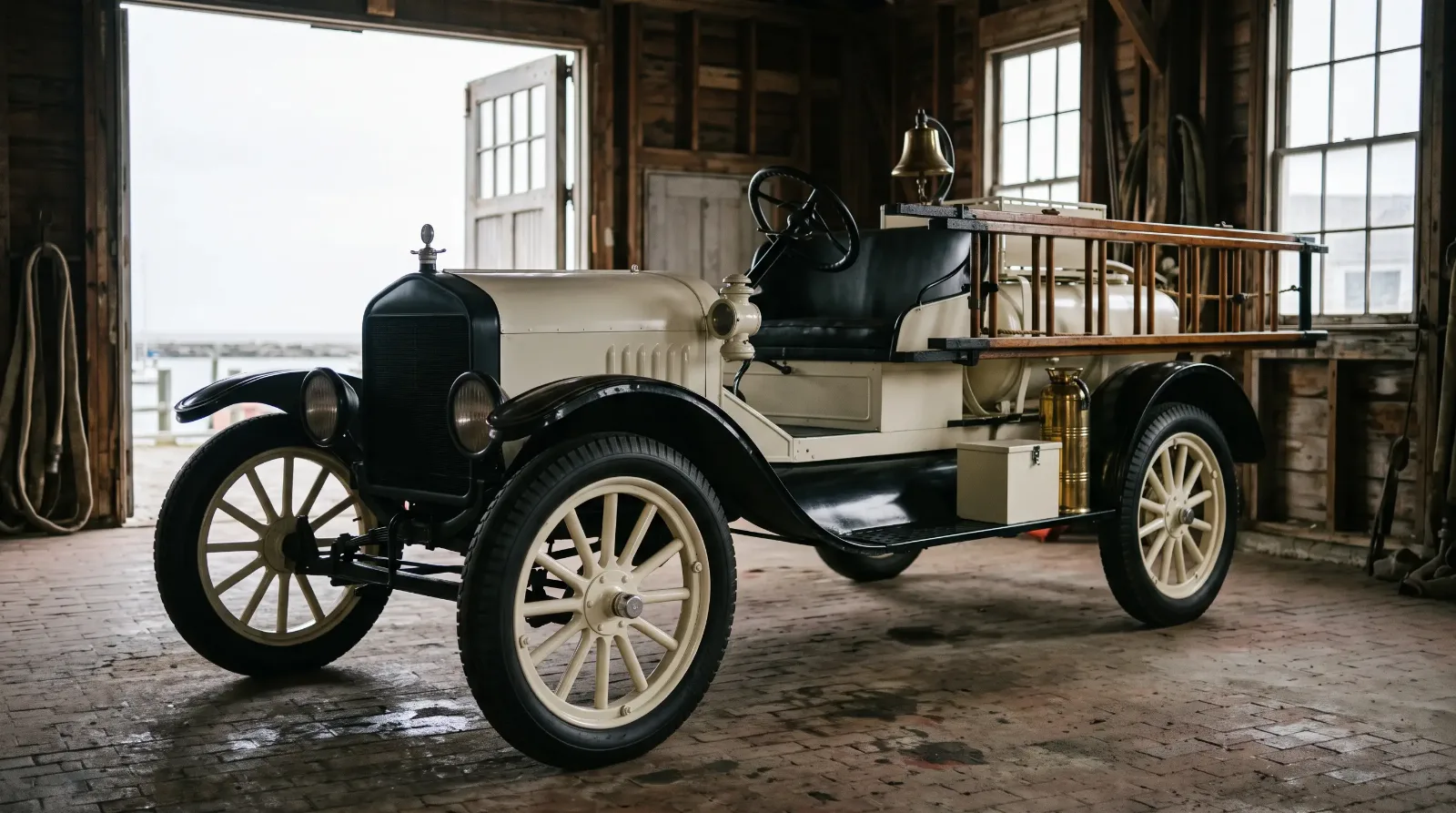
Most small-town Model T apparatus did not pump water. It carried chemical tanks, usually soda-acid. The principle is simple. A tank holds water mixed with sodium bicarbonate, and a container of acid sits inside it. Tip or open the acid into the solution and the reaction builds gas pressure that drives the water out through the hose. No pump, no engine drive, just chemistry. The museum record for the Milan truck lists chemical tanks among its equipment.
The rest of the load was what you would expect: hose on a reel or in a basket, ladders along the sides, axes, buckets, lanterns and a bell. Some rigs had a seat for a few firefighters. Others had them riding on the running boards and the back step. Tank sizes and outfit details varied by builder and buyer. The 1919 car RM Sotheby's sold carried dual chemical tanks, and the Milan truck's tanks are marked American-La France Fire Engine Co. of Elmira, New York. I have not seen a reliable factory list of specifications or prices for these conversions.
The mechanical side was straight Model T: the 177 cubic inch four rated at 20 horsepower, the two-speed planetary transmission, and gravity fuel feed. That last point mattered on a steep grade with a light tank. A heavy rig on a TT chassis with standard worm gearing was not going anywhere fast, but it would get up the hill.
"People see the brass and the red paint and figure these were fancy machines. They weren't. They were a work truck with a bell on it. That's why so many survived. They were built simple, and simple is cheap to keep running."
Robert Halloran
Where to see one, and what to know before you buy
Model T fire rigs were built and used well beyond the United States, so they turn up in many countries. The Model T Museum in Richmond, Indiana, run by the Model T Ford Club of America, shows a Model T fire truck alongside its ambulances and delivery vehicles. The North Charleston Fire Museum in South Carolina displayed the American LaFrance corporate collection, 1919 Model T chemical car included, until it closed in February 2026, when the owners reclaimed the trucks and sent them to auction. A 1919 American LaFrance-Ford chemical car from that collection sold at RM Sotheby's Miami sale for $35,840. Plenty of fire departments kept their old Ford and still bring it out for parades.
If you are thinking about buying one, a few practical points:
The good news is the mechanical parts. Engines, transmissions, axles and running gear are Model T and Model TT, and those are some of the easiest antique parts in the world to buy. More than 15 million Model Ts and about 1.5 million Model T trucks were built, and the hobby has been reproducing parts for decades. Brass fittings, ladders and fire equipment are another story. Those come from specialists, swap meets and other fire apparatus collectors, and they cost what they cost.
Documentation drives value here more than with an ordinary Model T. A truck with a known town, photos in service and a chain of owners is worth more and sells more easily than an anonymous red Ford with a bell. If the history is missing, do not invent one.
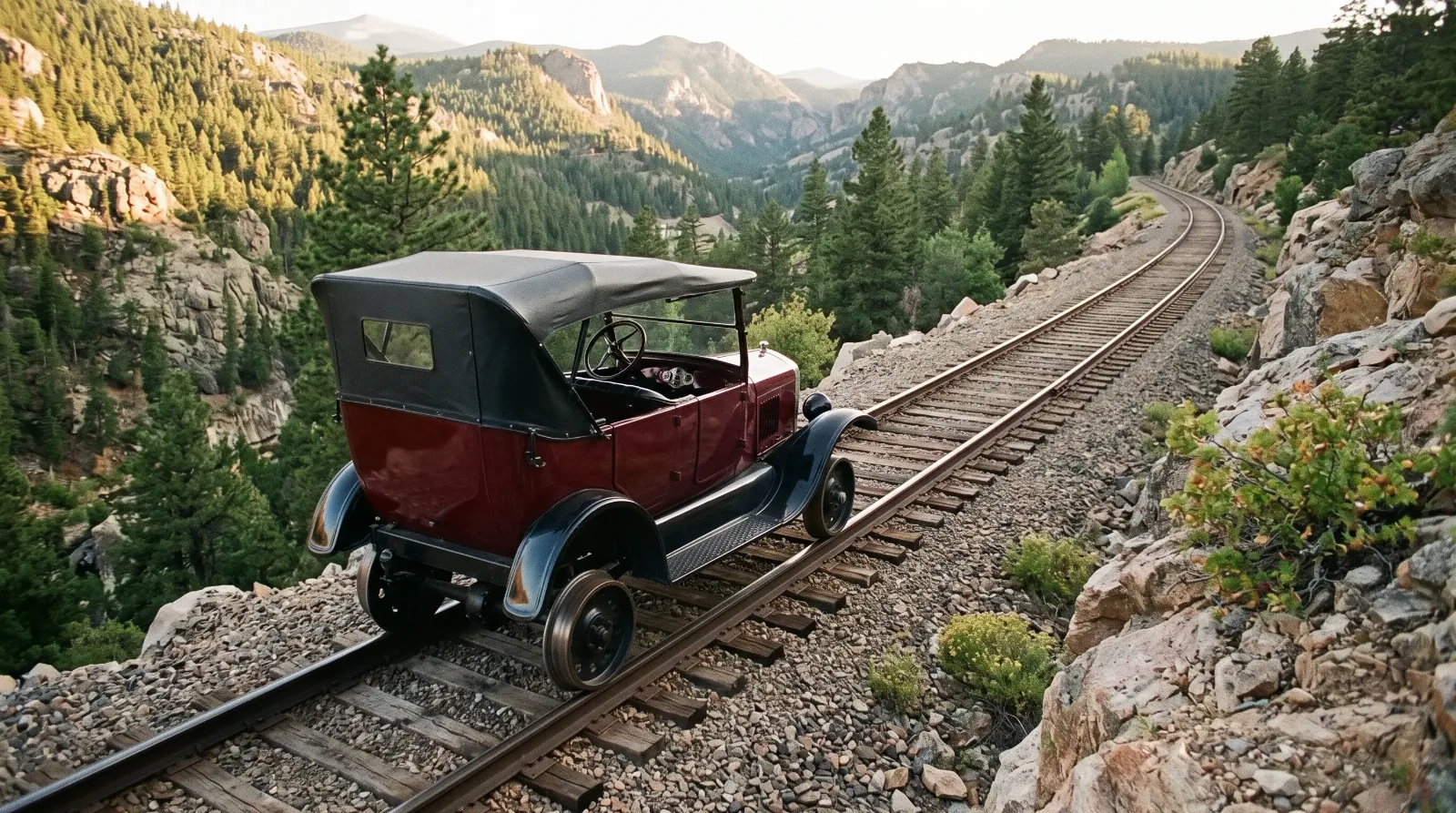
Fire trucks were one of many working jobs the Model T took on. Railroads used them as inspection cars; see the rail cars for that story. Merchants used the enclosed C-cab, which you can read about in this piece. The fire truck is the one that still draws a crowd at the parade, and it earned that by doing a hard job on a cheap chassis, year after year, in towns that could not afford anything else.
Sources and notes
- The Henry Ford: 1926 Ford Model T fire truck from Milan, Michigan
- RM Sotheby's: 1919 American LaFrance-Ford Model T chemical car
- Firehouse: North Charleston Fire Museum to close after owners reclaim trucks
- Visit Indiana: the Model T Museum in Richmond
- Mac's Motor City Garage: the 1917 to 1927 Ford Model TT
- Wikipedia: Ford Model TT
Related Reading
Have a
Ford Model T
for Sale?
Reach thousands of serious classic car collectors across the US.
Sell It Here →
Selling a classic? Here's how: the best sites to sell a classic car
Are You a Classic Car Dealer?
List your full inventory and connect with targeted classic car buyers.
Join as a Dealer →

About the author
Robert Halloran
Texas-based classic truck enthusiast with decades of experience buying, restoring, and writing about American pickups from the 1940s through the 1980s.
Related Listings - Ford Model T




Comments
Be the first to comment on this article.