
The word "snowmobile" was coined by a Ford dealer in New Hampshire, and it was first applied to a Model T. Virgil D. White sold Fords in West Ossipee, where winter roads closed for months and a car spent the season under a tarp. His answer was the Model T snowmobile: take the front wheels off, bolt on skis, put cleated caterpillar tracks on the back, and keep driving. In 1917 he applied for a patent on the kit and on the name itself. Every sled you hear buzzing across a frozen lake today carries his word, if not his idea.
Car Features
6 min read
Model T Snowmobiles: Snow Flyers and Winter Mail Routes
How a New Hampshire Ford dealer put a Model T on skis and tracks, coined the word snowmobile, and kept rural mail moving in winter.
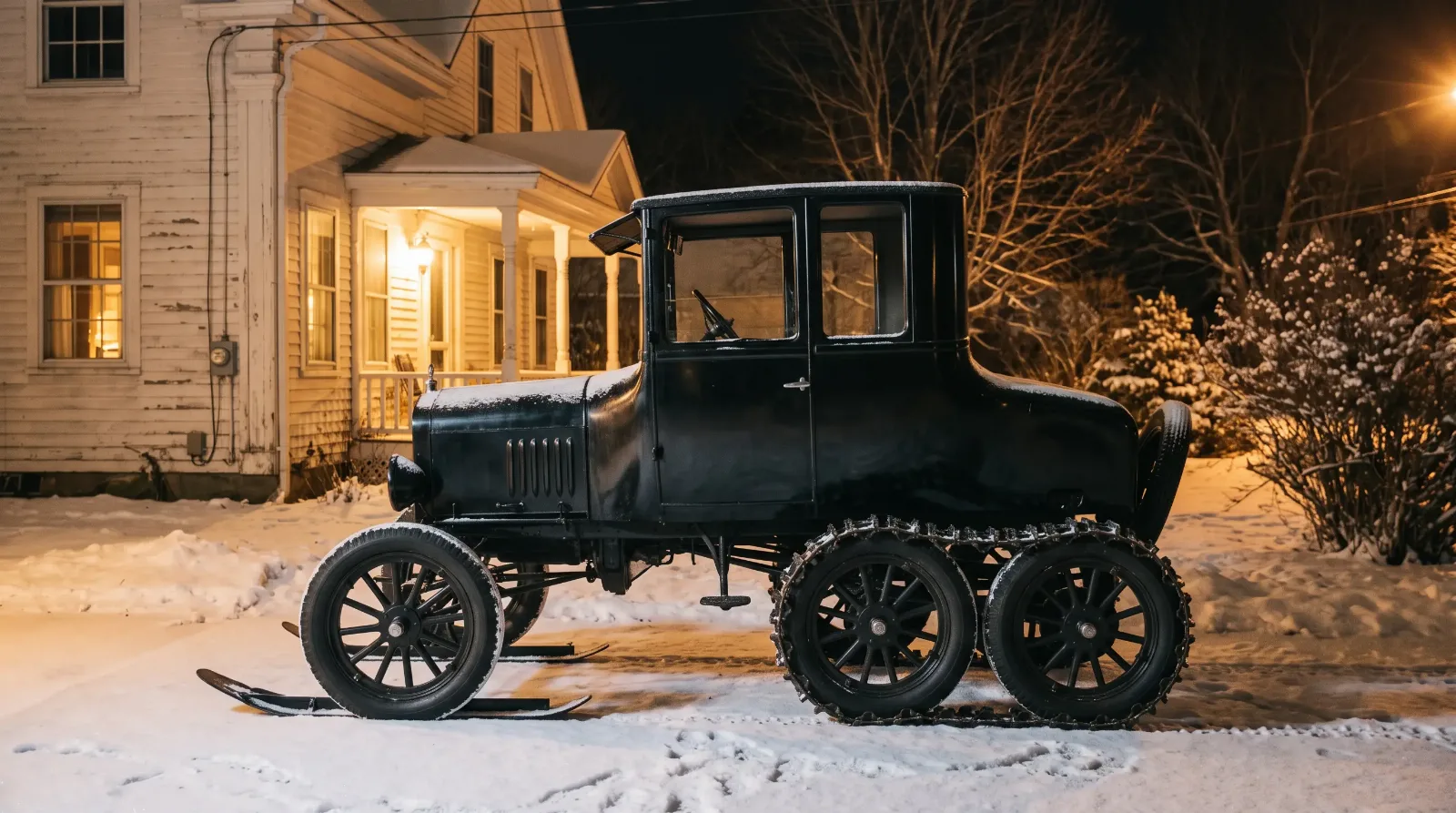
The rest of the story is about country doctors, rural mail carriers and a Wisconsin farm-equipment company that kept the idea going into the Model A years. It is a sideline of the Ford truck and utility world; for the TT, the AA and the factory pickups, the parent guide has the details.
Virgil White and the first Model T snowmobile
White's design was simple, which is why it worked. Skis replaced the front wheels and did the steering. At the rear, a cleated caterpillar track ran around the drive wheels and gave the car something to push against in deep snow. The engine, the planetary transmission and the controls stayed Ford. A man who could drive a T in July could drive the converted one in January, and a man who could fix one could fix the other.
The dating needs a little care. Some accounts put White's first prototype at about 1913. The patent application followed in 1917, though one source gives 1918. The kits did not reach the market until 1922, because the First World War got in the way. So "invented in 1913" and "patented in 1917" are describing different steps, not arguing with each other. Even the patent wording varies by source: WXPR says he applied for it in 1917, while others say he received it that year. I have not found the patent number itself, so I will not quote one.
When the kit did go on sale in 1922, it cost about $400. A complete snowmobile, Model T and conversion together, cost $750. That is real money in a year when a new runabout sold for well under that, but for a rural business that lost three months a year to snow it was cheap.
| Item | Detail |
|---|---|
| Inventor | Virgil D. White, Ford dealer, West Ossipee, New Hampshire |
| Patent application (kit and name) | 1917 (one source says 1918) |
| On sale | 1922, delayed by World War I |
| Kit price | About $400 |
| Complete vehicle | $750 |
| Output, mid-1920s | About 2,500 to 3,300 units a year |
| West Ossipee plant | Closed 1929 |
Winter mail routes, doctors and undertakers
The buyers were people who could not wait for spring. Postal carriers bought them, and for a time the converted T was popular for rural mail delivery. Doctors bought them to reach patients on farms the plows never touched. Firefighters bought them. So did undertakers, who had the most reason of anyone not to postpone a trip.
That last group had a famous moment. In 1926 a White snowmobile led the funeral procession of Calvin Coolidge's father in Vermont. A year later, in 1927, one went north into subarctic Canada with the explorer Donald MacMillan. Not bad for a car the jokes called a tin can; the nickname's own history is covered here.
I have found no breakdown of buyers by trade, so there is no telling how many kits went to postal carriers. What we do have is the factory figure: the West Ossipee plant was building something like 2,500 to 3,300 units a year by the mid-1920s. For a small-town shop in New Hampshire, that is a business.
Snow Flyer: the Wisconsin years
In 1925 the Farm Specialty Manufacturing Company of New Holstein, Wisconsin, bought the rights and sold the conversion as the Snow Flyer. A co-owner named Langenfeld is credited with launching that version. A 1930 merger created the Snow Flyer Corporation, and kits (sold as the Snow Bird) for the Model T, the Model A and other cars stayed on sale through 1939. According to RM Sotheby's, the company furnished a Snow Bird for Admiral Byrd's Antarctic expedition, which is about as far from West Ossipee as a Ford ever got.
Meanwhile White's own plant in West Ossipee closed in 1929. The Model T had ended production in 1927, and a kit built around one car loses its market when that car stops coming off the line. The Wisconsin firm sold kits for the Model A and other makes too, so the idea outlived the man who named it.
"A dealer in a New Hampshire village saw his customers park their Fords every December and decided that was a sales problem. That is the whole history of the snowmobile, and I like it better than most invention stories."
Gary Nowak
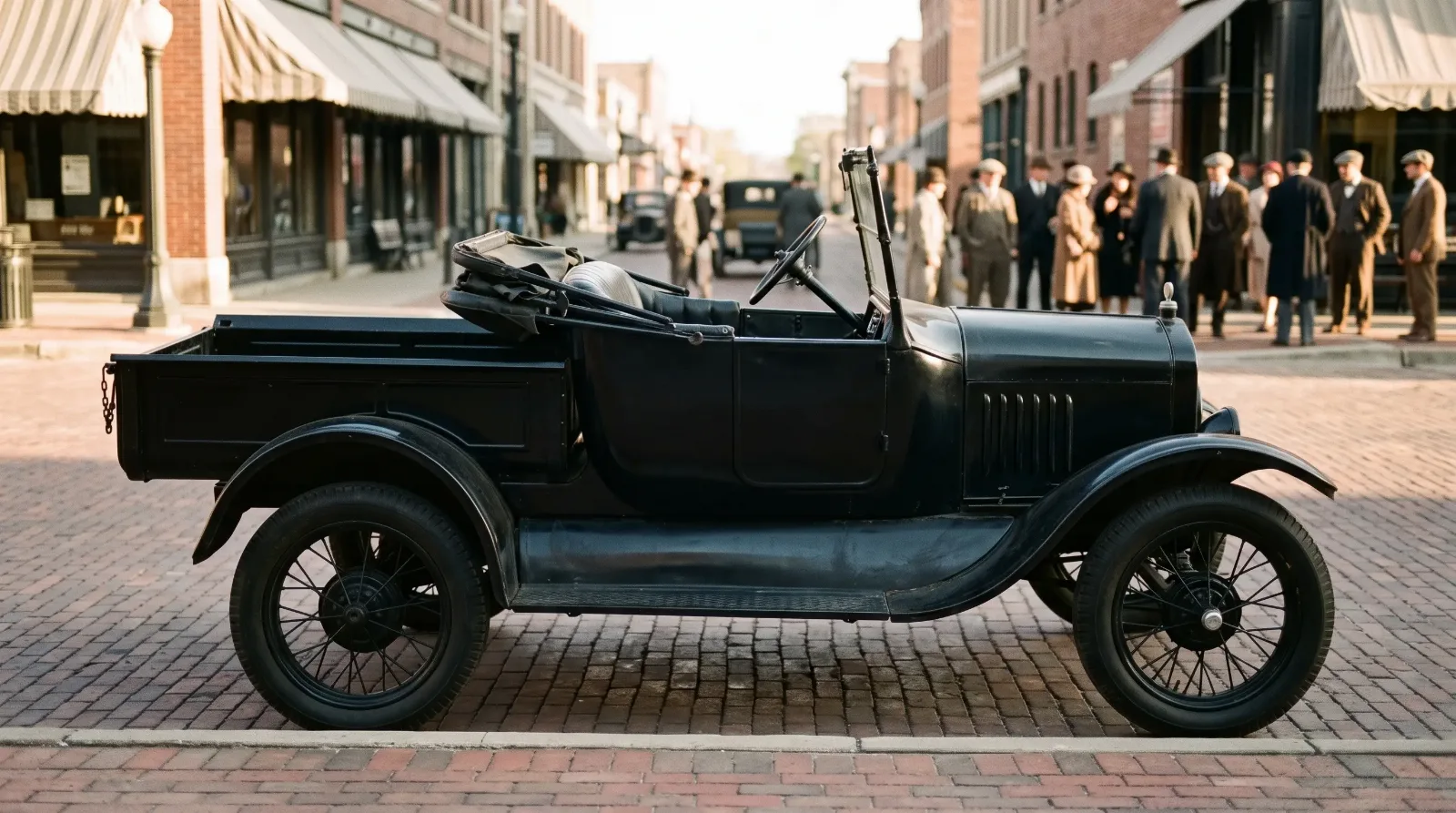
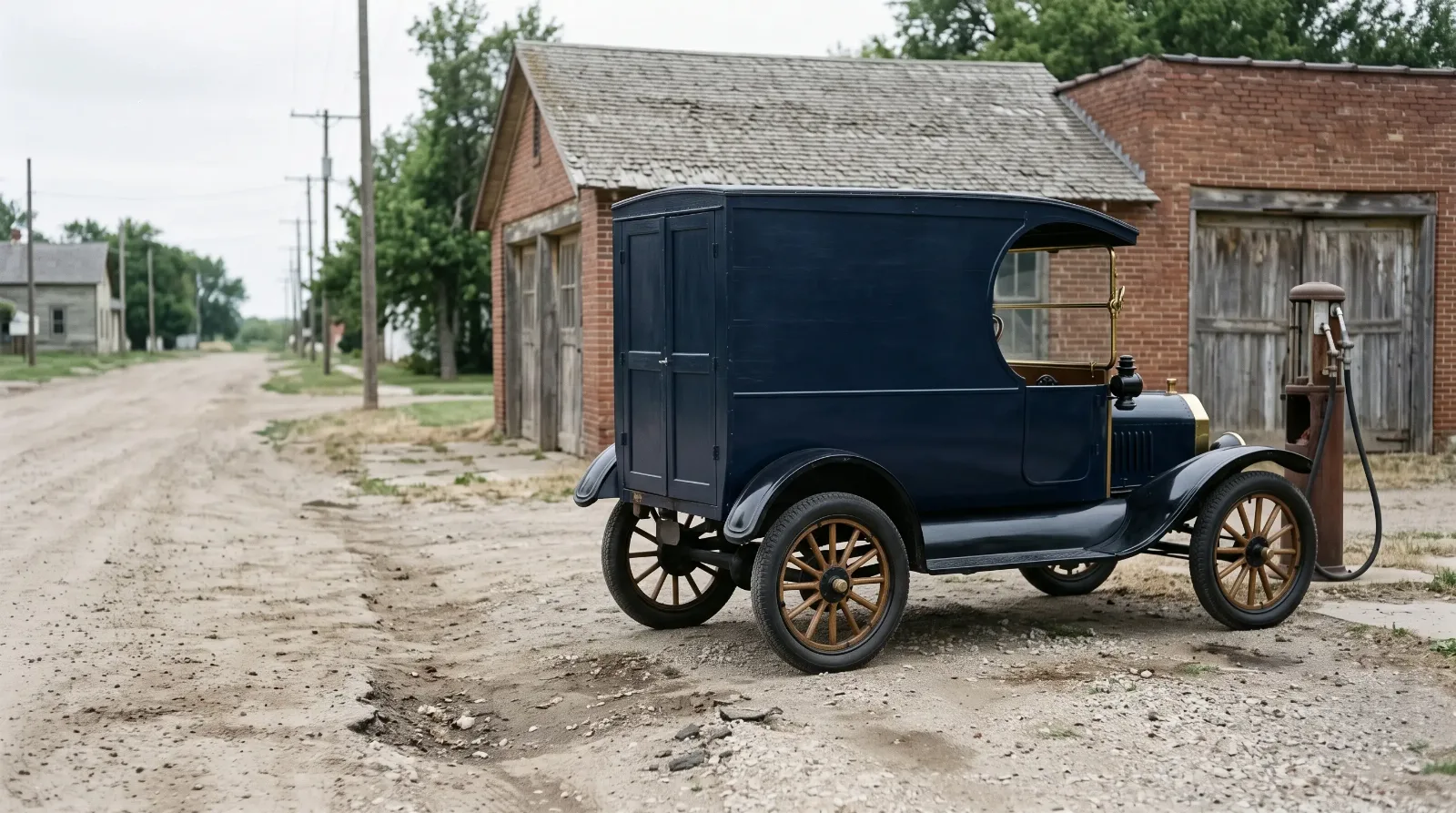
The snowmobile was one of many jobs the T took on outside the factory catalog. Outside firms turned it into rail inspection cars, delivery vans and the fire trucks that small towns used for years. The common thread is a cheap, light chassis that local mechanics already knew inside out.
Model T snowmobiles today
Survivors exist, and they bring real money when they come to auction. A 1925 Model T "Snow Flyer" coupe sold for $30,250 at RM Sotheby's Hershey sale in October 2012 (lot 243). That is one sale, more than a decade old, so treat it as a marker rather than a price guide.
The people who keep them running have their own club. The Model T Ford Snowmobile Club holds an annual meet, usually somewhere in New England, which seems right. You go where the snow is, and where Virgil White started.
The old-timers who ran these things on mail routes would probably laugh at a club meet, with everybody driving for fun on a Saturday. They drove them because the alternative was a horse and a sled. Still, somebody has to keep the old ways alive, and a T on skis does it better than a museum card ever could.
Sources and notes
Related Reading
Have a
Ford Model T
for Sale?
Reach thousands of serious classic car collectors across the US.
Sell It Here →
Selling a classic? Here's how: the best sites to sell a classic car
Are You a Classic Car Dealer?
List your full inventory and connect with targeted classic car buyers.
Join as a Dealer →

About the author
Gary Nowak
Lifelong Midwest rodder who has been building and driving traditional pre-war hot rods since the 1970s.
Related Listings - Ford Model T




Comments
Be the first to comment on this article.