
Start with the two numbers that matter. In the 1909 model year a Model T touring car listed at $850 and a runabout at $825. By 1925 the runabout was down to $260 and the touring car to $290. Any honest answer to what a Ford Model T cost has to cover both ends of that slide, because the car that sold for $850 and the car that sold for $260 were, mechanically, close relatives. Ford did not build a cheaper car. It built the same car more cheaply, and then passed most of the saving to the buyer.
Car Features
7 min read
How Ford Kept Cutting the Price of the Model T
The Model T fell from $850 to $260 between 1909 and 1925. Here is what a Ford Model T cost year by year, and why the price kept dropping.
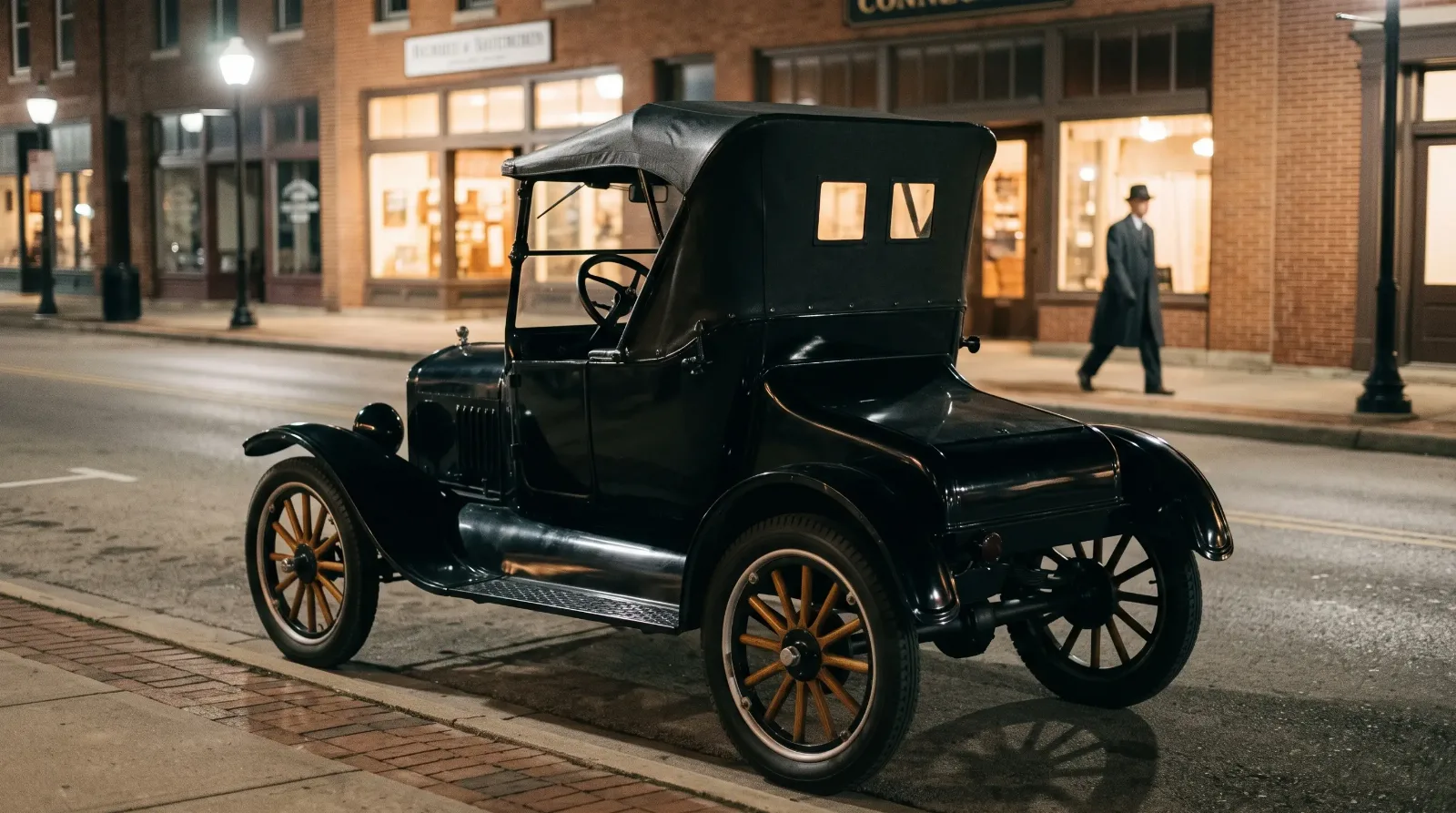
That is the part of the story worth looking at closely. The dates of the run are covered in the guide to when was the Model T made; this piece follows the money.
What a Ford Model T cost, year by year
The cleanest series we have is the runabout, the two-seat base car, quoted f.o.b. Detroit. The figures below come from the period price lists as compiled in standard references. Treat them as list prices for the bare car: options, freight and dealer extras came on top.
| Model year | Runabout list price | Note |
|---|---|---|
| 1909 | $825 | Touring car $850 |
| 1910 | $900 | The one early increase |
| 1911 | $680 | |
| 1912 | $590 | |
| 1913 | $525 | |
| 1914 | $440 | First full year of the moving line |
| 1915 | $390 | |
| 1916 | $345 | |
| 1917 to 1919 | $500 | Price back up; timing disputed |
| 1920 | $395 | |
| 1921 | $325 | |
| 1922 | $319 | |
| 1923 | $364 | |
| 1924 | $265 | |
| 1925 | $260 | All-time low; touring car $290 |
| 1926 and 1927 | $360 | Improved Model T |
Read the table as a trend with bumps, not a straight line. The price fell by more than a third between 1910 and 1913, kept falling through 1916, jumped to $500 for three model years, and then resumed its decline into the mid-1920s. The 1910 figure deserves a footnote: one widely used source gives $900 for the runabout and $780 elsewhere in the same text, the lower number apparently for a different body or year. The table value, with its body style stated, is the one I would cite.
Adjusted for inflation, the spread is even more striking. The $850 launch price works out to roughly $25,200 in 2021 dollars. The $260 runabout of 1925 comes to about $4,056 on the same basis. That is a car priced like a used compact at the start of the run and like an old used hatchback at the end of it.
The assembly line paid for the price cuts
The mechanism behind the falling price is not a mystery, and it was not generosity. The moving assembly line, introduced at Highland Park from 1913, cut the labor needed to put a chassis together from about 12.5 hours to about 93 minutes. When the hours fall that far, the cost of each car falls with them, and Ford chose to spend the saving on price rather than keep all of it as margin.
Volume is the other half of the equation. Ford's own production department counted 10,666 Model Ts in fiscal 1909. In calendar 1923 the figure was 2,011,125, the peak of the run. Each price cut opened the car to a new tier of buyer, the larger tier justified more tooling and more line speed, and the faster line made the next cut possible. Economists would call it a volume flywheel. Ford simply called it the policy.
Labor cost moved in the other direction at the same time. On January 5, 1914, Henry Ford and vice president James Couzens announced the Five Dollar Day. Ford raised pay and still cut the runabout from $440 to $390 the following model year. That combination tells you how much of the price was set by the process rather than the payroll.
When the price went up instead
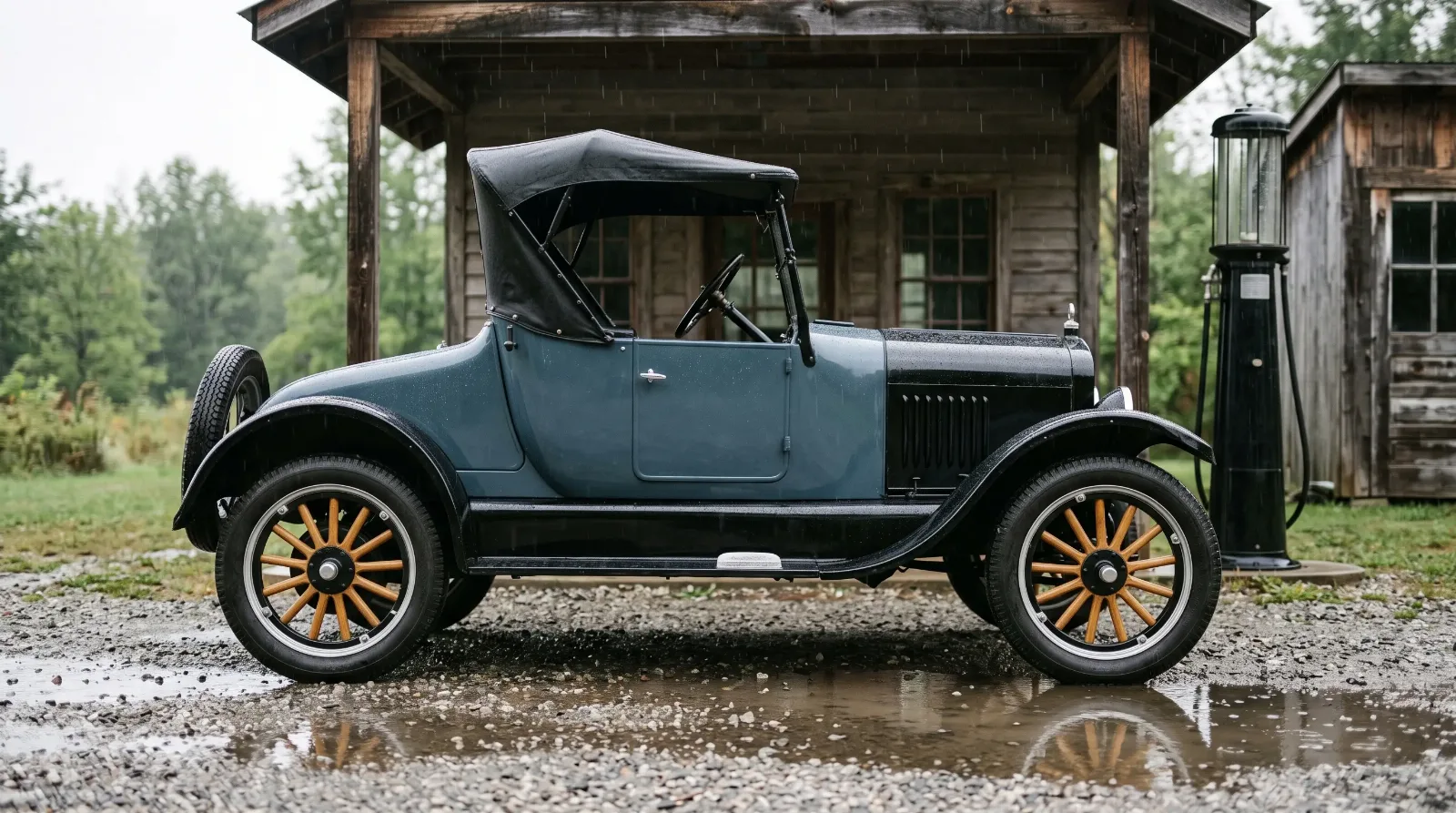
Two stretches break the pattern, and both are worth understanding before you assume Ford only ever cut.
The first is 1917 to 1919, when the runabout list climbed back to $500 after bottoming at $345 in 1916. The record is untidy here: the standard model-year table shows $500 for all three years, while other price lists keep the runabout near $345 into 1918 and put the jump in 1919. Either way, the rise came during and just after the First World War, when materials were diverted to the war effort and became scarcer and dearer for civilian makers. Ford still sold enormous volume through those years, and the price was back under $400 by 1920.
The second is the end of the run. For 1926 and 1927 the runabout listed at $360, a hundred dollars above the 1925 low. These were the Improved Model Ts, with a wider cowl, a lower body, new fenders and larger brakes, and buyers were paying for more car. They were also paying more at the exact moment Chevrolet was selling a more modern car, with a three-speed gearbox, from $525, which is a large part of why the model's final two years went the way they did.
"The headline price tells you less than people think. What I watch is the gap between what the car cost and what the buyer got for it. Through 1925 Ford kept that gap moving in the customer's favor. In 1926 it stopped, and the sales numbers followed."
David Mercer
What the list price left out
A list price is a starting point, and the Model T's was famously bare. Some features that a modern buyer would assume were standard cost extra. When the electric starter arrived for the 1919 model year, it came first on the closed cars, and on open cars it was a $75 option. That is more than 15 percent of a $500 runabout, for a single feature.
Body style mattered too. A 1919 sedan listed at $875, well above the open cars of the same year and higher than the touring car had cost at launch. The low headline numbers that made the Model T famous belong to the runabout and the touring car, the open models most families actually bought. Rural buyers in particular stayed with the open bodies, which suited the car on the farm and the budget that came with it.
Ford also kept its own selling cost low. From 1917 to 1923 the company bought no advertising at all. With half the country's cars already wearing a Ford badge, the product sold on price and word of mouth.
From $260 new to the collector market
The Model T is still cheap by collector standards, which is fitting. Classic.com tracked almost 300 Model T sales averaging just under $17,000 as of April 2025. In Britain, Classic Valuer counts 391 tracked sales with a median of £10,169 since 2020. Those are averages across every body style and condition, so a tired touring car and a restored early brass car sit in the same pool.
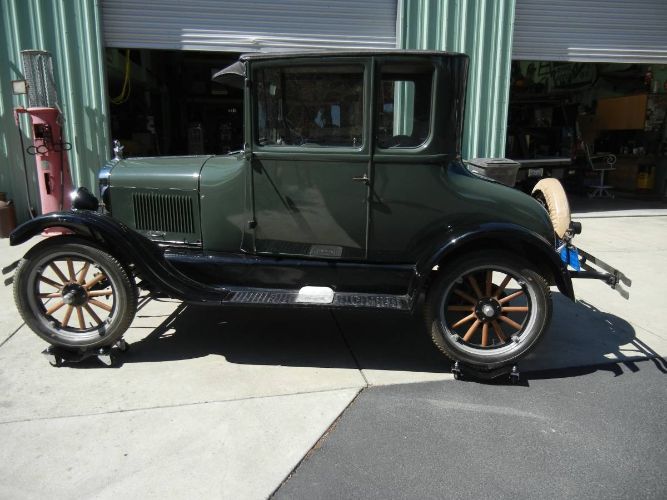
The top of the market is a different story, and it usually has a reason attached. A 1925 Model T coupe known as the "Snow Flyer" sold for $30,250 at RM Sotheby's Hershey sale in October 2012, well above the averages, because it was a documented and unusual car rather than a plain one. Condition, paperwork and originality drive the spread, as they do with any collectible.
My read: the Model T is one of the few pre-war cars where a buyer can still enter at a price a working family could justify, which is exactly the position Ford built it to hold in 1925. For current asking prices and listings, look at what Model Ts sell for now, and compare the body style and year against the table above before deciding whether a car is fairly priced.
Sources and notes
- Ford Model T: runabout price table and production, Wikipedia
- The Model T, Ford Motor Company (From the Road, 2021)
- Advertising the Model T, The Henry Ford
- Tin Lizzie's last stand: the 1926-27 Model T, Mac's Motor City Garage
- Cost and production of Ford vehicles, 1908-1924, The Geography of Transport Systems
- 1925 Ford Model T Snow Flyer coupe, RM Sotheby's Hershey 2012
Related Reading

Have a
Ford Model T
for Sale?
Reach thousands of serious classic car collectors across the US.
Sell It Here →
Selling a classic? Here's how: sell my classic car
Are You a Classic Car Dealer?
List your full inventory and connect with targeted classic car buyers.
Join as a Dealer →

About the author
David Mercer
Classic car market analyst with two decades of experience tracking collector car valuations, auction results, and investment trends.
Related Listings - Ford Model T




Comments
Be the first to comment on this article.