
Picture a small town street sometime around 1915. A black Model T clatters past the feed store, its fenders shivering over every rut, and someone on the porch laughs and calls it a tin lizzie. Nobody writes down who said it first. That small gap in the record is the reason the tin lizzie Ford nickname still starts arguments more than a century later. The car is easy to document: more than 15 million were built before production ended in May 1927. The name is not. If you want the car's full arc, start with where it all began. This story is about the word, the people who traded it around, and why nobody, Ford included, can say for sure where it came from.
Car Features
11 min read
Tin Lizzie: The Ford Model T's Nickname, Its Disputed Origins and the Legend
Nobody, Ford included, knows who first called the Model T a Tin Lizzie. Here are the competing stories, the dates, and why Pikes Peak came too late.
What "tin lizzie" actually meant
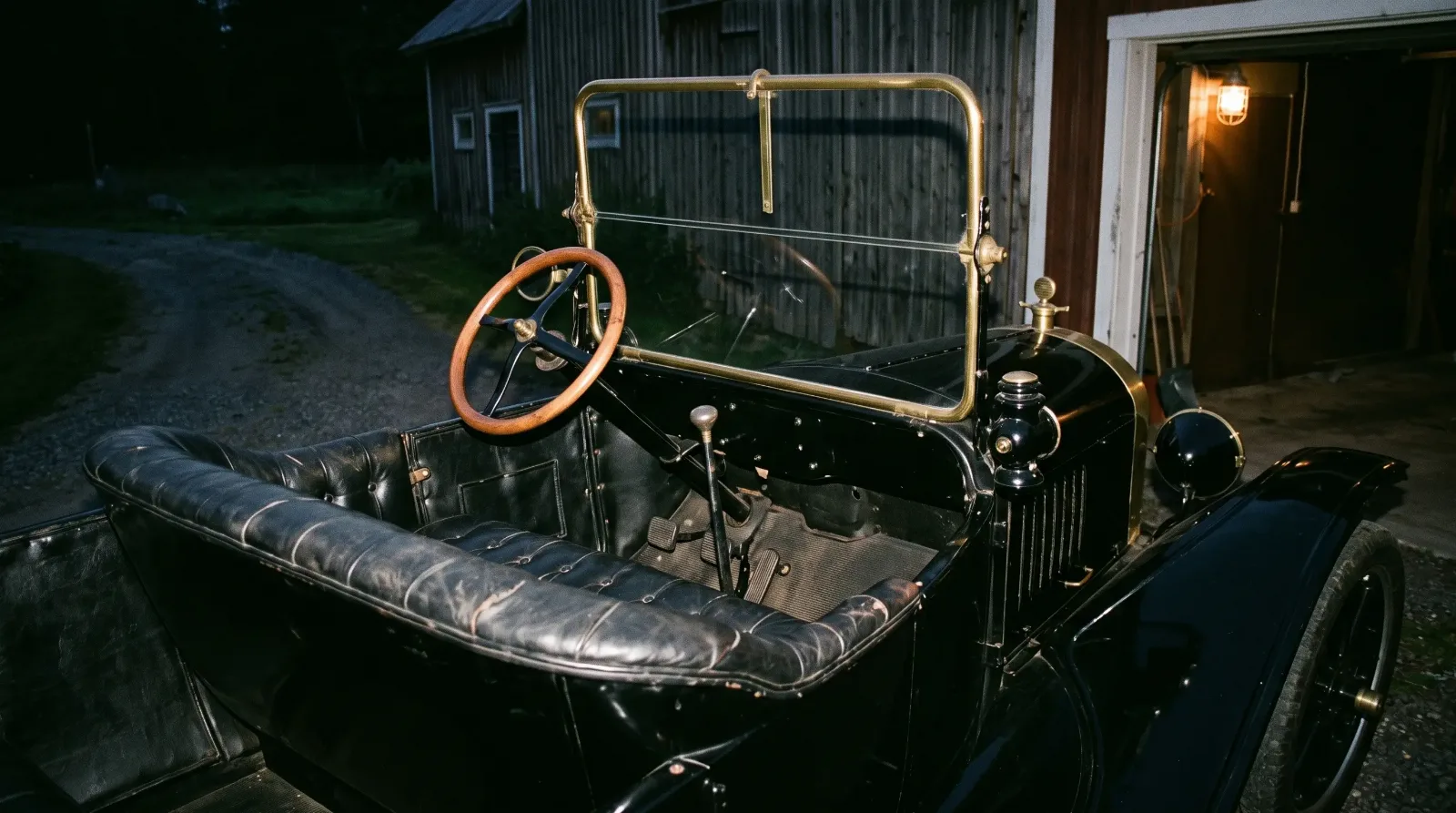
Dictionaries define "tin lizzie" as slang for a small, cheap car, usually a worn-out one, and they name the Model T Ford as the car it originally and most often described. That definition carries two jokes at once. "Tin" pokes at the thin sheet metal and the rattle. "Lizzie" is the friendly part, a pet name, the kind you give something you complain about and would never sell.
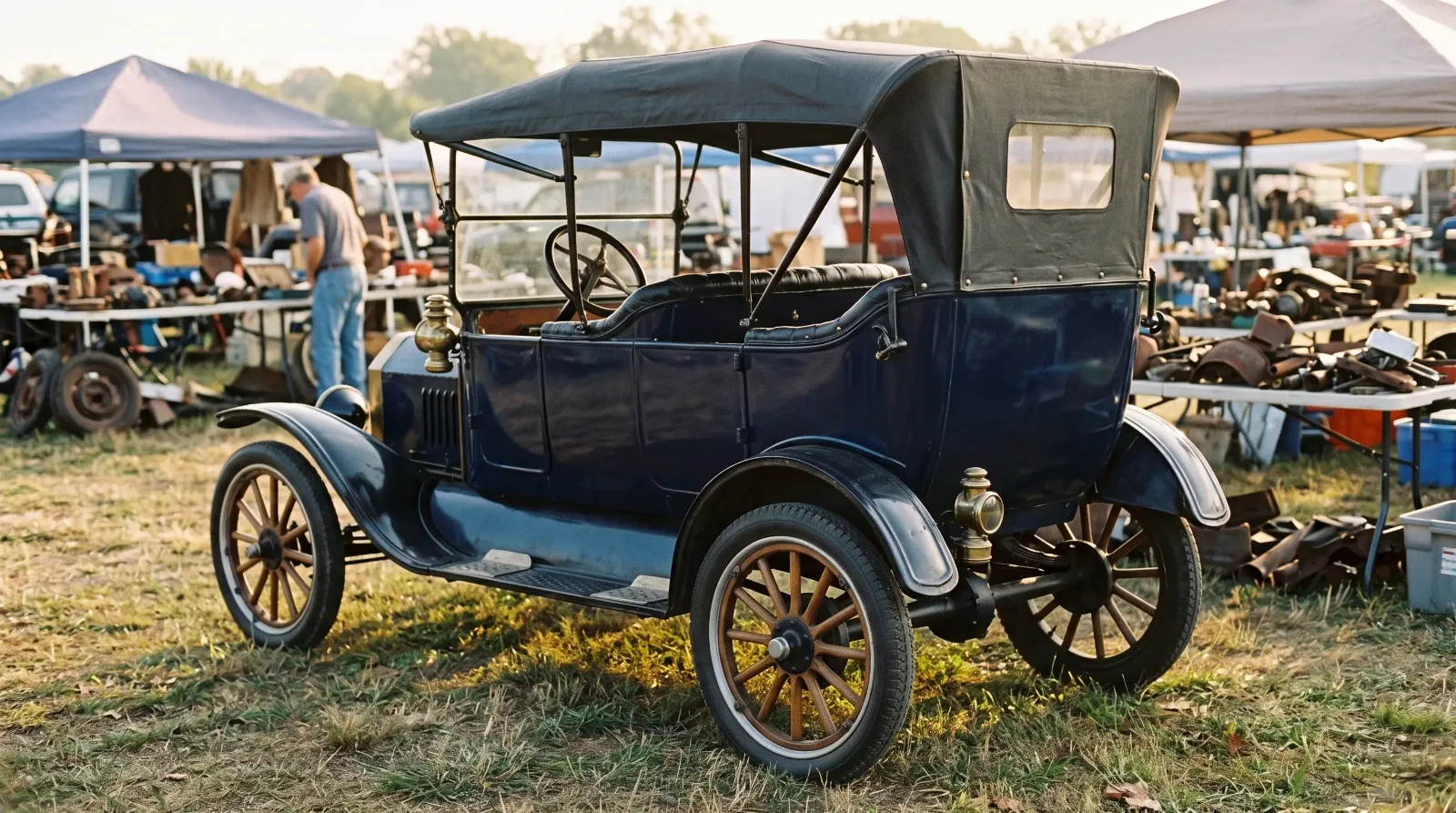
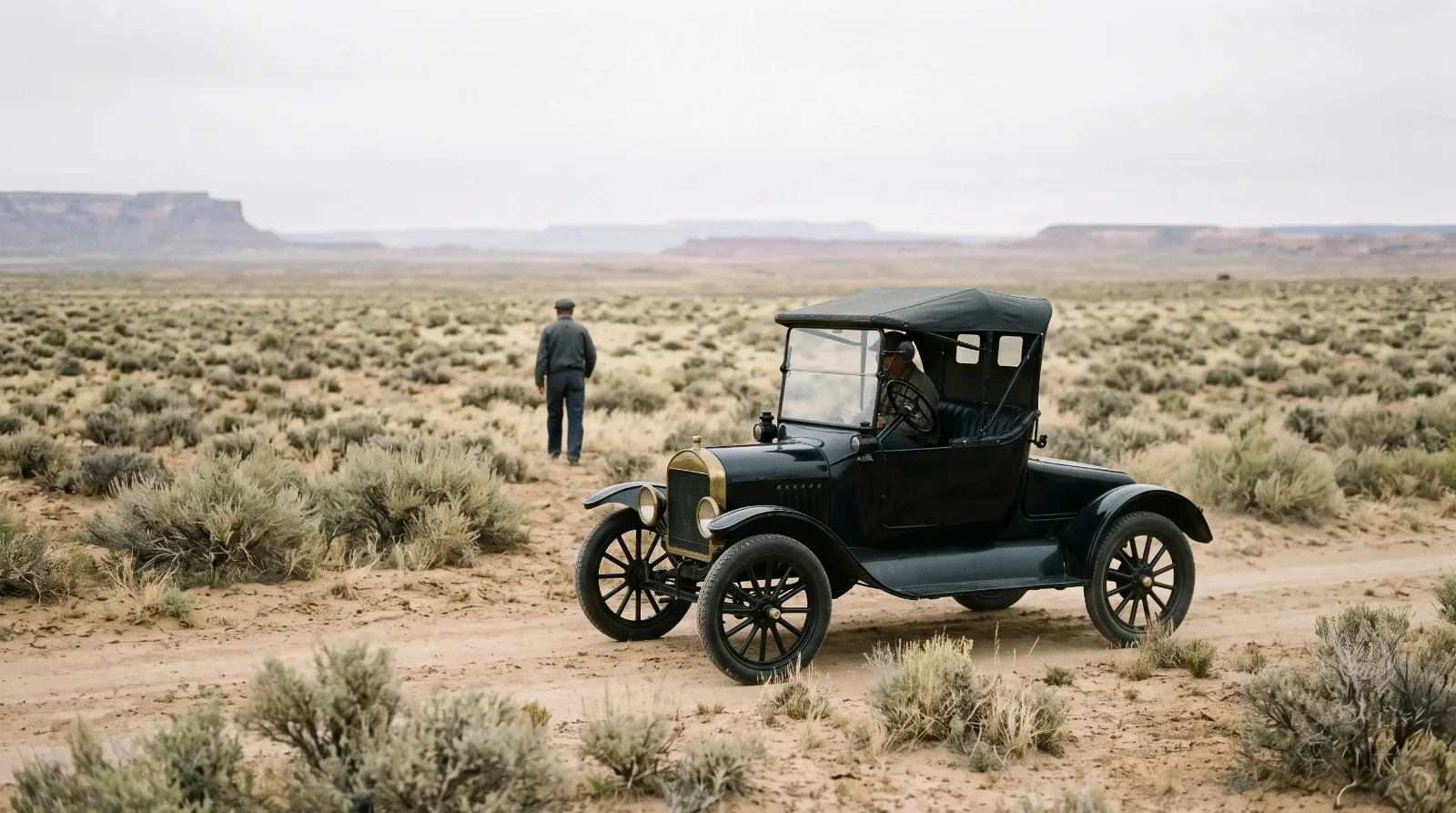
Both halves fit the Model T of the 1910s. The car was cheap and getting cheaper. The Runabout listed at $825 in 1909 and fell to $260 by 1925, the lowest price of the whole run. From 1914 to 1925 every Model T left the factory in black. By 1918, half of all the cars in America were Model Ts. When one car is that common, that plain and that affordable, it stops being a machine people admire and becomes one they live with. Living with something is how nicknames happen.
Ford's own history pages say the Model T was known as the "Tin Lizzie" but had dozens of nicknames. That detail matters. Tin Lizzie was never an official name, never a badge, never an advertising line in the car's early years. It came up from the street, and street language rarely leaves a paper trail.
Where the tin lizzie Ford name came from: the competing stories
Ford Motor Company says plainly that it is unsure how the name came about. Its own history page offers two candidate origins rather than one answer, and a third story circulates in secondary sources. Here they are side by side, with the weak spot in each.
| Theory | What it claims | Support | The problem |
|---|---|---|---|
| A common name | "Lizzie" was an everyday name, and a generic name for horses, so it slid onto the car that replaced the horse | Named by Ford as a possibility; Elizabeth ranked 11th among US girls' names in 1920 | Explains "Lizzie" but not when or where the phrase first appeared |
| The San Antonio dealer | A dealer complained about badly fitting doors and suggested shipping cars without doors plus a tool kit, like a tin can opener | Repeated in secondary sources, no primary document cited | Unconfirmed; reads like a story told after the fact |
| "Old Liz" at Pikes Peak | Noel Bullock's stripped, unpainted 1922 racer was nicknamed "Old Liz" and compared to a tin can | Repeated by Ford and by several car sites | The phrase was already in print by 1915, seven years earlier |
The first theory is the gentlest and probably the hardest to disprove. Calling a horse "Lizzie" was ordinary in rural America, and the Model T was, for millions of families, the thing that replaced the horse in the barn. Transferring a familiar stable name to the new animal in the yard is exactly the kind of move ordinary speech makes without asking permission. What the theory cannot do is name a moment. It tells you why "Lizzie" felt right, not who first said "tin lizzie" out loud.
The San Antonio dealer story has the most texture and the least support. A dealer annoyed by doors that would not close properly, a sarcastic suggestion about shipping the cars with a can opener, the image of the Model T as a tin can on wheels: it is a good anecdote. The versions in circulation cite no primary document, so it belongs in the "told and retold" pile until someone finds a letter, a trade paper or a newspaper item that pins it down.
Why the Pikes Peak "Old Liz" story cannot be the start
The race story is the one most people hear first, and it is a fine story. In 1922, Noel Bullock took a stripped Ford special up Pikes Peak in Colorado. The car had no paint and no hood, and people called it "Old Liz" and likened it to a tin can. Ford's media history records Bullock winning the Open Wheel class in 19:50.90, in what it describes as a "50-horsepower Ford Special." The same source notes that a Model T had already reached the Pikes Peak summit by 1913.
The trouble is the calendar. If the phrase appears in print in 1915, a car nicknamed in 1922 cannot have coined it. The most the Bullock story can do is reinforce a name that already existed, and that may well be what happened. A scruffy, unpainted Ford beating better-dressed machines up a famous mountain would have been the perfect advertisement for a nickname people already used. A newspaper reader in 1922 who saw "Old Liz" in a headline would have recognized the joke instantly, because the joke was already seven years old.
So the honest version runs like this. The race did not create the tin lizzie. The tin lizzie, already part of American slang, gave the racer an easy name, and the racer then gave the slang one of its best stories. Over time the order got flipped in the retelling, which is how most car legends grow.
"Every good nickname eventually picks up an origin story that sounds better than the truth. With the Tin Lizzie, the truth is that a whole country named the car at once, and nobody thought to take notes."
Patrick Walsh
Flivver, jitney and the other names
Tin Lizzie was the most durable nickname, not the only one. "Flivver" ran right alongside it, and its paper trail is easier to follow. The word is an Americanism from around 1905 to 1910, and its origin is uncertain. In its earliest known sense it had nothing to do with cars. A 1907 item in the Ledger-Star of Norfolk, Virginia, used it to mean a failure, and a 1909 paper explained that "a flivver is a fizzle." The slang is said to have come from the theater, where a flivver was a show that flopped.
By 1909 the word had found the Ford. The Chronicle Telegram of Elyria, Ohio, reported a Ford colliding with a truck carrying nitroglycerine without an explosion, "because it was a flivver." Within a few years "Ford Flivver" was routine newspaper language. The word even escaped the garage. A 1916 cartoon titled "Ford's Flivver Cure" mocked Henry Ford's peace ship, and Ford later built a small single-seat airplane, unveiled on July 30, 1926, that carried the Flivver name and was promoted as the "Model T of the Air." Only five were built.
"Jitney" came from a different direction. Informal share taxis in the United States and Canada were called jitneys, and so many of them were Model Ts that the car itself picked up the name. That one is a nickname by association: the job came first and the car inherited the label.
Jokes, songs and a carmaker who laughed along
A nickname only spreads if people keep saying it, and in the 1910s America would not stop talking about the Model T. Thousands of jokes circulated about the car. They praised its toughness and mocked its looks and its rattles in the same breath. Joke postcards were printed, including one from around 1915 in the collection of The Henry Ford with artwork by Cobb & Shinn. A joke book called "Funny Stories About the Ford" carried a 1915 copyright from Presto Publishing Co. of Hamilton, Ohio. The usual themes were the car's size, its tinny body and its knack for getting a farmer out of any hole in the road.
Henry Ford could have bristled. Instead, by the museum's account, he was amused and liked to say that "every Ford joke sold a car." That attitude helped the nickname along. A company that sues over a joke gets fewer jokes. A company that laughs along gets free advertising every time someone tells one, and the car most often named in those jokes was the one coming off the line in Highland Park. If you want to know why there were so many of them to joke about, read up on how the assembly line built it.
Songwriters joined in. "The Little Ford Rambled Right Along," published in 1914 with music by Byron Gay and lyrics by C. R. Foster and Gay, made the car sound indestructible. Then, in 1928, a song marked the end of the era by name: "Henry's Made a Lady Out of Lizzie," by Walter O'Keefe, published by De Sylva, Brown & Henderson in New York. The joke in the title is the whole story of the nickname. The Model A had arrived, Ford had cleaned up his act, and Lizzie, the tin one, was being retired into respectability. Its printed sheet music even carried ukulele chord fingerings, which tells you who was expected to sing it.
How the tin lizzie outlived the car
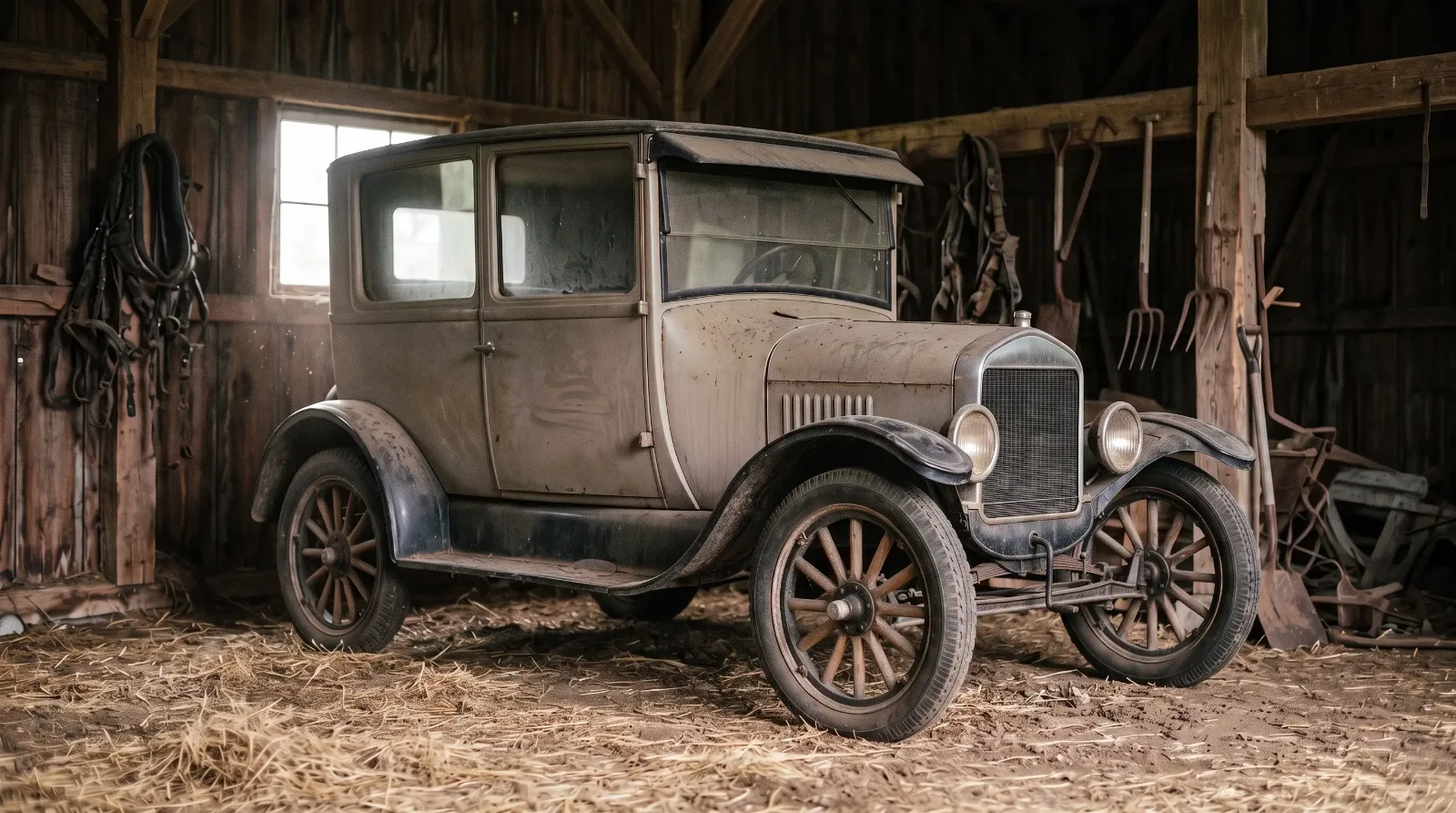
The last Model T came off the line in May 1927. The nickname did not go with it. If anything, the end of production turned "tin lizzie" from a joke about a current car into a word for a vanished way of life.
In 1929 an expedition Model T nicknamed "Little Lizzie" was donated to Henry Ford, a sign that the pet name had become something owners chose on purpose. In May 1936 The New Yorker published "Farewell, My Lovely!" under the blended byline "Lee Strout White," a comic catalogue of the car's quirks and the gadgets owners bought for it. The piece came from E.B. White and Richard Lee Strout; exactly how they divided the writing is still unclear. It was later reissued as "Farewell to Model T." In 1945 John Steinbeck's Cannery Row called for "an erudite essay" on the effect of the Model T on the nation, and added a famous joke about how many babies of the period got their start in one.
None of those writers needed to explain the car. They could lean on the nickname and trust readers to fill in the rattles, the crank, the mud and the affection. That is what a nickname does at its best: it stores a whole shared memory in two words.
The word kept traveling. In Pixar's Cars, released in 2006, Katherine Helmond voices an elderly Model T character named Lizzie. Children who have never heard a planetary transmission whine get the joke anyway, because the name still carries the old mix of fondness and teasing.
Living with an unanswered question
It would be tidy to crown one theory. The record does not allow it. What the evidence supports is narrower and, in its way, more interesting. "Lizzie" was a familiar name for people and for horses. "Tin lizzie" was in print by 1915, while the Model T was becoming the most common car in America. "Flivver" had a theater past and a Ford present by 1909. The Pikes Peak "Old Liz" came later and helped the name along without inventing it. The San Antonio dealer remains a good story waiting for a source.
That leaves the tin lizzie Ford name where it began, with the public. No marketing department chose it and no single wit owns it. Millions of drivers who cranked, cursed and loved the car named it together, and that may be the best tribute the Model T ever received. If the legend has gotten under your skin, the next step is finding a Tin Lizzie of your own, rattles included.
Sources and notes
Related Reading
Article
Ford Model T and Model A: The Complete Story of Henry Ford's Cars, 1908 to 1931
Article
Ford Model T History: When It Was Made and How It Put America on Wheels
Article
Henry Ford's Assembly Line: How the Model T Was Built
Article
Flivver: The Other Nickname of the Model T
Article
Model T Jokes: How America Laughed at the Tin Lizzie
Article
Songs About the Model T and the Early Ford

Article
The Model T in Slapstick Comedy: Laurel and Hardy and the Silent Era
External
/ford/model-t
Have a
Ford Model T
for Sale?
Reach thousands of serious classic car collectors across the US.
Sell It Here →
Selling a classic? Here's how: sell my classic car
Are You a Classic Car Dealer?
List your full inventory and connect with targeted classic car buyers.
Join as a Dealer →

About the author
Patrick Walsh
Automotive journalist covering classic car shows, events, and the enthusiast community across North America.
Related Listings - Ford Model T
Comments
Be the first to comment on this article.