
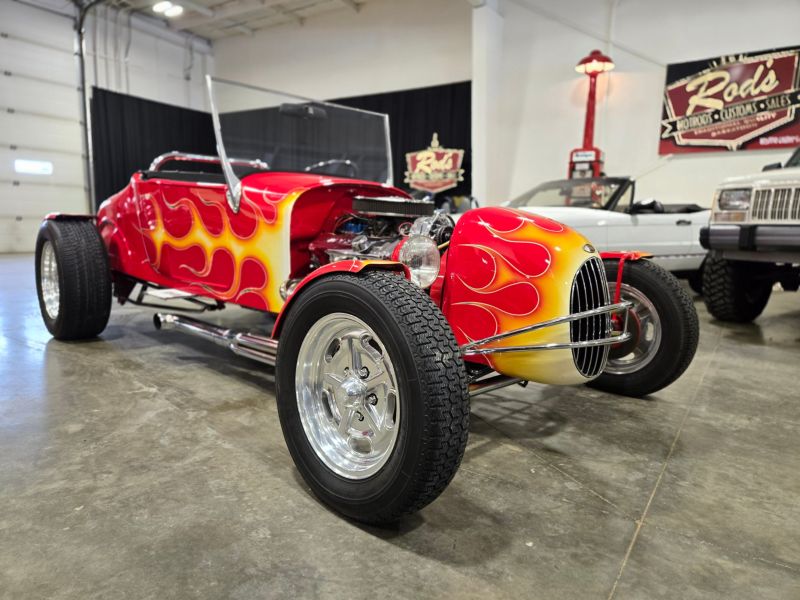
Here is how it usually started. A young man in the 1920s found a worn-out Model T behind somebody's barn, paid about $25 for it, and threw away everything that did not make it go faster. The fenders went. The touring body went. What was left got a pointed tail, two bucket seats and maybe a hotter cylinder head, and on Saturday night it was a Model T speedster. Hot rodding did not start with the Model T, but a lot of it started in one.
Car Features
6 min read
Model T Speedsters and Early Racing
Stripped Model Ts, Fronty heads, Indianapolis, Le Mans and Pikes Peak: how the cheap Ford became an early hot rod and a real race car.
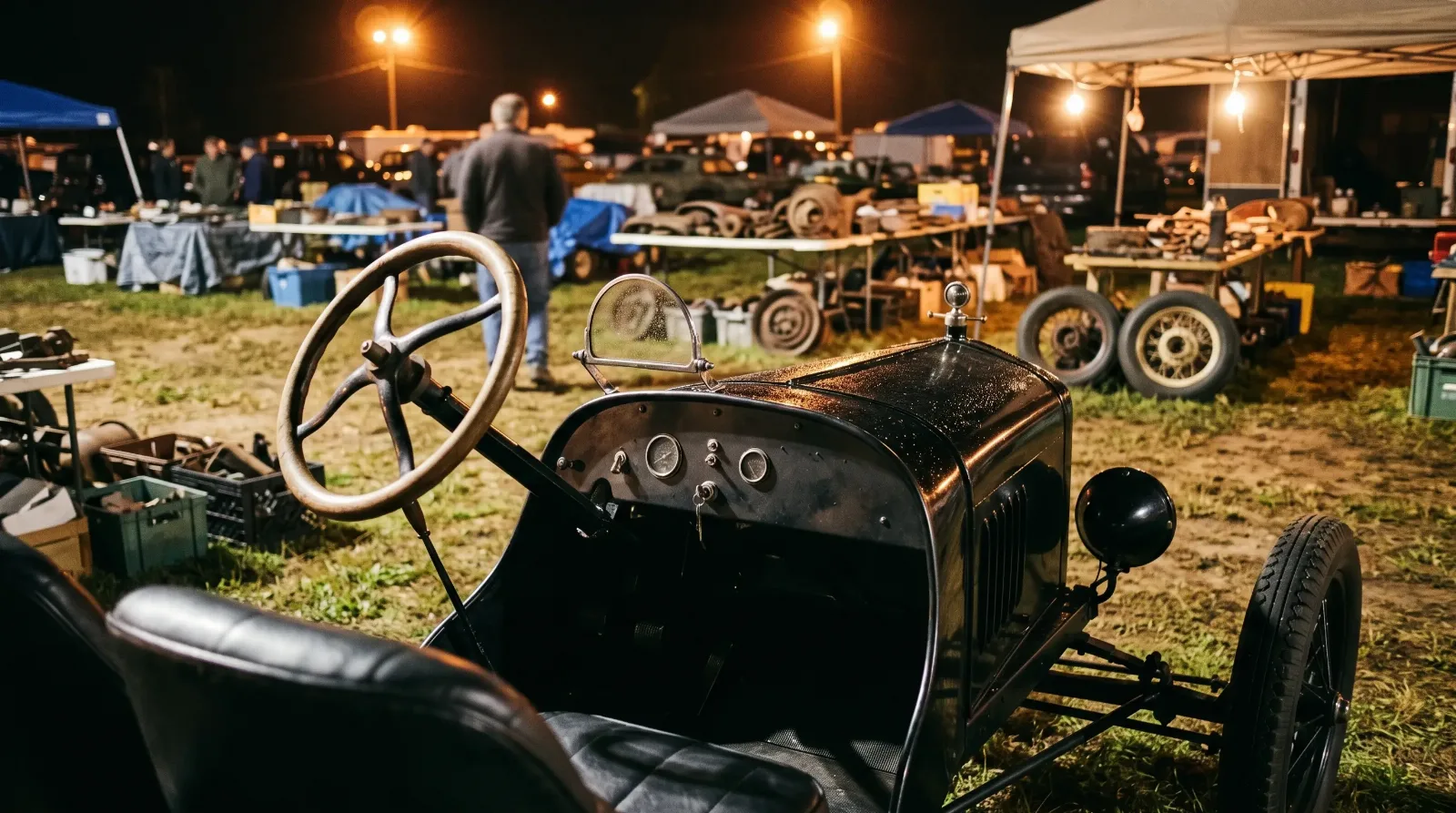
The Model T had more nicknames than any car of its day, and you can read more on that here. This piece is about the cars that wore those nicknames at speed: the stripped specials, the Fronty-Fords, and the few that made it to Indianapolis and Le Mans.
Where the Model T speedster came from
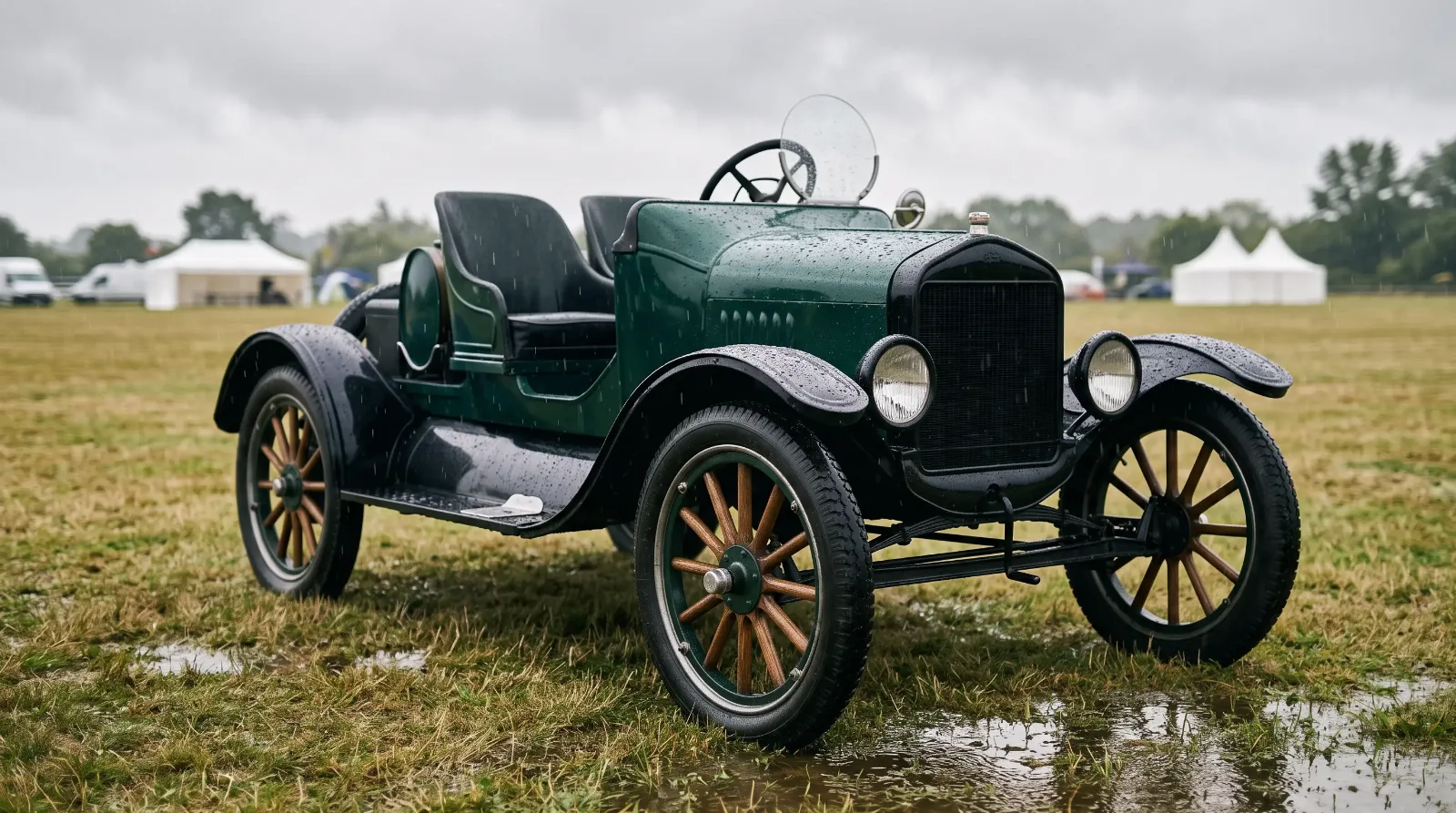
The first Model T speedsters probably showed up soon after production began, according to a 1987 AutoWeek history. They were not a youth fad at first. Edsel Ford had one of his own, a 1911 to 1912 speedster, built while his father's company was turning out touring cars by the hundred thousand.
The real boom came in the 1920s, and the reason was simple arithmetic. There were millions of used Model Ts by then, and an old one could be had for about $25. A stock T, on the other hand, struggled to reach 40 mph. So you had a cheap, plentiful chassis with a lot of room for improvement, which is exactly what a young fellow with a wrench and a free weekend wants.
Bodies came three ways. You could buy one ready-made from one of the firms that built them, buy a kit, or take a set of paper patterns to the local tinsmith and have him roll you a boat-tailed body out of sheet steel. The result was low, light and loud. Old-timers will tell you every county had a few of them, and most of them looked a little different from the next one.
Fronty heads and the hunt for horsepower
The stock Ford Model T engine was built to pull, not to rev. It made about 17 hp by the reckoning of the men who set out to improve it. Those men were Louis and Arthur Chevrolet. Early in 1921 they developed an overhead valve head for the Model T and sold it under the Frontenac name. Everybody called it the Fronty. It cost $100, and in their own catalog it took the engine from about 17 hp to more than 30.
The Fronty was not the only choice. RAJO and Laurel heads were popular too, and each had its loyal following. A Model T with one of those heads, a lightened chassis and a speedster body was a serious machine on a small dirt track, and Fronty-Fords became a fixture on the dirt ovals of the 1920s.
Give the Chevrolet brothers credit. They took a farm engine that most people laughed at and found real power in it, without changing the block. That is the kind of work hot rodders have been copying ever since.
"People talk like hot rodding was invented after the war. It wasn't. A kid in 1925 with a Fronty head and a tinsmith's tail on an old T was doing the same thing, he just had fewer parts catalogs and more nerve."
Gary Nowak
Model T racers at Indianapolis, Le Mans and Pikes Peak
The cheap speedster scene fed into real racing, and a few Model T based cars went right to the top of the sport.
| Year and event | Car or entrant | Result |
|---|---|---|
| 1909 Ocean to Ocean race | Ford No. 2, driven by Bert Scott | First into Seattle, June 23, 1909; later disqualified |
| 1912, frozen lake near Detroit | Frank Kulick, modified Model T | Just under 108 mph |
| 1922 Pikes Peak hill climb | Noel Bullock, "50-horsepower Ford Special" | Won the Open Wheel class, 19:50.90 |
| 1923 Indianapolis 500 | Barber-Warnock Ford, L. L. Corum | 5th, all 200 laps |
| 1923 24 Hours of Le Mans | Montier Special Model T | 14th |
| 1924 Indianapolis 500 | Three Barber-Warnock Fords | 14th, 16th and 17th |
Indianapolis is the one people remember. In 1923 Barber-Warnock, a Ford dealer in Indianapolis, entered a single Fronty-Ford in the 500. L. L. Corum started seventh, ran all 200 laps and finished fifth, behind only the winning H.C.S. of Tommy Milton and three Durants. They came back in 1924 with three cars, driven by Bill Hunt, A. E. Moss and Fred Harder, and finished 14th, 16th and 17th. That was the year the double overhead cam, 16-valve "DO" Fronty head made its debut.
Across the ocean, Paris Ford dealer Charles Montier and Albert Ouriou ran the Montier Special, a Model T, in the first three 24 Hours of Le Mans. At the very first one, in 1923, it finished 14th.
Then there is Pikes Peak. In 1922 Noel Bullock won the Open Wheel class in a stripped, hoodless, unpainted Ford he called "Old Liz," with a time of 19:50.90. Some folks say that car gave the Model T its Tin Lizzie name. It did not: the dictionaries have "tin lizzie" in print by 1915. Old Liz may have helped spread the name. That is all.
The Model T speedster after the Model T
Production of Model T cars ended in 1927, but the engines kept coming. Ford built Model T engines until August 4, 1941, almost 170,000 of them after the last car. Racing shops like Cragar, Navarro and Frontenac kept working with Model T blocks, and the speedster idea carried straight over to the Model A. In 1931 George Riley wrote a piece called "Secrets of Speed" that included building a 100 mph Model A speedster.
Not every T owner of the 1920s wanted to race, of course. Plenty of them loaded the car with tents and pans and headed south for the winter instead. That is a different crowd, the tin can tourists, and they measured a good day in miles, not miles per hour.
Today a good Model T speedster is one of the most fun ways into the old Ford hobby. They are light, simple and easy to work on, and every one has a bit of its builder in it. If you want one, start by browsing Model T speedsters for sale, and pay for the chassis and the paperwork before you pay for the paint. The old boys built them on a budget. There is no shame in buying one the same way.
Sources and notes
- Remember Road: Model T speedster, hot rod of an earlier age
- Chevrolet Brothers: Fronty catalogs
- Indianapolis Motor Speedway: 1923 Indianapolis 500 results
- Indianapolis Motor Speedway: 1924 Indianapolis 500 results
- Museum of American Speed: the Fronty-Ford DO
- Ford: Pikes Peak and the 1922 Ford Special
Related Reading
Have a
Ford Model T
for Sale?
Reach thousands of serious classic car collectors across the US.
Sell It Here →
Selling a classic? Here's how: the best sites to sell a classic car
Are You a Classic Car Dealer?
List your full inventory and connect with targeted classic car buyers.
Join as a Dealer →
#indianapolis 500
#Pikes Peak
#hot rod history
#ford model t
#Model T speedster
#Fronty Ford
#early racing

About the author
Gary Nowak
Lifelong Midwest rodder who has been building and driving traditional pre-war hot rods since the 1970s.
Related Listings - Ford Model T
Comments
Be the first to comment on this article.